In May 2020, South Korea had 661 children who had been missing for more than a year. Of those, 638 had been missing for more than five years. Their families had not stopped looking. They had been handing out flyers, sharing social media posts, and hoping that someone, somewhere, would recognise a face from a photograph taken years earlier.
The longer a missing child case remains unsolved, the more invisible the child becomes. The face on the flyer blurs into the background of a city that has seen it too many times. The human brain is wired to ignore what it has already processed. For families who had been searching for years, that invisibility was the specific and daily cruelty of their situation.
Cheil Worldwide and the Korean National Police Agency identified a medium that nobody had previously used for missing children awareness in South Korea, and built a campaign around it on May 25, 2020, International Missing Children’s Day.
The Medium
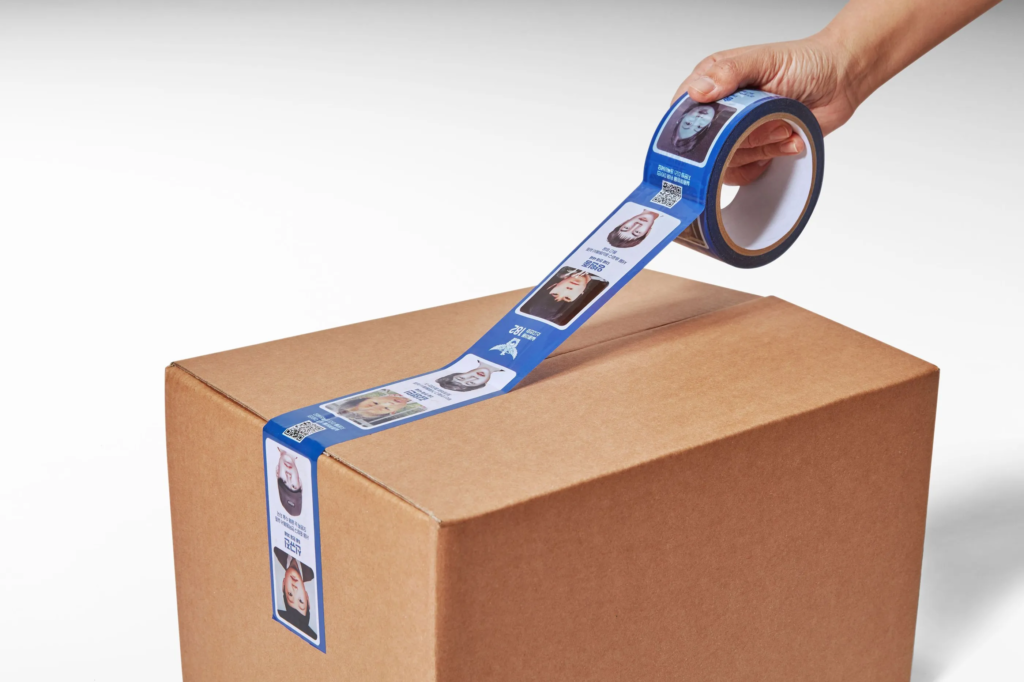
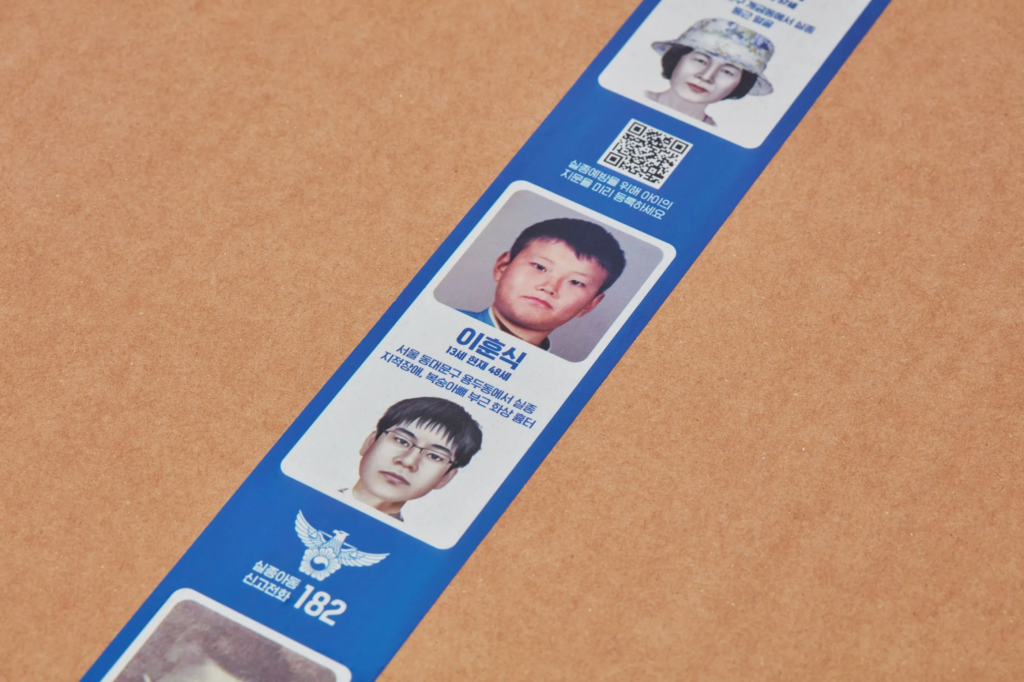
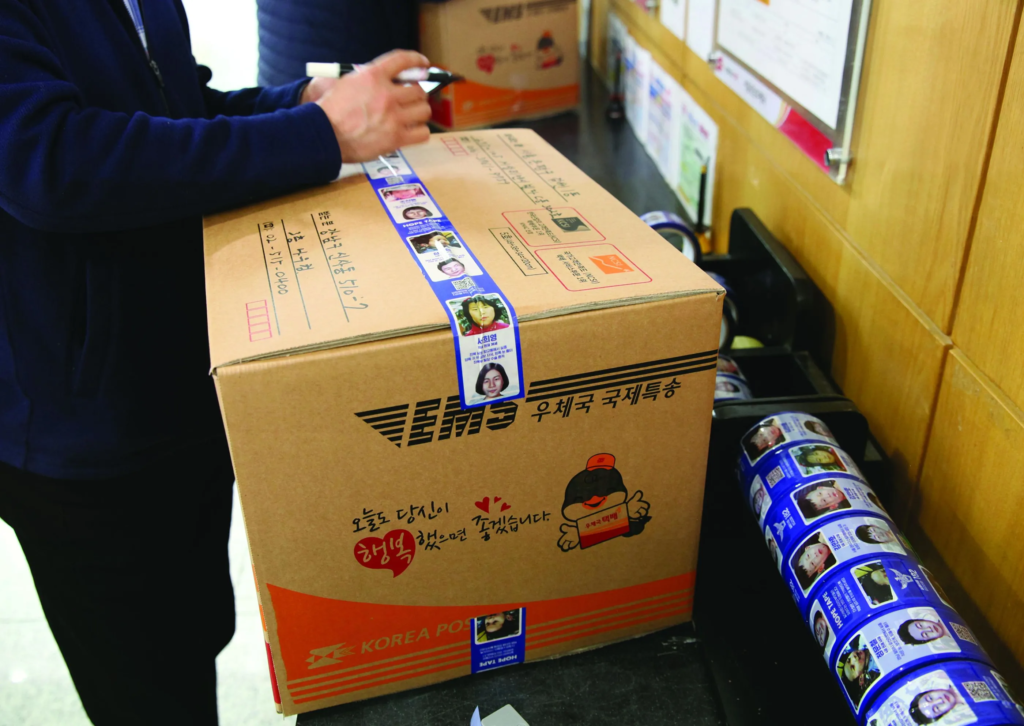
Hope Tape is a specially designed packaging tape printed with the photographs and details of 28 long-term missing children. It is functionally identical to the brown sealing tape that closes every delivery box sent by courier across South Korea. The difference is what is printed on it.
Each roll of Hope Tape carries the child’s photograph taken at the time of their disappearance alongside an age-progressed image generated using technology developed by the Korean National Police Agency, showing what the child is most likely to look like today. Below those images are physical details, the place the child was last seen, and a QR code linking to the police’s dedicated mobile app where anyone can report a sighting, search for more information about long-term missing children, or register their own child’s fingerprints in the police database as a precautionary measure.
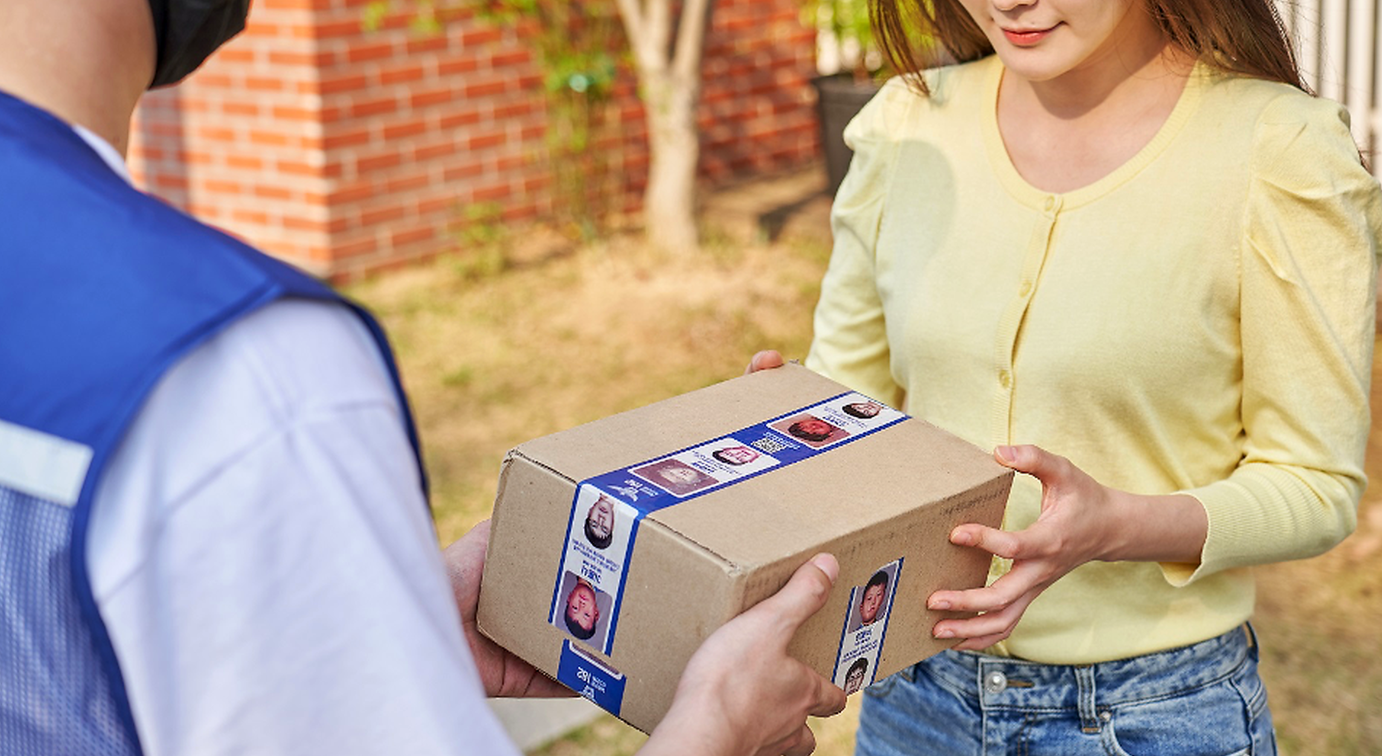
The tape is not a flyer. It is not a poster. It is the thing that seals a box that someone is expecting and has to open. The attention that a missing child’s face cannot reliably command on a flyer is compelled by the functional act of receiving and opening a parcel.
The COVID-19 Insight
The campaign’s timing reflected a specific and acute insight about South Korean daily life in 2020. The COVID-19 outbreak had kept people at home and accelerated the country’s already significant e-commerce activity into a volume that no pre-pandemic projection had anticipated. South Korea’s parcel delivery infrastructure was operating at record capacity. More households than ever were receiving deliveries. More people than ever were at home to receive them.
Seongphil Hwang, Creative Director at Cheil Worldwide, described the connection between that moment and the campaign’s medium: “With the Coronavirus outbreak, people tend to stay home and use more door-to-door delivery services. Parcels can be a highly effective medium to spread information about missing children. We wish Hope Tape provides real help to families who would not give up on searching their loved ones.”
The campaign converted a circumstance that had disrupted nearly everything else into a distribution channel for a cause that needed exactly what the lockdown had created: a captive audience at home, opening boxes.
The Distribution
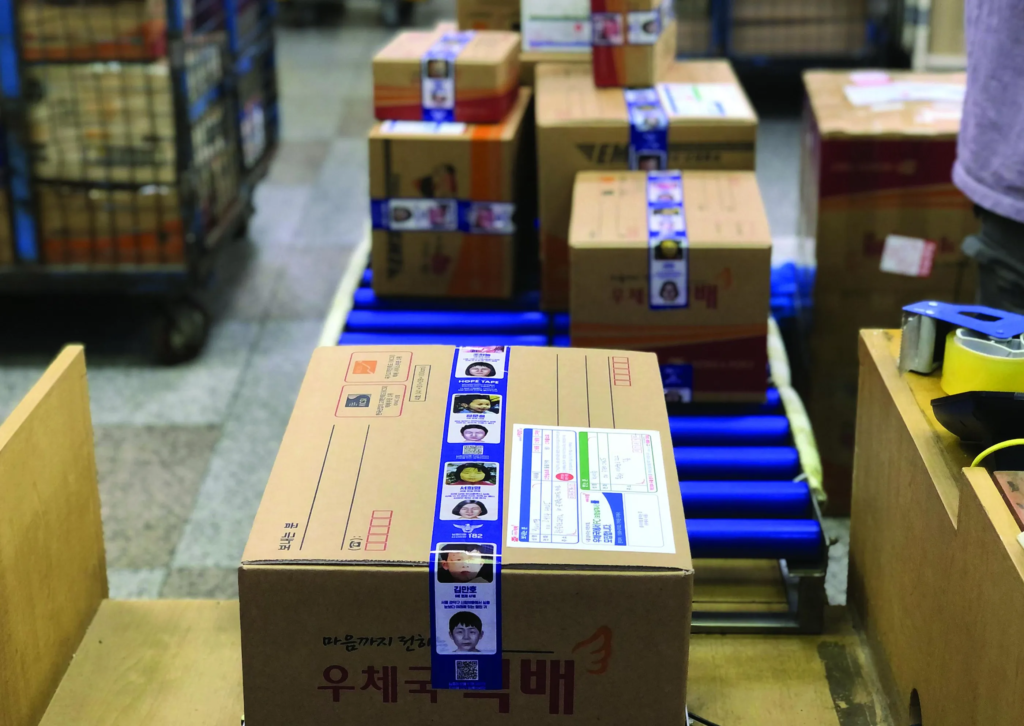
10,000 rolls of Hope Tape were produced and distributed in mid-April 2020, in advance of the International Missing Children’s Day launch. Korea Post, the national postal service, and Hanjin Express, one of South Korea’s largest private courier companies, both participated in the programme, applying Hope Tape to parcels moving through their networks.
Within a month of the launch, more than 620,000 packages sealed with Hope Tape had been delivered to addresses across South Korea. Each one carried the faces of 28 children to a doorstep that had never seen a missing children flyer arrive addressed specifically to it.
Cheil also announced that it was opening the design rights of Hope Tape to any company or organisation wishing to participate in the campaign and extend its reach further. The offer converted what was initially a partnership between a single police agency and a creative company into an open platform that any South Korean business using packaging tape could join.
The Strategic Logic
Missing children campaigns have historically faced the same structural problem as most public awareness advertising: the audience needs to actively choose to engage with the message. A flyer can be ignored. A billboard can be tuned out. A social media post can be scrolled past. The medium in which missing children’s faces most commonly appear in public, the flyer distributed by a desperate family, is precisely the medium that the public has learned to overlook.
Hope Tape circumvents that problem through the mechanics of the delivery system itself. A person who is expecting a parcel must take it inside, find the tape seam, and open it. The face on the tape is encountered in the moment of opening rather than in the moment of passing by. The act of receiving the delivery creates a brief but guaranteed period of physical engagement with the object bearing the child’s image, which is a different quality of attention from anything a flyer or a poster can produce.
The QR code extends that moment of engagement into the possibility of action. A person who recognises a face, or who wants to check, can scan it immediately and access the police database without needing to remember a hotline number, find a website, or take any additional step beyond the phone already in their hand.
The Campaign’s Broader Significance
Hope Tape belongs to a growing body of work in which the creative solution to a social problem is not a new message but a new medium, specifically one that is already embedded in the behaviour of the audience it needs to reach. Piracanjuba’s Missing PortrAIts campaign, launched in Brazil in 2025, applied the same structural logic to milk cartons rather than packaging tape, reaching families across 40 countries through the product they were already purchasing. The Samsugn Back2Life campaign embedded CPR training inside a video game mechanic rather than a classroom. Each of these interventions found a moment when the audience was already doing something and placed the most important information inside that moment rather than competing with it for attention.
Hope Tape found that moment in a delivery box. The tape that held the box shut was also the medium through which South Korea’s missing children reached 620,000 households in a single month.
Campaign Name: Hope Tape
Agency Name: Cheil Worldwide / Creative Director: Seongphil Hwang / Distribution Partners: Korea Post, Hanjin Express
Brand Name: Korean National Police Agency (KNPA)
Location: South Korea (national; launched May 25, 2020, International Missing Children’s Day)