When Vodafone and Idea merged in 2018 to form Vi, the union created India’s largest telecom network on paper. In practice, it created something less straightforward: a trust problem. Existing users from both networks experienced coverage gaps, dropped calls, and data failures during the integration period. Non-users who had been considering a switch looked at the coverage complaints circulating online and kept their existing SIMs. By 2023, Vi had improved its network substantially. The challenge was convincing people who had already decided not to trust it.
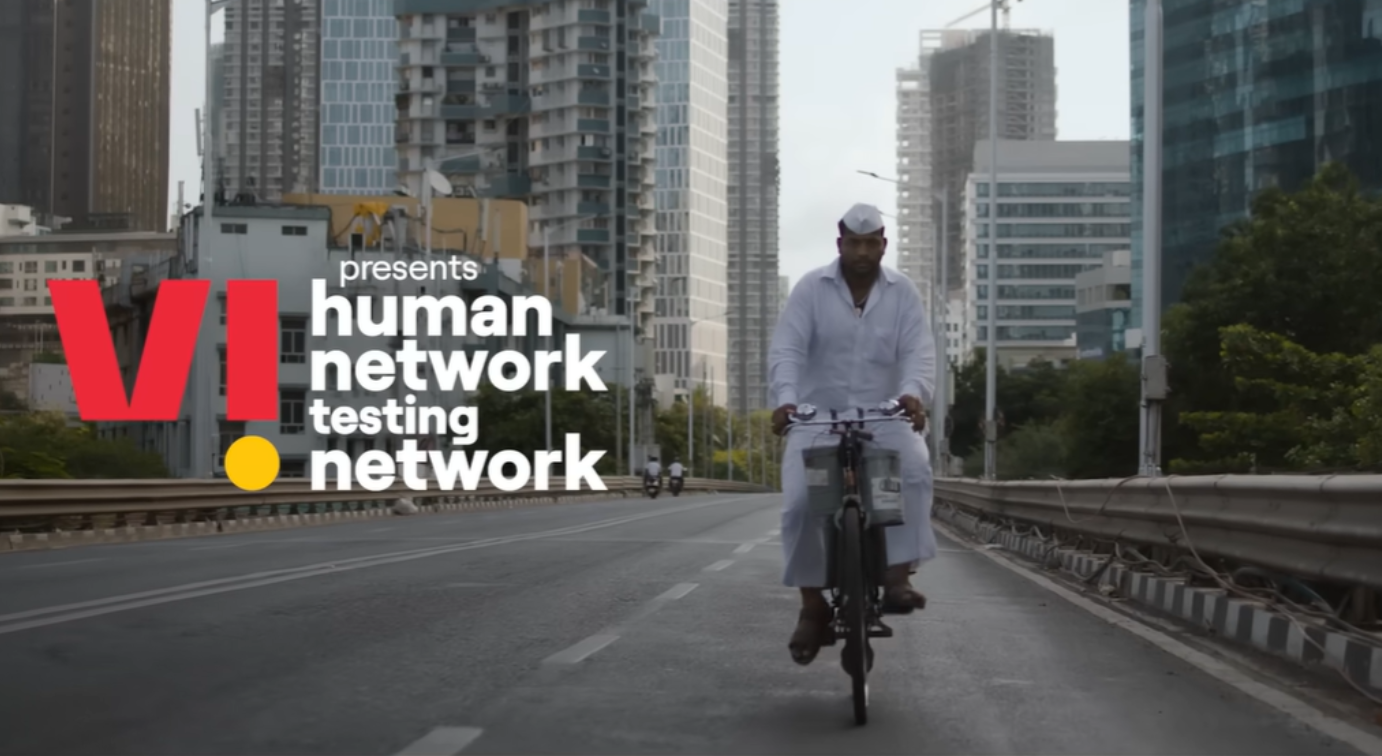
Ogilvy India’s solution was to stop making claims and start making proof. Specifically, proof delivered by 5,000 people who move through Mumbai’s most impenetrable spaces every single day and have been doing so without a single error for 135 years.
The Dabbawalas
Mumbai’s Dabbawala network is one of the most studied logistics operations in the world. An estimated 5,000 Dabbawalas collect home-cooked lunches from residential addresses across Mumbai, transport them through the city’s labyrinthine local train network, and deliver them hot to office workers by midday, six days a week, before collecting the empty containers and returning them to their starting points by evening. The system serves approximately 200,000 people daily.
The error rate of the Dabbawala network has been calculated at one mistake per 6 million deliveries. Forbes magazine estimated their accuracy at 99.9999%. The London Business School has studied them as a model of organisational efficiency. In 2001, Prince Charles met with Dabbawala representatives during his India visit. In 2005, they received Six-Sigma certification, the international quality standard for processes that produce fewer than 3.4 defects per million opportunities. No other human delivery network in the world carries that rating.
Vi partnered with this network to test its own.
What the Dabbawalas Did
For over two weeks, Dabbawalas carried Vi GIGAnet SIMs on their daily routes and performed heavy data tests throughout their working hours. The testing methodology was designed to replicate the most demanding real-world network conditions Mumbai’s urban geography produces. They made video calls from narrow, crowded lanes where buildings block signal propagation. They streamed heavy media content in building basements and underground parking structures. They ran gaming sessions on local trains during peak commute hours, when Mumbai’s population density, 73,000 people per square mile, one of the highest in the world, creates the most severe network congestion conditions available anywhere in India. They tested signal bars in mezzanine floors within floors, the specific architectural conditions that defeat most network optimisation because they exist between standard measurement points.
The One Club’s documentation of the campaign describes the logic of the partner selection precisely: monitoring and improving a network requires more than the latest technology. It requires a perspective that can only come from knowing Mumbai in and out. The Dabbawalas have been developing that perspective since 1890.
When the Dabbawalas confirmed that Vi’s network performed reliably across their full daily route, the certification carried a weight that no third-party technical assessment could have produced. The network that had been verified by the most accurate delivery operation in the world, across the most complex urban terrain in India, was not a network making a claim. It was a network with a witness.
The Results
The campaign produced a 66% growth in port-ins from competitor networks among non-users, the specific audience that Vi’s trust deficit had been failing to reach. The result reflects what the activation was designed to achieve: not awareness of an improved network among existing customers, but conversion of people who had already decided against Vi into people willing to make the switch.
The D&AD Wood Pencil awarded to the campaign in the Experiential: Activation and Participation category recognised what the judges identified as the campaign’s structural achievement. It did not place the brand claim in advertising. It placed the brand claim in the hands of a human network whose own credibility was already beyond dispute. The claim became credible by association rather than by assertion.
Why the Partnership Worked
Telecom network quality is one of the most difficult product attributes to demonstrate in advertising because the experience it delivers is invisible. A faster car looks faster. A brighter screen looks brighter. A network that works in a Mumbai train at rush hour looks identical, from the outside, to a network that drops calls in the same conditions. The gap between claim and verification is structural rather than creative.
The Dabbawala partnership resolved that gap by making the verification process as publicly legible as the claim. A Six-Sigma-certified human network, known to every Mumbaikar and documented by every business school that has ever studied operational excellence, carrying a telecom SIM through the spaces that defeat other networks is not a testimonial. It is a test conducted by the most qualified available testing team, at scale, in real conditions, with a result that the testing team’s own reputation is attached to.
Vi did not claim its network was reliable. It asked Mumbai’s most reliable institution to find out.
Campaign Name: Vi Human Network Testing Network / The Dabbawalas, Human Network Testing Network
Agency Name: Ogilvy India / Production Company: Hungry Films
Brand Name: Vi / Vodafone Idea
Location: Mumbai, India (2024)