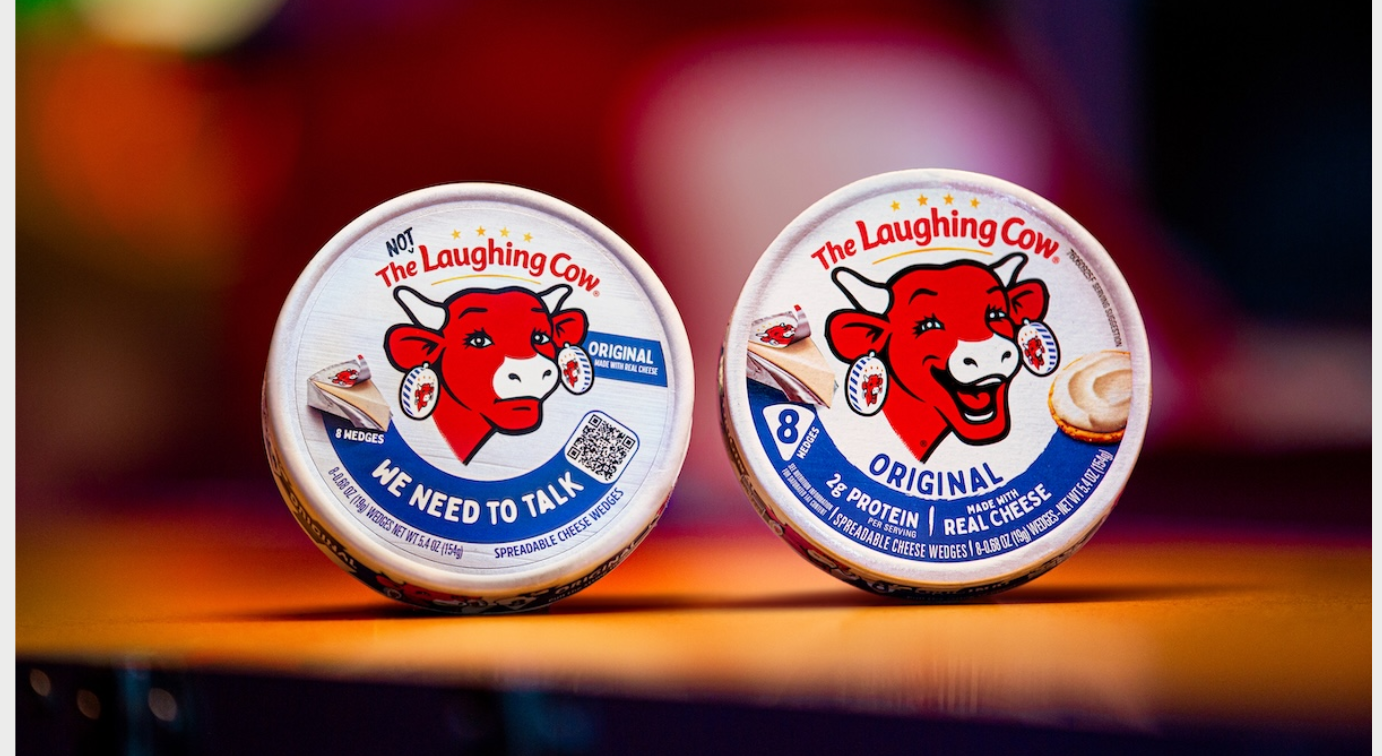
Since 1921, The Laughing Cow has had one expression. On September 22, 2026, Bel Brands USA changed it. The smile disappeared from the brand’s most recognisable asset for the first time in over a century, and the packaging it was removed from carried two words in its place: “We need to talk.”
The Campaign
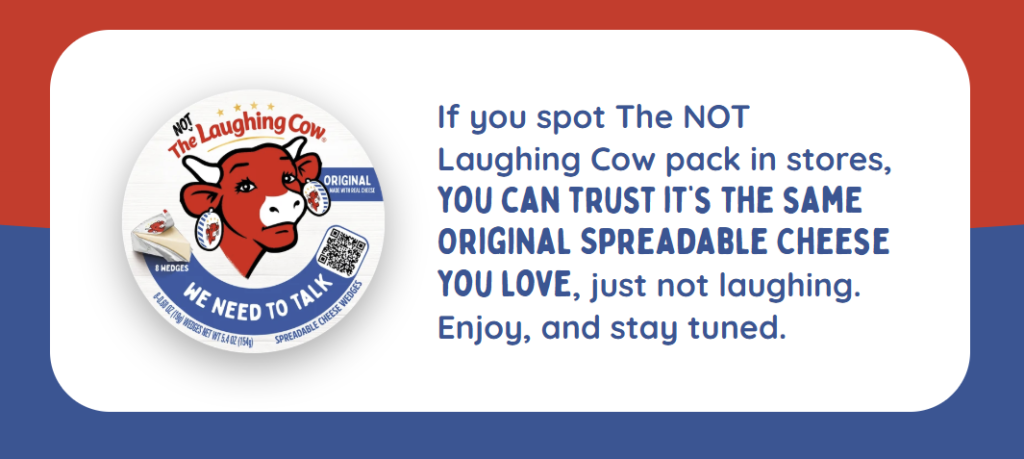
The Not Laughing Cow launched on select packs of Creamy Original cheese in more than 4,700 US stores simultaneously. The straight-faced mascot replaced the grinning red cow that had appeared on the brand’s packaging without interruption for 105 years. The cheese inside was unchanged. The only difference was the face.
A QR code on each pack sent shoppers to TheNotLaughingCow.com, where videos showed the mascot sitting alone in a diner and looking glum on a park swing. The brand’s social media handles changed to The Not Laughing Cow. The website offered no explanation. Instead, it invited shoppers to speculate. Bel Brands US confirmed only that the cow had stopped laughing and that she would explain herself when she was ready.
Jamee Pearlstein, Chief Marketing Officer of Bel Brands US Cheese, described the campaign’s emotional mechanic: “Whatever finally got to her must be worth talking about. We’ll let her explain when she’s ready.”
The Internet Responded Immediately
The campaign generated attention precisely because of what had been removed rather than what had been added. The Laughing Cow’s smile had been a constant for so long that most consumers had stopped consciously registering it. Removing it triggered the specific cognitive disruption that familiarity makes possible: the brain notices absence more acutely than it notices presence when the thing missing has been present for long enough.
The Dexerto X account posted about the change on September 26, 2026, generating over 42,000 likes and 3,200 reposts in two days. TikTok creators produced content speculating about what might have upset the cow. Memes spread the mystery. The QR code on the packaging was scanned by shoppers who would not normally engage with a cheese brand’s digital presence. The packaging had become the campaign’s primary media channel, and the campaign had become a national conversation.
Peter McGuinness, CEO of Bel North America, described what the response confirmed: “We knew The Laughing Cow was loved, but we didn’t realize just how much until she stopped laughing.”
The Reveal
On September 30, 2026, The Not Laughing Cow appeared in the dressing room of Jimmy Kimmel before a taping of Jimmy Kimmel Live in Brooklyn. Through a conversation with Jimmy and Guillermo, structured around a debate about whether it was acceptable to wear socks with sandals, the cow explained what had made her stop laughing.
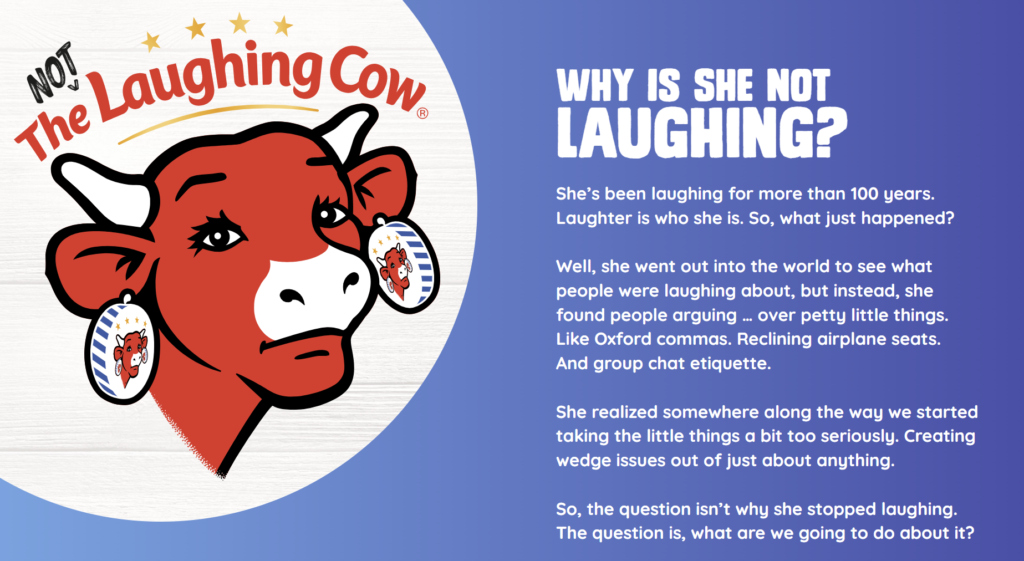
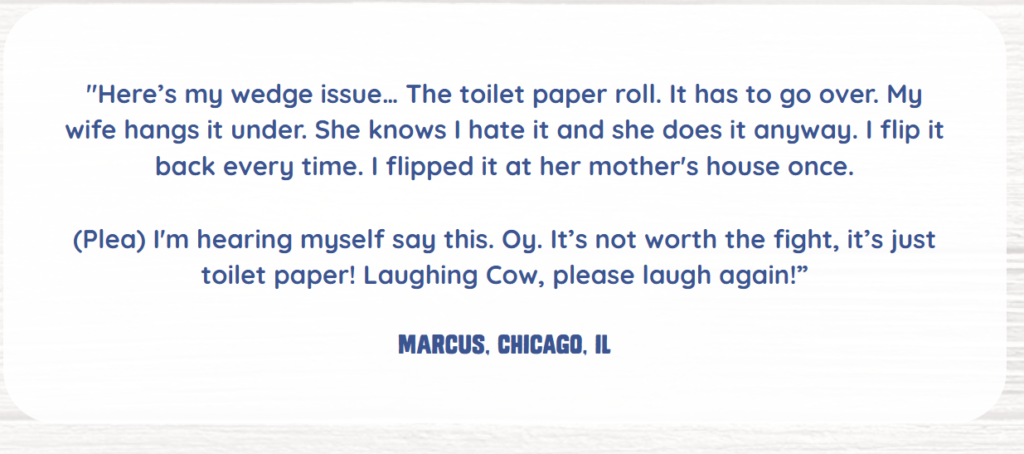
The answer was on the website TheNotLaughingCow.com: she had gone out into the world to find what people were laughing about, and instead found people arguing about petty things. Oxford commas. Reclining airplane seats. Green bubbles versus blue bubbles in group chats. Four-year disputes that neither party could remember starting.
The campaign’s statement of purpose was precise: “She realized somewhere along the way we started taking the little things a bit too seriously. Creating wedge issues out of just about anything.”
The timing was not accidental. The reveal arrived ten days before World Mental Health Day on October 10, 2026. The campaign’s underlying argument, that trivial disagreements drive people apart while bigger things that should matter go unaddressed, lands differently in that context.
The call to action asked fans to laugh off small disagreements, come together, and help get The Laughing Cow laughing again.
Why the Mechanism Worked
The Not Laughing Cow campaign belongs to a specific category of brand communication in which the brand’s most established asset is temporarily removed or altered to generate attention and force engagement. KFC Canada knocked out the Colonel’s teeth for a hockey campaign. McDonald’s removed the Happy Meal smile to start conversations about children’s emotions. In each case, the disruption worked because the original was so familiar that its absence was immediately noticeable.
The Laughing Cow had an unusual advantage in this approach: a mascot whose entire identity was built on a single expression, whose name contained that expression, and which had maintained that expression consistently for over a century. No other food brand mascot carries that specific level of unbroken emotional consistency across that length of time. The smile belonged to the cow the way the Swoosh belongs to Nike. Removing it was not a small change to packaging. It was a personality shift visible to anyone who had ever bought the product.
The mystery mechanic, withholding the reason and inviting speculation, extended the campaign’s earned media life across the week between the launch and the reveal. Every person who scanned the QR code, every meme that circulated, every social media post asking why the cow looked sad, was free distribution for a campaign whose media spend consisted primarily of printing a different face on a proportion of the brand’s existing packaging.
Campaign Name: The Not Laughing Cow
Agency Name: Not mentioned
Brand Name: The Laughing Cow / Bel Brands USA
Location: United States (national; 4,700-plus stores, social media, Jimmy Kimmel Live reveal; September 22 to 30, 2026)