Concert posters have been stolen from walls since walls have had concert posters on them. The behaviour is so established and so universal that it barely registers as vandalism anymore. It is simply what fans do. Spotify and its in-house creative team looked at that behaviour and decided, for the third instalment of its Fan Life campaign, to make it official.
The Tearable Poster
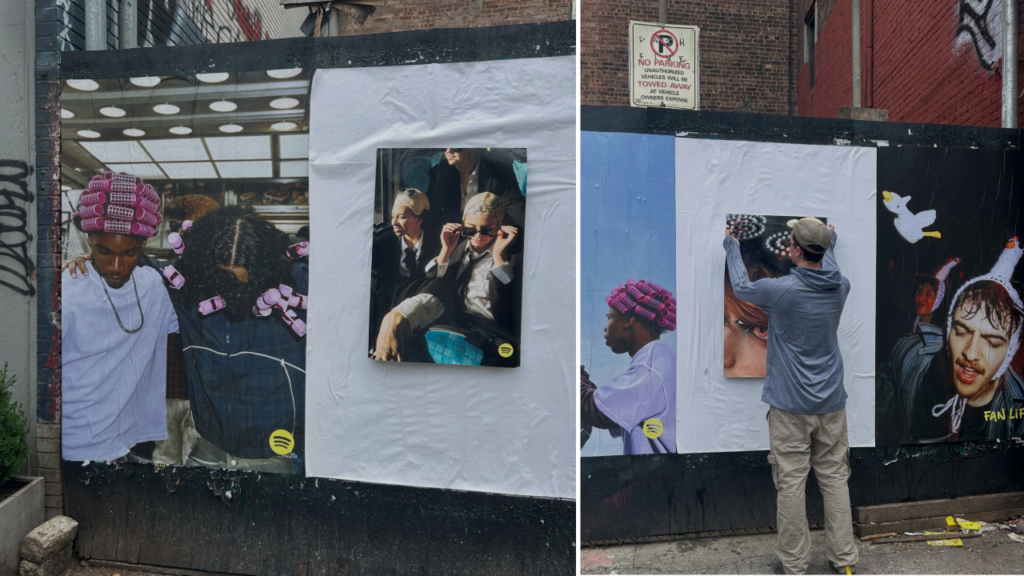
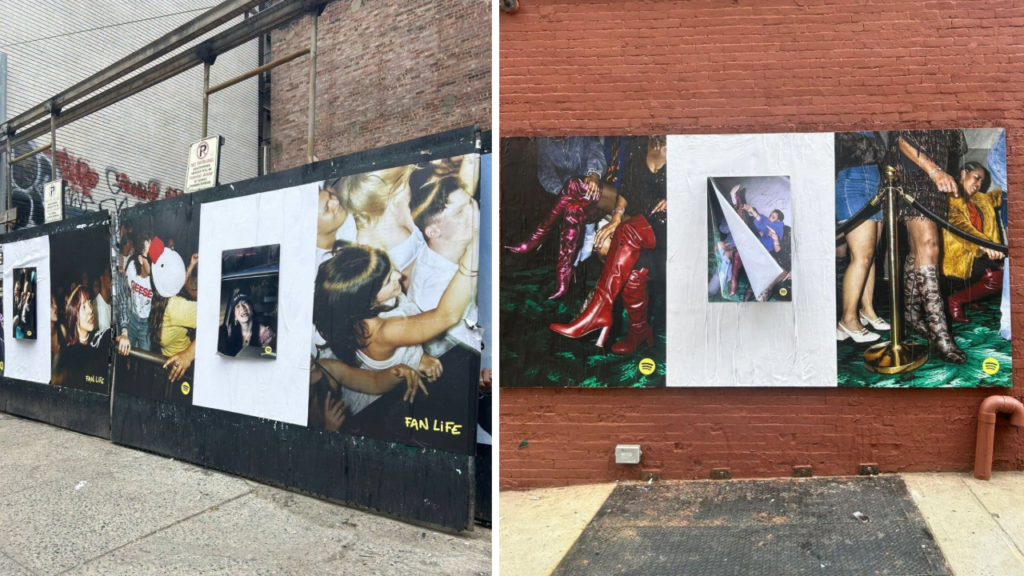
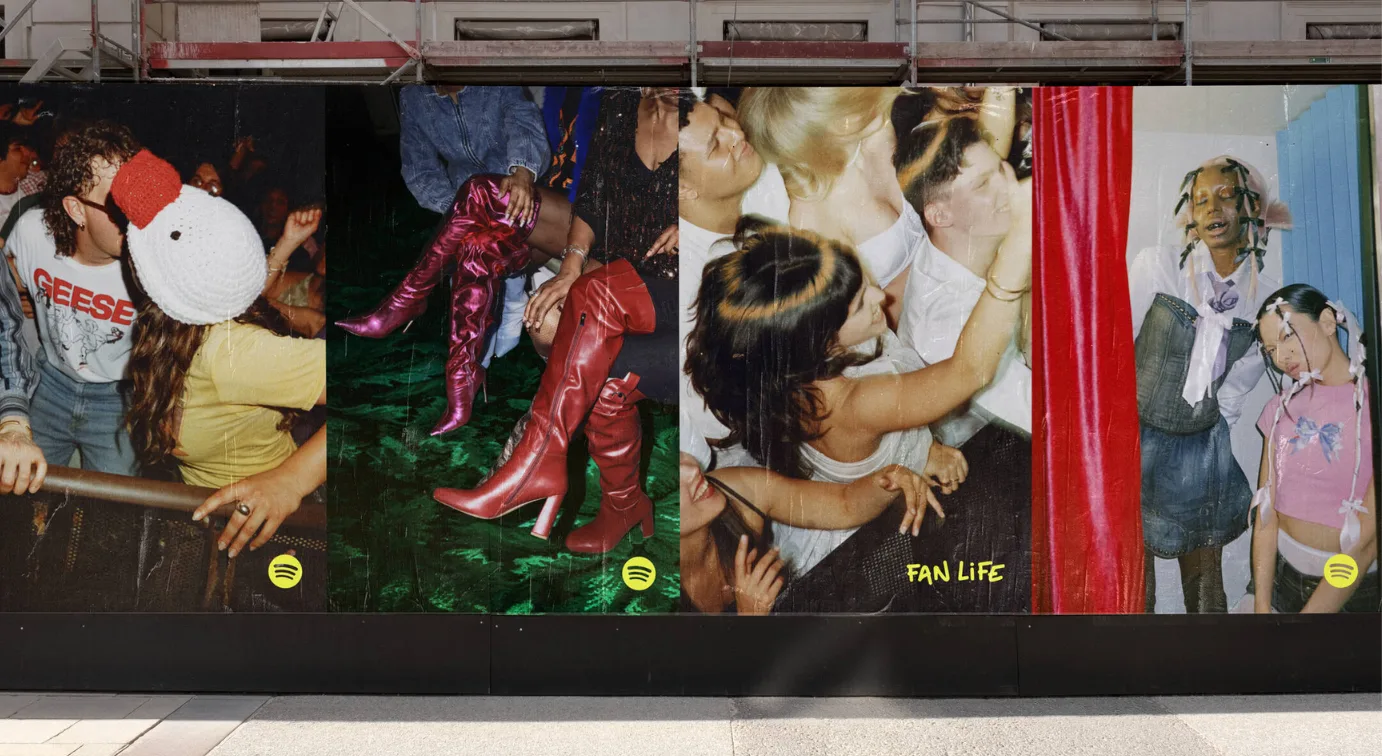
The Fan Life street poster execution features perforated sections built into the design, engineered to be ripped away cleanly. The posters are not simply printed on standard paper that might happen to tear. They are designed from the outset to be taken home. Hidden among the general run of tearable posters is a smaller number of artist-signed versions, distributed across locations without announcement, so fans who rip down a poster have a chance of discovering that the one they took carries an artist’s signature.
The execution is a single creative inversion of the most persistent problem in outdoor advertising. For decades, brands and municipalities have tried to stop people taking posters off walls. Spotify engineered a poster specifically so that people would.
The signed versions hidden within the run extend the mechanic into a genuine incentive. Every fan who rips down a Fan Life poster is participating in the campaign as an intended behaviour rather than a countermeasure to it. Every fan who discovers they have taken a signed version has had an experience that no conventional outdoor advertisement can produce.
The Fan Life Platform
The tearable poster is the OOH activation within the third instalment of Spotify’s Fan Life campaign, which launched globally on July 27, 2026. The broader campaign is built around a philosophy that has run consistently across all three chapters: music fans are more interesting, more creative, and more culturally significant than the artists they follow, and Spotify is the platform that understands that.
The third chapter focuses specifically on live music rituals, the things that fans do in preparation for a show, on the way there, and in the crowd itself, that have nothing to do with the music being performed and everything to do with belonging to the community that surrounds it.
The campaign celebrates fandoms for AAPRocky,Geese,ROSALIˊA,Sailorr,MaryJ.Blige,andZaraLarsson,bringingtolifethedistinctwayseachexpressestheirdevotion,fromSailorrfansgettingreadytogetherwithblackteethandbabybowsintheirhair,toZaraLarssonfansdancingintrueearly−2000smaximalism,toAAP Rocky fans stepping out in pink hair rollers for a nod to the artist’s signature style.
Real fans, not actors, populate every image and film in the campaign. Kye, a Geese superfan, appears rocking out with fellow supporters, all of them in crocheted goose beanies. The artists themselves do not appear. Their place is taken by the communities that have built their own visual languages, their own rituals, and their own ways of marking membership, around the music those artists make.
Why the Artists Are Absent
The deliberate exclusion of artists from Fan Life is the campaign’s most structurally significant creative decision across all three of its chapters. Conventional music advertising celebrates artists. Fan Life celebrates the people who make being an artist worth being.
Lauren Solomon, Senior Director, Global Brand and Marketing at Spotify, described the platform’s purpose: “Fan Life is a way for us to show our appreciation and belief that fans are essential to creating music culture. They are the core of every artist’s story.”
Solomon described what the campaign’s research confirmed about modern music fandom: “People don’t just stream their favourite artists. They create content, build communities, and find new ways to express themselves through music.” The platform’s role in that creative ecosystem is as the space where those communities form, discover each other, and access the artists they love. Fan Life communicates that role by showing what the ecosystem produces rather than explaining what the platform provides.
The History of Fan Life
The Fan Life platform launched with its first instalment capturing behaviours that had never previously appeared in mainstream brand advertising: Pitbull fans arriving to shows in suits and bald caps, the visual tribute to their artist’s signature look. Megan Moroney fans filmed singing along in their cars, alone, with the kind of unselfconscious commitment that only happens when someone believes they are not being watched. Chapter two, which Spotify described as “a research exercise as much as an ad campaign” when it launched in August 2025, documented similarly specific fandom behaviour across a broader range of artists and markets.
Each chapter has taken the same position: the interesting creative material is what happens in the stands and on the pavement, not on the stage. The tearable poster adds a physical dimension to that position. It is not simply an advertisement that tells fans Spotify understands them. It is a poster designed to be taken down from the wall, which is what fans have always done with posters they love, now built into the infrastructure of the campaign itself.
The Distribution
The Fan Life campaign runs across paid social, billboards, and wild postings in New York, Los Angeles, Chicago, Miami, and Atlanta, with additional launches in Canada, Brazil, and Mexico. Regional editions feature local artists whose fan communities reflect each country’s unique music culture. In Mexico, Spotify spotlights Chuyin, El Bogueto, and Bratty. Localised fan community documentation also runs in Germany, France, and the UK.
The tearable poster format is specifically deployed in the wild posting locations where the behaviour of taking posters off walls is most established. The perforated sections and artist-signed versions are not distributed through all campaign formats. They exist specifically in the street-level, paste-up context where the history of poster theft is deepest, and where the campaign’s reversal of that history is most precisely felt.
Campaign Name: Fan Life (Chapter 3) / Tearable Posters
Agency Name: Spotify in-house creative team
Brand Name: Spotify
Location: USA (New York, Los Angeles, Chicago, Miami, Atlanta), Canada, Brazil, Mexico, Germany, France, United Kingdom (launched July 27, 2026)