Over two-thirds of male football fans hold negative attitudes toward women’s sport, according to Durham University research. Orange France and Marcel Paris did not argue with that statistic. They used it as the mechanism for a campaign that made those fans prove themselves wrong before the reveal had even arrived.
The Problem
The 2023 FIFA Women’s World Cup was scheduled to begin in Australia and New Zealand on July 20. Orange, a longstanding partner of the French Football Federation, faced a brief that most brands had failed to execute successfully for years: how do you get fans who do not watch women’s football to care about the French women’s team before a tournament begins?
The standard approaches had been tried. Films celebrating female athletes. Statistics about the growth of the women’s game. Emotional campaigns asking fans to consider the gender bias in their viewing habits. Two-thirds of European fans still told researchers they considered women’s sport less entertaining than the men’s equivalent. The rational argument had not moved them. Marcel Paris identified a different approach: do not argue with the bias. Exploit it.
The Film
La Compil des Bleues launched on June 28, 2023, three weeks before the World Cup began, targeted across L’Équipe, BeIN Sports, Foot Mercato, and the French Football Federation’s own channels, platforms where male football fans were already spending their attention.
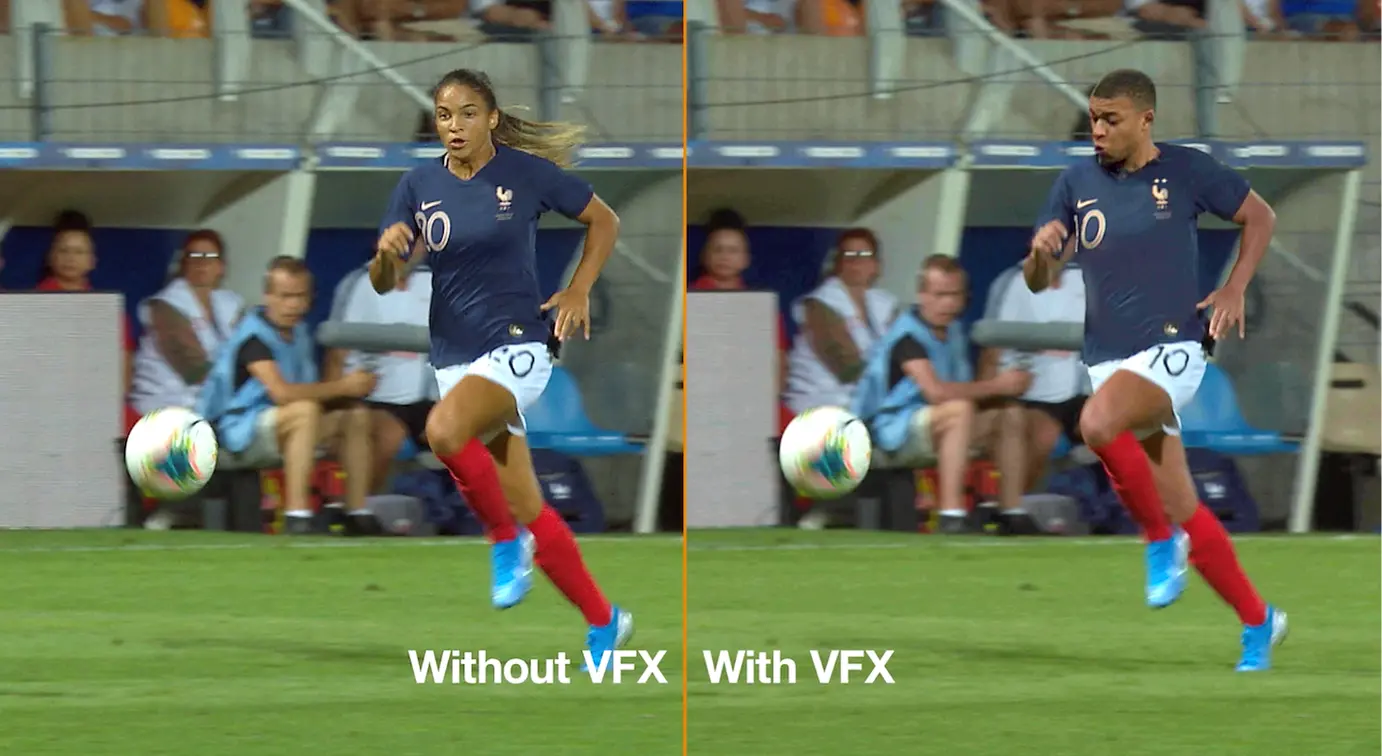
The film opens as a standard football highlight reel. The editing is fast. The skill on display is exceptional. Kylian Mbappé drives past defenders. Antoine Griezmann controls the ball with a first touch of startling precision. Selma Bacha hits the post. Kingsley Coman squares the ball across goal. The faces belong to France’s most recognisable male internationals. The commentary registers the quality of what is being shown. The audience watches exactly what they would expect to watch from a highlights package of the French men’s team.
For over a minute, the deception holds.
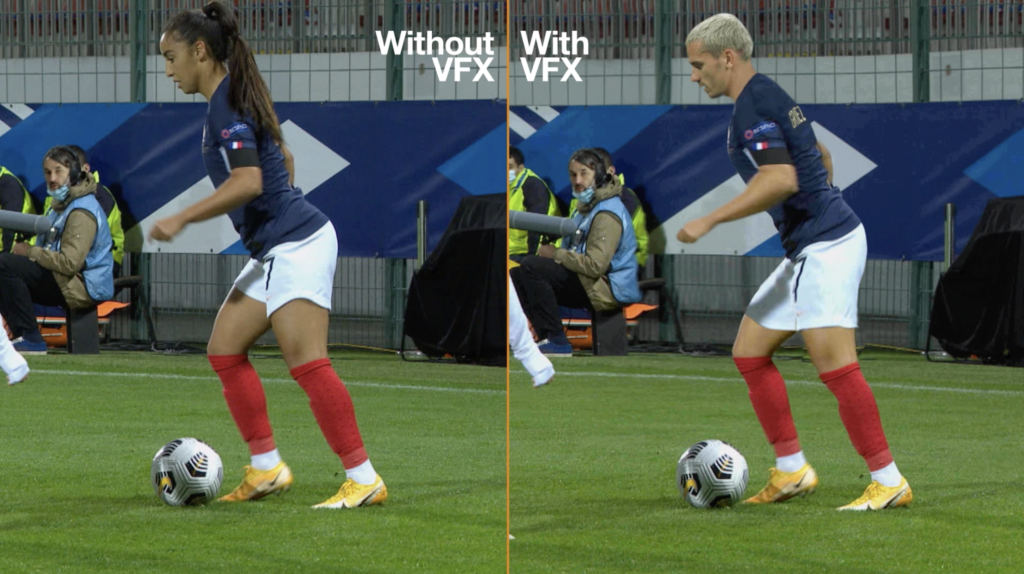
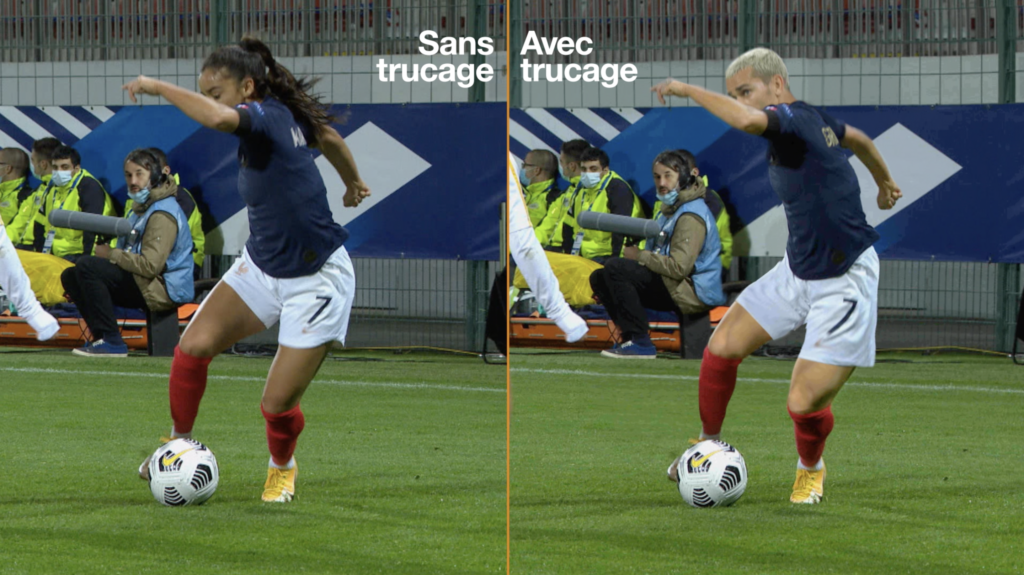
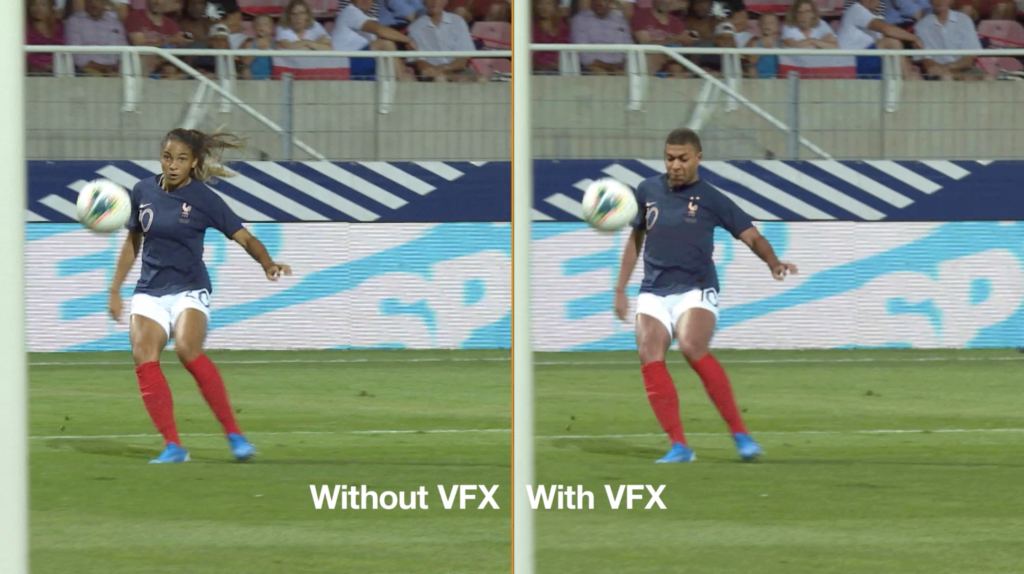
Then the film pauses. The footage rewinds. The same clips play again, but this time without the VFX that had been applied to the players’ faces throughout the first half. The people performing those exceptional pieces of skill are not Mbappé and Griezmann and Coman. They are Sakina Karchaoui, Selma Bacha, Marie-Antoinette Katoto, and their teammates on the French women’s national team. The same footage. The same skill. Different faces.
The final caption changes one word from the French men’s team designation to the women’s: from Bleus to Bleues.
How the VFX Was Built
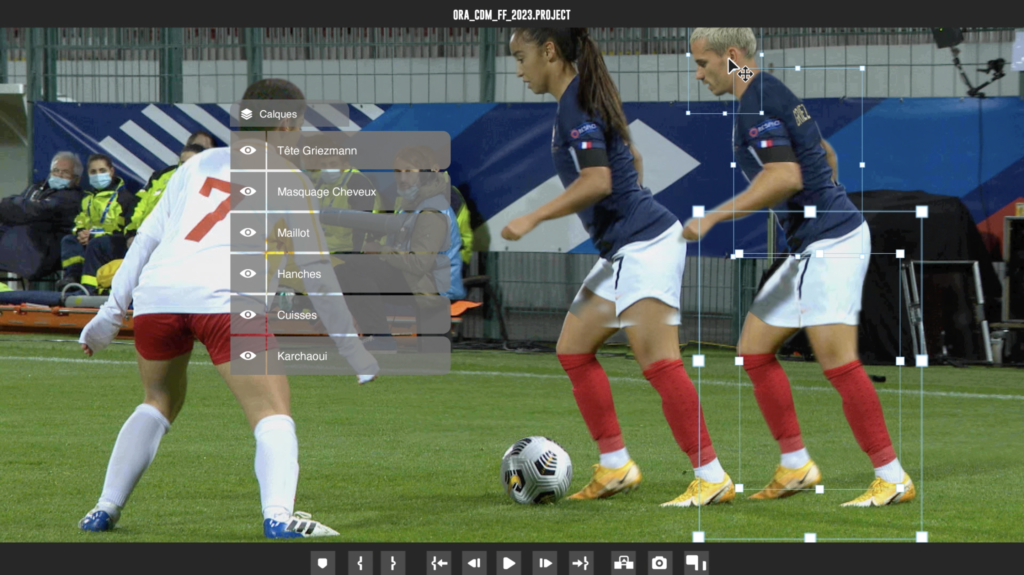
The technical execution behind the campaign’s central deception required a production process that matched the creative ambition. Marcel Paris sifted through footage from more than 80 men’s and women’s matches, each with an average duration of 95 minutes, to find the specific moments where a women’s player’s technique most closely mirrored the characteristic movements of the male star whose face would be applied to it. The matching had to be precise enough that the VFX would not break under attention from football-literate viewers watching on platforms dedicated to the sport.
Prodigious Paris and Artisans du Film handled the production and post-production work that made the deepfake layer convincing. The faces of Mbappé, Griezmann, Coman, and Giroud were applied to the bodies and technical movements of the women’s players using AI deepfake technology, with the VFX calibrated to the specific quality standard that a sports media platform would require.
The two halves of the film were always intended to stand as a comparison rather than a before and after. The first half showed what the fans expected to see. The second half showed what they had actually been watching. The reveal was not designed to shame the audience. It was designed to eliminate the gap between the quality they had been cheering and the players who had produced it.
The Response
The film was viewed more than 15 million times in its initial distribution period, generating 50 articles of press coverage and being mentioned in prime-time television news in France. It was shared on social media by the French Minister of Sports and by current and former players from both the men’s and women’s national teams. The viral expansion beyond its initial media placement converted a paid campaign into an earned media event with 2 billion total impressions across its full run.
The Drum’s coverage described the campaign as something that “well and truly hit the back of the net,” noting that it had been called by fans “the best women’s football ad and one of the best sports ads ever.” Storyboard18 noted it became the second most awarded ad in the 2023 World Creative Rankings. The campaign went on to claim the Cannes Lions Entertainment for Sport Grand Prix, the festival’s highest recognition in the category that most directly captured what the film had achieved: using entertainment mechanics to change the cultural conversation around a sport.
The Broader Strategic Argument
The WoMen’s Football campaign resolves a communications problem that had defeated previous approaches by changing the unit of persuasion. Earlier campaigns asked fans to reconsider their bias through argument. Orange France asked them to enjoy football and then showed them what they had enjoyed.
A fan who has spent a minute cheering at Mbappé doing something he did not actually do has been given concrete personal evidence that his bias was not founded on what he had seen but on what he had assumed. The reveal does not require him to accept an argument. It only requires him to watch the same footage twice with different information about who is on screen.
The campaign works because it is built on the one thing that cannot be argued with: the viewer’s own reaction. The quality of the football was never the question. The identity of the players producing it was. WoMen’s Football gave every viewer who watched it an answer to that question before they had had time to form a defensive response.
Campaign Name: WoMen’s Football / La Compil des Bleues / Bleues’ Highlights
Agency Name: Marcel, Paris / Production: Prodigious Paris, Artisans du Film
Brand Name: Orange France
Location: France (digital, sports media; launched June 28, 2023; ran through the 2023 FIFA Women’s World Cup)