Facebook and Instagram censor female nipples. That policy, applied uniformly across both platforms, creates a specific and medically consequential problem: how do you teach women to perform a breast self-examination on the platforms where most of the world’s population spends most of its time? MACMA, Argentina’s breast cancer support movement, and DAVID Buenos Aires found the answer in 2016 by looking for breasts that were not censored. They found Henry’s.
The Brief
MACMA, the Movimiento Ayuda Cáncer de Mama, is an Argentine non-profit founded to support people affected by breast cancer and to promote early detection. Breast self-examination is the most accessible form of early detection available to any woman anywhere in the world, requiring no specialist equipment, no medical training beyond basic instruction, and no cost. The barrier to that instruction was not knowledge. It was platform policy.
Facebook and Instagram’s community standards prohibited the display of female nipples in any context, including medical education. A video demonstrating the correct method for breast self-examination required the camera to show exactly what the platforms would not allow. Every attempt to distribute the educational content through the channels where young Argentine women actually spent their time would result in the content being flagged and removed.
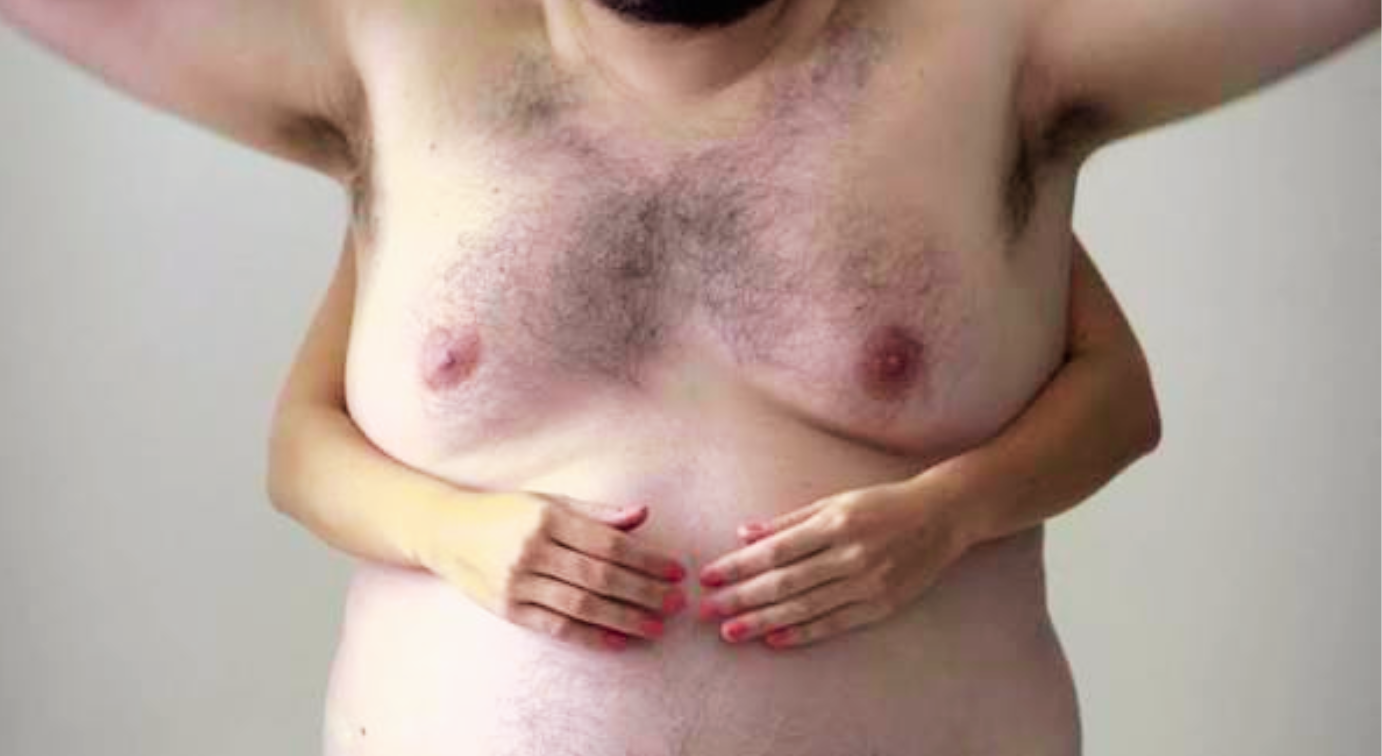
Executive Creative Directors Joaquin Cubria and Ignacio Ferioli at DAVID Buenos Aires identified the loophole in the policy’s logic. The censorship applied to female breasts. Male chests, regardless of their appearance, were not subject to the same restriction. A man with a large chest and visible breast tissue, colloquially known as man boobs, could be filmed, shared, and distributed across both platforms without triggering any moderation policy.
The Film
The campaign opens with a woman beginning to undress. The camera cuts before showing her breasts. Instead, the screen fills with the logos of Facebook and Instagram, covering where her chest would have been. The narrator addresses the problem directly: “Breasts aren’t very welcome. They’re censored. Even when teaching how to perform a BSE for the early detection of breast cancer.”
Then: “But we found boobs that aren’t censored.” A large shirtless man named Henry appears on screen. The video proceeds to demonstrate the complete breast self-examination technique using Henry’s chest, showing precisely how to look and feel for the early signs of breast cancer, including changes in skin texture, lumps, and irregularities, using his body as the teaching medium.
The film closes with a note that men are also susceptible to breast cancer, making Henry’s participation both the creative workaround and a public health message in its own right. “Good thing that doesn’t go for censorship,” the narrator observes.
The campaign hashtags were #ManBoobs4Boobs in English and #TetasxTetas in Spanish. The invitation at the end was explicit: “Share this video, or make your own. All you need is a pair of man boobs.”
The Response
The Facebook posting of the video reached more than seven million views, as documented by the BBC. The video spread globally through social sharing, news coverage, and the hashtag, which was picked up across Twitter and other platforms. Fox News covered it. Yahoo News covered it. The BBC covered it. The Mirror reported on it. A campaign produced for an Argentine breast cancer charity with no paid media budget had generated global press coverage by finding a loophole in the censorship policy of the world’s two largest social media platforms.
The creative team at DAVID Buenos Aires described the situation with the precision the campaign’s mechanics deserved: “Breasts aren’t very welcome. They’re censored. Even when teaching how to perform a BSE for the early detection of breast cancer. That’s where ‘manboobs4boobs’ comes in.”
The Cannes Recognition
Man Boobs 4 Boobs won the Cannes Lions Grand Prix, confirming what the global advertising industry’s most significant jurors had identified: a campaign that solved a genuine public health communication problem using the most direct available creative solution, at essentially no media cost, and generated reach that no paid campaign could have purchased for an equivalent budget.
The Grand Prix is the award the Cannes Lions reserves for work that changes the conversation about what advertising can be. Man Boobs 4 Boobs changed the conversation about platform censorship, about public health education online, and about the specific absurdity of a policy that allowed a man’s chest in any condition while preventing a medical organisation from teaching life-saving detection techniques.
The Broader Significance
The Man Boobs 4 Boobs campaign belongs to a small and specific category of health communication campaigns in which the structural barrier to the message is itself identified as the creative brief. Greenpeace’s They Can’t Arrest This Billboard placed activists on digital OOH screens rather than the streets that had been made legally risky. MACMA placed its breast self-examination instructions on a man’s chest rather than the female body that would have been removed.
Both campaigns found the one version of their message that the barrier could not touch. In MACMA’s case, that version was medically accurate, functionally complete, and funnier than any alternative. Henry’s contribution to breast cancer awareness remains, a decade later, one of the most precisely designed workarounds in the history of advertising.
Campaign Name: Man Boobs 4 Boobs / ManBoobs4Boobs
Agency Name: DAVID Buenos Aires / Executive Creative Directors: Joaquin Cubria, Ignacio Ferioli / Copywriter: Juan Peña / Art Director: Ricardo Casal / Production House: Landia / Director: Matías Calzolari / DOP: Nicolas Hardy / Editor: Ana Svarz / General Accounts Director: Emanuel Abeijon
Brand Name: MACMA (Movimiento Ayuda Cáncer de Mama)
Location: Argentina (digital and social media; 2016)