
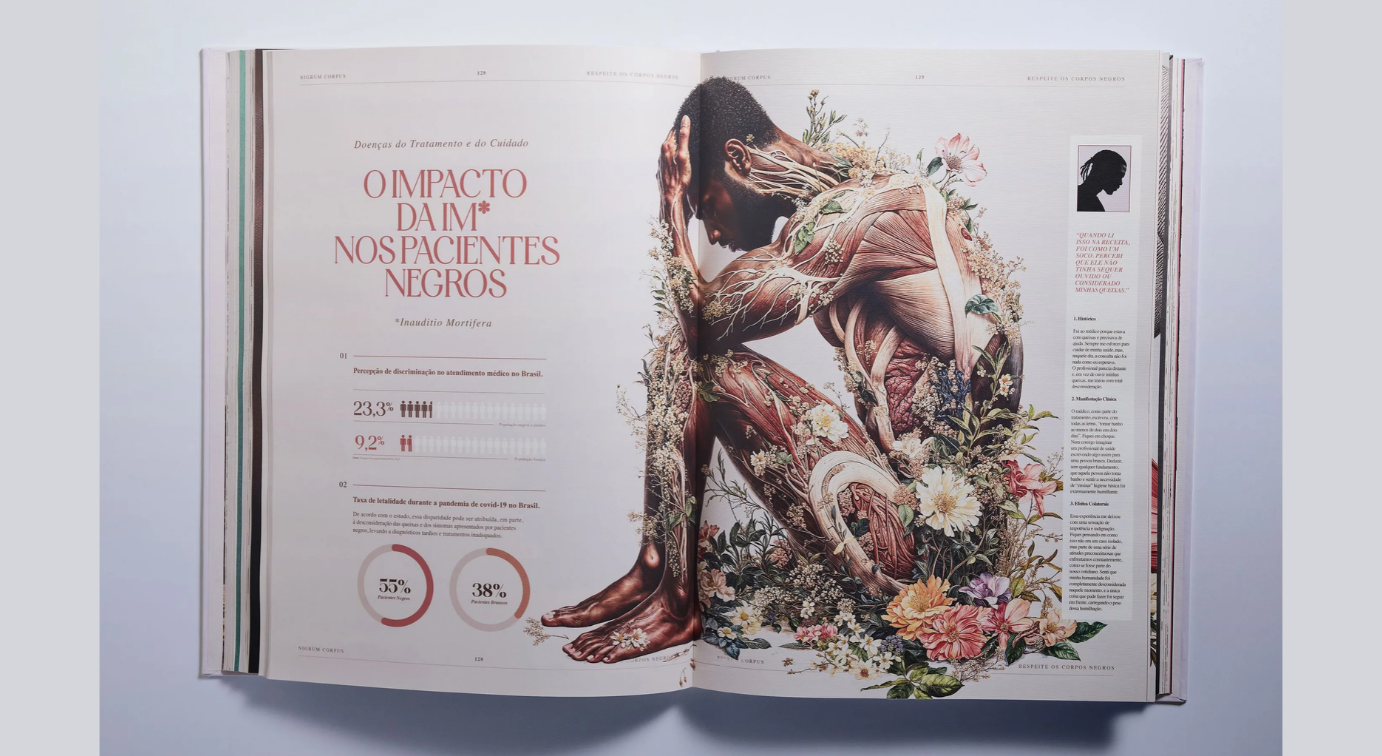
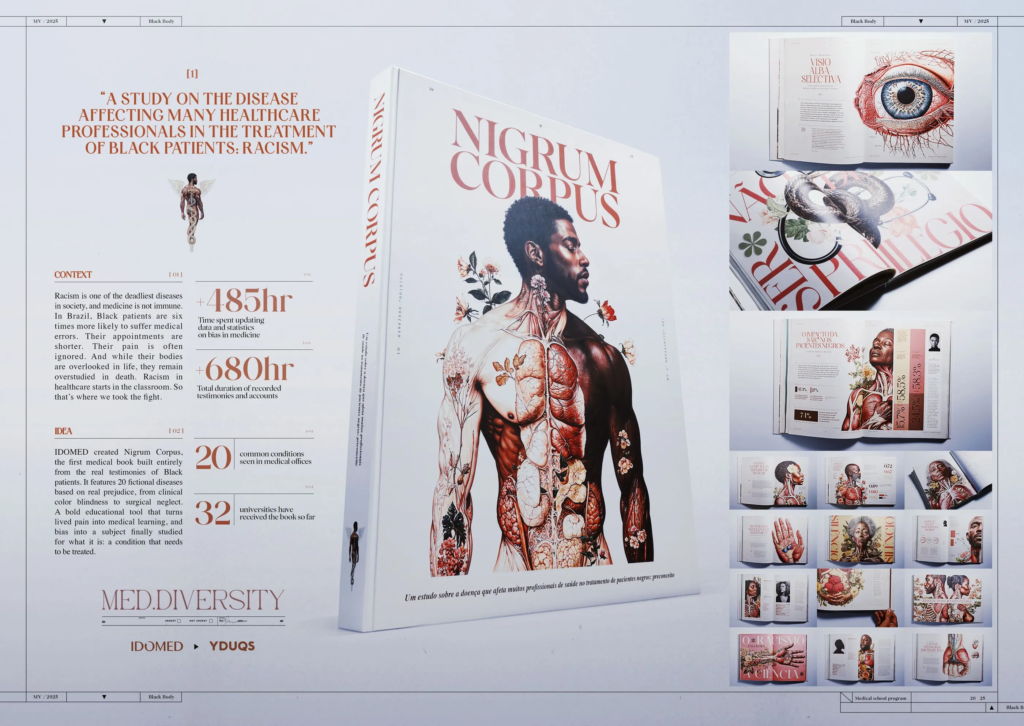
A medical textbook handed to students across Brazil looks like any other anatomy manual. Inside are 20 diseases that appear in no clinical guide. Each one is built from real accounts of Black patients who were misdiagnosed, left in pain or ignored by doctors. The book is called Nigrum Corpus, Latin for “Black body.”
The Gap in Brazil’s Medical Training
More than 55% of Brazilians identify as Black or mixed race. Only 3% of the country’s doctors are Black, according to the Federal Council of Medicine. Studies cited by the campaign show that Black patients get shorter consultations, receive less pain medication and wait an average of 6.7 days longer between diagnosis and surgery.
Part of the problem starts in the classroom. Brazilian medical education has long treated the white body as its default clinical reference, so conditions that look different on darker skin get less attention.
The Instituto de Educação Médica, known as IDOMED, and Instituto Yduqs set out to change that through Mediversidade, a programme to bring racial equity into medical education. They worked with agency Artplan.
“The Black patient is not seen, yet ironically, Black bodies are the most studied by medical students,” said Rodrigo Almeida, chief creative officer at Artplan.
What the Book Diagnoses
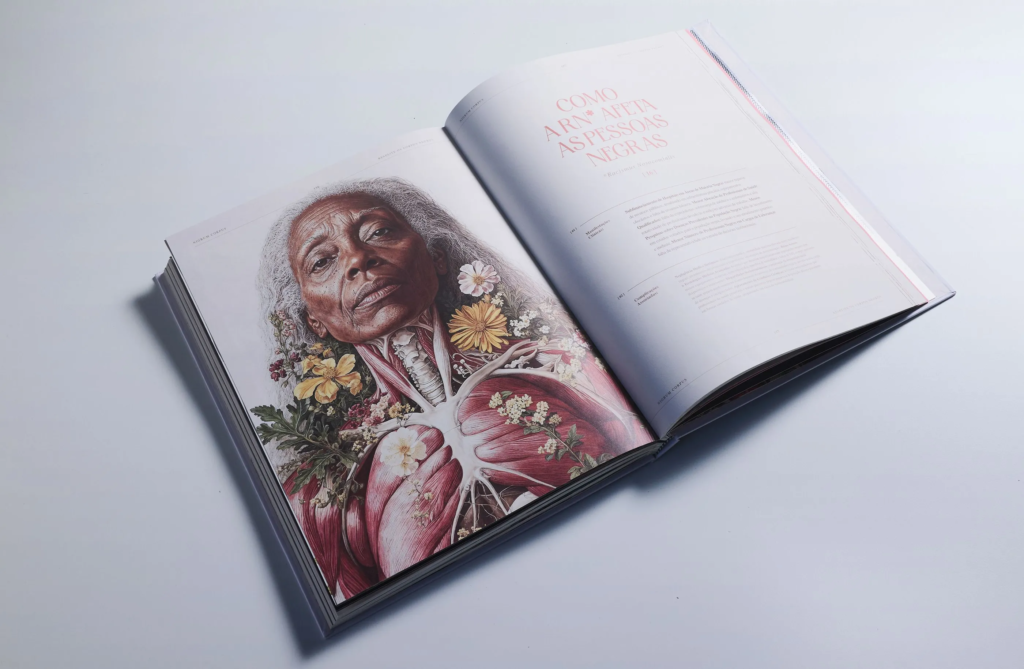
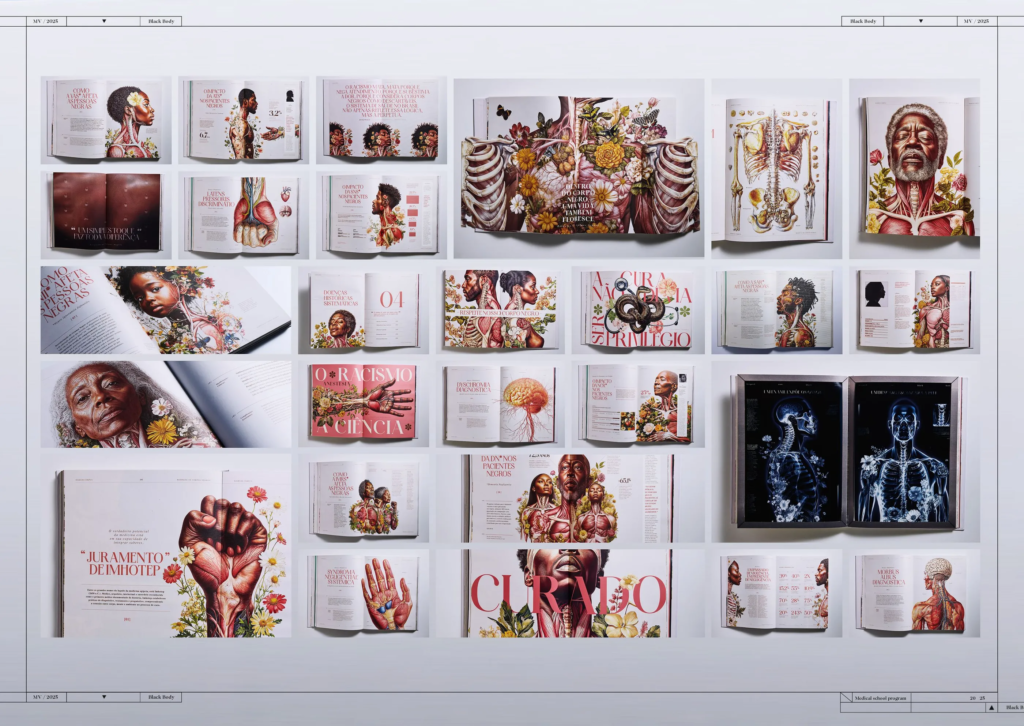
Nigrum Corpus, subtitled A Study on Racism in Brazilian Medicine, gives Latin medical names to patterns of racist treatment. Each of the 20 conditions is paired with testimonies from Black patients who lived through it. The entries cover misdiagnosis, pain that went unacknowledged and obstetric violence. One describes what the creators call clinical blindness, the medical dismissal of Black pain.
The research behind the book took more than 680 hours of testimonies, data and statistics. The book also goes beyond diagnosis. It recommends that medical schools hire more Black professors and train students on racially diverse clinical simulators.
A Textbook Designed Like the Real Thing
The book is modelled on the anatomy manuals medical students receive at graduation and on classical anatomical atlases. It includes clinical files, microscope slides, pages styled like X rays and scientific posters. The art direction combines illustration, editorial layout and 3D modelling, with AI used only to refine images.
The anatomy drawings are scientifically accurate, but they are framed with colour, flowers and butterflies. The decoration sits against the brutality of the testimonies and presents Black bodies with dignity instead of as clinical specimens.
The Patient the Camera Kept Out of Focus
A short film, Corpo Preto, carries the same idea to the screen. Directed by Nany Oliveira, it follows a Black man trying to get a diagnosis while hospital staff treat him with coldness and indifference. He stays blurred throughout the film and only comes into focus at the moment of his death.
The film premiered on April 1, 2025 at Cinema Estação in Rio de Janeiro’s Shopping da Gávea, followed by a panel discussion. Outdoor ads, influencers, lectures and further screenings extended the campaign.
Where the Book Ended Up
The book was sent to medical schools across Brazil. According to the agency’s case study, 17 institutions in 10 states adopted it and more than 9,000 medical students have used it. It was presented to Brazil’s Ministry of Health and added to a World Health Organization resource collection.
In April 2026, the book became a free public exhibition at the Samaritano and Vitória hospitals in Rio’s Barra da Tijuca, aimed at students and health professionals.
How the Juries Responded
At Cannes Lions 2025, the campaign won the Grand Prix in Industry Craft, Gold in Design, and Gold and Bronze in Health & Wellness. A year later, it won the Grand Prix in Glass and the Lion for Change at Cannes Lions 2026. Jury president Monique Nelson’s panel singled out its use in university curricula as the deciding factor. At D&AD 2026, it won 2 Graphite Pencils, in Art Direction and Health & Wellbeing.
The book works because it speaks a language its readers already trust. A medical student who might skim a poster about bias will study a disease.
Campaign Name: Nigrum Corpus
Agency Name: Artplan
Brand Name: IDOMED and Instituto Yduqs (Mediversidade programme)
Location: Brazil (launched April 2025)