Loewe is 178 years old and still routinely mispronounced by the people wearing it. The Spanish luxury house founded in Madrid in 1846 carries a name that looks nothing like it sounds. It is low-ay-vay, or in some phonetic guides, low-er-vay. It is not Lo-ee. It is not Loov. It is emphatically not spelled L-W, which is where Aubrey Plaza starts, in 1971, at the National Spelling Contest, and where things immediately go wrong for the next five decades.
The Film
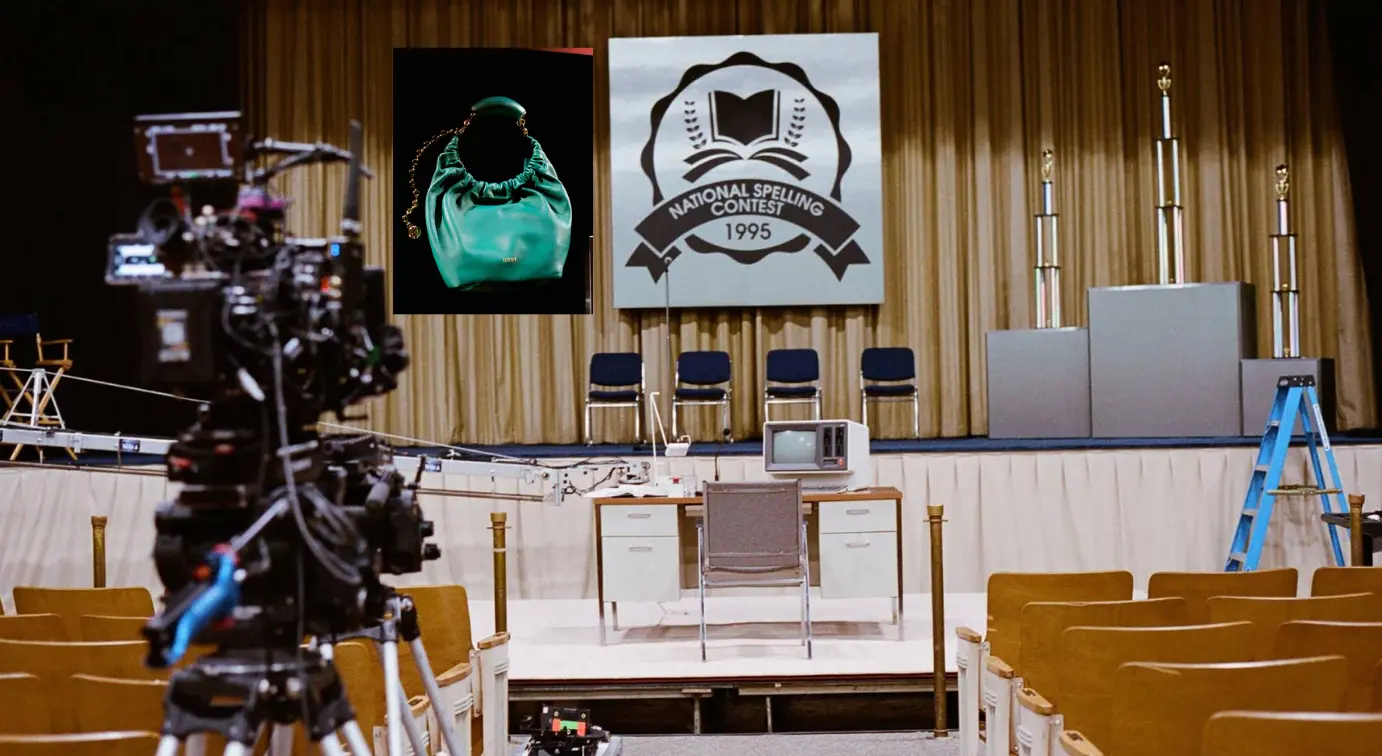
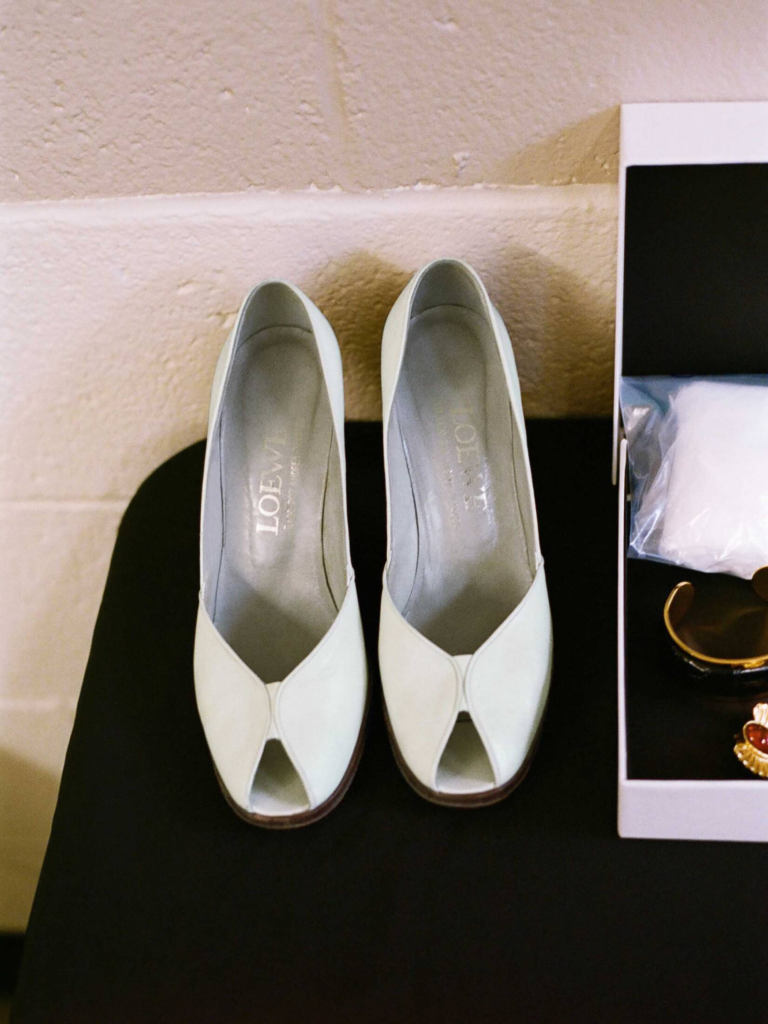
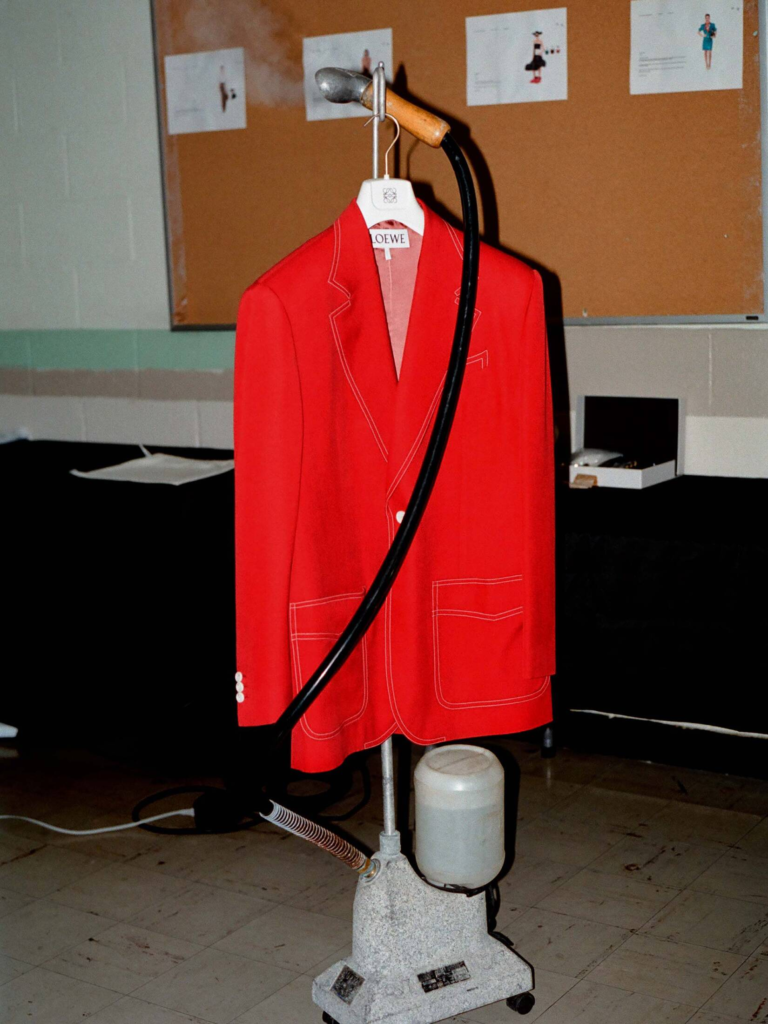
Decades of Confusion launched on March 28, 2024, directed by Ally Pankiw, written by Dan Levy, and produced under the creative direction of Jonathan Anderson. The film is structured as an era-spanning spelling bee in which Levy plays the judge and Plaza plays the contestant, a role she inhabits across multiple decades without ever successfully spelling the word she is being asked to spell.
The film opens in 1971. Plaza appears in oversized lucite glasses, a tie-neck blouse, and a flared midi skirt, her hair styled by Michelle Ceglia into a Farrah Fawcett-inspired wave. Levy, equally period-accurate in his own decade-matched suit, asks her to spell Loewe. Plaza pauses. “Sorry, what?” She asks for a definition. She asks for a glass of water, which she cannot have. She attempts the word. “L… W…” The buzzer sounds.
The film progresses through the decades. 1985: Plaza is now a game show contestant, in a quietly luxurious ensemble, asking Levy if the word is French or Bulgarian, and accusing him of hitting on her. Each decade produces a new character, a new archive Loewe look, a new hairstyle courtesy of Ceglia, and the same fundamental failure. Plaza never spells the name correctly.
The film ends in 2024. Plaza, now visibly exasperated by an entire lifetime of encounters with this specific word, finally hears the correct spelling from Levy. Her response is the film’s closing line: “Are you f**ing kidding me, there’s a W in there?” She walks off the stage in Loewe’s iconic car-shaped dress from the FW22 collection, her exit punctuated by three beeps.
Why It Works
Fashion advertising has a well-established reputation for taking itself very seriously. Loewe under Jonathan Anderson has built its most commercially successful period by doing the opposite. The brand’s campaigns have consistently used wit, surrealism, and self-awareness as the aesthetic register rather than aspiration or exclusivity.
Decades of Confusion is the most direct expression of that register the brand has produced. The joke is the brand name. The brand is the target of the joke. The film does not protect the luxury house’s dignity by keeping the confusion at arm’s length. It makes the confusion the plot, casts two of the most naturally comedic actors available in roles that require genuine comic timing, and lets the archive do the styling work that a conventional fashion campaign would have placed at the centre.
The Impression described the campaign’s tone as “a surprising yet fun change of pace” given that “Loewe’s campaigns tend to be serious, subtle, and surreal,” noting that the film receives “a huge boost thanks to its strong talents” and gives archive pieces “new old life.”
Fast Company noted that the ad debuted on YouTube with more than a million views, while behind-the-scenes clips shared on TikTok amassed more than 10 million views, identifying the campaign as an example of Loewe’s “effortlessly cool, in-on-the-joke brand voice.”
The Talent
Dan Levy wrote the script, which means the film’s comedic precision reflects a writer who understood the material and cast himself in the role that would best serve Plaza’s performance. Levy as the straight-faced, slightly hapless moderator who cannot help Aubrey Plaza and the rules will not allow him to is the correct version of this film. Plaza as the returning contestant, across five decades, growing progressively more frustrated with a word she genuinely cannot spell despite her obvious intelligence and increasingly impeccable Loewe archive styling, is the character the film needed.
Aubrey Plaza is half Puerto Rican and a Spanish speaker, which the film’s writers were aware of when casting her as the person who cannot spell a Spanish name. The irony is deployed carefully enough to function as an in-joke for audiences who know Plaza’s background rather than as the film’s central premise.
The archive selections, supervised by the Loewe team under Anderson’s creative direction, are as considered as the casting. Each decade’s look is a piece of genuine Loewe history shown in a context that makes it look extraordinary without requiring the viewer to know what they are looking at. Stylist Harry Lambert and hair and makeup teams for both leads completed the period execution.
The Broader Context
Fashion Times noted that “spelling-bee-inspired marketing is having its moment in fashion,” with SSENSE releasing a similar campaign the same week that played with difficult-to-spell designer names. The proximity of the two campaigns confirms that the cultural appetite for fashion brands engaging with their own opacity was real and Loewe was not the only house that recognised it.
What distinguishes Loewe’s execution from a trend participation is the scale of the commitment. A brand that writes a film, casts two major talents, spans five decades, costumes the entire production from its own archive, and ends with its protagonist walking away in a car dress has invested in the joke rather than gesturing toward it.
Campaign Name: Decades of Confusion
Agency Name: Partizan / Creative Direction: Jonathan Anderson / Director: Ally Pankiw / Writer: Dan Levy / Photographer: Hedi Stanton / Hair: Michelle Ceglia
Brand Name: Loewe
Location: Spain (global digital distribution; launched March 28, 2024)