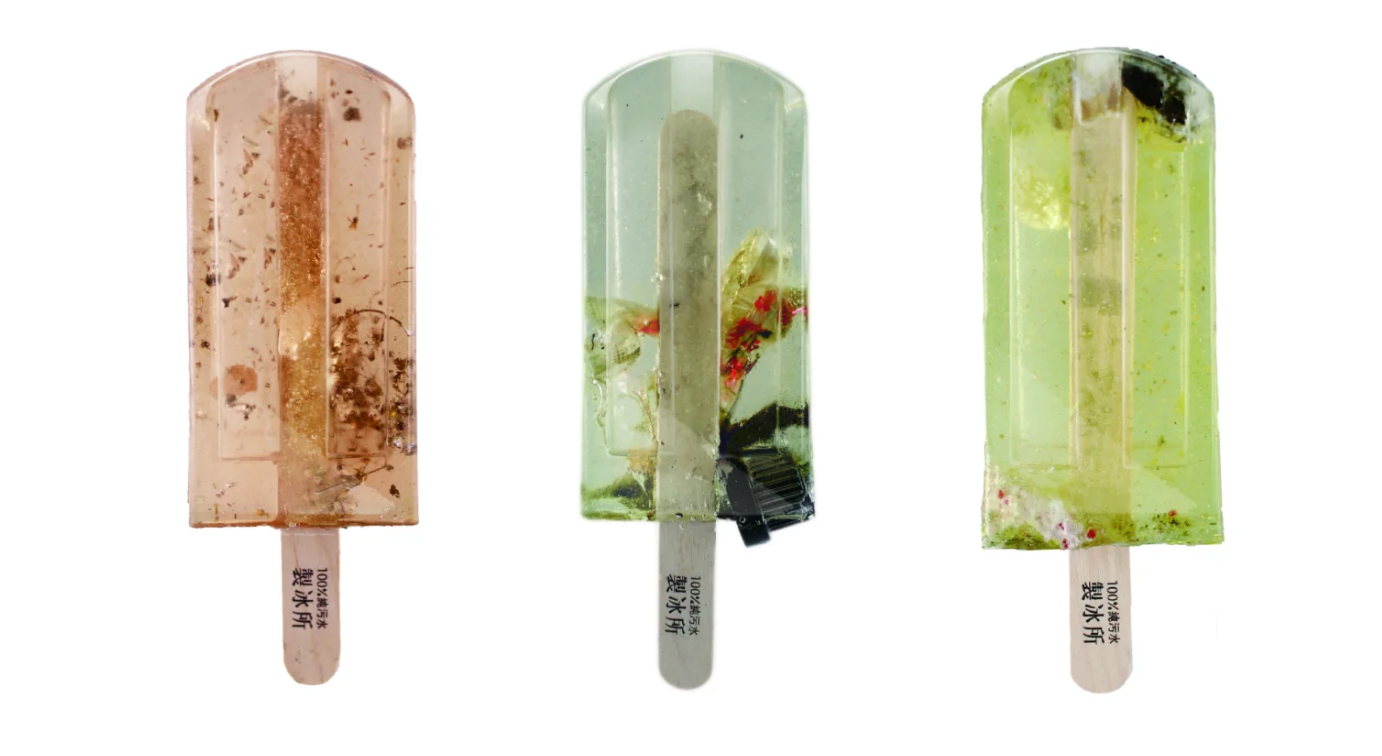
A popsicle is one of the most universally desirable objects in the human visual vocabulary. Colourful, translucent, inviting, shaped for the hand and the mouth. Three students from the National Taiwan University of the Arts understood that desirability precisely, which is why they chose it as the container for something nobody would ever want to consume. In 2017, Hung I-chen, Guo Yi-hui, and Zheng Yu-di collected water from 100 polluted locations across Taiwan, froze each sample in a popsicle mould, and let the contents speak for themselves.
The Project
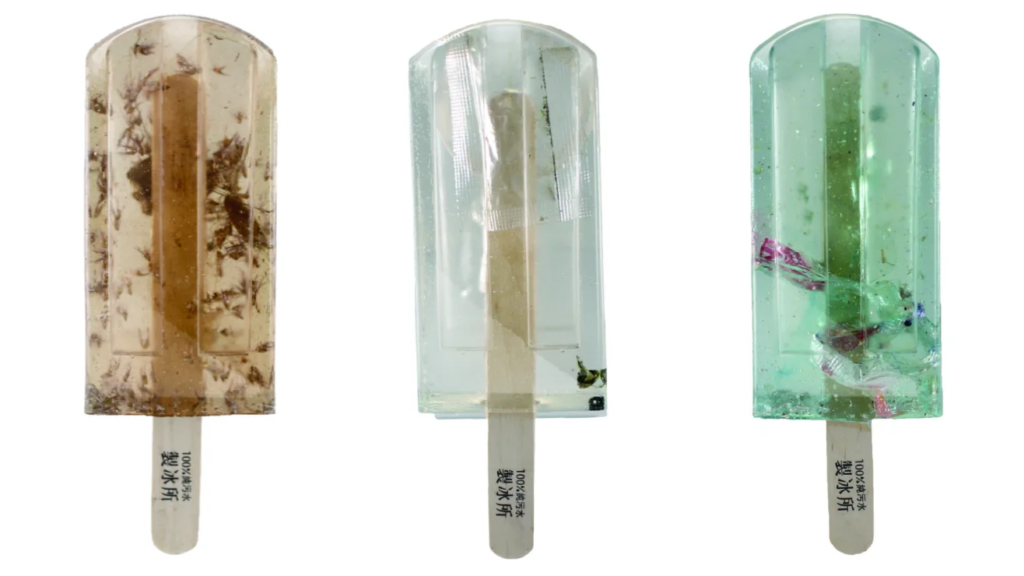
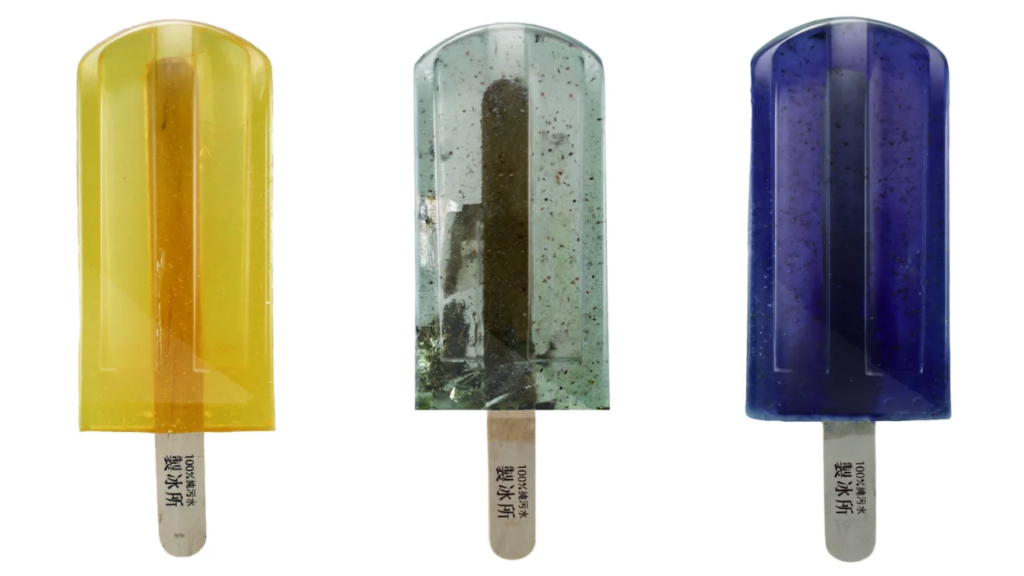
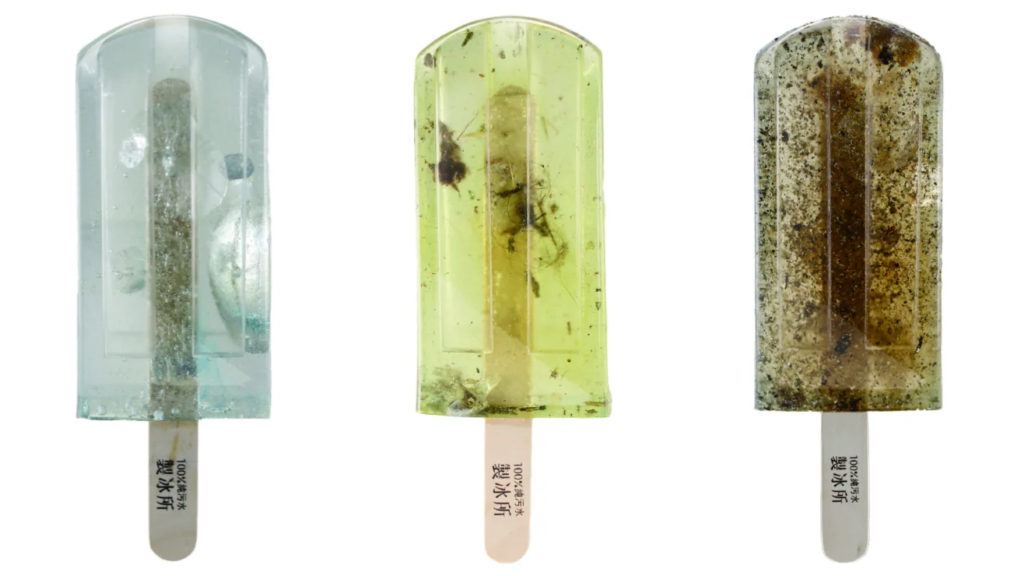
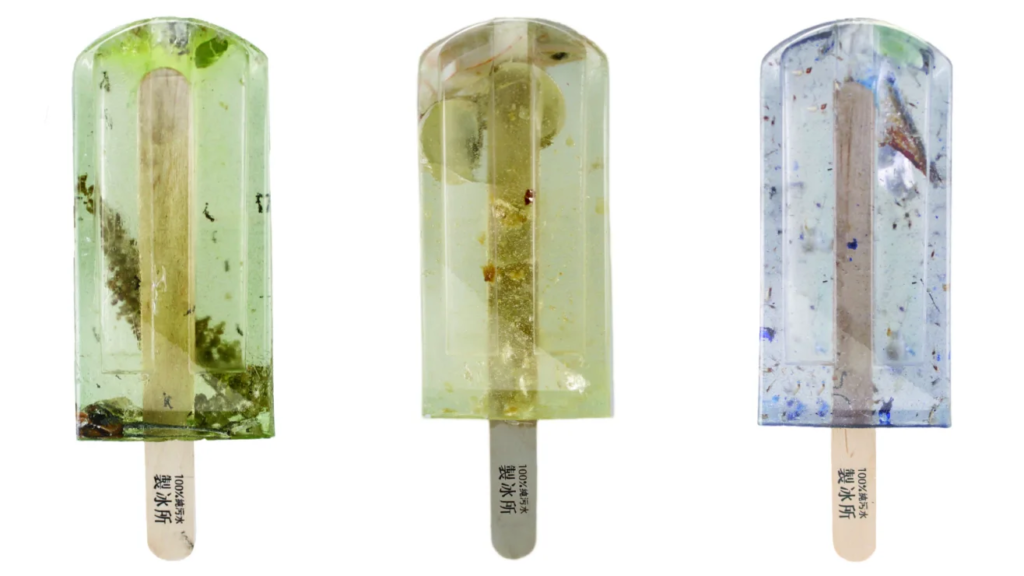
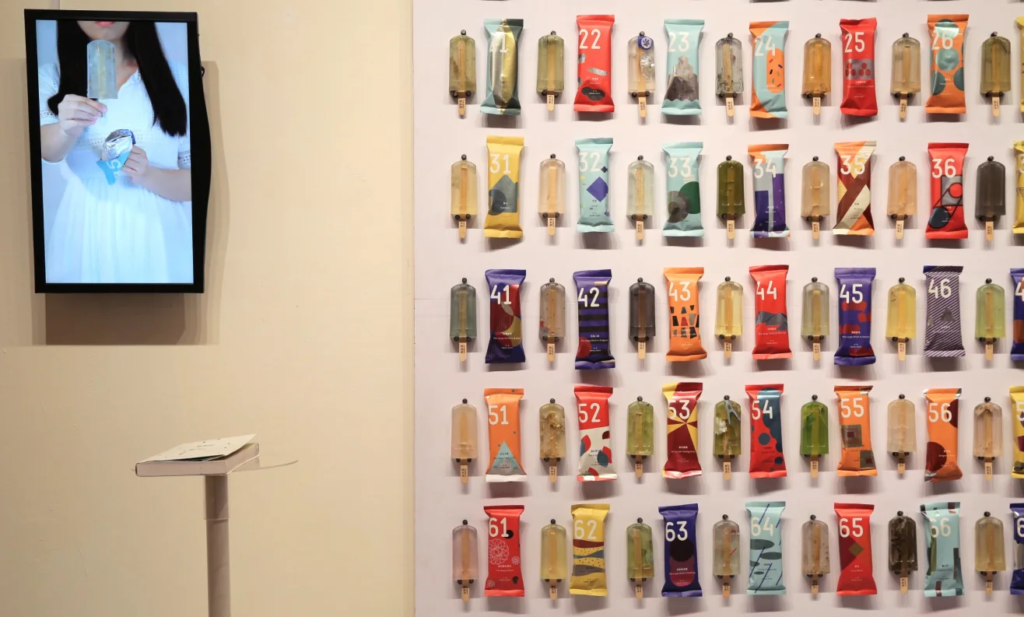
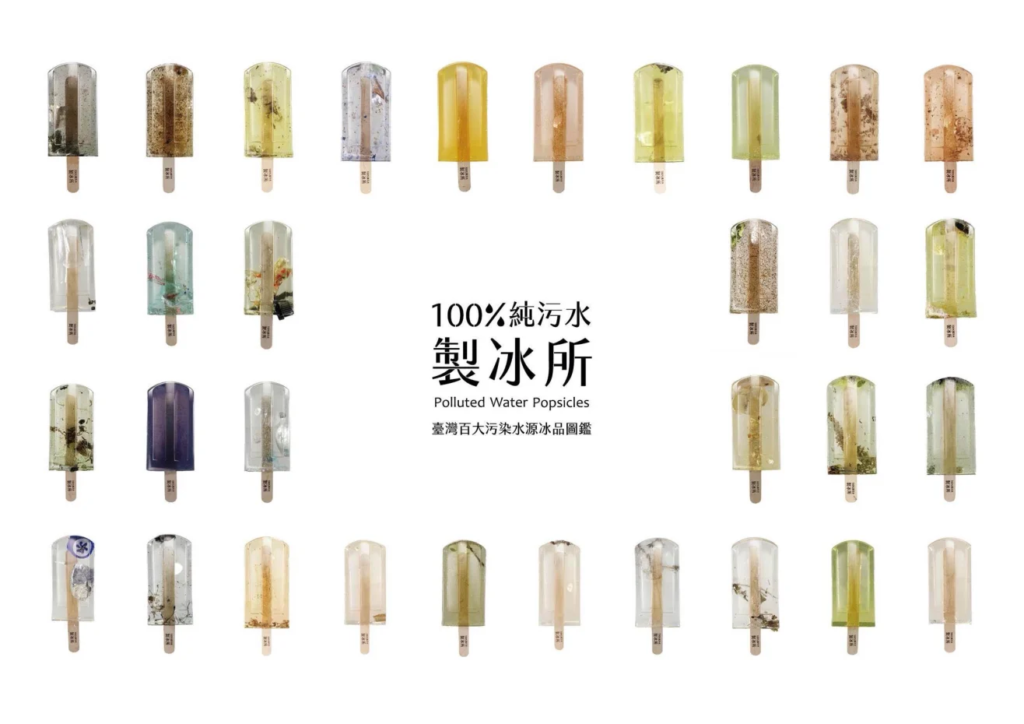
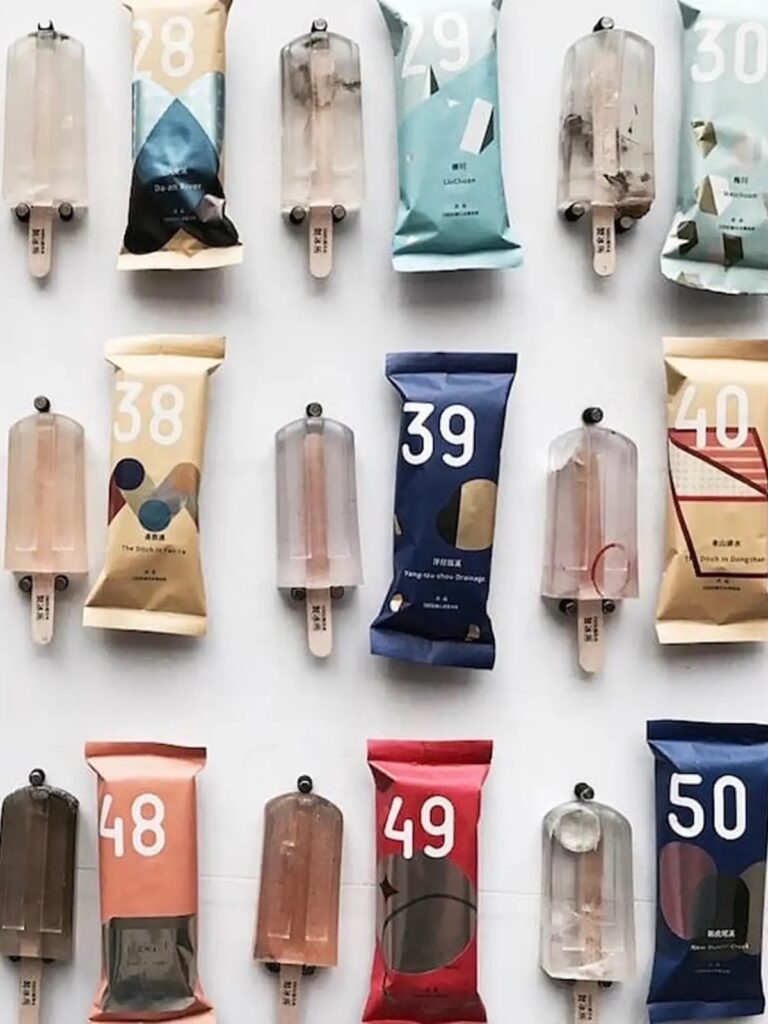
The water came from rivers, ports, ditches, beaches, and industrial waterways across Taiwan. Each of the 100 locations produced a unique sample. The colours varied: industrial dye turned some samples vivid orange or blue-green, resembling fruit flavours. The contents varied further. Plastic fragments. Cigarette butts. Bottle caps. Dead fish. Nets. Insects. Oil residue. Packaging wrappers. Approximately 90% of the solid waste visible in each popsicle was plastic.
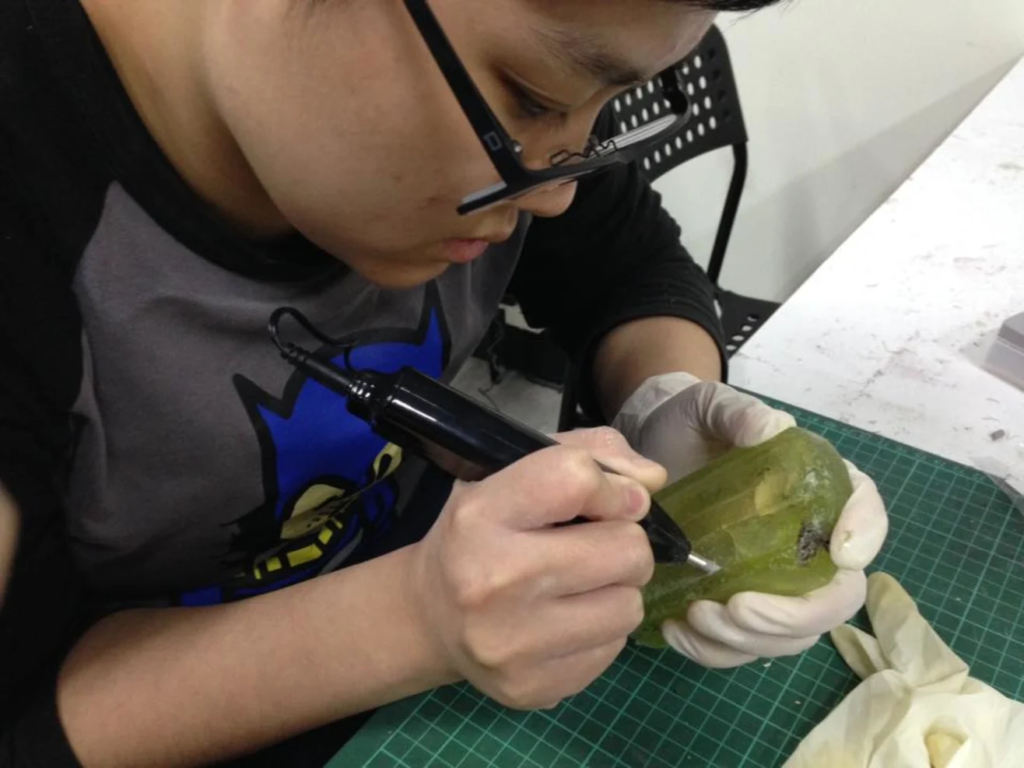
The students first froze the actual water samples, then created permanent replicas of each one using polyester resin, allowing the popsicles to be handled, exhibited, and photographed without melting. The resin preserved not only the visual content of each sample but the colour and density of the water itself, so that each popsicle remained a faithful document of exactly what had been collected.
Guo Yi-hui described the project’s founding observation: “We hoped to use the contrast and conflict between the pretty popsicle wrapper and the polluted water inside to let the society understand the importance of clean water resources.”
Hong Yi-chen added the dimension that made the project a cultural statement rather than simply a science experiment: “Through observation, we found that people did not attach great importance to water resources around them but often ignored them.”
The Packaging
The popsicles were not presented as specimens or laboratory samples. The students designed 100 individual consumer-style wrappers, one for each water source, each one listing the location’s contents as though they were ingredients in a product sold at a convenience store. The wrapper format borrowed directly from the aesthetic vocabulary of artisanal food packaging, clean typography, bright colours, a name and a description, applied to something that would cause immediate illness if consumed.
That decision is the project’s most precise creative move. A photograph of polluted river water is a document. A popsicle with a cheerful wrapper listing its ingredients as plastic wrappers, cigarette butts, and industrial dye is an experience that bypasses the viewer’s intellectual defences before they have decided whether to engage.
The popsicles were ranked from dirtiest to cleanest. The worst-ranked sample, the popsicle that contained the most concentrated pollution, came from Keelung Harbor.
The Response in 2017
The Polluted Water Popsicles project was exhibited at the New Generation of Design Exhibition at Taipei World Trade Center in May 2017 and nominated for the Young Pin Design Award. When images from the project began circulating online in June 2017, they spread globally within days. CNN, The Guardian, Design Indaba, Colossal, IGNANT, and dozens of international publications covered the project. The images required almost no editorial framing: a photograph of a child holding a colourful popsicle that, on closer inspection, contained a dead insect and a cigarette butt was a complete argument without a caption.
The project’s viral spread confirmed what the students had designed for: the visual trick, the moment when a desirable object resolves into something disturbing, was reproducible at scale across every screen it appeared on.
The Vogue Taiwan Continuation: Heat Wave
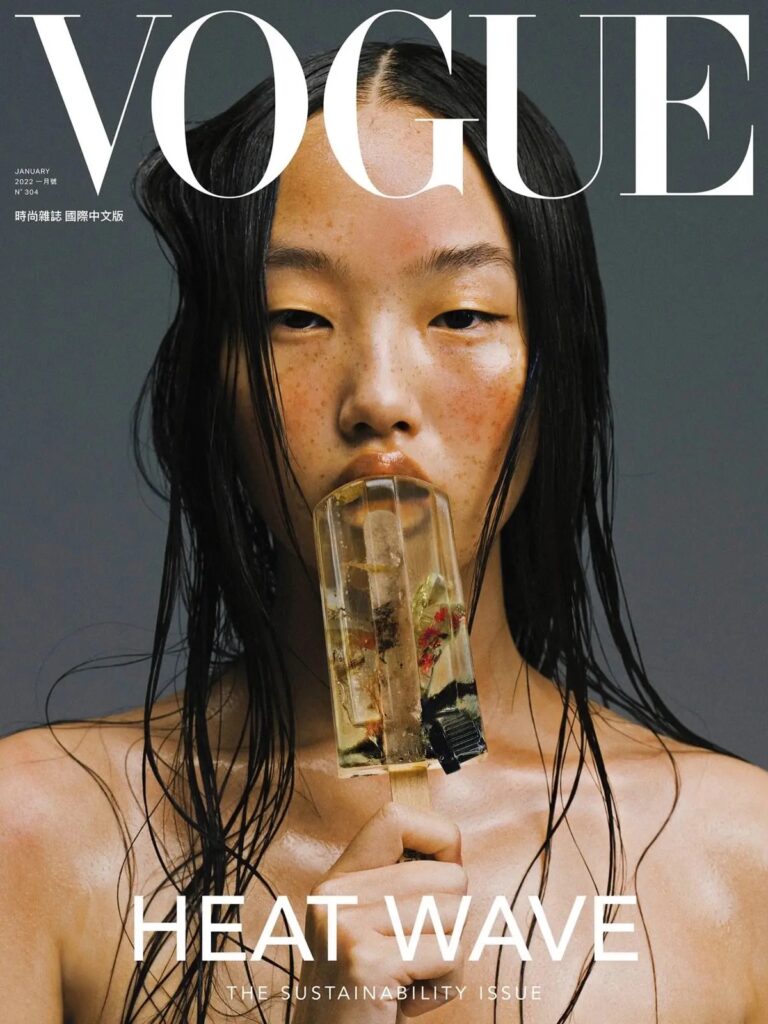
Eight years after the original project, Vogue Taiwan’s Heat Wave editorial brought the Polluted Water Popsicles back into the cultural conversation through a different register: fashion photography. The editorial featured model Peng Chang holding samples from the original project, photographed against a surreal ecological landscape that placed the contaminated ice directly in the context of the body consuming it.
Fashion photography and environmental documentation are not natural partners. The combination in the Heat Wave editorial produced something that neither discipline could have produced alone. The fashion context, the model, the styling, the art direction, gave the pollution visual language that could reach an audience the original design project had not. The environmental content gave the fashion imagery weight and purpose that elevated it beyond aesthetics.
Together, the two projects span a decade and two entirely different creative disciplines, connected by the same physical objects and the same argument: what is in Taiwan’s water is also in what Taiwan touches, wears, breathes, and consumes.
Why the Format Endures
The Polluted Water Popsicles work as a creative project because they use the mechanics of consumer desire against the logic of consumer pollution. The objects that contain the pollution are indistinguishable, at first glance, from the objects people reach for on a hot day. The wrapper that lists the ingredients uses the visual language of the products whose packaging produced many of those ingredients. The popsicle that looks most like something you might want to eat may be the one made from the water closest to where it was manufactured.
The project does not argue that Taiwan has a pollution problem. It shows you what the problem looks like when it is shaped like something you want.
Campaign Name: Polluted Water Popsicles / 100% Polluted Water Popsicles
Agency Name: Not applicable (student graduation project)
Brand Name: Not applicable
Location: Taiwan (100 water sources across rivers, ports, beaches, and industrial waterways; exhibited at Taipei World Trade Center, May 2017)