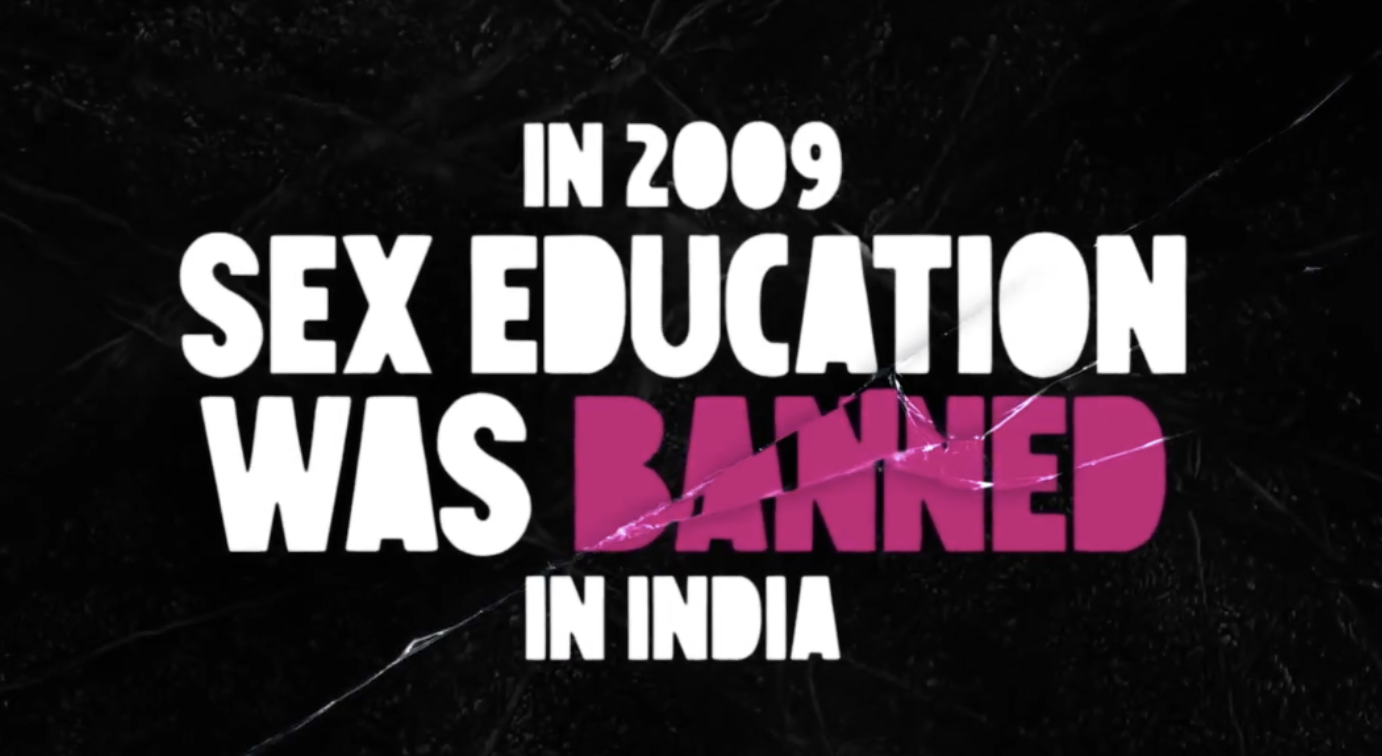
India does not have a national sex education curriculum. What it has is Bollywood, and Bollywood has spent decades teaching a specific, deeply embedded lesson about consent: that a woman’s rejection is not the end of the story but the beginning of it. The hero who persists despite a “no” is romantic. The one who accepts it is weak. Generations of Indian schoolchildren have absorbed that lesson from the films their families watched, and the consequences have been documented in NCRB crime statistics year after year. Durex and VML decided that if popular culture created the problem, popular culture had to fix it.
The Problem Bollywood Built
In a significant share of classic Bollywood narratives, a woman’s refusal functions as a challenge rather than a conclusion. Young men internalise the idea that persistent pursuit will eventually convert rejection into enthusiasm. That cultural conditioning does not stay in the cinema. It moves into schools, where eve-teasing and molestation were documented as rising problems with no formal educational framework to counteract them.
The standard institutional response to gaps in sex education is a textbook addition or a classroom lecture. VML’s brief was to address a problem built by entertainment, which meant the solution could not arrive in a format that students would dismiss as dry, clinical, or adult-facing. It had to speak the exact language the youth were already consuming.
The Curriculum
In partnership with India’s National Curriculum Framework and the Government of India, Durex and VML created India’s first all-age, all-gender consent curriculum. The distinction from previous attempts is structural. This was not an NGO workshop or a one-off awareness campaign. It was a formal educational programme embedded into the school system and delivered through formats chosen specifically for their relevance to a generation raised on digital content.
Comic books and cartoons translated complex social interactions into visual, relatable scenarios accessible to younger students. Audio podcasts gave teenagers an intimate, private format to hear and reflect on boundaries without the social awkwardness of a classroom discussion. School murals transformed corridors into daily, passive reminders of mutual respect. The anchor piece of the curriculum’s content was a Bollywood-style music video, built in the exact format that had been normalising coercive behaviour for decades, now used to celebrate enthusiastic agreement and the Language of Yes instead.
The decision to fight popular culture with its own tools rather than with clinical correction is the campaign’s most precise creative choice. A consent lecture delivered by a teacher in a classroom competes with decades of cinematic conditioning. A consent lesson delivered in a Bollywood music video speaks to students in the format their conditioning came from.
The Scale
The curriculum reached over four million students across 13,000 schools nationally. The implementation was grassroots and sustained rather than one-off, giving each school community consistent exposure to the material rather than a single session.
The Results
Participating schools saw a 47.5% drop in molestation cases and an 18.9% decline in eve-teasing according to NCRB reporting data. Changing national crime statistics through an advertising campaign is not a benchmark that most campaigns are held to. Durex built something that was held to exactly that benchmark and met it.
The scale of the outcome reflects what the campaign identified correctly at the brief stage: the problem was not awareness. Most young people in India are aware that harassment is wrong. The problem was a cultural framework that had consistently modelled the opposite. Replacing that framework required a curriculum built in the same cultural format that had created it, distributed at the scale of the Indian school system, and sustained long enough to produce measurable behavioural change.
Why It Matters Beyond Advertising
The Consent Curriculum is the most consequential example in this region of a commercial brand taking its product category’s cultural responsibility seriously enough to build infrastructure around it. Durex sells contraceptives and intimate care products. Its commercial interest in a society where consent is understood and respected is not abstract. But the curriculum goes significantly further than commercial interest. It partnered with the Government of India’s own curriculum framework, reached four million students, and changed crime statistics in participating schools.
Most brands talk about purpose. Few produce documentation from national crime databases to substantiate it.
Campaign Name: Consent Curriculum
Agency Name: VML / Production partners: National Curriculum Framework (NCF), Government of India
Brand Name: Durex (Reckitt)
Location: India (national rollout across 13,000 schools)