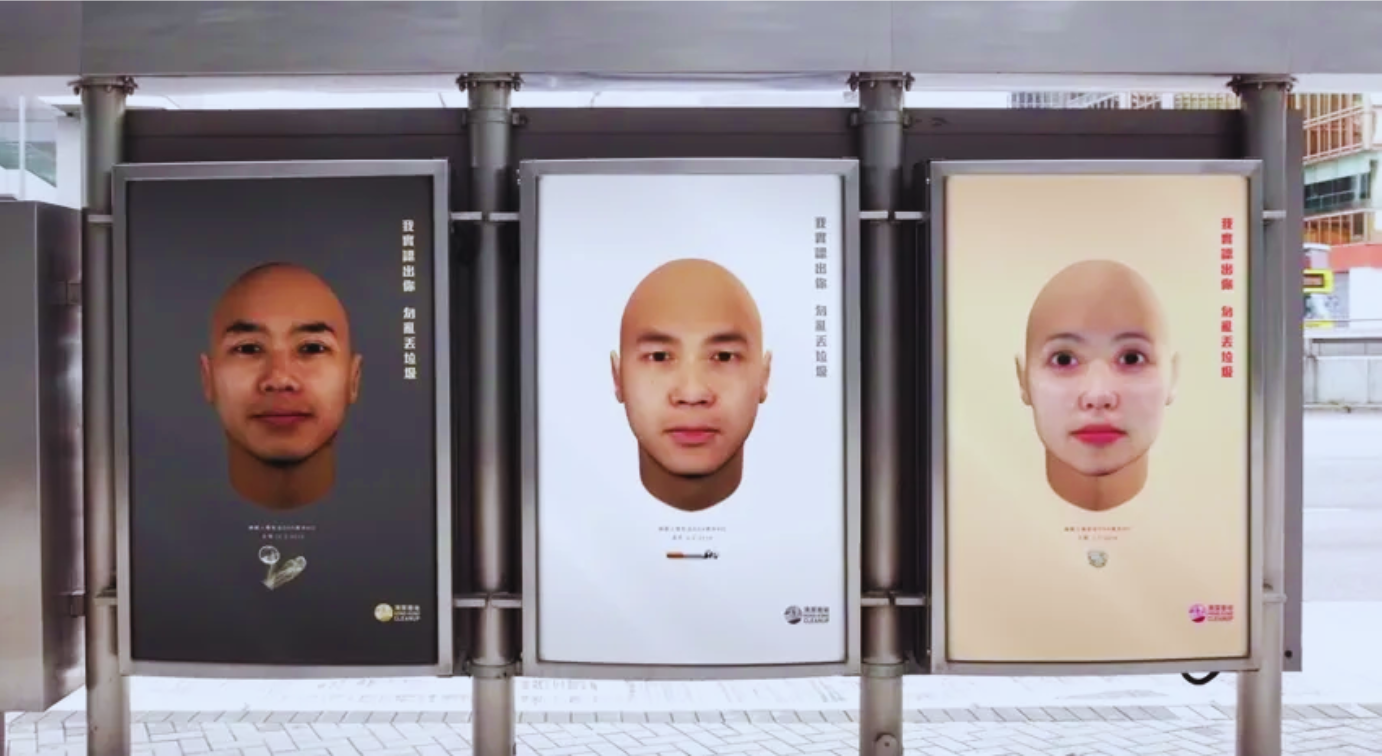
Hong Kong gave its litter a face. A campaign used DNA from discarded trash to create digital portraits of the people who may have dropped it. Those faces then went up on posters and billboards across the city and online.

How a Cigarette Butt Became a Portrait
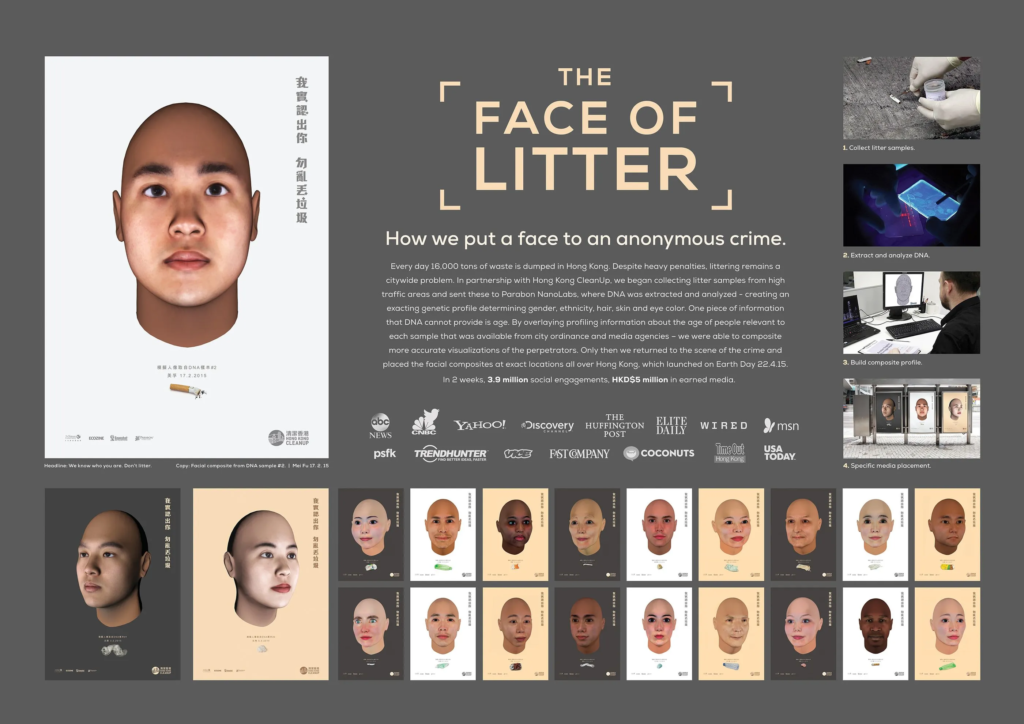
The team collected litter from local streets, including chewing gum, cigarette butts and even a condom. It extracted DNA from the samples and sent it to Parabon NanoLabs, a company in Virginia that had developed a way to build digital portraits from tiny traces of DNA.
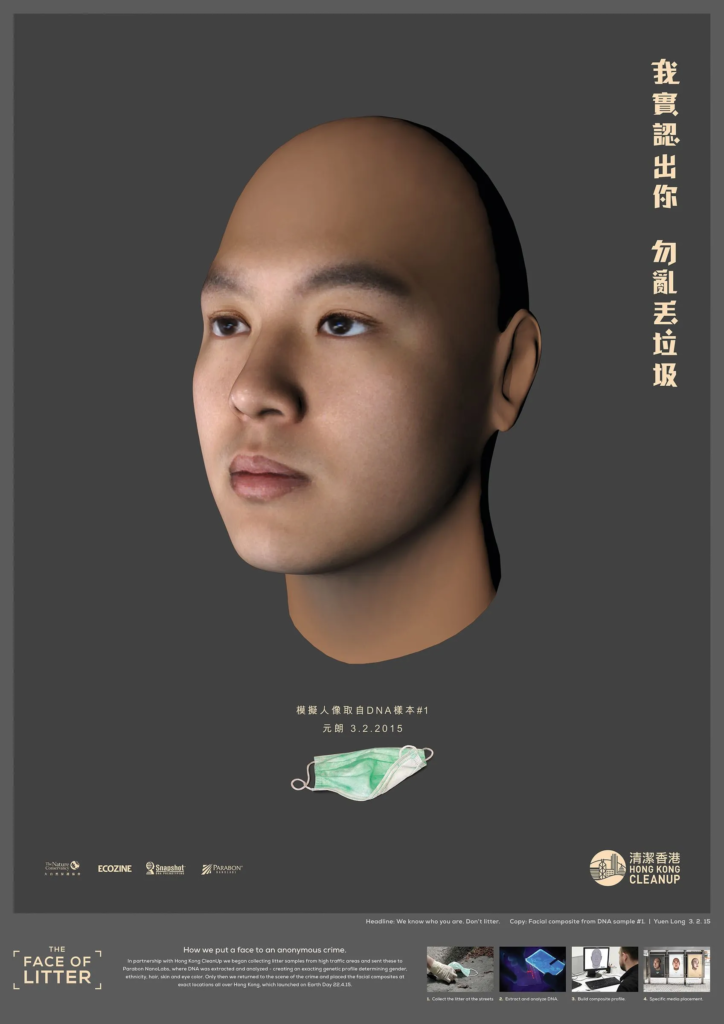
Parabon’s SnapShot system read tens of thousands of genetic variants in each sample to predict ethnicity, eye, hair and skin colour, freckling and face shape. DNA cannot reveal age, so the team estimated it from demographic patterns tied to the type of litter and where it was found. The process produced 27 composites in all, from 24 litter samples and 3 control samples donated by volunteers.
Where the Faces Appeared
The campaign launched on Global Earth Day, April 22, 2015. The portraits ran as “wanted posters” and digital banners in busy areas, including 10 MTR stations and the spots where the litter had been found. Paid social posts and an educational video supported the outdoor work.
The posters borrowed the look of a police appeal. Each face asked passersby to consider whether a stranger could build their portrait from something they had just dropped on the pavement.
Why the Campaign Called Littering a Crime
Hong Kong was dumping 16,000 tons of waste every day, and littering remained a citywide problem despite heavy penalties. The campaign set out to remind people that littering is a real crime. It borrowed DNA phenotyping, a method researchers had developed to identify criminal suspects from small samples of hair or saliva.
Reed Collins, chief creative officer of Ogilvy & Mather Group Hong Kong, said the work could “put a face to this anonymous crime.”
The organisers were careful about what the faces meant. They said the aim was never to single out individuals, and they acknowledged that DNA alone gives only a probable likeness. The images were predicted composites, not photos or identifications of real people. Lisa Christensen, cofounder and CEO of Hong Kong Cleanup, said the campaign was meant to provoke a conversation that leads to positive social change.
How Far the Faces Travelled
The video and posts reached just under 4 million social media users and were shared in Southeast Asia, the US and Brazil. PBS NewsHour covered the story, and WIRED described the posters as high-tech wanted signs built to shame litterbugs.
The idea also drew scrutiny. Privacy International lists the campaign as an example of DNA being used to publicly shame people.
The work was entered at Cannes Lions in 2015 in the Titanium and Innovation categories.
The Group Behind the Cleanup
The client was the Hong Kong CleanUp Initiative, organised by Ecozine and The Nature Conservancy. The year before, the NGO had rallied 418 teams for a six-week challenge that collected 3,894 tonnes of litter.
The campaign never caught a single litterbug. It was built to make every passerby wonder whether their own discarded gum could end up on the next poster.
Campaign Name: The Face of Litter
Agency Name: Ogilvy & Mather Group Hong Kong
Brand Name: Hong Kong CleanUp Initiative (Ecozine and The Nature Conservancy)
Location: Hong Kong