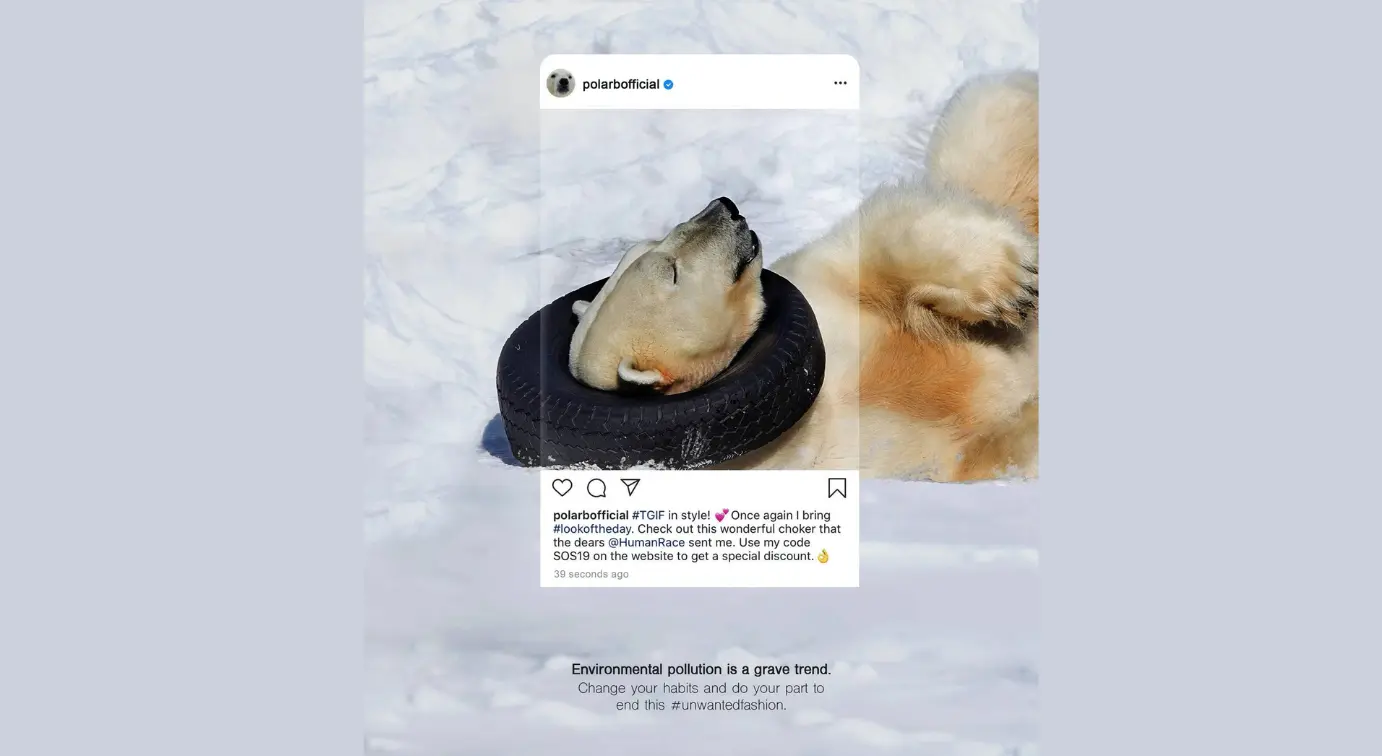
Mozambique Fashion Week dressed marine animals in accessories made from ocean trash and presented them online as fashion influencers. At the event itself, models walked a catwalk built from 250,000 plastic bottle caps. The campaign is called “Unwanted Fashion,” and every piece of it was made from the waste washing up on the country’s beaches.
The Problem on the Beaches
The campaign starts from a hard number. More than 100,000 marine animals die each year from trash dumped into the world’s oceans.
In Mozambique, the problem is close to home. The country lacks a sustainable recycling system, and littering along its coastline is common, especially on beaches during the holiday season. Mozambique Fashion Week launched the campaign around December 4, World Wildlife Conservation Day, just as the holiday crowds were about to arrive.
Sea Creatures With a New Look
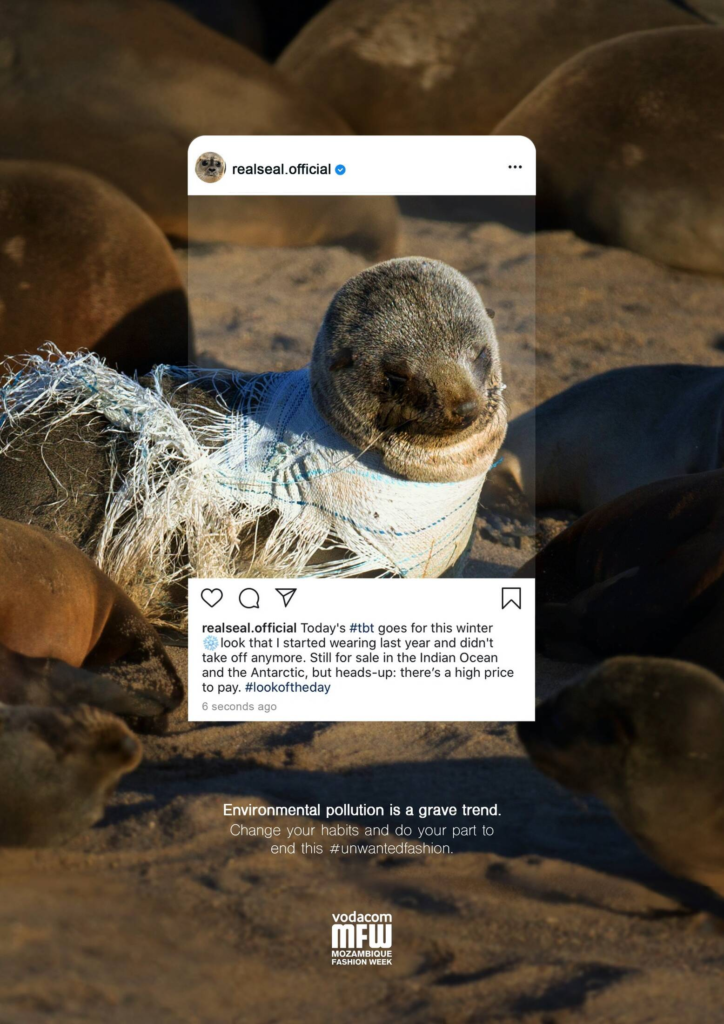
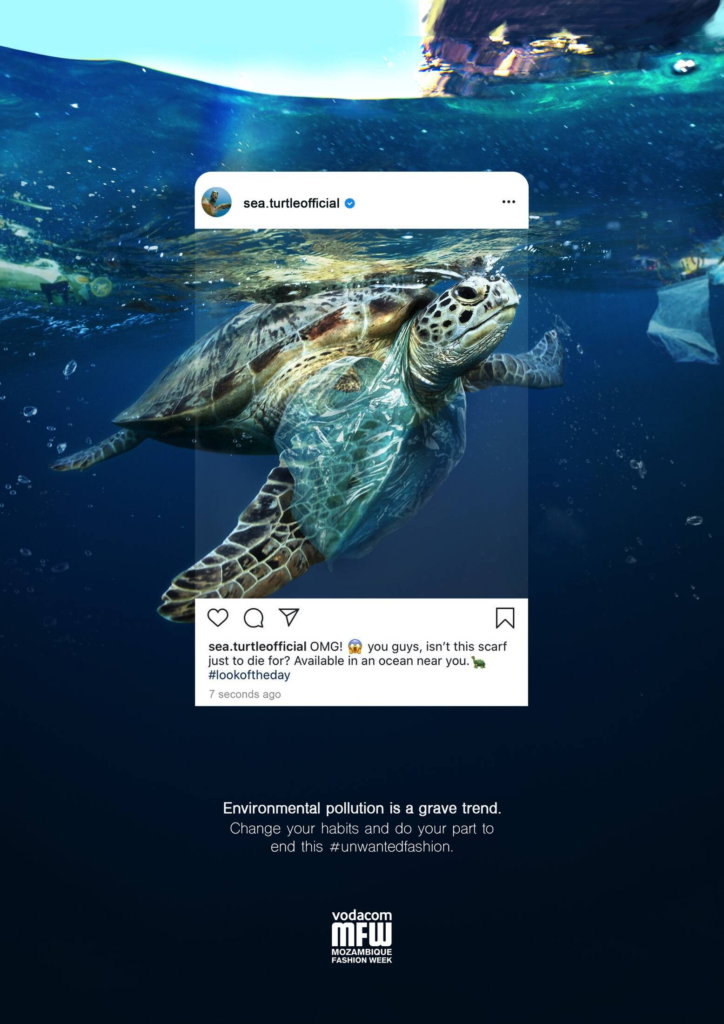
Online, the campaign turned marine animals into digital influencers. Each one wore accessories made from ocean trash, styled the way fashion brands style their models.
The name carries the idea. The accessories are “unwanted fashion” in two ways. Nobody would choose to wear them, and the animals never asked to. The influencer format borrows the look of fashion’s own feeds, so the audience recognises the style first and the plastic second.
The same images ran as a 3 part print series, carrying the message beyond social media.
A Catwalk Made of Bottle Caps
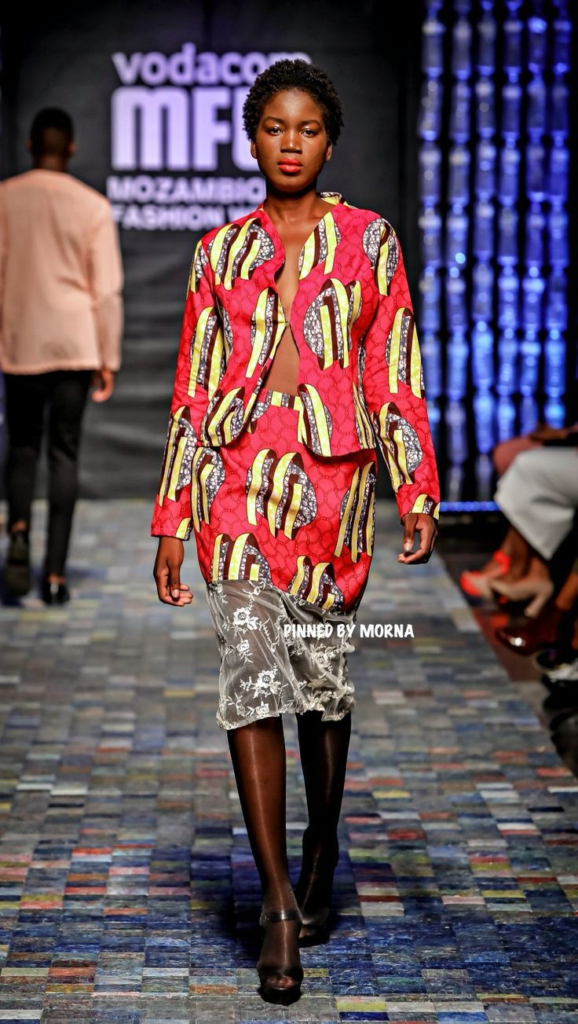
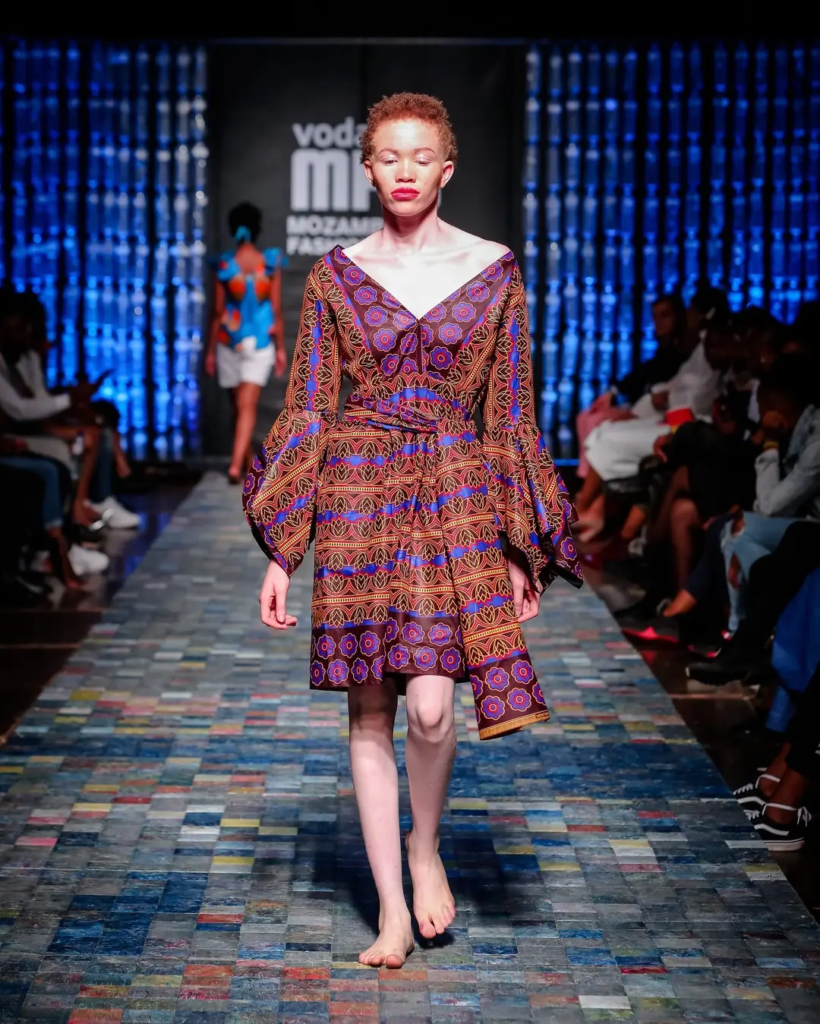
The offline show made the point physical. The entire catwalk was built from 5,000 tiles made from 250,000 plastic bottle caps. Every model on the runway walked on recycled waste, and every guest watching the show was looking at it.
A runway is where a fashion week puts its most important material on display. Building it from discarded plastic put the trash problem at the centre of the event rather than at its edges.
Sculptures Lit by the Sun
Around the venue, the campaign added more pieces made from recycled materials. Sculptures of marine animals and a 6 metre tree were built from salvaged plastic and lit using solar panel energy.
Across the catwalk, the sculptures and the tree, the campaign used more than 1 ton of plastic. Each object showed visitors how much waste ends up on the coast, at a scale they could walk around.
Why a Fashion Week Took It On
A fashion week draws attention to what people wear and what they buy. Mozambique Fashion Week used that attention to show something people throw away. The event’s own stage, guests and media coverage carried the message, so the campaign did not need a separate platform to be seen.
The Team Behind It
DDB Mozambique in Maputo created the campaign for Vodacom Mozambique Fashion Week. The team included CEO Vasco Rocha, COO Cristiana Oliveira, creative directors Christiano Vendramine and Albachir Muinde, creative supervisor Ivo Alves, art director João Lucas Roque, copywriter Gonzaga Neto and digital retoucher Curgy Junior.
At most fashion weeks, the runway shows what people want to wear. In Mozambique, it showed what the ocean is forced to wear.
Campaign Name: Unwanted Fashion
Agency Name: DDB Mozambique (Maputo)
Brand Name: Vodacom Mozambique Fashion Week
Location: Mozambique