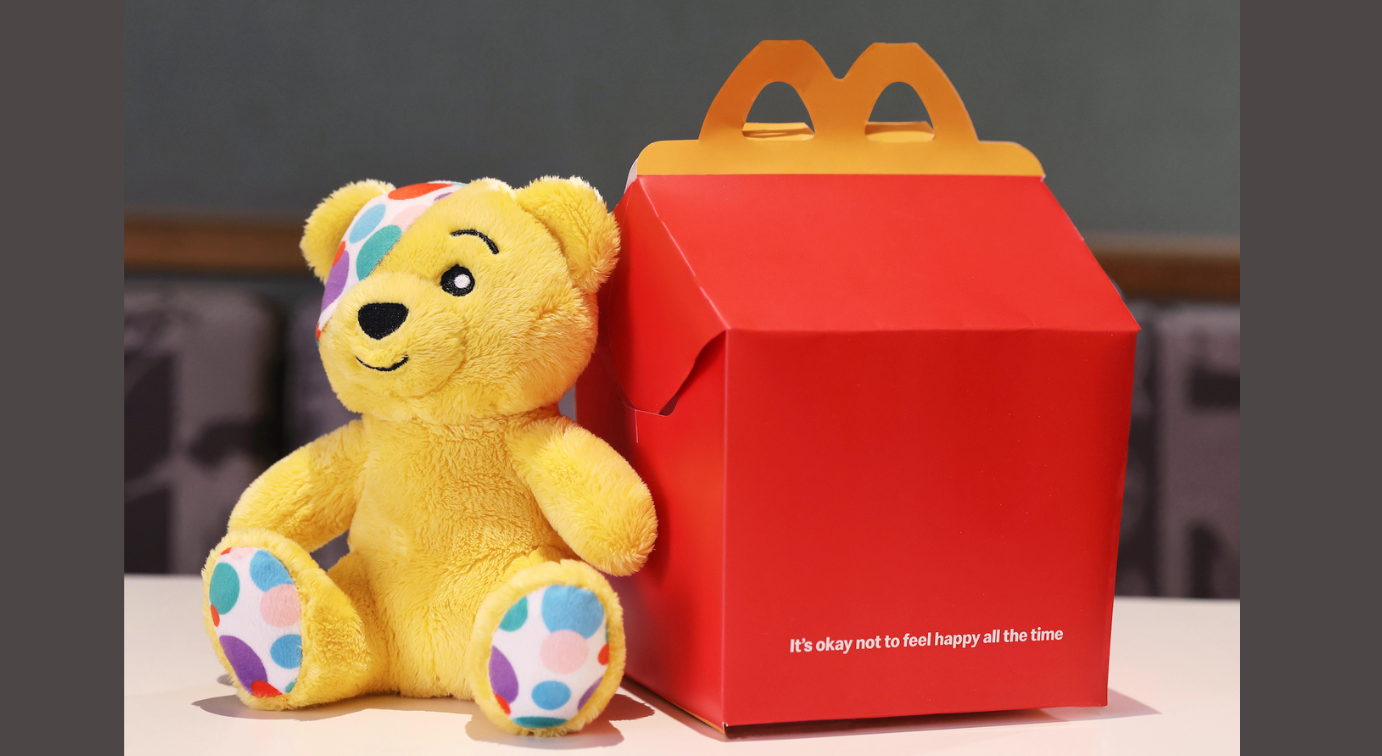
The Happy Meal has had the same face for decades. The wide yellow smile on the side of the box is one of the most recognisable pieces of branded packaging in the world, appearing on 2.5 billion boxes every year across every McDonald’s market globally. In May 2024, for Mental Health Awareness Week, McDonald’s UK and Leo Burnett removed it entirely. The box became blank where the smile had been. The product was renamed The Meal. The Happy was gone.
The Research That Built the Brief
The campaign was built on a study commissioned by McDonald’s and conducted by children’s insight agency Beano Brain, which surveyed UK children between April 5 and 9, 2024. The finding that produced the campaign was precise and uncomfortable: 48% of UK children feel as though they must be happy all the time, even when they do not want to be.
That statistic is the campaign’s entire creative brief in one line. A product called the Happy Meal, carrying a permanent smile on its packaging, distributed to children who already feel pressure to perform happiness regardless of what they actually feel, was, without anyone intending it, reinforcing exactly the expectation it should have been challenging. The smile on the box was telling every child who received one that happiness was the default, the expected condition, the standard the meal came with.
Leo Burnett UK and Ready10 identified that the most powerful way to communicate that it is okay not to be happy all the time was to remove the signal of mandatory happiness from the most iconic children’s food packaging in the country.
The Execution
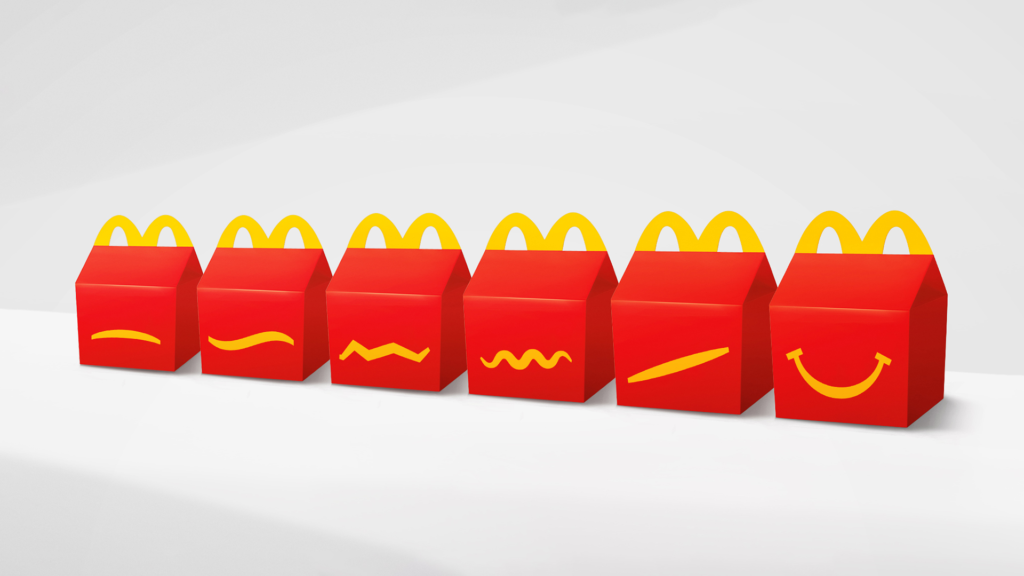
2.5 million Happy Meal boxes were distributed across more than 1,400 McDonald’s restaurants in the UK during Mental Health Awareness Week, May 13 to 19, 2024. Every box had the smile removed. The product was renamed The Meal for the duration of the campaign.
Selected restaurants also distributed emotion sticker sets alongside the boxes, allowing children to replace the blank space where the smile had been with whatever emotion they actually felt. Angry, sad, scared, surprised, confused: any of the stickers could go where the smile used to be. The box became a conversation starter rather than a statement of required mood.
A QR code on the limited-edition packaging connected families to a dedicated hub of mental health resources developed in partnership with BBC Children in Need, providing parents with tools to start conversations about emotions and emotional wellbeing with their children. The hub was also accessible through McDonald’s website and social channels.
A short film, directed by Jake Mavity through Rogue Films, showed children reacting to the new box and sharing the range of emotions they actually felt, rather than the one the packaging had previously assumed for them.
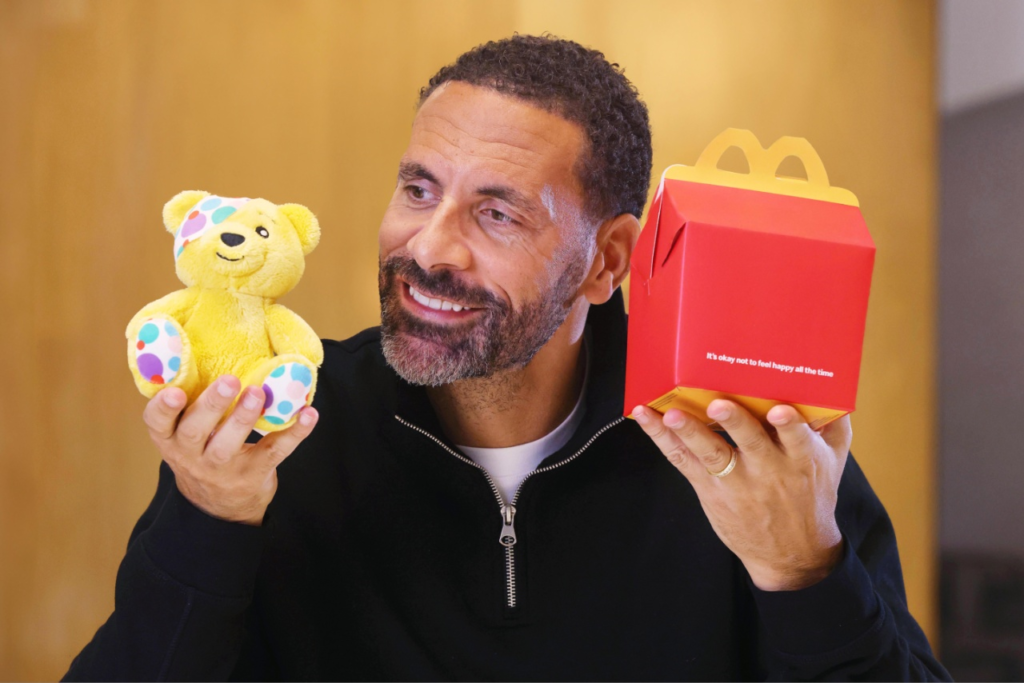
Football presenter and father of five Rio Ferdinand fronted the campaign alongside the film, drawing on his own parenting experience to speak about the importance of allowing children to feel and express the full range of emotions rather than performing happiness on demand.
The Results
The campaign generated over 2,000 media articles and 8 billion impressions during its one-week activation. Prime-time television coverage ran across continents. Brand love for McDonald’s UK increased, with positive sentiment reaching 87%. More than 2.5 billion Happy Meal boxes were sold during the activation week, confirming that removing the smile did not reduce commercial performance. The campaign won a D&AD Wood Pencil in the PR category at D&AD 2025.
Andrew Long and James Millers, executive creative directors at Leo Burnett UK, described what the campaign was built around: “Happy Meal is all about bringing families together, and to do that it’s important we’re open with all our emotions.”
Kate Addy, managing partner at Ready10, described the scale of what McDonald’s had agreed to: “The Happy Meal smile is one of McDonald’s most iconic brand marks and we knew suggesting it was removed from the boxes would be a big ask, but we were delighted when McDonald’s also saw the potential to positively impact millions of children with this important campaign.”
Why the Decision Was Significant
Removing a trademarked brand mark from your most iconic product for any reason, including a genuine one, is not a decision that most global brands would make. The Happy Meal smile is not simply a piece of packaging design. It is a commercial asset that has appeared on billions of boxes and been associated with positive childhood experiences across multiple generations of McDonald’s customers.
McDonald’s UK agreed to remove it for seven days because the research confirmed that the smile was, in a specific and measurable way, contributing to a pressure that 48% of UK children were already experiencing. The campaign did not claim that the Happy Meal caused that pressure. It acknowledged that the Happy Meal’s permanent smile was part of a wider cultural environment in which children felt required to present happiness regardless of what they actually felt.
Taking the smile off for a week, renaming the product The Meal, and replacing the mandatory emotion with a sticker set that allowed children to choose their own expression was the simplest available demonstration of the campaign’s argument. It is okay not to feel happy all the time. Even the Happy Meal is allowed to feel otherwise.
Campaign Name: The Meal
Agency Name: Leo Burnett London / Ready10 / Production: Rogue Films / Director: Jake Mavity / Partnership: BBC Children in Need
Brand Name: McDonald’s UK
Location: United Kingdom (1,400-plus restaurants; film, social, PR, packaging; Mental Health Awareness Week, May 13 to 19, 2024)