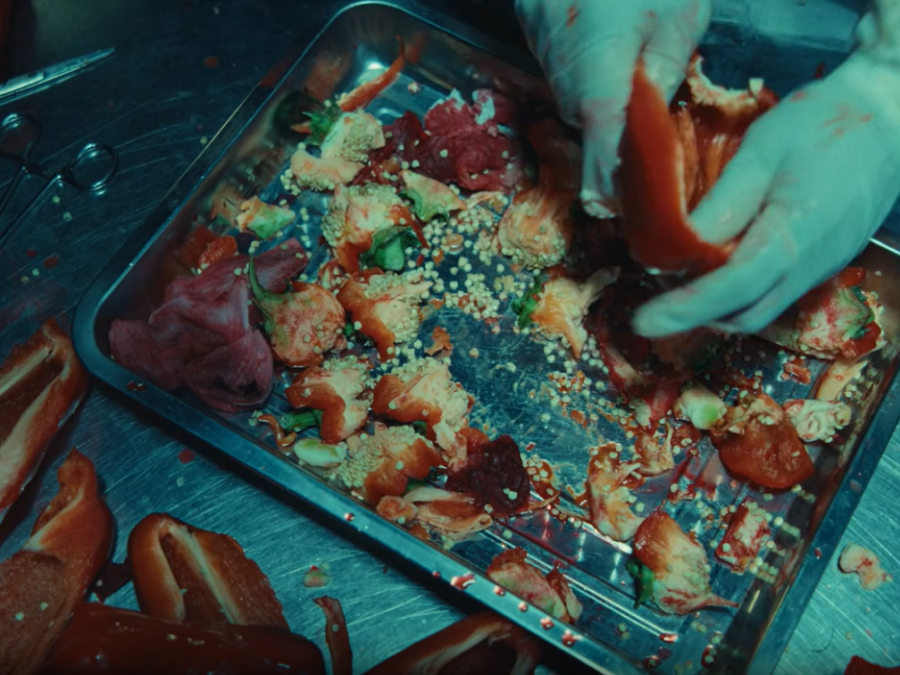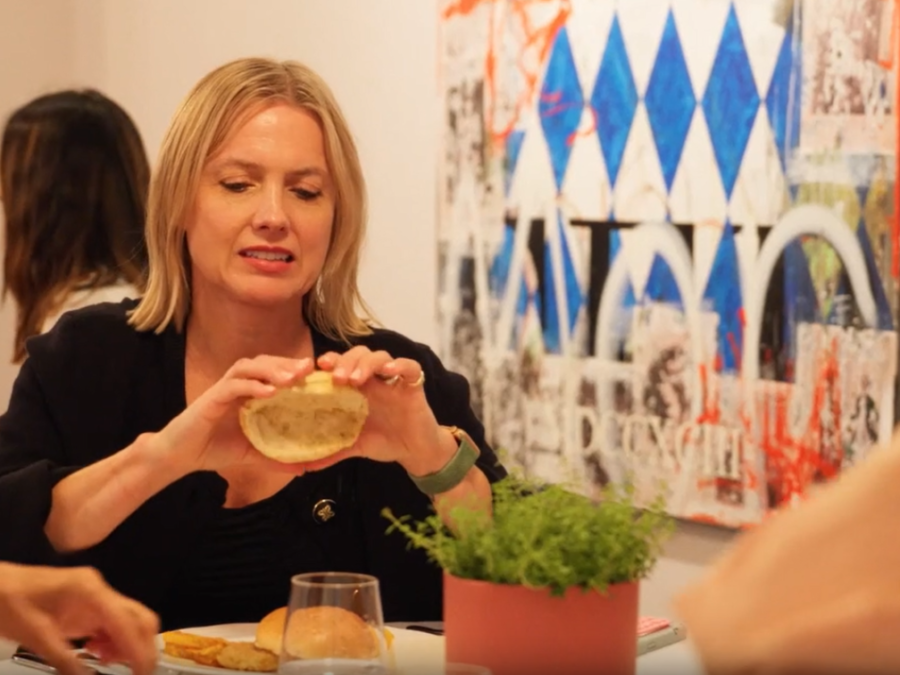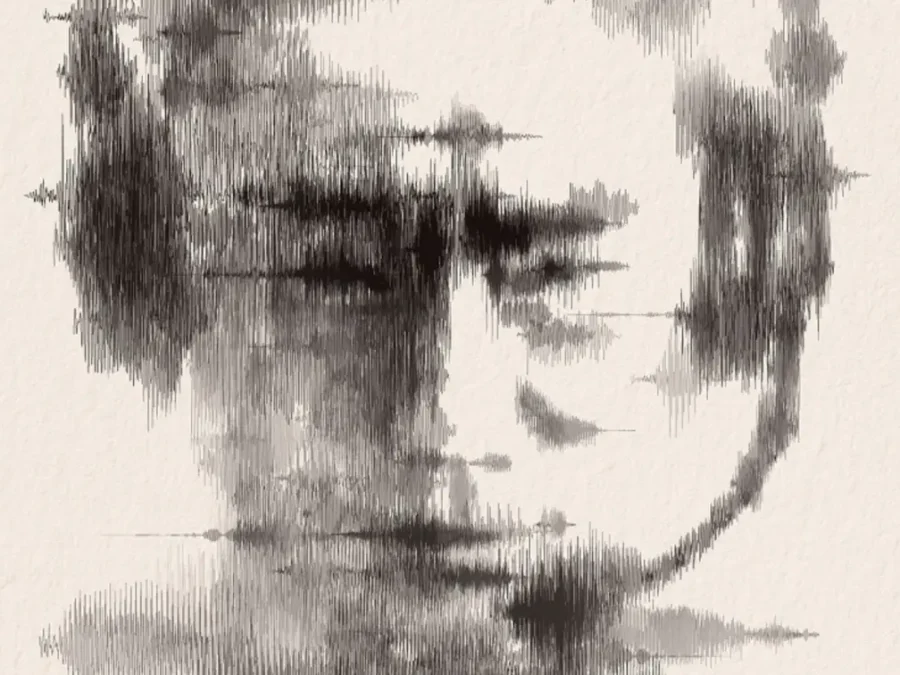
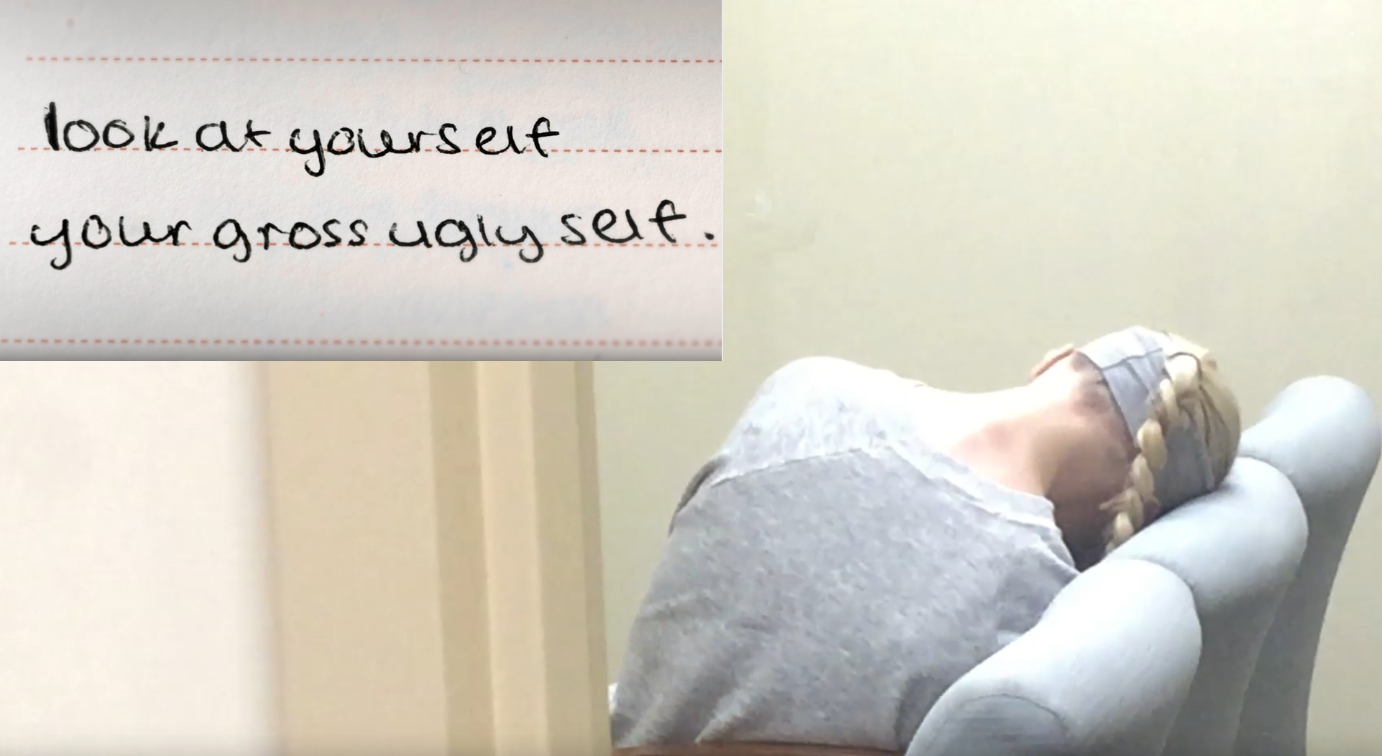
The brief that Dove and Ogilvy faced in 2023 was one that the advertising industry had been attempting to answer for years without a fully satisfying creative solution. How do you show the harm that toxic social media beauty content causes to young people in a way that cannot be dismissed as exaggeration, staging, or brand self-interest? The answer that Ogilvy UK and Ogilvy Toronto found was not to shoot anything new at all.
The Story of Mary
Mary is a real person. She is not an actress or a reconstructed composite of research findings. She is a young woman who almost lost her life to an eating disorder that developed directly as a consequence of the toxic beauty content she was exposed to on social media from the moment she received her first phone.
What made Mary’s story available to Dove and Ogilvy in a format no conventional film production could replicate was a decade of self-documentation. Mary had photographed and filmed herself throughout the years of her struggle, keeping a journal alongside the visual record. Her own photos, videos, and diary entries, spanning more than ten years, contain a documentary of exactly what social media did to her self-image, her mental health, and her relationship with her own body.
The film uses that archive. Every image of the girl who existed before social media arrived in her life. Every image of what followed. The descent is documented in her own hand, by her own camera, in her own voice. Ogilvy’s job was not to simulate or reconstruct. It was to assemble and present what Mary had already recorded as evidence of her own experience.
The Scale of the Problem the Film Addresses
The film was created in response to a documented and accelerating public health crisis. Research from the Dove Self-Esteem Project found that nine in ten children are exposed to toxic beauty content on social media. One in two of those children experience mental health impacts as a direct result. Three in five children experience mental health issues from social media more broadly. The consequences documented in clinical settings include anxiety, depression, body dysmorphia, eating disorders, self-harm, post-traumatic stress, and suicide.
The specific mechanism the film addresses is the social media algorithm: the recommendation and feed-curation systems that, once a young person begins engaging with beauty content, amplify and intensify that content without limit. Social media’s business model depends on engagement. The more distressing or aspirationally unrealistic the content, the more engagement it generates. The algorithm does not distinguish between content that makes a young person feel inspired and content that makes them feel inadequate. It optimises for time spent, and time spent feeds on comparison, inadequacy, and the relentless availability of an unachievable standard.
The Film
The Cost of Beauty is three minutes long, directed by Henry-Alex Rubin through Smuggler, and set to a female cover of Joe Cocker’s You Are So Beautiful to Me, performed by singer-songwriter Self Esteem. The musical choice is precise: the song whose title describes an unconditional declaration of beauty becomes the soundtrack for a story about a young woman who was taught that she was not beautiful enough by the content she consumed daily.
The film was developed in consultation with licensed clinical mental health counsellor Dani Bryant and with Johanna Kandel, Founder and CEO of the National Alliance for Eating Disorders, as well as with Project HEAL, ensuring that the clinical dimensions of Mary’s experience were represented accurately rather than dramatised for effect.
The ending of the film delivers its most significant creative move. After documenting Mary’s specific experience across a decade, the film reveals that this is not only Mary’s story. It is the story of millions of girls. The individual archive becomes the representative document. One young woman’s decade of self-documentation becomes the evidence for a systemic crisis.
The Legislative Dimension
The Cost of Beauty was not only a brand campaign. It was a piece of advocacy material with a specific legislative target. The film concluded with a call to action directing viewers to sign a petition in support of the Kids Online Safety Act, US legislation designed to regulate the social media content and algorithmic features that Dove identified as the primary mechanisms driving youth mental health harm.
Dove surpassed its goal of 50,000 petition signatures. The Kids Online Safety Act subsequently passed in the United States Senate. The film that began with Mary’s personal archive contributed to the passage of federal legislation governing the online environment that created the conditions for Mary’s experience.
That outcome, a piece of brand advertising that functioned as effective legislative advocacy, places The Cost of Beauty in a category of creative work where the commercial and the social are genuinely inseparable rather than merely adjacent.
The Platform It Belongs To
The Cost of Beauty sits within Dove’s Self-Esteem Project, the 20-year brand platform built on the proposition that beauty standards cause measurable harm and that advertising has a responsibility to challenge rather than reinforce those standards. Previous executions under the platform include Reverse Selfie, which showed a young girl’s social media editing process in reverse, the #DetoxYourFeed campaign, and the Injectable Billboard, which placed 50,000 syringes representing Canadian teenagers who had received cosmetic injections on a billboard in Toronto.
The Cost of Beauty extends the platform into its most documentary register: not a constructed advertisement illustrating a problem, but a real person’s own archive of what the problem actually did to her life, assembled into a three-minute film and released into the same social media ecosystem that produced the harm it documents.
The Clio Health Recognition
The campaign won a Gold at the Clio Health Awards 2024 in the Integrated category, confirming the industry’s recognition of what it achieved across both its creative and clinical dimensions. The campaign was developed by Ogilvy UK and Ogilvy Toronto together, with Mindshare handling media distribution and Edelman managing public relations.
Campaign Name: The Cost of Beauty / Cost of Beauty
Agency Name: Ogilvy UK, London / Ogilvy Toronto, Toronto / Media: Mindshare / PR: Edelman / Production: Smuggler / Director: Henry-Alex Rubin / Music: Self Esteem (cover of Joe Cocker’s You Are So Beautiful to Me)
Brand Name: Dove / Unilever
Location: United Kingdom and Canada (global digital distribution; January 2024)