The debate around school food quality in the United Kingdom has been running for decades, accelerated significantly by Jamie Oliver’s 2005 campaign that exposed the nutritional content of school meals to a national television audience. Twenty years later, with the government rolling out updated school food standards in September 2026, The School Food Project and BBH London decided that telling parents about the problem was no longer sufficient. They needed to put the problem in front of parents directly. Literally. On a plate.
The Coalition Behind the Campaign
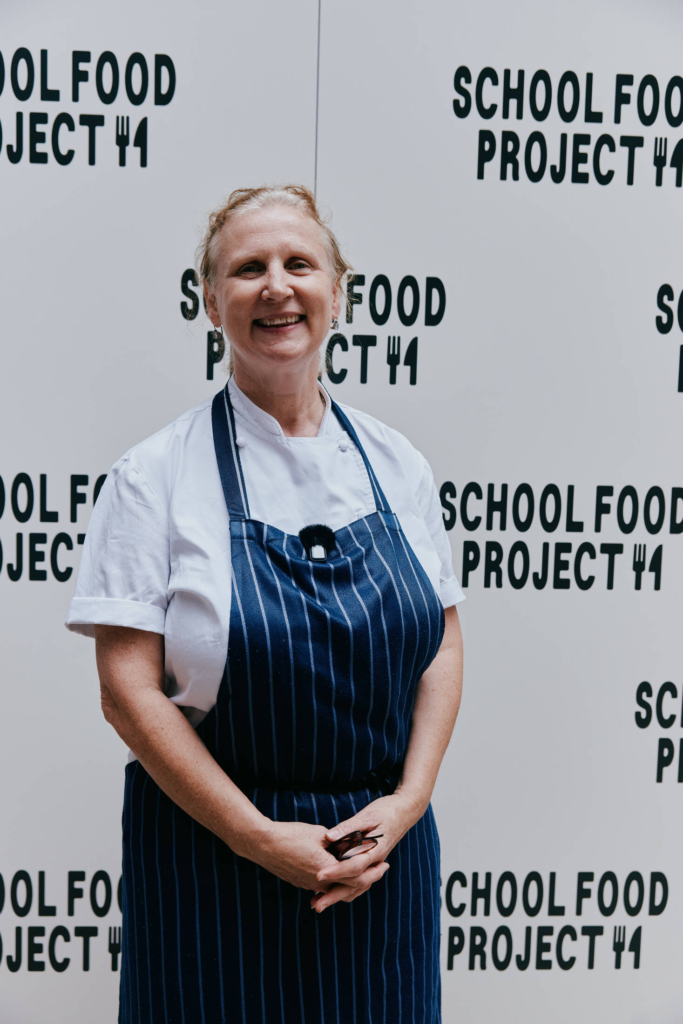
The School Food Project is a coalition of five organisations dedicated to improving child nutrition and school food across the UK: Bite Back, Chefs in Schools, School Food Matters, The Food Foundation, and the Jamie Oliver Group. The coalition was established specifically to support schools in transforming their food offer, improving food education, and serving meals that children would actually want to eat. The campaign launching the Project coincided with the government’s rollout of updated school food standards, with a particular focus on secondary schools, where food quality challenges are most acute. While the new standards are formally due for enforcement from September 2027, the government made clear it expected schools to begin implementing healthier meal options immediately.
The Centena Activation
BBH London’s campaign for the School Food Project launch centred on a single, deceptively simple insight: the debate around school food is almost always framed around children’s experiences. Most adults discussing the issue have not eaten a school meal since they were children themselves, and the distance between memory and current reality allows them to engage with the problem as an abstract rather than a personal one. BBH asked what would happen if adults were confronted with the same food, in the same circumstances, right now.
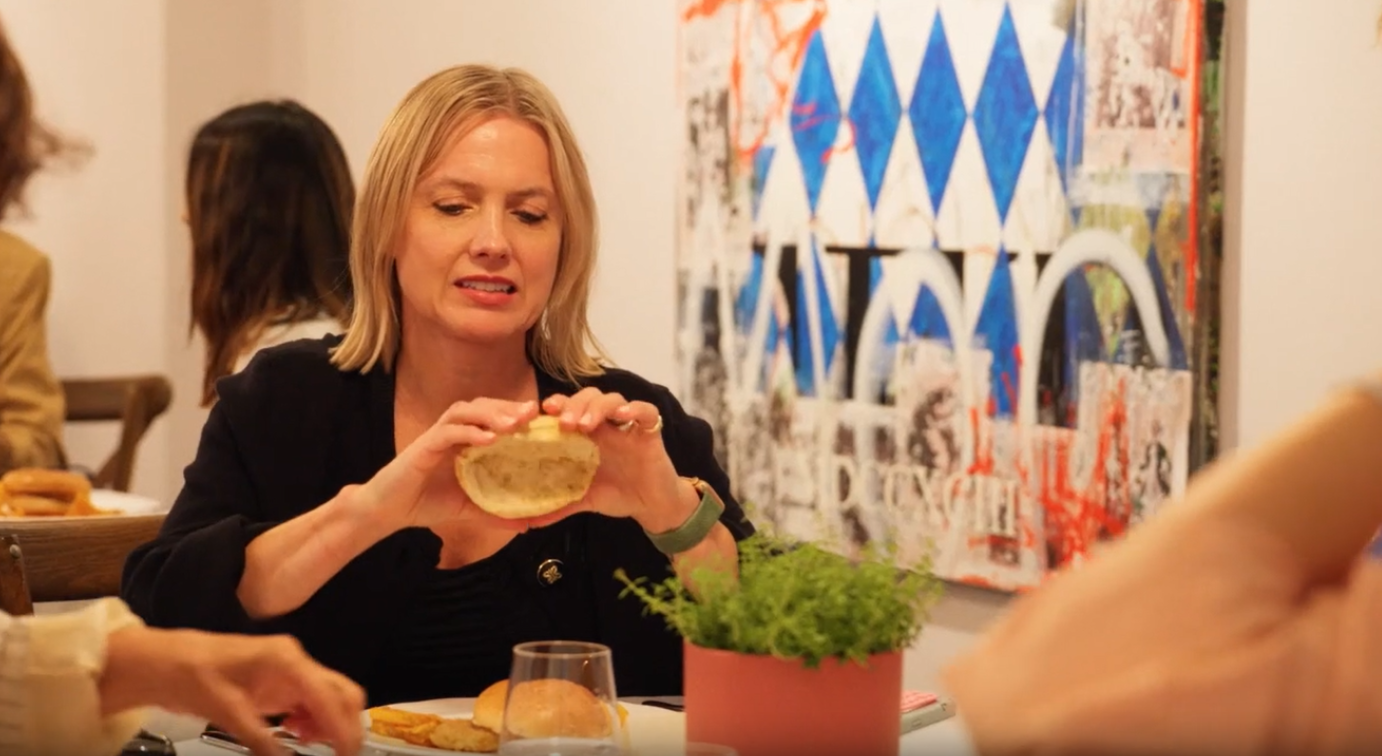
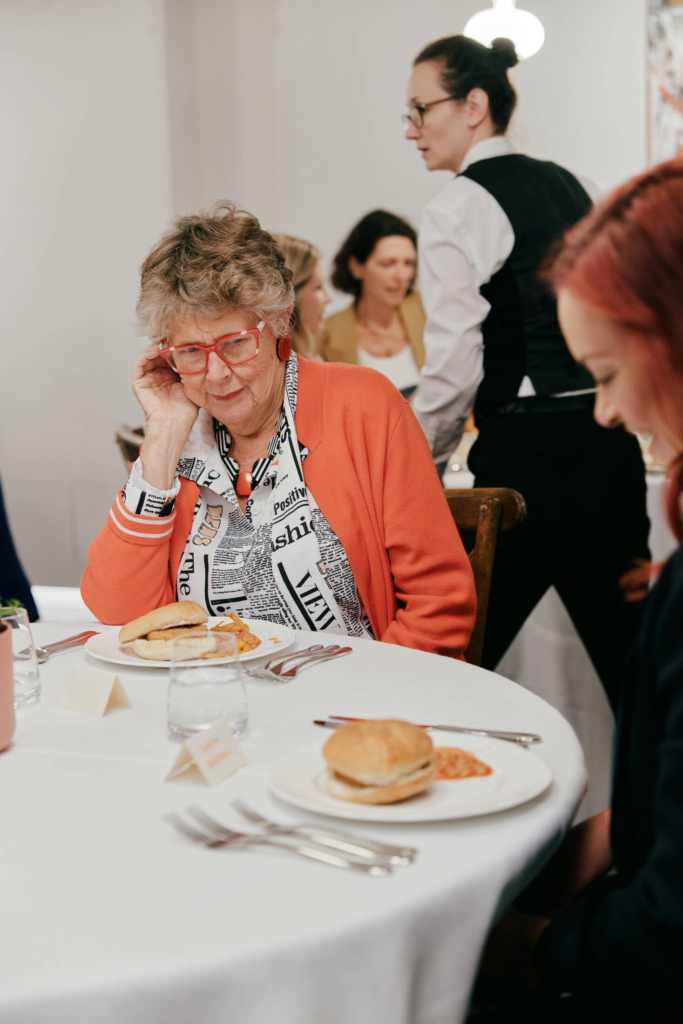
The answer was a fake pop-up restaurant called Centena, an anagram of “canteen,” positioned to guests as the latest dining venture from renowned British chef Angela Hartnett. The experience was presented with every hallmark of a credible, prestigious restaurant launch: the setting, the presentation, the implied authority of Hartnett’s involvement. Guests arrived expecting to eat food designed by one of the UK’s most respected chefs. They received something else entirely.
The dishes that arrived were real school meals. Processed chicken burgers. Stale burger buns. Soggy chips. Cold, congealed baked beans. Angela Hartnett had designed neither the dishes nor the menu. The kitchen was producing what school kitchens across the UK produce every day for millions of children.
Guests’ reactions were filmed through hidden cameras by Pixl Evolution and captured for a social media film by Grey Moth, directed by editors Archie Sinclair and Luigi Sibona. The footage directed viewers to The School Food Project’s website hub, where families can sign their schools up for support from the Project and learn how to advocate for better food standards in their own communities.
What Happened After the School Meals Were Served
The activation did not end with the reveal of the school meals. After guests had experienced the food exactly as children experience it daily, the event shifted into a demonstration of what good looks like. Angela Hartnett then presented dishes designed to show what could be possible under higher food standards, making the contrast between current reality and achievable improvement tangible within a single dining experience. The activation was not simply a critique. It was structured as a before and after, with the before being the honest current state and the after being the campaign’s actual argument: improvement is possible, it is achievable, and it requires families to demand it.
Naomi Duncan, CEO of Chefs in Schools, described what the campaign captured about children’s relationship with food: “What we consistently hear from children and young people is that they care about taste, flavour and nutrition and are far more willing to be adventurous with food than we might imagine. New standards mean an exciting opportunity to translate Government ambition into tasty food that children will enjoy.”
Karen Martin, CEO of BBH London and Dublin, described the coalition’s broader purpose: “The work the School Food Project is doing is vital: to show parents that good school food really is possible. We’re so proud to have supported members of the Project’s coalition for many years now and look forward to working together moving forwards.”
Why the Format Was Correct
School food campaigns face a specific communication challenge. The audience that most needs to be activated, parents, has a relationship with school food that is mediated through their children’s reports rather than their own direct experience. A child who says the food is bad competes with the institutional authority of the school, the inertia of accepted standards, and the assumption that school meals today are roughly similar to what they were a generation ago.
The Centena activation bypassed every one of those mediating factors. Parents sat down in a space designed to signal culinary quality, received food that did not meet that signal, and experienced the gap between expectation and reality firsthand rather than through their children’s accounts. The discomfort of eating a cold, congealed meal in an environment designed to suggest something different is the entire campaign argument, delivered without a single statistic or policy document.
The format also avoids the condescension that food quality campaigns can fall into when they instruct parents about what their children should be eating. Centena did not tell anyone anything. It showed them.
Campaign Name: Serving Up the School Food Crisis on a Plate / Centena
Agency Name: BBH London / CCO London and Dublin: Felipe Serradourada Guimarães / Deputy Executive Creative Director: Charlene Chandrasekaran / Associate Creative Director: Charlie Pendarves / Design Director: Oded Shein / Event Production: Blonstein / Videography and Post Production: Grey Moth / Hidden Cameras: Pixl Evolution / Stills Photography: Paul Perelka / Music: Black Sheep Music / Media: Kindred
Brand Name: The School Food Project (Bite Back, Chefs in Schools, School Food Matters, The Food Foundation, Jamie Oliver Group)
Location: United Kingdom (experiential activation; film and social media distribution; September 2026)