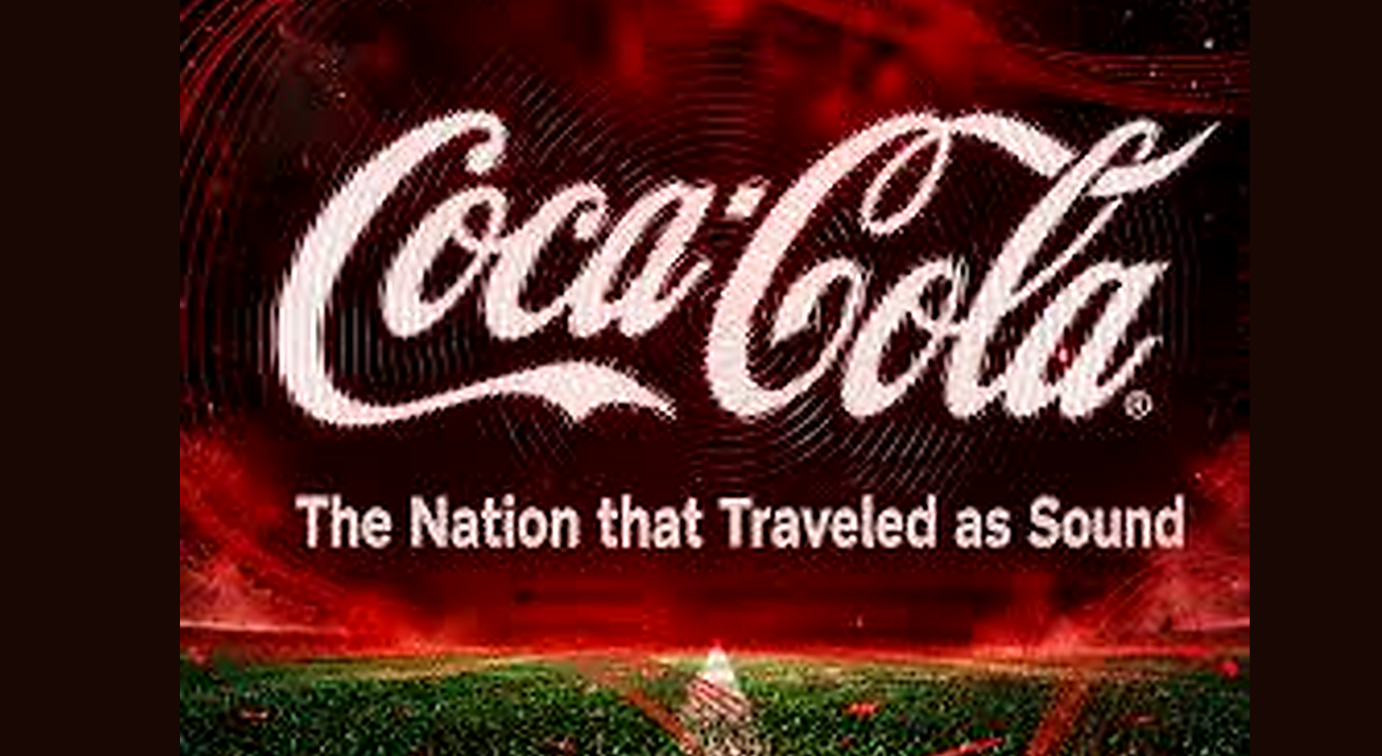
For the first time in history, Uzbekistan qualified for the FIFA World Cup. The tournament was held thousands of kilometres away in North America. For a country where the average monthly salary makes transatlantic travel an impossibility for most people, the historic qualification was also a historic frustration. Coca-Cola and Ogilvy Kazakhstan identified the gap between what the moment deserved and what most fans could access, and built something that could travel where the fans could not.
The Question That Started It
The campaign brief began with a question: if the fans cannot travel to the World Cup, how can their support still reach the team? The answer was not a digital campaign, a social media activation, or a broadcast advertisement. It was a chant. Specifically, Uzbekistan’s first national football chant, created not for the fans but with them.
Uzbekistan, despite its football tradition and recent qualification success, had never had a collective, universally owned chant that supporters could sing together. There was no equivalent of “You’ll Never Walk Alone,” no phrase that a stadium full of strangers would all know and reach for in the same moment. That absence was the creative brief.
The Making of “Olg’a, Olg’a, O’zbekiston!”
The Ogilvy Kazakhstan team, working with G-Force Uzbekistan, travelled 3,480 kilometres across nine Uzbek cities, recording voices from communities across the country. The recording journey was accompanied by a Telegram bot, the communication platform most widely used across Central Asia, that allowed anyone in Uzbekistan to contribute their voice to the chant regardless of where they lived.
More than 15,000 people joined. Grandmothers in Samarkand. Children in Tashkent. Workers in Fergana. Each one contributing a voice to a phrase that the composer Muinov Qosim set to music: “Olg’a, Olg’a, O’zbekiston!” Forward, forward, Uzbekistan.
The phrase was designed to be simple enough that anyone could sing it, memorable enough to travel, and emotionally direct enough to carry the weight of a country’s first World Cup qualification.
The Debut and the Journey
The chant debuted at Uzbekistan’s official World Cup send-off, the gathering where the nation said goodbye to its team before they departed for North America. The 15,000 voices played together for the first time as the players prepared to leave. The chant then travelled with the team, becoming the emotional heart of Coca-Cola’s football campaign in the Uzbekistan market across the duration of the tournament.
The campaign included a film developed in collaboration with Music Bolalar, one of Uzbekistan’s most celebrated music acts, choreographer Kasatkina Svetlana, and director Ayrapetova Anna, alongside the Doppi Twins, capturing the recording journey and the communities whose voices became part of the finished chant.
Why the Idea Works
Football’s most powerful cultural artefacts are not the trophies or the individual moments. They are the things that happen in the stands, the phrases that tens of thousands of people say together without having planned to, the sounds that make a group of strangers feel like a single entity for ninety minutes.
Those things cannot be manufactured in a studio and distributed to fans as a finished product. They have to come from the fans themselves. The genius of The Nation That Traveled as Sound is that it understood this completely. Ogilvy Kazakhstan did not write a chant and teach it to Uzbekistan. It asked Uzbekistan what it wanted to say and built the infrastructure for 15,000 people to say it together.
The result is a piece of cultural infrastructure that belongs to Uzbek football permanently rather than to a single Coca-Cola campaign. The chant existed before the World Cup ended. It will exist after the campaign concludes. That permanence is what separates it from advertising and puts it into the category of genuine cultural contribution.
The Broader Strategic Context
Coca-Cola’s FIFA World Cup 2026 partnership produced work across multiple markets simultaneously, but the Uzbekistan activation reflects a specific and increasingly visible creative philosophy within the company’s global marketing: find the cultural gap that the brand is uniquely positioned to fill, and fill it with something that belongs to the community rather than to the brand.
Butool Rizvi, Senior Marketing Director at The Coca-Cola Company, and Solen Yucel, Regional Creative Director at Studio X, working alongside Salima Talipova as Frontline Marketing Director and Alexandra Saade as Creative Content Director, shaped the strategic framework within which Ogilvy Kazakhstan developed the campaign. The result is one of the most distinctly local and structurally thoughtful pieces of World Cup advertising the 2026 tournament produced.
Campaign Name: The Nation that Traveled as Sound
Agency Name: Ogilvy Kazakhstan / G-Force Uzbekistan / Music: Music Bolalar / Media: MediaCom Uzbekistan / Studio X
Brand Name: Coca-Cola Uzbekistan / The Coca-Cola Company
Location: Uzbekistan (nine cities across 3,480 km; launched May 2026)