
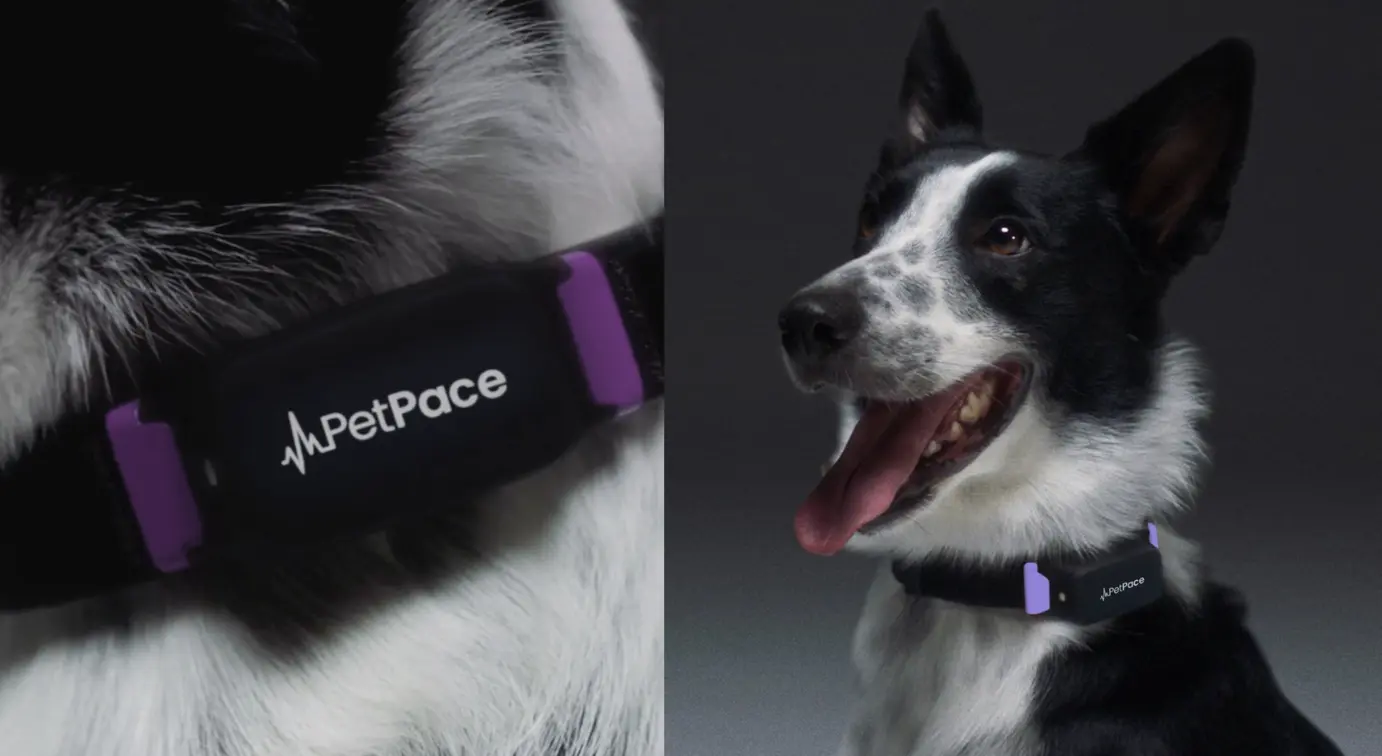
Every major earthquake early warning system on Earth is built around seismic sensors, GPS networks, and scientific instruments designed to detect the first wave of energy released when tectonic plates shift. None of them can reliably predict an earthquake before it starts. They detect it as it begins. PetPace, Serviceplan Group, and L&C Lima-NYC built something that operates earlier in the timeline, by fitting the city’s pet dogs with health monitoring collars and tracking when their stress levels spike simultaneously across multiple locations.

The Science Behind It
The relationship between animal behaviour and seismic activity has been documented for centuries. Ancient Greek accounts describe animals fleeing cities before earthquakes. Modern scientific literature, including the research of Dr. Rachel Grant, the behavioural ecologist who advised the Animal Alerts project, has documented measurable changes in animal behaviour hours and sometimes days before seismic events. The mechanism is not fully understood, but the leading hypothesis involves animals sensing changes in the electromagnetic field, groundwater levels, or low-frequency acoustic signals that precede a quake.
Previous attempts to use this biological sensitivity as an earthquake early warning system had consistently failed for the same reason: the animals monitored in the wild required invasive or outdated technology, creating stress that made the behavioural data unreliable. Wild animal monitoring also struggled with the scale problem. You need enough animals, spread across enough locations, to distinguish a genuine pre-seismic stress response from individual variation.
Lima solved both problems simultaneously. Nine million people live there. Many of them own dogs. And PetPace already made the most advanced non-invasive pet health monitoring collar on the market.
The PetPace Collar
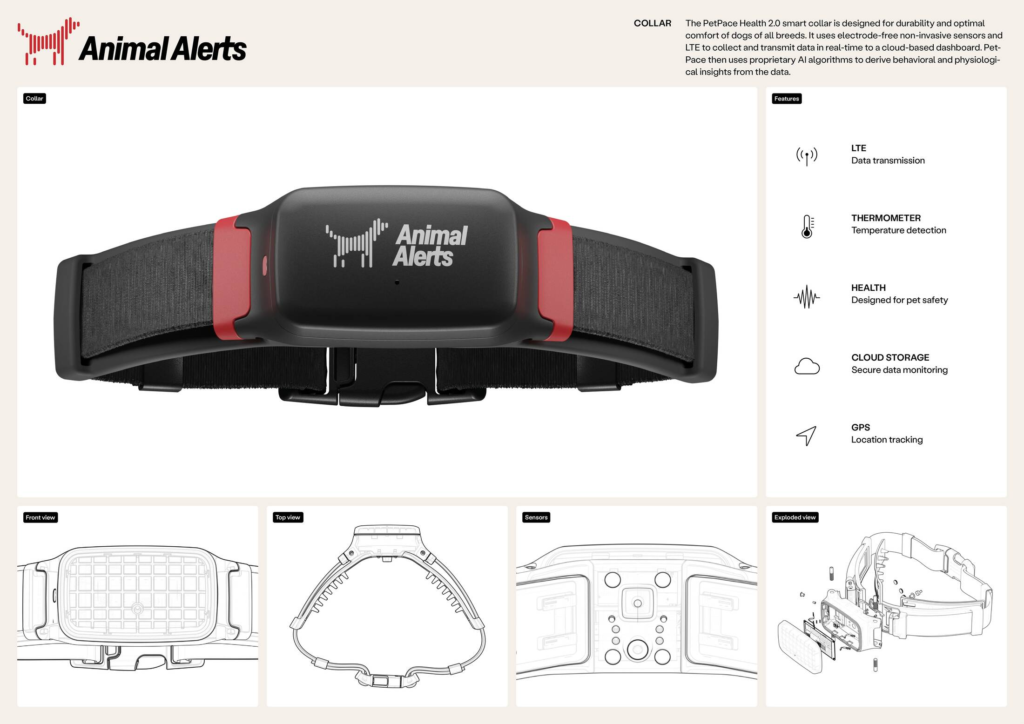
PetPace’s smart collar uses electrode-free, non-invasive sensors to record a dog’s pulse, temperature, respiration rate, and movement continuously in real time. The collar’s proprietary AI algorithms analyse those parameters to determine the dog’s stress level as a single, trackable metric. In normal circumstances, each dog’s stress profile follows its own individual pattern, affected by weather, activity, owner’s schedule, and other everyday variables.
The Animal Alerts system is built around the pattern that occurs when those individual stress profiles diverge from their normal ranges in the same direction, at the same time, across multiple dogs distributed throughout Lima. When enough dogs in enough locations show an anomalous spike simultaneously, the system flags a potential seismic event. Dr. Asaf Dagan, Chief Scientist and Co-Founder of PetPace, described the principle: “The same data can be harnessed with the aim of protecting communities.”
The Pilot and the Launch
A pilot study ran in August 2023. The full programme launched in March 2024. By April 2024, the Animal Alerts system had successfully detected 18 seismic events, issuing alerts to Lima residents before the events were registered by conventional seismic networks.
When the system detects a potential seismic event, alerts are distributed across multiple channels simultaneously: geo-targeted push notifications to mobile devices, digital billboard messaging across the city, and radio broadcasts. The media partnerships required to operate those channels were secured at no cost through Mediaplus Group, Serviceplan’s media subsidiary and the largest independent media agency in Europe, and Reset Media in Lima.
Pet nutrition brands across Lima participated in retail promotions encouraging dog owners to enrol their pets in the programme, building the distributed sensor network that makes the system statistically viable. A dedicated website provided further information and enrolment pathways for interested pet owners.
Carlos Guardia Brown, Disaster Risk Management Expert at TECHO Peru, described what the system’s speed advantage means in Lima specifically: “There is an urgent need for innovative approaches to warn the public before an earthquake. Especially since Lima’s infrastructure is extremely vulnerable to seismic activity. A timely alert from Animal Alerts could help save countless lives.”
The Campaign’s Structural Significance
Animal Alerts belongs to a category of work that the advertising industry describes as a product innovation rather than a campaign: the deliverable is a functional public safety system rather than a piece of creative communication. The Serviceplan and PetPace teams identified a genuine public health gap, existing earthquake warning technology’s inability to provide advance notice, and built an alternative infrastructure to address it using technology that was already operational and a network of participants who were already engaged through pet ownership.
The system’s scalability is the most significant element of its potential impact. Lima’s test case has produced documented results across 18 seismic events. Peru’s seismic geography, its location along the Pacific Ring of Fire, made it the obvious launch market. Plans for global expansion to Turkey, Japan, and other high-seismic-activity countries are in development.
Alex Schill, Global Chief Creative Officer at Serviceplan Group, described what the initiative demonstrates about the intersection of pet health technology and community safety: “This initiative not only showcases an innovative use of technology, but also emphasises the deep connection between humans and their pets, leveraging this bond for protecting the community.”
Rolando Cordova, Chief Creative Officer at L&C Lima-NYC, added the personal dimension that the campaign’s origin carries: “Growing up in a country like Peru, where seismic activity is constant, this idea becomes a really valuable tool.”
Campaign Name: Animal Alerts
Agency Name: Serviceplan Group / L&C Lima-NYC / Media: Mediaplus Group / PR: Peppercomm / Scientific Advisor: Dr. Rachel Grant
Brand Name: PetPace
Location: Lima, Peru (pilot August 2023; full launch March 2024; campaign published December 2025)