Every dog owner knows the moment. Food hits the table and a pair of eyes appears below it, patient, hopeful, and entirely persuasive. The chicken bone gets passed. The pasta gets shared. The bread goes in the bowl. The intention is affection. The consequence, documented in veterinary research, is obesity, digestive disorders, pancreatitis, and long-term health complications from ingredients that human digestive systems process differently from animal ones. Mousoudi Pet Shop and Ogilvy Greece decided that the most direct way to challenge this habit was to show pet owners what they were actually doing, in the most literal visual terms available.
The Executions
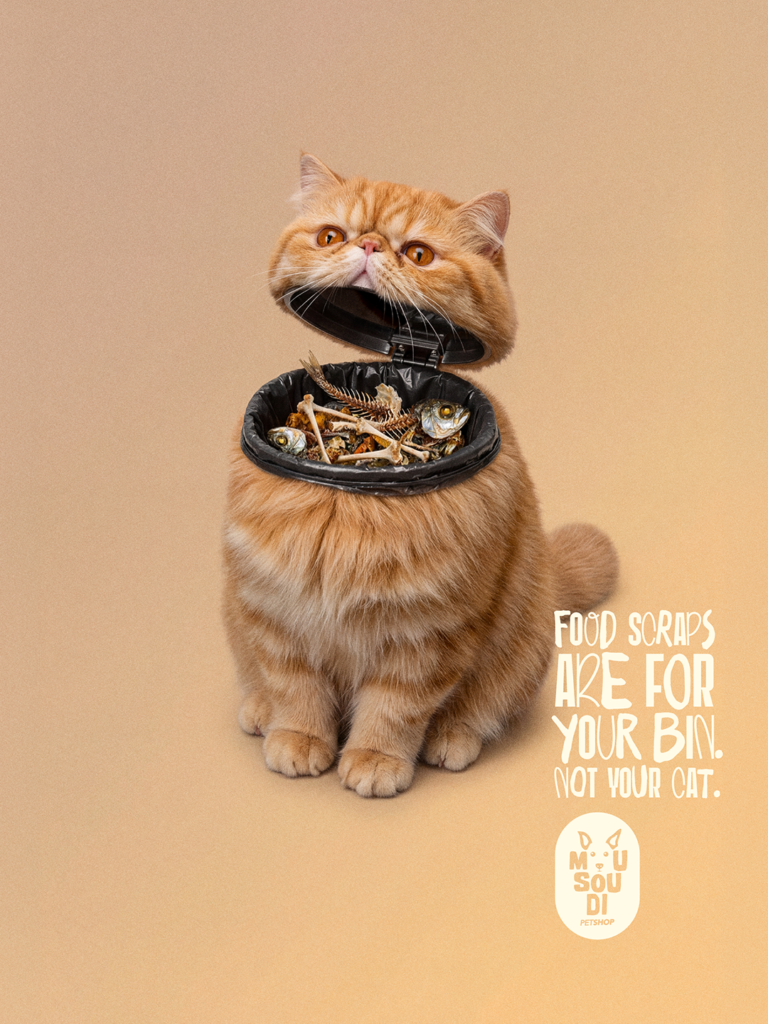
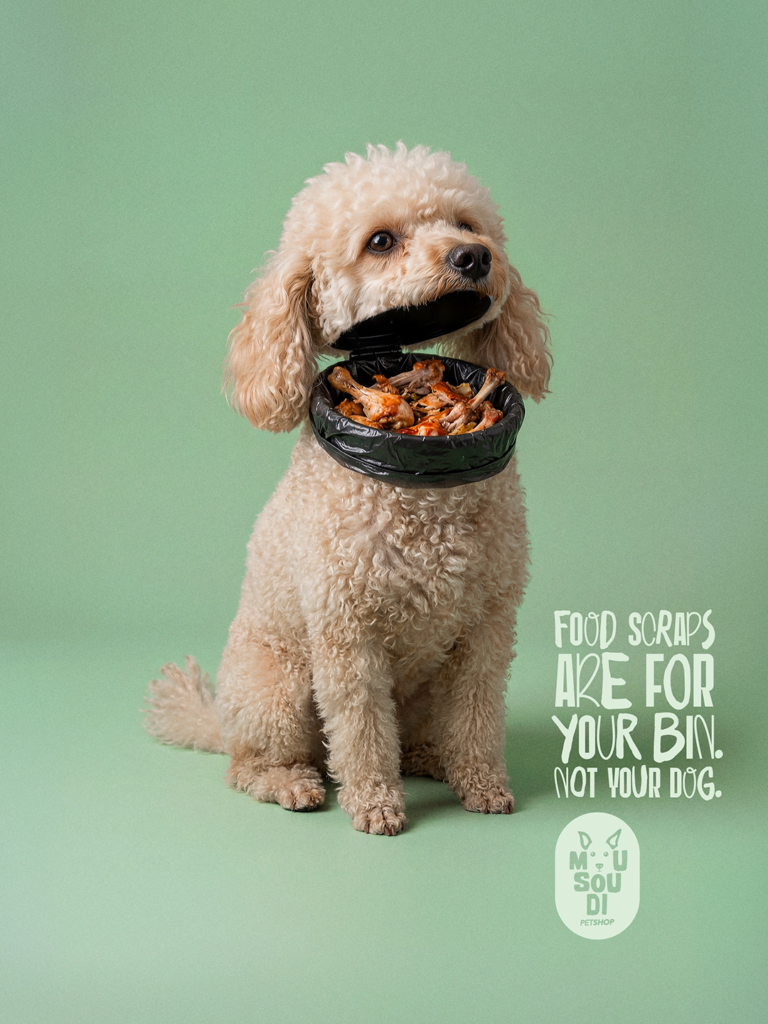
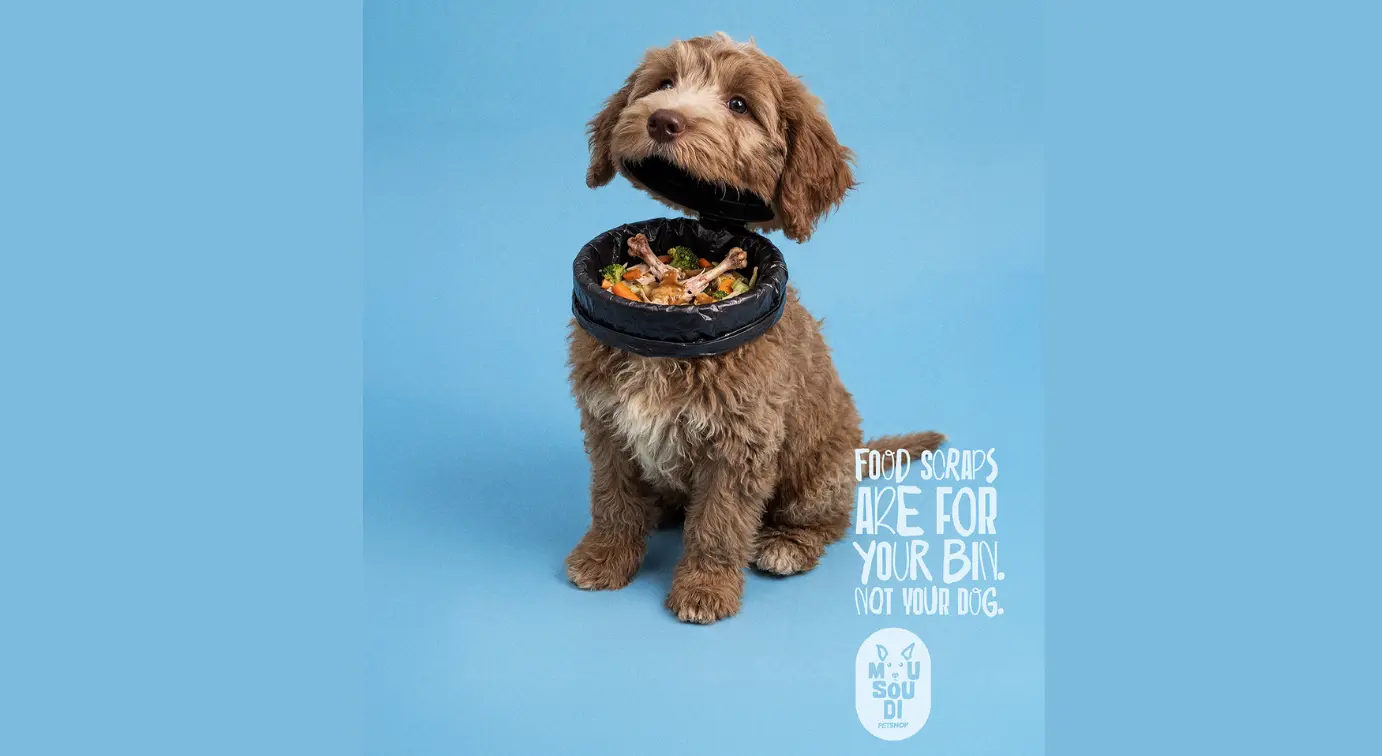
Food Scraps is a three-piece print campaign, published in Greece in May 2026, built around a single and deliberately uncomfortable visual metaphor. Each ad shows a pet, one dog and two cats, portrayed with the body of a kitchen waste bin. The animal’s fur and features remain entirely recognisable and endearing. What has changed is the anatomy: the pets’ torsos are bin bodies, and their open mouths function as bin lids, with chicken wings, fish bones, fish heads, and other leftover meal remnants overflowing from inside them.
The image is arresting on two separate registers. At first glance it is a picture of a cute animal. On the second, it is a picture of what that animal has been quietly turned into: a receptacle for discarded human food. The campaign’s copy line runs beneath each execution without further explanation: “Food scraps are for your bin. Not your dog.”
Ogilvy Greece Chief Creative Officer Panos Sambrakos, Group Creative Director Rena Chrisoulaki, and Associate Creative Director Spiros Sourlantzis developed the campaign. Creative Review described the execution as “highly amusing and slightly uncomfortable,” noting that the campaign reflects Mousoudi Pet Shop’s animal-first ethos while reminding owners that showing affection sometimes means resisting a pet’s imploring eyes.
The Behaviour the Campaign Targets
Feeding pets table scraps is one of the most prevalent habits among pet owners globally and among the most consistently documented by veterinarians as a source of preventable health problems. The foods most commonly passed from human plates to pet bowls, cooked bones, processed meats, pasta, bread, and seasoned dishes, are prepared with human digestive needs in mind and carry ingredients including onions, garlic, salt, and artificial additives that are harmful or toxic to cats and dogs.
The challenge in communicating this to owners is not a knowledge gap. Most pet owners are aware that table scraps are not ideal. The habit persists because it does not feel like negligence. It feels like love. Mousoudi Pet Shop’s brief to Ogilvy was to change that framing without clinical messaging, statistics, or the kind of direct instruction that produces defensiveness rather than behaviour change.
Why the Visual Metaphor Works
The bin metaphor is structurally precise. In everyday domestic life, throwing food scraps into a bin and feeding them to a pet are experienced as entirely separate actions with different moral weights. Putting leftovers in the bin feels like waste management. Giving them to a dog feels like generosity. Food Scraps does not attempt to argue against that distinction in copy. It collapses it visually, making the two actions the same image in a single frame.
Media-marketing.com described the mechanism accurately: “The ad first draws attention with the familiar sight of a pet, then changes it with a detail that creates discomfort. It is precisely from this shift that a warning emerges, one that can be understood without any additional explanation.” The two-stage visual delivers both the emotional hook and the rational argument without requiring either to carry the full weight of the message.
Creative Bloq’s reviewer, writing from personal experience as a pet owner, noted that the ads are “a mixture of disturbing and enlightening” and “nearly impossible to ignore,” adding that the unexpected visual confirmed something every honest pet owner recognises: their animals are sometimes the “fluffy equivalent of a sentient bin” by choice and without constraint.
Ogilvy’s own framing of the campaign’s purpose sits in one sentence from their official statement: “Leftovers aren’t love.” The campaign earns the right to make that claim not through assertion but through the image it builds around it.
Campaign Name: Food Scraps
Agency Name: Ogilvy Greece / Chief Creative Officer: Panos Sambrakos / Group Creative Director: Rena Chrisoulaki / Associate Creative Director: Spiros Sourlantzis
Brand Name: Mousoudi Pet Shop
Location: Greece (print, May 2026)