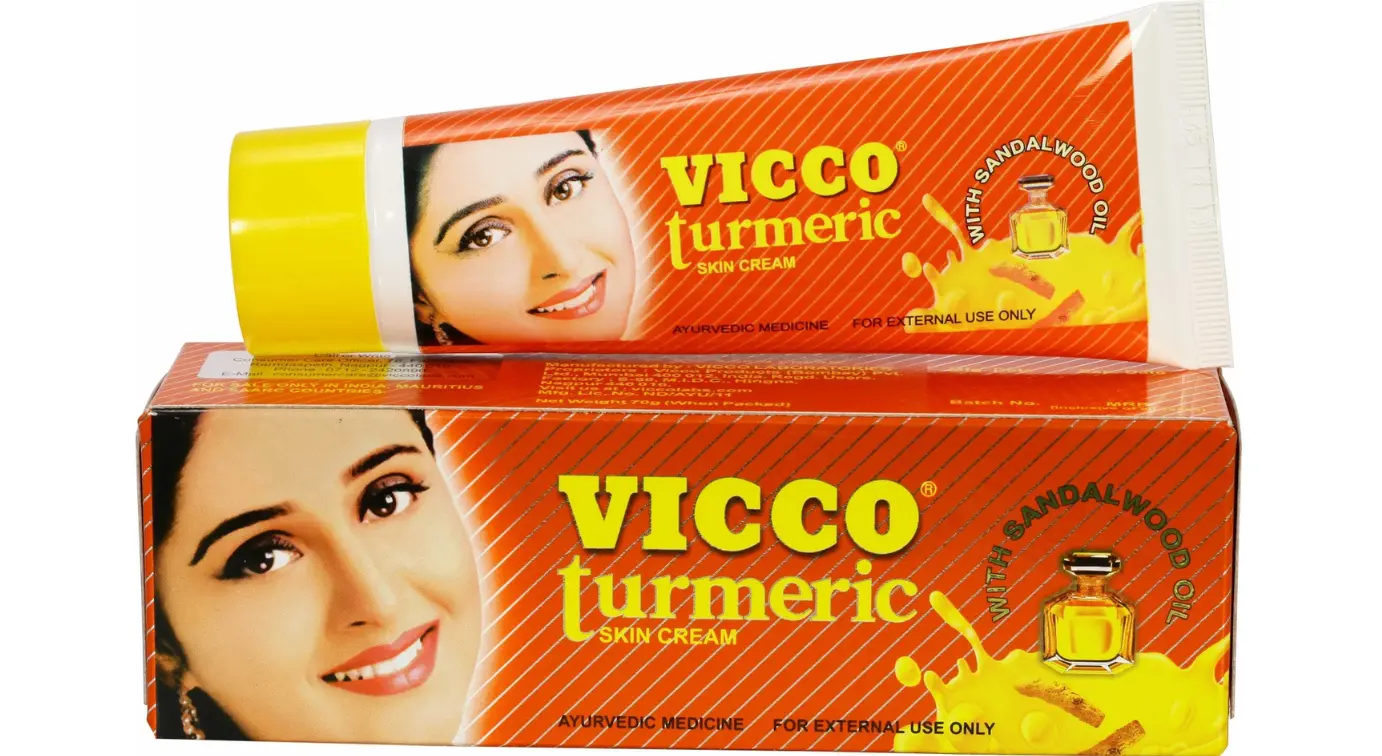
In 1978, the Central Excise Authorities of India made a determination that would change Indian advertising history. They informed Vicco Laboratories that its two flagship products, Vicco Vajradanti toothpaste and Vicco Turmeric Skin Cream, could not be classified as ayurvedic products and must instead be taxed as cosmetics. Vicco disagreed. It fought the case through three levels of the Indian court system, won at each level, and while it was fighting, created one of the most recognisable jingles in Indian advertising history.
The Company and What It Stood For
Vicco Laboratories was founded in Nagpur, Maharashtra, in 1952 by the late Keshav V. Pendharkar, beginning commercial production in 1955 with an annual turnover of ten thousand rupees. The brand’s founding proposition was the promotion of Ayurveda at a time when modern cosmetics were beginning to enter Indian homes. Vicco was the first company in India to launch an ayurvedic toothpaste and the first to produce a turmeric-based skin cream. Its entire identity was built on the distinction between genuine herbal preparation and conventional cosmetic manufacturing.
By the 1970s, Vicco had expanded globally, exporting to Europe, North America, Australia, and the Middle East. Its products were trusted by a generation of Indian consumers who associated the brand directly with the Ayurvedic tradition it claimed to represent. The Central Excise case threatened that foundation at its core.
The Legal Battle
The Central Excise Authorities had a commercial argument. Under Indian excise law, cosmetics attracted a significantly higher tax rate than ayurvedic medicines. By reclassifying Vicco’s products as cosmetics, the government stood to collect substantially more revenue. The classification turned on a simple question: were Vicco Vajradanti and Vicco Turmeric Skin Cream genuinely ayurvedic preparations, or were they essentially cosmetics dressed in traditional language?
Vicco challenged the classification before the Civil Judge, Senior Division. The court ruled in Vicco’s favour, finding that both products were prepared using ayurvedic medicines and should be classified accordingly. The Central Excise Authorities appealed to the Bombay High Court.
The Bombay High Court reached a nuanced conclusion. It held that the products could not be classified as cosmetics. It also held, however, that they could not be exclusively classified as ayurvedic either. Both Vicco and the excise authorities filed special leave petitions before the Supreme Court. The Supreme Court dismissed the petition by the Central Excise Authorities and passed a consent order confirming that Vicco’s products did not fall under the cosmetics category.
The matter did not end there. When the Central Excise Tariff Act of 1985 came into force, the authorities renewed their claim that the new legislation reclassified Vicco’s products as cosmetics. The excise tribunal again ruled in Vicco’s favour. Show-cause notices continued to arrive from the Central Excise Authorities throughout this period, each one requiring Vicco to respond, and each one sustaining a cloud of public uncertainty over a brand that had been trusted for decades.
The Marketing Problem the Legal Fight Created
The tax classification dispute was not merely a financial problem. It was a perception problem. Indian consumers in the 1970s and 1980s were watching a national newspaper story unfold about whether Vicco’s products were really ayurvedic. The brand that had built its entire commercial identity on Ayurvedic authenticity was being publicly challenged on exactly that claim by the Government of India.
Consumer surveys and market feedback during the period showed that even loyal customers were beginning to ask questions. The legal victory alone would not be enough to restore the confidence of a market that had been watching the dispute play out across years of coverage. Vicco needed to communicate its position to millions of people simultaneously, clearly, memorably, and in a format that would settle the question in the public’s mind before the next show-cause notice arrived.
The Jingle
Vicco’s response was a television campaign built around a jingle so precisely constructed that it answered the legal question in a single line that millions of Indians were already singing without realising they were also being told something important about a court case.
“Vicco Turmeric, nahi cosmetic. Vicco Turmeric, ayurvedic cream.”
The line was not an advertising claim in the conventional sense. It was a direct refutation of the government’s classification, delivered in a melodic format that lodged itself in the memory of every person who heard it. The word “nahi” is Hindi for “no.” The jingle was structured as a categorical denial: this product is not cosmetic. It is ayurvedic.
The advertisement ran across every major Indian television channel at a time when television was the dominant media environment in Indian homes. 76% of people who knew about Vicco said they had learned about it through television commercials. The jingle was not limited to a single campaign cycle. It became a fixture of Vicco’s advertising across years, repeated across generations of Indian households until the line became as culturally embedded as the products themselves.
India’s First Television Sponsorship
The jingle needed a platform, and Gajanan Pendharkar, Chairman of Vicco Laboratories and son of the founder, found one that nobody else in Indian advertising had yet exploited: sponsoring a television serial on Doordarshan.
In the early 1980s, India had only one television channel and commercial breaks were far less frequent than today. Pendharkar approached the producers of Yeh Jo Hai Zindagi, Doordarshan’s first sitcom, broadcast on the National Network in 1984. Vicco became the show’s sponsor. Its famous 77-second commercial, featuring actress Sangeeta Bijlani as a soon-to-be bride applying Vicco Turmeric cream as part of her pre-wedding haldi ritual, aired alongside every episode.
The combination was precise in its targeting. A serial about ordinary Indian domestic and family life was the natural home for a product embedded in Indian domestic and family ritual. Because Doordarshan was the only television channel in India at the time and the show was broadcast on the National Network, the reach was essentially the entire television-watching population of the country. Every viewer of Yeh Jo Hai Zindagi heard the jingle. The same jingle that was simultaneously fighting the brand’s legal battle in the court of public opinion was now inside the homes of millions of Indians, week after week, at one of the most-watched programming slots in the country.
Vicco went on to produce and sponsor multiple serials, films, and Doordarshan programmes in Hindi, Marathi, and Gujarati. The brand did not simply buy advertising space inside existing programming. It became a producer of the programming itself, extending its presence from the commercial break into the content around it. Gajanan Pendharkar is widely credited in Indian advertising history as the person who pioneered television sponsorship in India, predating the modern branded entertainment category by decades.
Why the Jingle Worked
The genius of the execution is structural rather than aesthetic. The legal dispute had put two words in opposition in the public mind: ayurvedic and cosmetic. Vicco’s jingle took exactly those two words and arranged them in a sentence that made one the negation of the other. Anyone who heard the jingle once had the brand’s legal and commercial position installed in their memory in a format that was effortless to recall and impossible to mistake.
The campaign also carried a layer of subtle institutional mockery. The Central Excise Authorities had created the very terms of Vicco’s messaging by filing their classification claim. The jingle repeated those terms back at the authorities, amplified by every television broadcast, for years.
Today, the line is remembered by multiple generations of Indians as one of the most instantly recognisable advertising jingles the country has ever produced. Most of them do not know it was written to win a tax case.