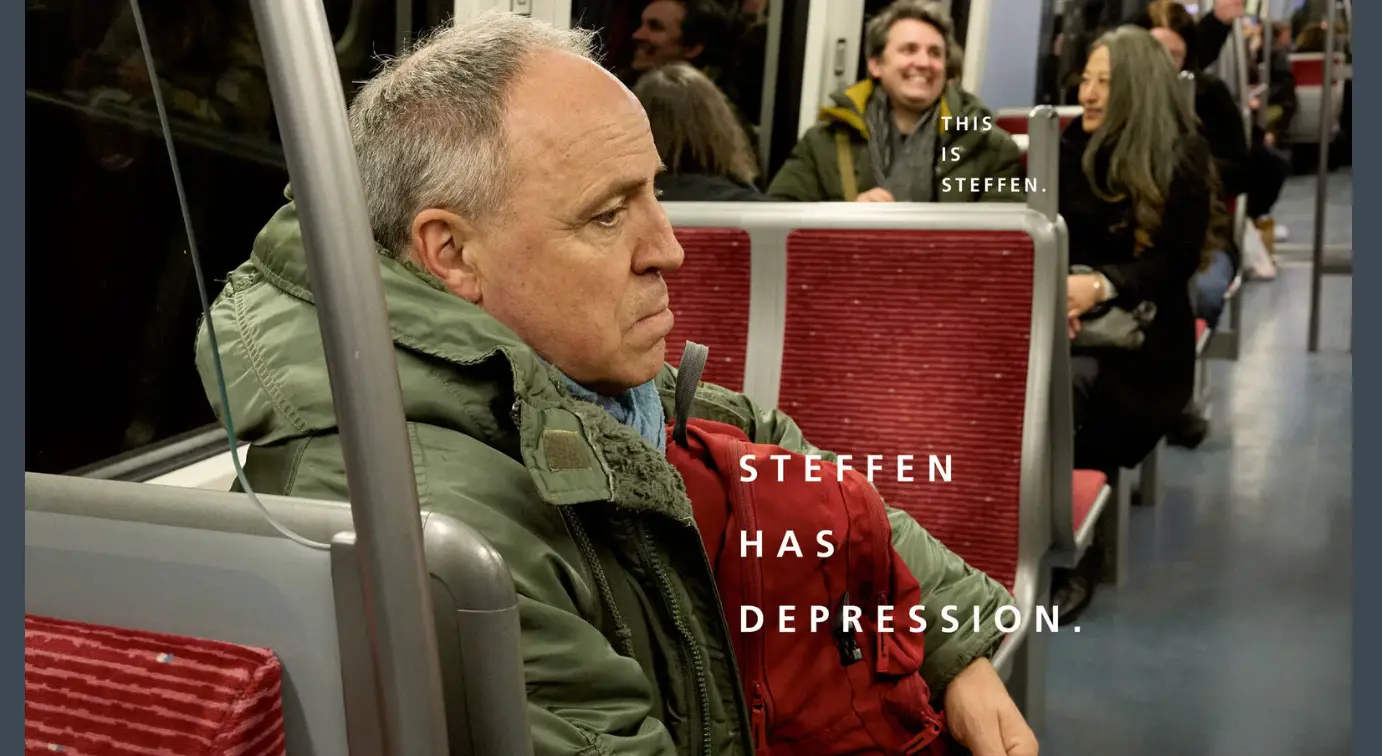
A German poster shows a train carriage and a simple statement: “Steffen has depression.” Most viewers look straight at the older man in the foreground, who stares ahead, looking tired and withdrawn. They have picked the wrong man. Steffen is the younger passenger smiling a few rows behind him. The campaign is called “Auf den zweiten Blick,” or “At Second Glance.”
The Face You Pick First
The photograph is set inside a commuter train with red seats. In the foreground sits a grey-haired man in a green jacket, unsmiling and lost in thought. He matches almost everyone’s picture of what depression looks like.
In the background, a younger man sits laughing among other passengers. Beside him, in much smaller letters, the poster reads “This is Steffen.” He is the one living with depression.
Built on a Common Mistake
The foundation behind the campaign says the idea targets a widespread prejudice. “Depression can affect anyone, often people you would never suspect,” said Professor Ulrich Hegerl, chairman of the Stiftung Deutsche Depressionshilfe und Suizidprävention. About 5.3 million people in Germany develop depression that needs treatment every year.
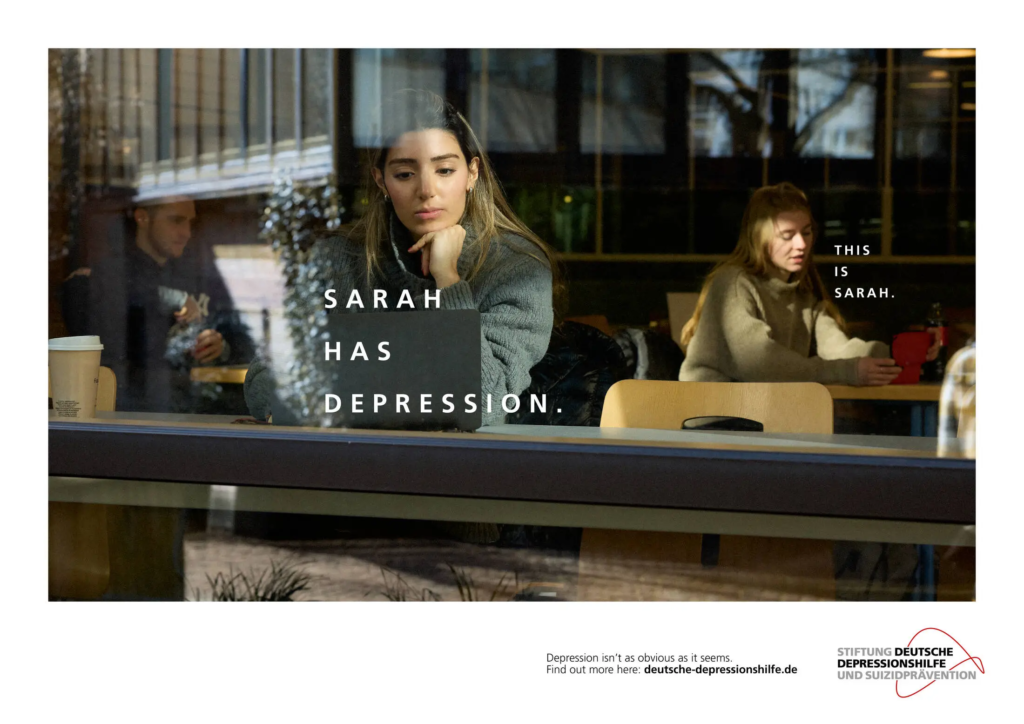
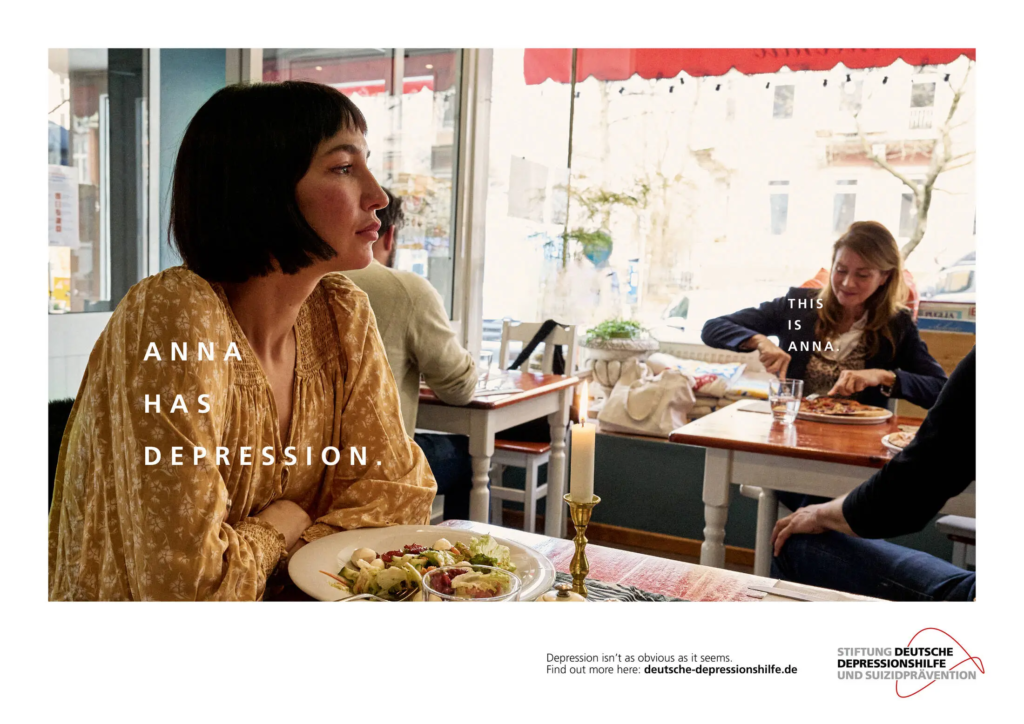
Steffen is one of several motifs built on the same trick, with others featuring Sarah and, from 2025, Anna. In each one, the sad-looking people are not the ones who are ill. The smiling person is.
Type That Sets the Trap
The layout is what makes the poster work. The large line “Steffen has depression” sits right next to the glum man in front, where the eye lands first. The small “This is Steffen” label sits beside the smiling man, easy to miss on a quick look.
Read the way people normally read a poster, it leads them to the wrong conclusion. A small line at the bottom explains what just happened. Depression isn’t as obvious as it seems. The poster lets viewers catch their own assumption rather than lecturing them about it.
From Digital Screens to a Third Run
Hamburg agency Grabarz & Partner created the campaign, with photography by Philipp Rathmer. It launched in January 2024 on digital screens provided by outdoor advertising company Wall in 11 German cities, including Hamburg, Cologne, Düsseldorf, Dresden and Stuttgart.
Frauke Bank, head of corporate communications at Wall, said depression is a subject people discuss reluctantly or not seriously enough. The campaign returned in 2025 and began a third nationwide run on October 6, 2026, this time focused on young people and backed by a social media push.
What the Second Glance Achieved
In a survey of 5,000 people, 12% had seen at least one motif and 90% said it addressed an important social issue. About two-thirds said it could encourage them to seek professional help. During the campaign, use of the foundation’s online depression self-test rose by 50%.
The work won Bronze for digital outdoor campaigns at the Deutscher Digital Award 2024 and was also recognised at the Plakadiva 2024 outdoor advertising awards. The European Alliance Against Depression later made the motifs available in English, French and Spanish for use in 13 countries.
Most awareness campaigns tell people that depression can hide behind a smile. This one gets viewers to look past the smiling man before telling them he’s the one with depression.
Campaign Name: Auf den zweiten Blick (At Second Glance)
Agency Name: Grabarz & Partner (Hamburg)
Brand Name: Stiftung Deutsche Depressionshilfe und Suizidprävention (German Depression Aid Foundation)
Location: Germany (motifs later shared in 13 countries)