
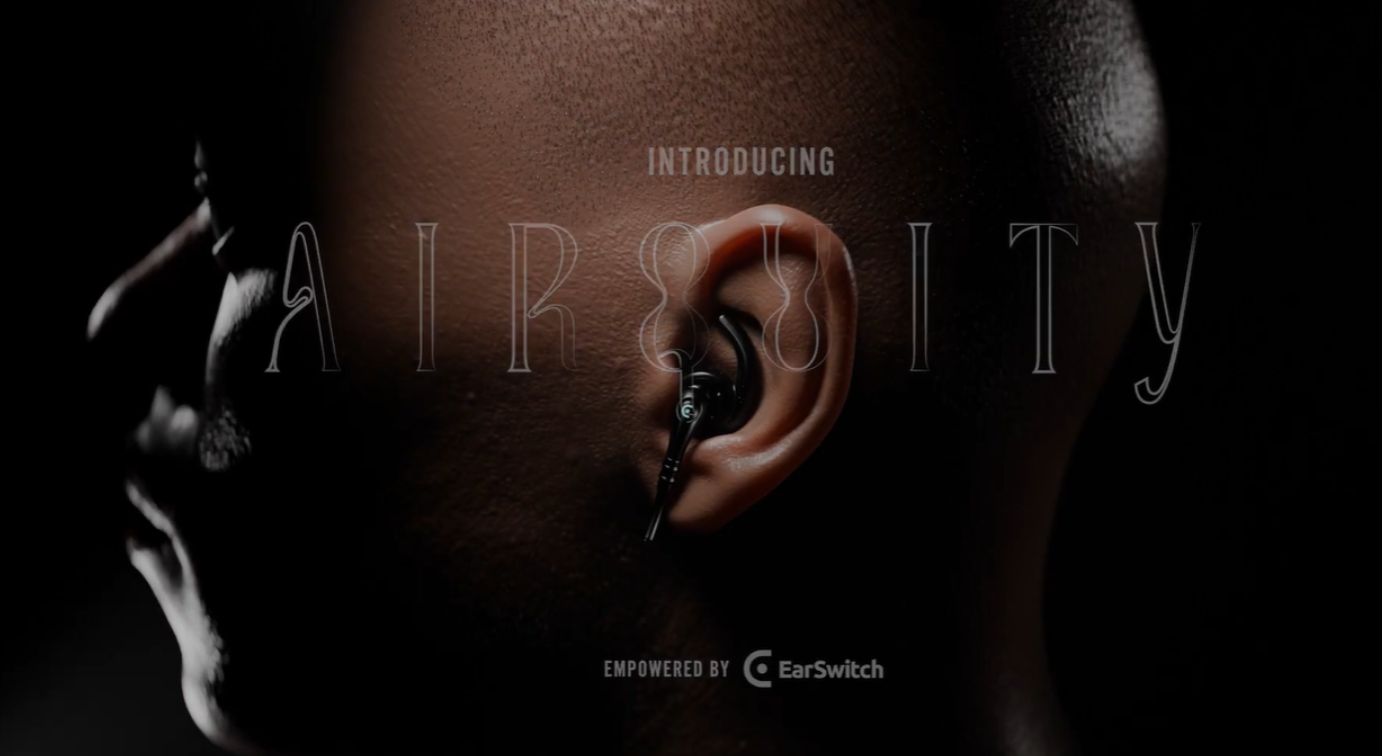
A UK medtech startup called EarSwitch has developed a device called Airquity, a pulse oximeter that measures blood oxygen levels from inside the ear canal rather than from the skin surface. The campaign to launch it, created by Havas Lynx and produced by Manchester-based Prose on Pixels, was built around a single problem that medical device manufacturers had failed to address for decades: standard pulse oximeters do not work equally across all skin tones.
The problem with existing devices
Pulse oximeters work by shining light through the skin to measure how much oxygen the blood is carrying. The accuracy of that reading depends on how the light passes through skin pigmentation. In darker skin, the reading can be overestimated by up to 7%. A 6 to 8% difference in a blood oxygen reading is not a minor calibration issue. It is the threshold at which a clinician decides whether a patient needs oxygen. People of African and African-American descent are three times more likely to die from respiratory conditions than white patients. The device that should be catching that risk is the same device that has been systematically under-reporting it.
The device
The inner ear canal does not vary in skin tone the way the surface of a finger or wrist does. EarSwitch identified that as the solution. By moving the measurement point from the skin surface to the ear canal, Airquity produces readings that are consistent regardless of the patient’s skin pigmentation. The device is non-invasive and designed for the same everyday clinical and consumer contexts where standard pulse oximeters are currently used.
The FDA updated its guidelines in early 2025 to call for greater racial inclusion in clinical testing of medical devices. EarSwitch was accepted into the NHS Innovative Devices Access Pathway, a programme that fast-tracks promising technologies through the NHS evaluation process. The potential reach cited for the device is 380 million people across the UK, US, and Europe, and 3.5 billion people globally.
The campaign
Havas Lynx built the product film around patients and real-world benefits rather than clinical language. The framing was consumer-facing, built to communicate a technical problem to a general audience without reducing it to a statistics slide. The quote that anchors the campaign’s position captures the argument concisely: “Health inequity is not only a social problem, it’s a design problem.”
That line does the work that most healthcare campaigns leave to charts and spokespeople. It places the responsibility for the racial gap in outcomes on the objects being used to measure health, rather than on the patients whose health is being measured. A device that reads inaccurately on darker skin is not a neutral tool. It is a piece of design that has encoded a disparity into the standard of care.
The wider context
The problem Airquity addresses became widely visible during the COVID-19 pandemic, when pulse oximeter inaccuracy in patients with darker skin was linked to delayed treatment and worse outcomes. Several studies published between 2020 and 2022 documented the gap between reported and actual oxygen saturation levels in Black patients. The FDA response in 2025 was a direct consequence of that evidence. EarSwitch developed Airquity against that backdrop, with the NHS pathway acceptance suggesting the device has cleared the early credibility threshold required to move toward wider clinical adoption.
Campaign Name: Airquity
Agency Name: Havas Lynx
Brand Name: EarSwitch
Location: United Kingdom