Every year, more than 5,000 people die on Brazilian roads. 65% of those deaths involve alcohol. The country spans continental distances, with remote areas that conventional road safety campaigns never reach. Billboards stay in cities. Television ads air in living rooms. The problem happens on highways in the dark, far from both.
Ambev, the Brazilian brewing company of Anheuser-Busch InBev, operates one of the largest distribution fleets in the country. Its trucks travel those same highways daily, covering the exact geography where most road accidents occur. In 2021, Ambev and Africa Brazil identified that fleet as the most effective available medium for a drunk driving awareness campaign and made a single creative decision that used it precisely.
What Was Changed
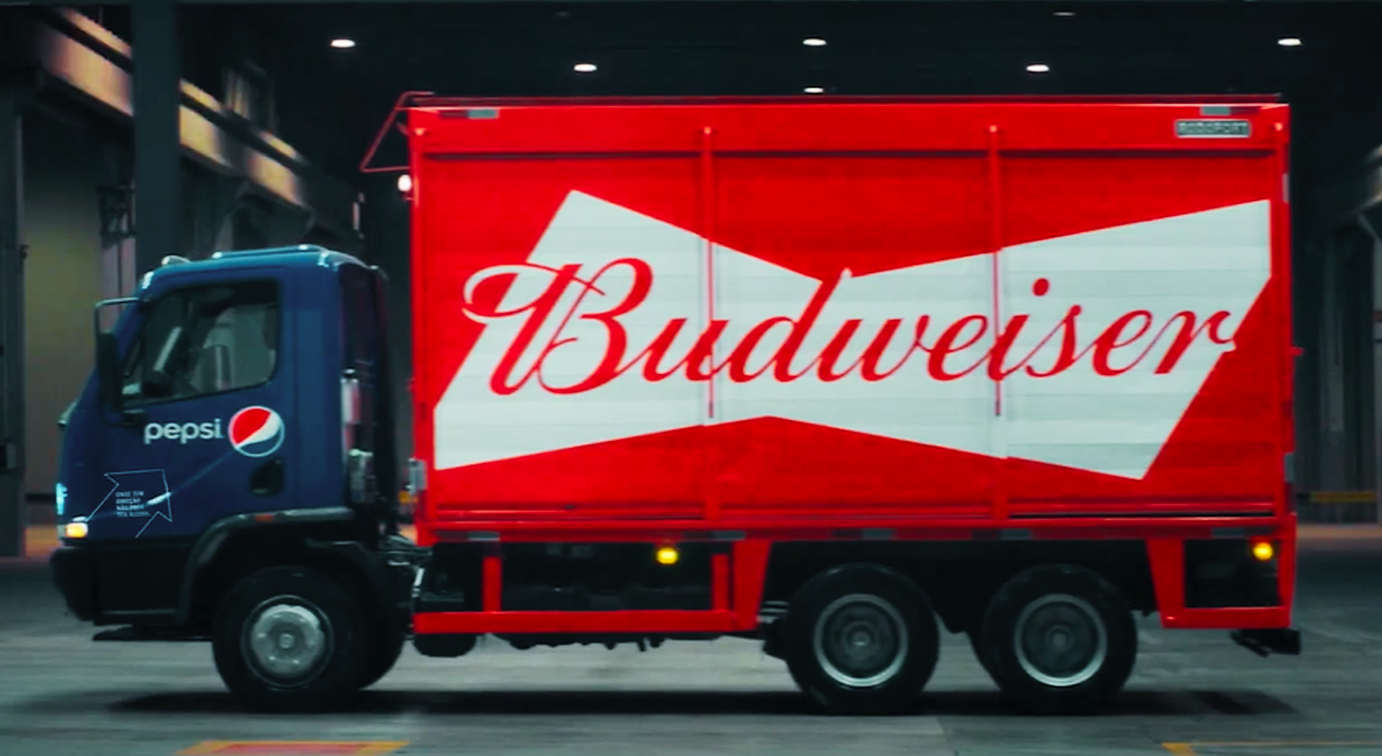
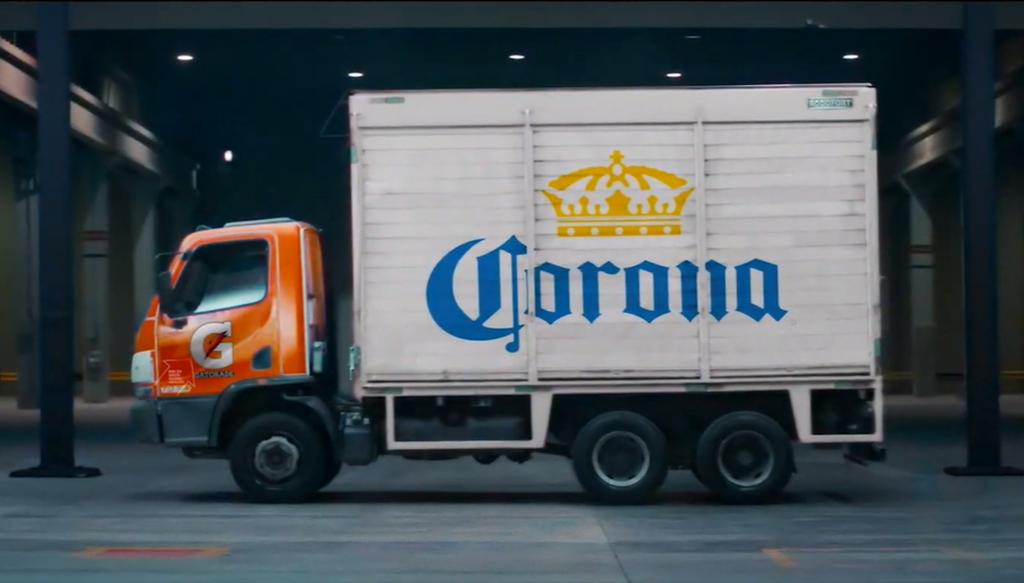
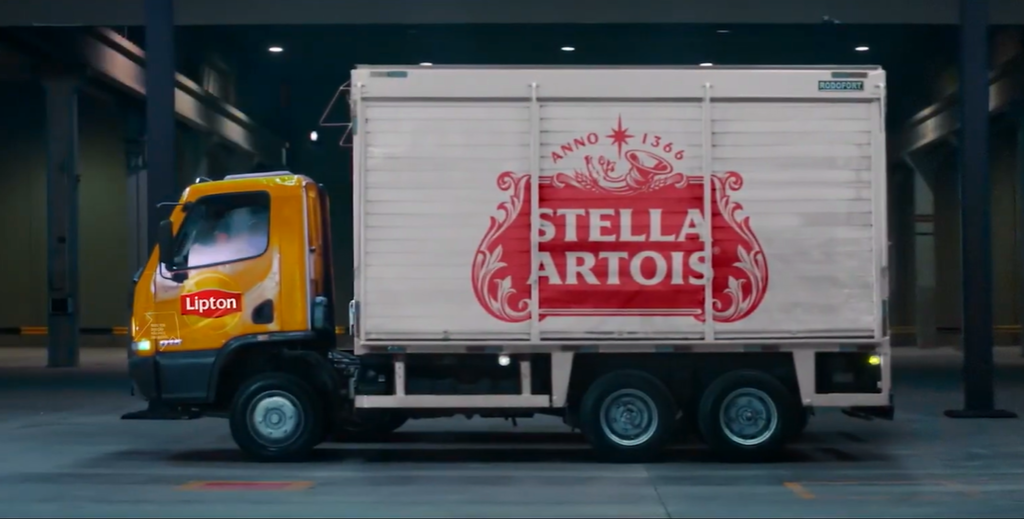
The Responsible Billboards campaign converted part of Ambev’s truck fleet through a visual split that required no new infrastructure. The semi-trailer portion of each converted truck retained the branding of the beer it was carrying: Budweiser, Corona, Stella Artois. That half of the truck advertises what is in the cargo.
The driver’s cabin, the half of the truck where the human being operating the vehicle sits, was painted with the non-alcoholic drink brands Ambev also distributes: Pepsi, Gatorade, Lipton. That half of the truck advertises what the driver is allowed to have.
The line printed across each converted cabin brings those two halves together: “Where there is a driver, there can’t be alcohol.”
The truck reads as a single, unified message. Beer in the back. Soft drinks up front. The visual makes the campaign’s argument before anyone reads the copy.
Why the Fleet Was the Right Medium
Brazil is a continental country. The distances between its major urban centres are measured in hundreds of kilometres, and the communities between those centres have limited access to the media environments where road safety campaigns typically run. A television spot reaches the living rooms of the urban middle class. An outdoor billboard reaches the residents of the city where it stands. Neither reaches the truck driver hauling goods between São Paulo and Goiânia at two in the morning, or the motorist joining that same highway from a small interior town where the nearest cinema is two hours away.
Ambev’s distribution fleet reaches both. The trucks travel the full length and breadth of Brazil’s road network as part of their normal operational purpose. Converting the driver’s cabin into a drunk driving awareness message means the campaign travels with the fleet, mile after mile, across exactly the roads and regions where the message is most needed and least likely to have been seen before.
Alexandre Costa, Marketing Director at Ambev, described the campaign within the brand’s broader road safety commitments: “Responsible Billboards is in line with Ambev’s long-term commitment to promote responsible consumption. Our initiatives range from awareness campaigns to in-depth solutions to try to mitigate impacts. We do this through campaigns, but also projects like Consumption X-Ray, a screening questionnaire that reveals someone’s consumption profile, and the Road Safety project, which works together with public, private and civil society sectors for the reduction of risks related to road safety.”
The Cost of the Campaign
The most significant element of the Responsible Billboards campaign is what Ambev gave up to run it. The driver’s cabin is premium branding real estate on a distribution truck. It is the part of the vehicle most visible at eye level to other drivers, pedestrians, and passers-by. Converting it from beer branding to road safety messaging is a commercial sacrifice made in service of the campaign’s purpose.
Most corporate road safety campaigns are additive: a brand adds messaging somewhere without removing anything from its existing communications. Responsible Billboards is subtractive: Ambev removed its own beer branding from the most visible surface of its trucks and replaced it with an advertisement for sobriety. The sacrifice is the proof of the commitment, which is why the campaign has continued to circulate in advertising reference lists five years after it ran.
The Recognition
The campaign won a Bronze Lion at Cannes Lions 2021 in the Direct category, a Wood Pencil at D&AD, the Grand Prix in Outdoor at El Ojo alongside three Gold, three Silver, and four Bronze Lions, and a Silver Star at CCSP. The recognition reflects what the jury across multiple awards shows identified: a campaign that solved a genuine public health problem using a medium the brand already owned, without manufacturing a new one.
Campaign Name: Responsible Billboards
Agency Name: Africa, Brazil / CCO: Sergio Gordilho / Copywriter: Pedro Bullos / Art Director: Erico Braga / Production Company: Corazon Filmes / Director: Pedro de La Fuente
Brand Name: Ambev / AB InBev
Location: Brazil (national; distribution fleet across Brazilian highway network; May 2021)