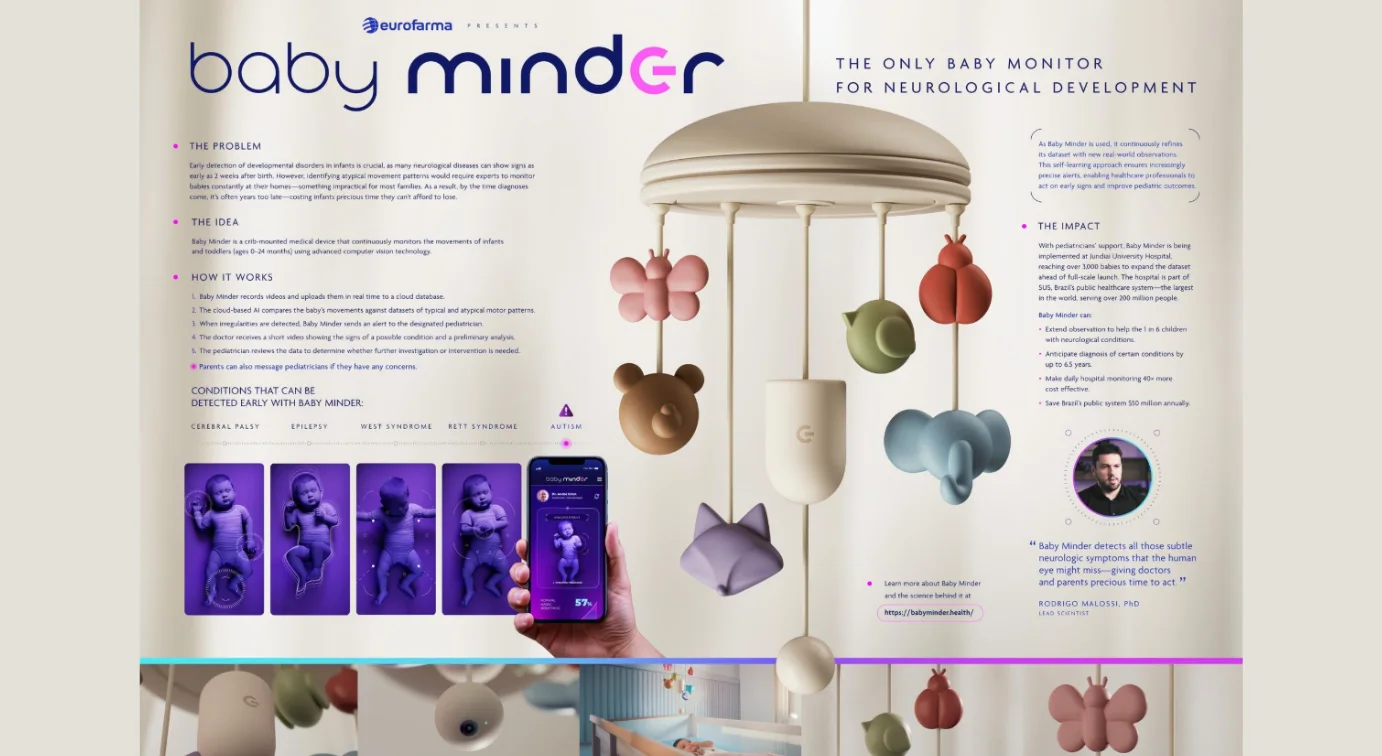
Neonatal doctors have approximately 48 hours with new parents before they are sent home. Many neurological conditions in children, including early indicators of autism, epilepsy, cerebral palsy, and motor delays, can be detected within a few weeks of birth. A proper early diagnosis requires weeks of consistent expert monitoring. Most families have no access to that kind of sustained specialist observation at home. Eurofarma, Ogilvy Health, and WideLabs built a device to close that gap, and disguised it as a crib mobile so it would not feel clinical.
The Device
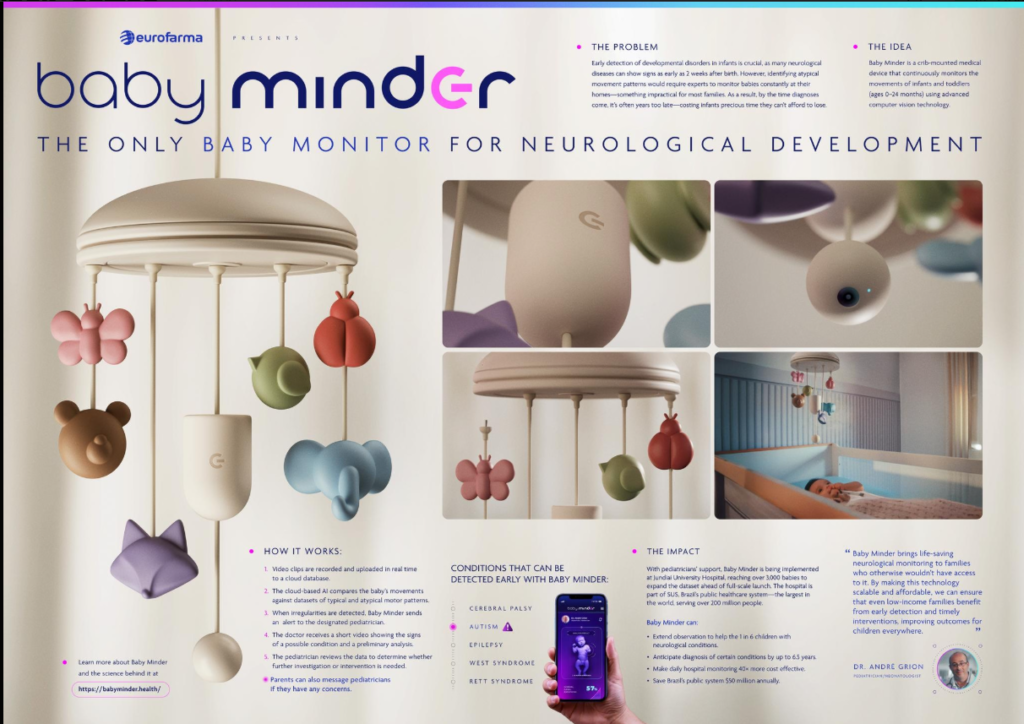
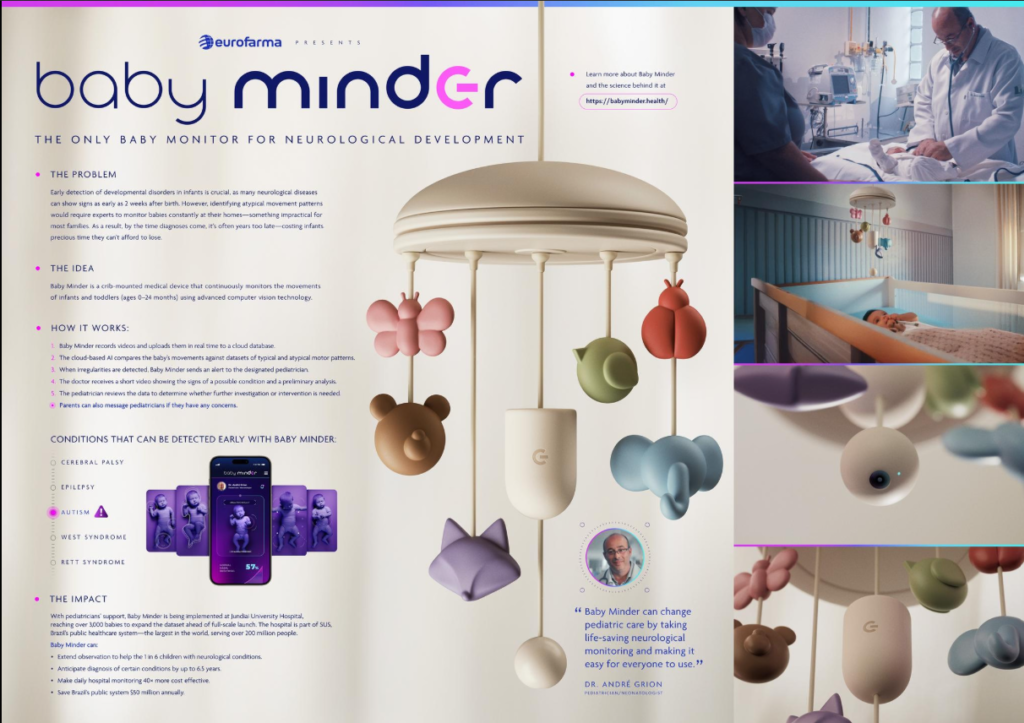
Baby Minder is the world’s first baby monitor specifically designed for neurological development monitoring. From the outside, it looks like a standard colourful crib mobile, the kind of object that hangs above a newborn’s sleeping space. From the inside, it is a sophisticated system combining AI-powered computer vision with continuous movement tracking. The device observes the baby’s subtle movement patterns and motor behaviours in real time, identifying irregularities that are clinically significant but invisible to the untrained eye of a parent watching their child.
The development was led by WideLabs, the technology company responsible for Amazônia 360°, Brazil’s first sovereign AI system. WideLabs brought two years of development work to the project before Eurofarma’s backing and Ogilvy Health’s creative and strategic involvement shaped it into a full campaign and product concept. The device was inspired specifically by the crib mobile form factor because it is the one object that already sits in position above the baby, within consistent range of the child, across the full duration of sleep, which is when movement patterns are most revealing and most consistently observable.
How It Works
Baby Minder records continuous footage of the infant. Those clips are uploaded to a secure cloud database. AI analyses the footage for movement patterns associated with early neurological signs, including atypical reflexes, repetitive movements, asymmetrical motor responses, and other subtle indicators that trained neonatologists look for during clinical assessments. When the system detects a pattern requiring further review, it alerts the treating doctor directly. The parent receives a notification. The medical professional follows up.
The system does not diagnose. It flags. That distinction is clinically and legally critical. The device functions as an AI-assisted early warning system rather than a diagnostic instrument, designed to get the child into a specialist’s hands sooner rather than to replace the specialist’s assessment.
The pilot phase launched at Jundiaí University Hospital in São Paulo in late 2025. Eurofarma’s stated expectation is that the device will reach thousands of families by 2026, with particular focus on regions with limited access to specialised neurological examinations, where the gap between a parent noticing something concerning and a child receiving clinical assessment can stretch to months or years.
The Problem It Addresses
Early diagnosis of neurological conditions in children is one of paediatric medicine’s most time-sensitive challenges. Outcomes for autism, epilepsy, and cerebral palsy are directly correlated with how early intervention begins. The earlier the diagnosis, the broader the range of therapeutic and developmental support available. The earlier the diagnosis, the better the outcome trajectory.
The structural barrier has always been the same: the clinical monitoring required to produce an early diagnosis requires expert eyes on the child for extended periods across multiple sessions. In Brazil, where the public health system is under sustained pressure and specialist neurological access is concentrated in major urban centres, that level of monitoring is not available to most families. Baby Minder converts the home environment into a continuous monitoring environment without requiring any clinical presence to operate it.
Paulo Rocha, CEO of Eurofarma, described the company’s intent in terms that reflect both the commercial and humanitarian dimensions of the project: “By investing in projects still in the testing phase that harness technology at the service of the patient, such as Baby Minder, we are investing in the future of healthcare.”
The Cannes Recognition
At Cannes Lions 2025, Baby Minder won a Silver Lion in the Innovation category alongside five additional shortlist nominations, making it Ogilvy Health’s first Cannes Lions Innovation category winner. The Innovation Lions are among the festival’s most demanding categories, reserved for solutions that demonstrate the potential to transform markets or behaviours rather than simply communicate effectively.
Campaign Name: Baby Minder
Agency Name: Ogilvy Health, New York / Technology Partner: WideLabs
Brand Name: Eurofarma
Location: Brazil (pilot at Jundiaí University Hospital, São Paulo; national rollout planned for 2026)