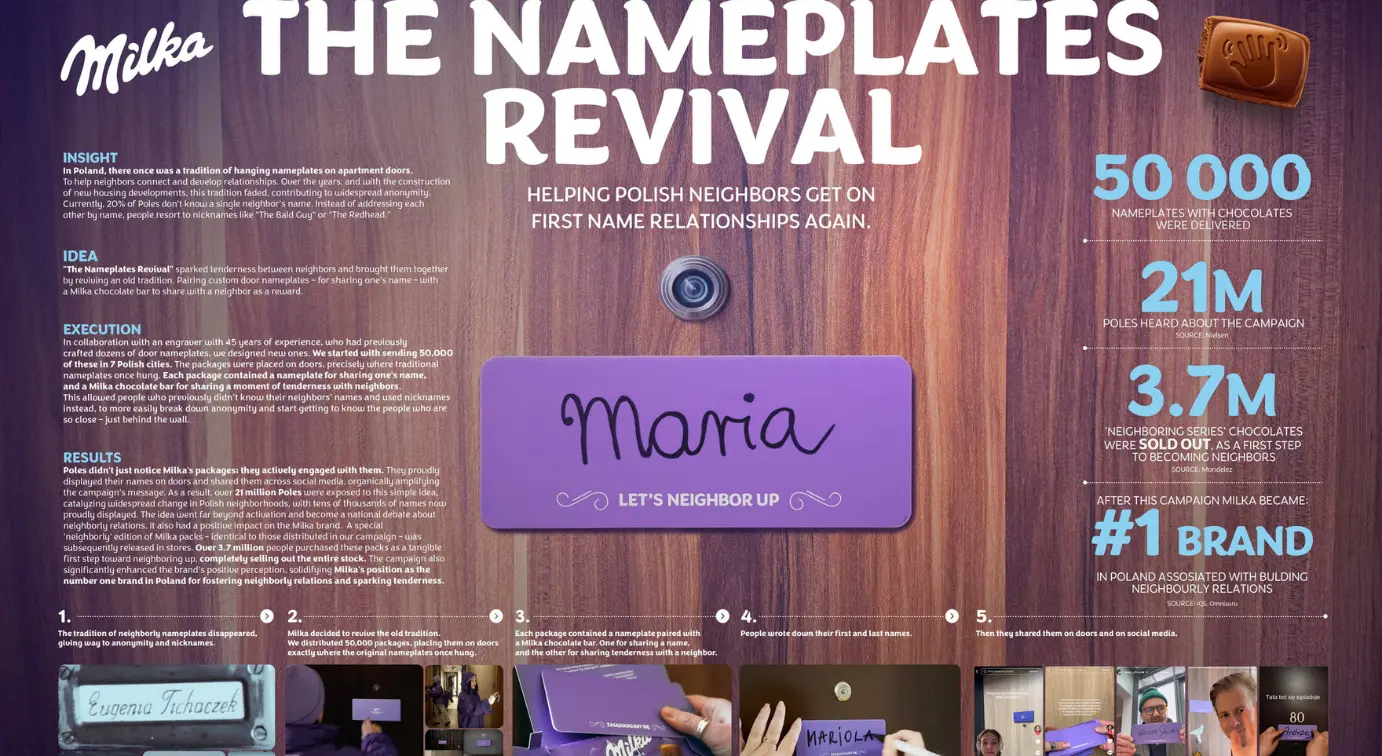
20% of Poles do not know the name of a single neighbour. Not in passing. Not at all. The reason for that anonymity was not hostility. It was sitting in plain sight on every apartment door in the country: an empty space where a nameplate used to hang before the tradition quietly disappeared. Milka and Ogilvy Warsaw found the answer to a social problem in a piece of absent hardware, and built a campaign around bringing it back.
The Observation Behind the Campaign
Poland once had a standard domestic tradition of engraved or embossed nameplates on apartment doors, small plates bearing the family’s name that made introductions natural and neighbourly life more connected. As housing developments shifted to newer formats across the country, the tradition faded. The blank space it left behind became normalised. People moved in, lived alongside strangers for years, and referred to their neighbours by descriptions rather than names. “The Noisy One.” “The Redhead.” “The Bald Guy.” The social distance was not a failure of goodwill. It was the absence of a starting point.
The Execution
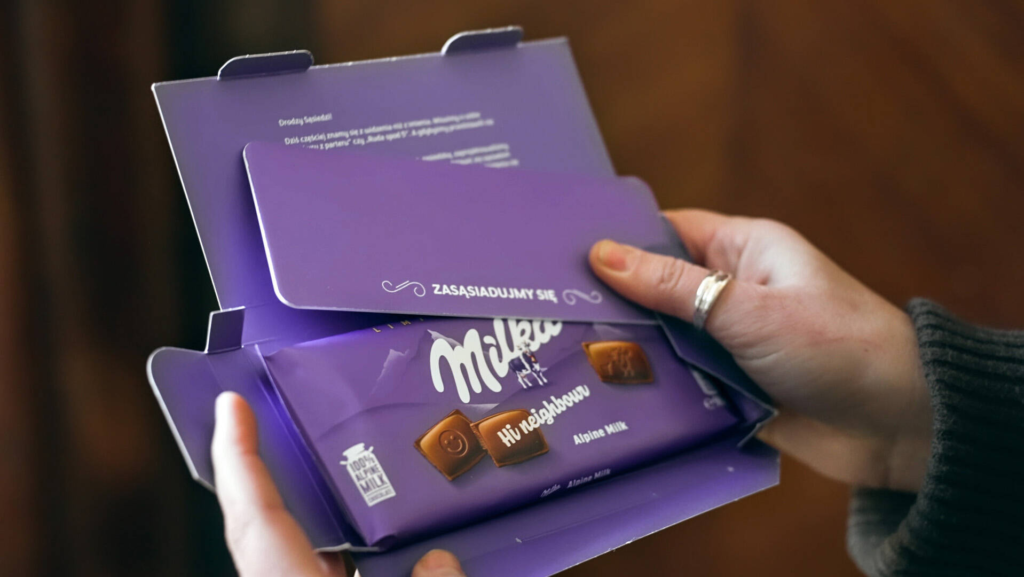
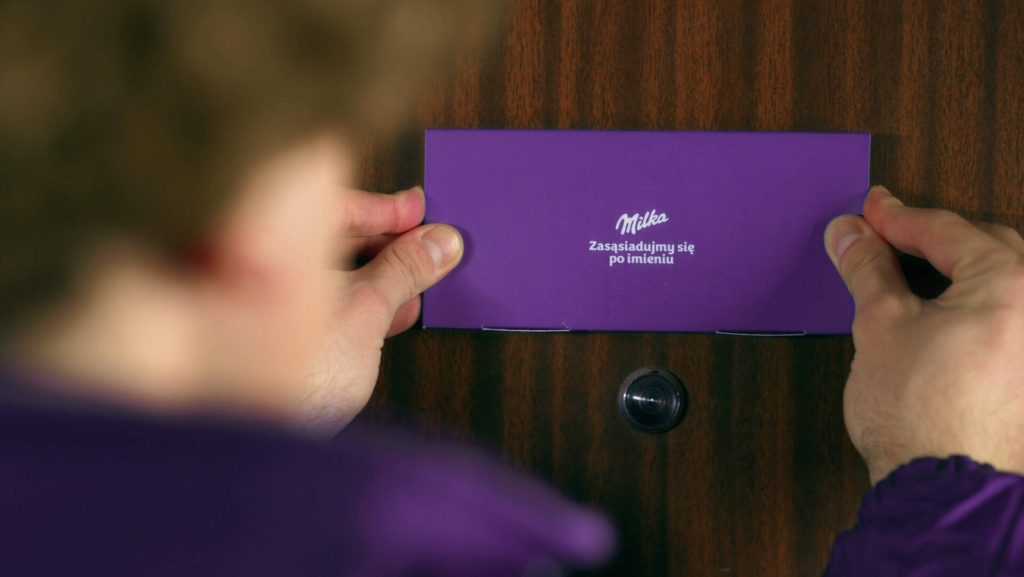
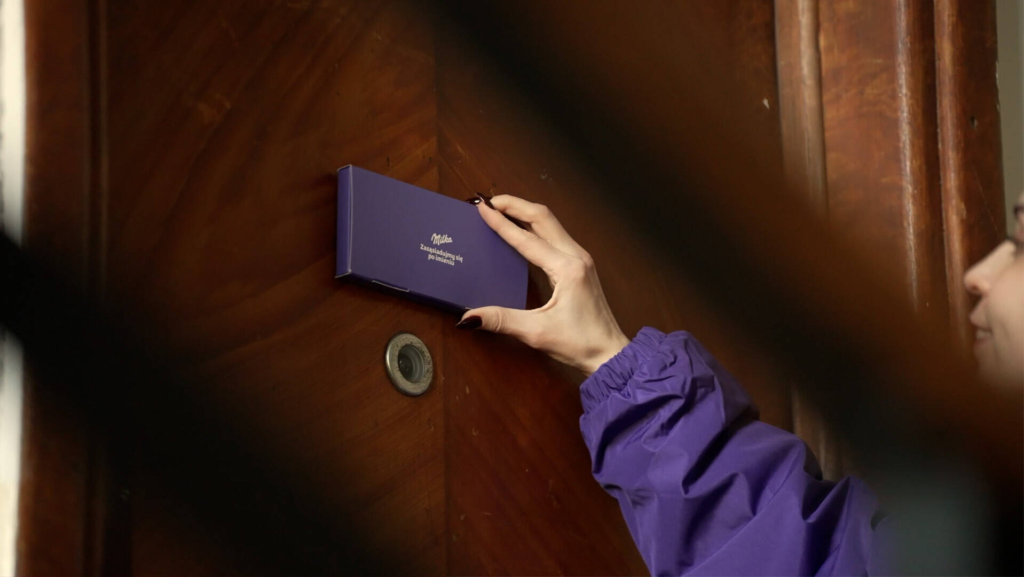
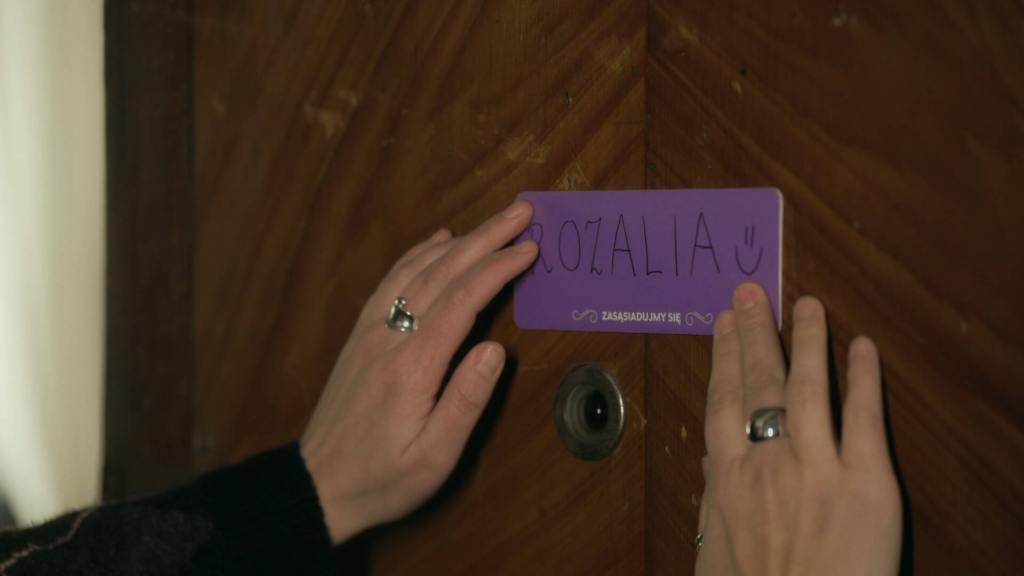
Milka partnered with Jarosław Wojdak, a craftsman with 45 years of experience producing the door nameplates that had once been standard in Polish homes. Together they produced 50,000 packages. Each package contained a custom nameplate and a Milka chocolate bar. The packages were placed on apartment doors, exactly where the nameplates used to hang, across seven Polish cities.
The mechanic required nothing from the resident except to open their door and find it. Hang your name. Pass the chocolate next door. The call to action was already on the door. No explanation was printed on the package. The object explained itself.
The craftsman partnership was not incidental. A commercially manufactured nameplate is a product. A nameplate made by someone who has spent four and a half decades making them is an object that carries the weight of the tradition it is reviving. That distinction is what made the packages feel like gifts rather than promotions, and what made recipients treat them as something worth keeping rather than something worth discarding.
What It Produced
The campaign reached 21 million people across Poland. Milka subsequently released a limited-edition version of the same package in stores, available for the broader Polish public to participate in the gesture. The entire stock of 3.7 million bars sold out completely.
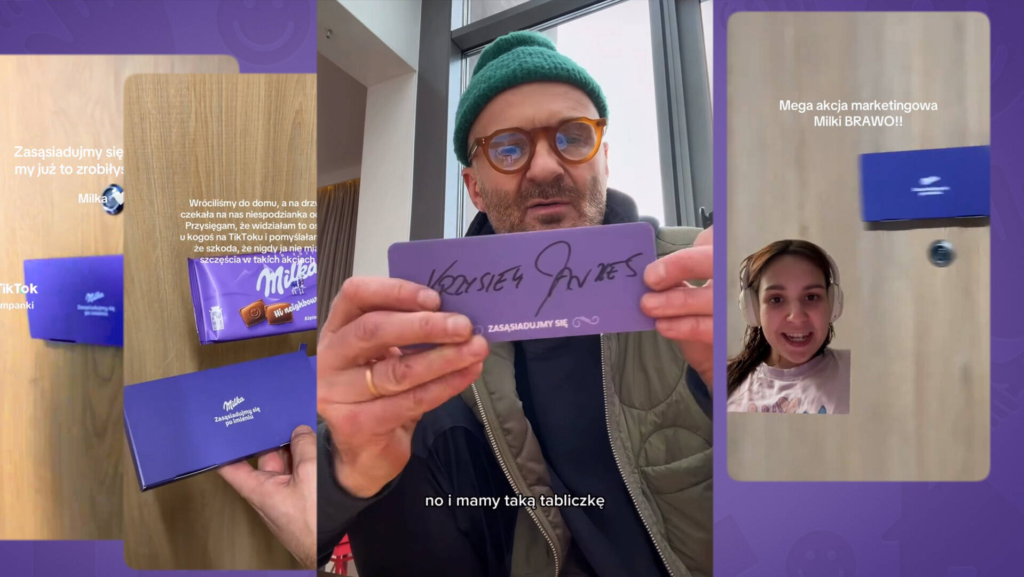
The IQS Omnisurv data following the campaign confirmed that Milka had solidified its position as the number one brand in Poland for fostering neighbourly relations. Residents shared their nameplates on social media, tagging the street, the building, and the neighbours who had introduced themselves as a result. The campaign distributed itself through the doors it was placed on.
The Logic That Made It Work
Most branded community initiatives build mechanics: digital platforms, hashtag campaigns, application processes. The Nameplates Revival had none of those. A craftsman made plates. They were placed where nameplates used to be. Anyone who opened their door found one. Anyone who hung it shared their name. Anyone who passed the chocolate next door started a conversation that might otherwise never have happened.
The simplicity is the campaign’s entire structural advantage. An instruction to “be a better neighbour” is easy to ignore. A nameplate on the door with a bar of chocolate attached to it is impossible to walk past without making a decision about what to do next. The campaign made neighbourliness the path of least resistance rather than an aspiration requiring effort.
Campaign Name: The Nameplates Revival / “Let’s Neighbor Up”
Agency Name: Ogilvy Poland, Warsaw / Media: Spark Foundry (Publicis Groupe)
Brand Name: Milka / Mondelēz International
Location: Seven cities across Poland