A print campaign does not need to be complicated to be devastating. Publicis Brussels proved that in September 2010 with four images, four words, and one line that has stayed in advertising curricula for fifteen years since.
The Campaign
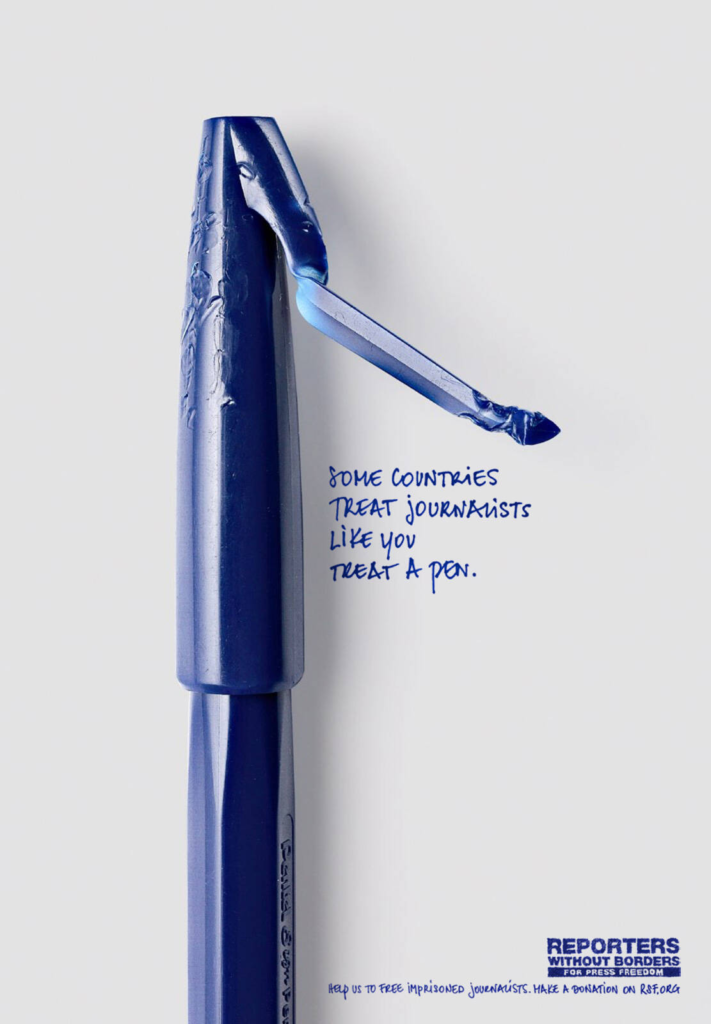
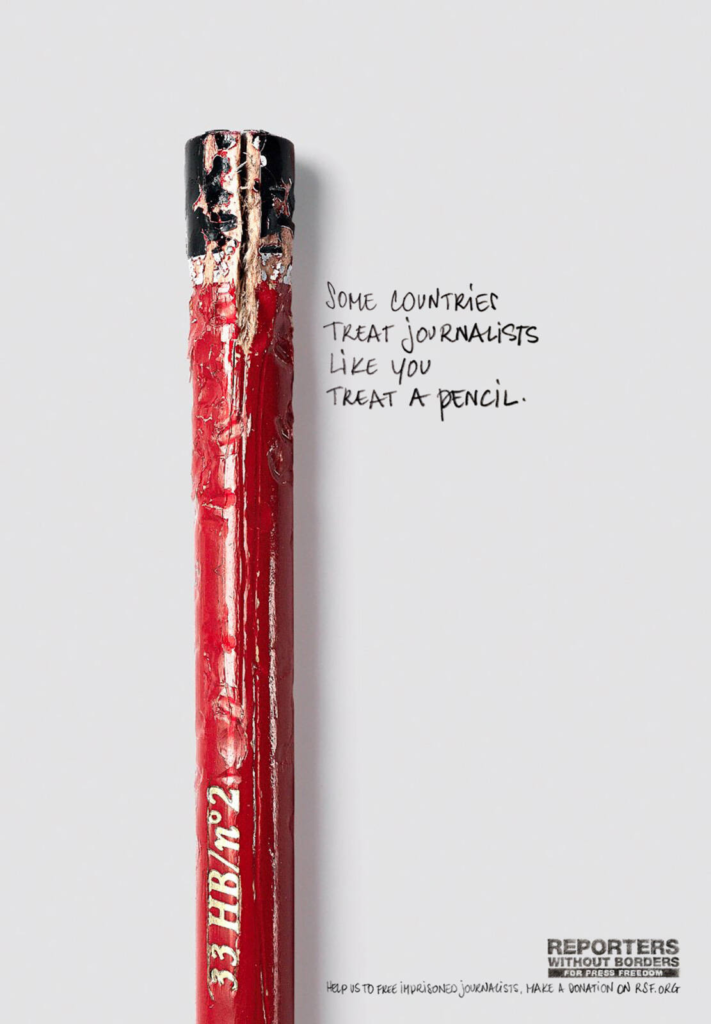
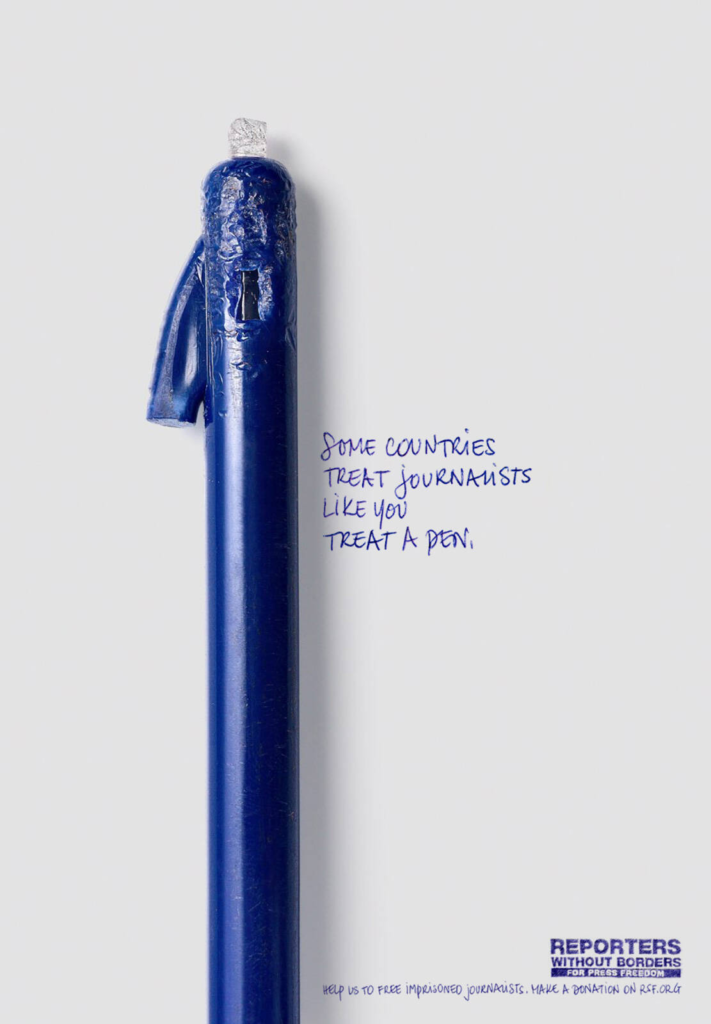
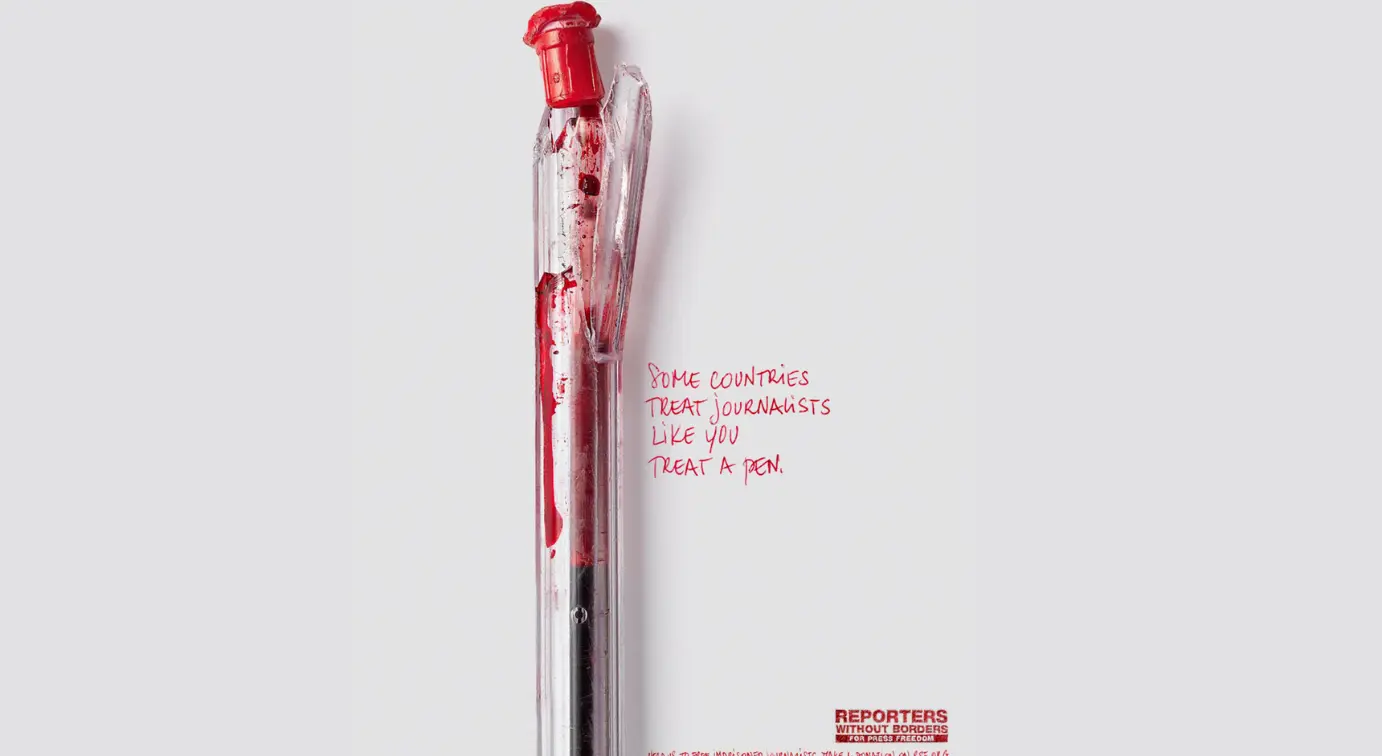
“Bloody, Amputated, Crushed, Twisted” was created by Publicis Brussels for Reporters Without Borders and published in Belgium in September 2010. The four print executions each show a pen nib in a different state of damage. One is bloody. One is amputated. One is crushed. One is twisted. The images are photographed with the clinical precision of a forensic document rather than an advertising visual.
The campaign line underneath each image reads: “Some countries treat journalists like you treat a pen.”
That is the entire campaign. There is no statistic. No photograph of a journalist in danger. No call to action. No body copy. Just the object, the state it has been left in, and the line that connects the two.
The Parallel the Campaign Draws
A pen that has been left bloody is a pen someone pressed too hard. A pen that has been amputated is one that has been snapped. A pen that has been crushed is one that has been stood on. A pen that has been twisted is one that has been broken deliberately. All of these are things people do to pens without a second thought, because pens are objects and objects do not have rights.
The campaign makes the parallel explicit without stating it. The viewer arrives at the implication themselves: in certain countries, the person holding the pen is treated with the same indifference as the pen itself. A journalist who has been bloodied, imprisoned, silenced, or killed is not a different category of concern from a broken pen. They are the same category of concern to the authority doing it.
The word choice across the four titles is precise. Bloody, Amputated, Crushed, Twisted are not abstractions. They are physical states, specific, tactile, and immediately imaginable. The viewer does not need to know which countries, which journalists, or which incidents the campaign is referring to. The words do the work of specificity without requiring any particular fact.
Who the Campaign Was Addressing
Belgium has among the highest press freedom rankings in the world. Reporters Without Borders chose Belgium as the market for this campaign precisely because its audience had never had to think about press freedom in personal terms. The campaign was not addressed to governments committing violence against journalists. It was addressed to people for whom a free press was so normal it had become invisible.
That targeting decision is what makes the pen the right vehicle for the message. Everyone in Belgium who read this campaign in 2010 had used a pen carelessly. Everyone had lost one, broken one, chewed one, left one pressed too hard against paper. The physical experience of treating a pen as disposable is universal. The campaign transfers that universally familiar experience to a context the reader had never applied it to before.
Creative Directors Paul Servaes and Alain Janssens, Art Director Alex Gabriels, and Copywriter Wim Corremans built something that fifteen years of digital campaigns, data visualisations, and immersive installations have not improved upon: a line and an image that require nothing from the viewer except a moment of recognition.
Why It Still Circulates
The campaign was submitted to Ads of the World at the time of its publication. It continues to be shared by advertising professionals, journalism students, and press freedom advocates across social media as a reference point for what print advertising can do when it commits to a single idea without decoration.
The test of a great print campaign is whether it would work with the brand name removed. “Some countries treat journalists like you treat a pen” works with any pen in the photograph and no logo in sight. That is the mark of an idea that belongs to the argument rather than to the brand executing it.
Campaign Name: Bloody, Amputated, Crushed, Twisted
Agency Name: Publicis Brussels, Belgium
Brand Name: Reporters Without Borders
Location: Belgium (print, September 2010)