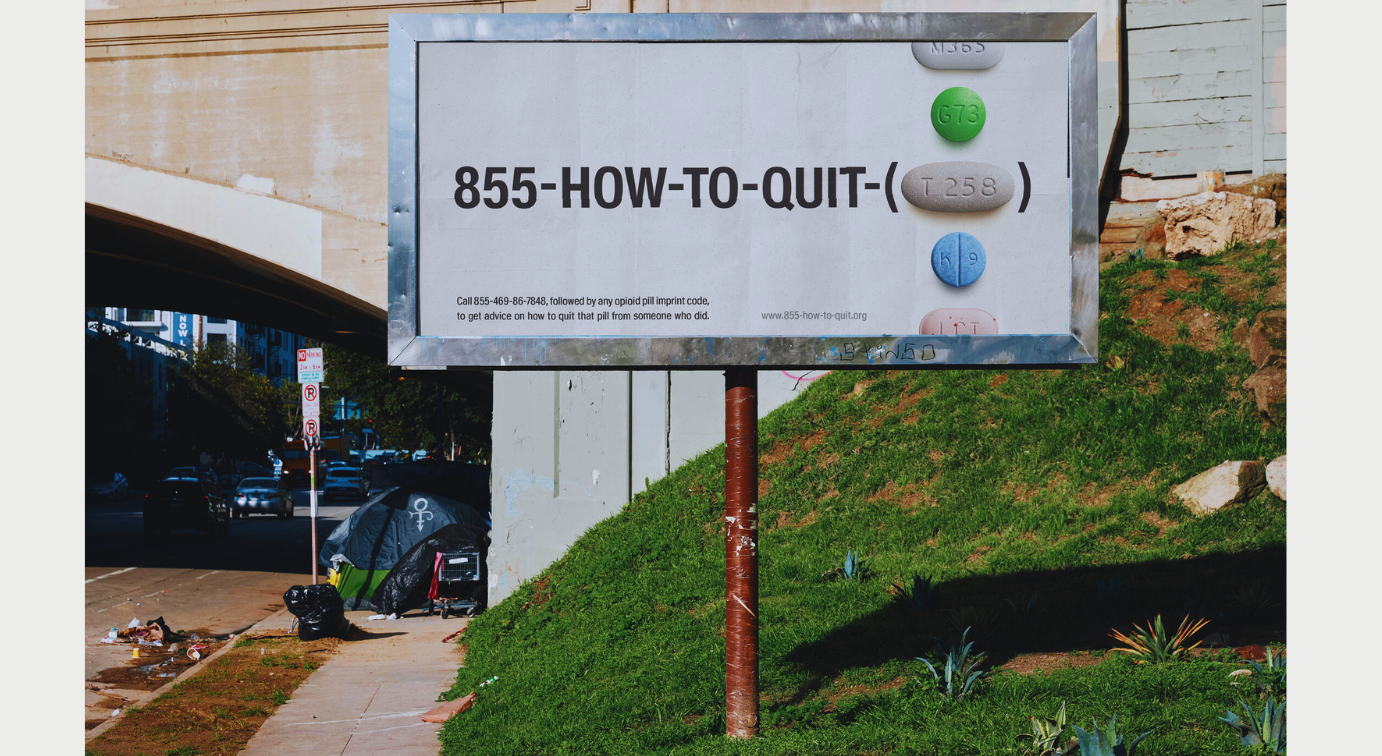
In the United States, opioids are dispensed legally across hundreds of millions of prescriptions every year. Every single pill produced for legal distribution in America carries a mandatory imprint code, stamped by the manufacturer and regulated by the FDA: OP for oxycodone, IP33 for codeine, C for fentanyl, K9 for another oxycodone variant. These codes are so embedded in the culture of opioid use that they function as street names. A person holding a pill knows its code. Serviceplan Germany and Anzen Health built a recovery helpline around that fact.
The Problem
The opioid epidemic affects more than 6.1 million Americans. Of those, the ones most reachable by an intervention are not the ones who have decided to seek help. They are the ones who have not yet decided. The person most likely to call a helpline is not sitting in front of a computer searching for resources. They are holding a pill, in the moment before they take it, when the gap between using and not using is at its narrowest and most unstable.
Every existing opioid helpline is designed to be found before that moment. The number is saved in a phone, printed on a card, displayed in a clinic waiting room. By the time someone is holding the pill, the distance between the moment and the resource has become too large. The campaign’s brief, as Anzen Health described it, was to reach people at the most critical moment, when they have a pill in their hand, with the least possible barrier between that moment and help.
The Helpline
855-HOW-TO-QUIT is a toll-free number. The innovation is in what happens when you call it. Rather than dialling a central operator, callers enter the imprint code from the pill they are holding as the phone extension. Codeine (IP33) is dialled as extension 4733. Oxycodone (K9) is dialled as extension 59. Each code maps to a specific extension on the helpline that connects the caller not with a clinical professional but with a person who has successfully quit that exact same pill.
The connection is peer-to-peer rather than clinical by design. Someone who has held the same pill, taken it, and found a way out is a different kind of voice from a professional reading from a script. The caller hears from someone who knows the specific drug in their hand from the inside. The code on the pill, the object of the addiction, becomes the mechanism of the intervention. The pill that was about to be swallowed becomes the phone number that reaches someone who stopped swallowing it.
Anzen Health developed a technical mapping system that turned physical pill identifiers into functional telephone extensions across the most commonly prescribed opioids in the US market. The helpline infrastructure was built in partnership with a coalition of NGOs, activists, and media partners.
The Campaign
The activation was not simply a helpline number. Serviceplan Germany built a nationwide media campaign around it, distributed through channels chosen for their proximity to the moment the helpline was designed to reach.
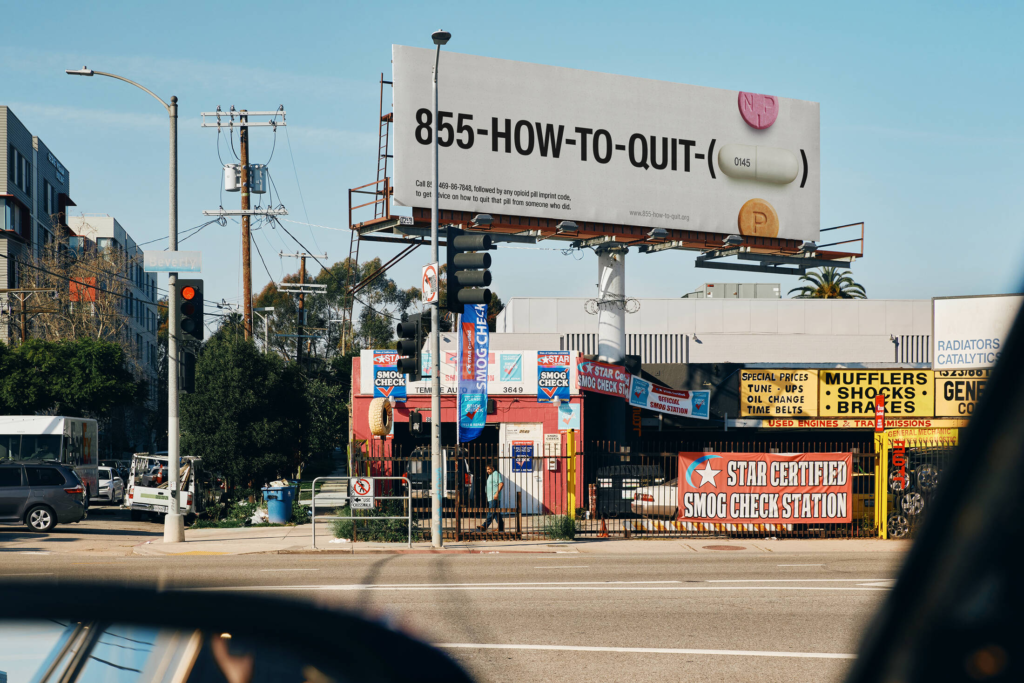
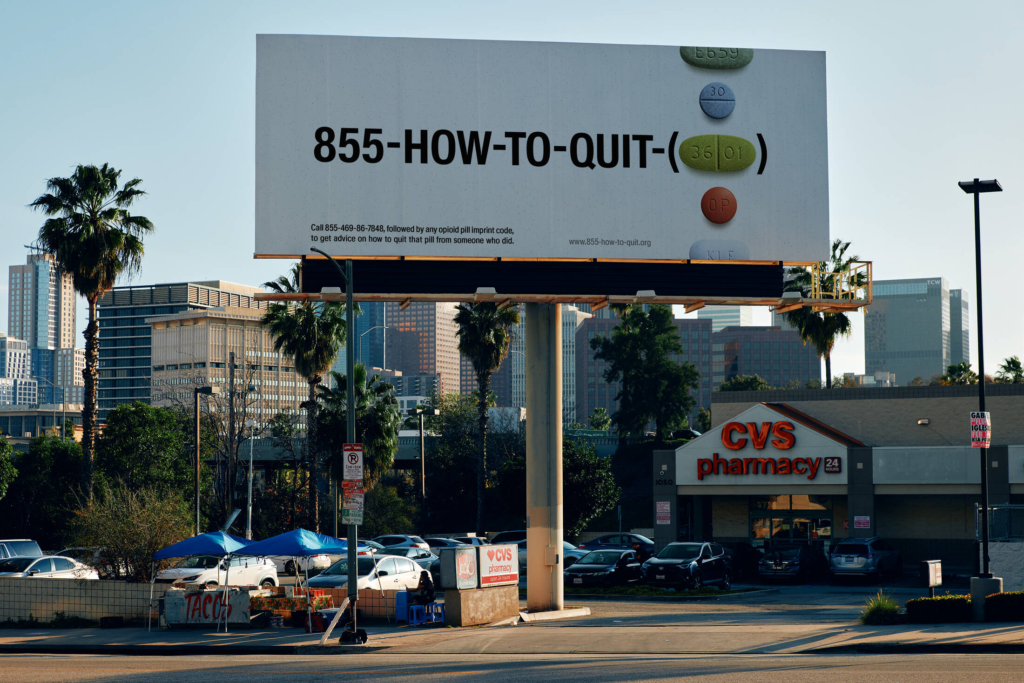
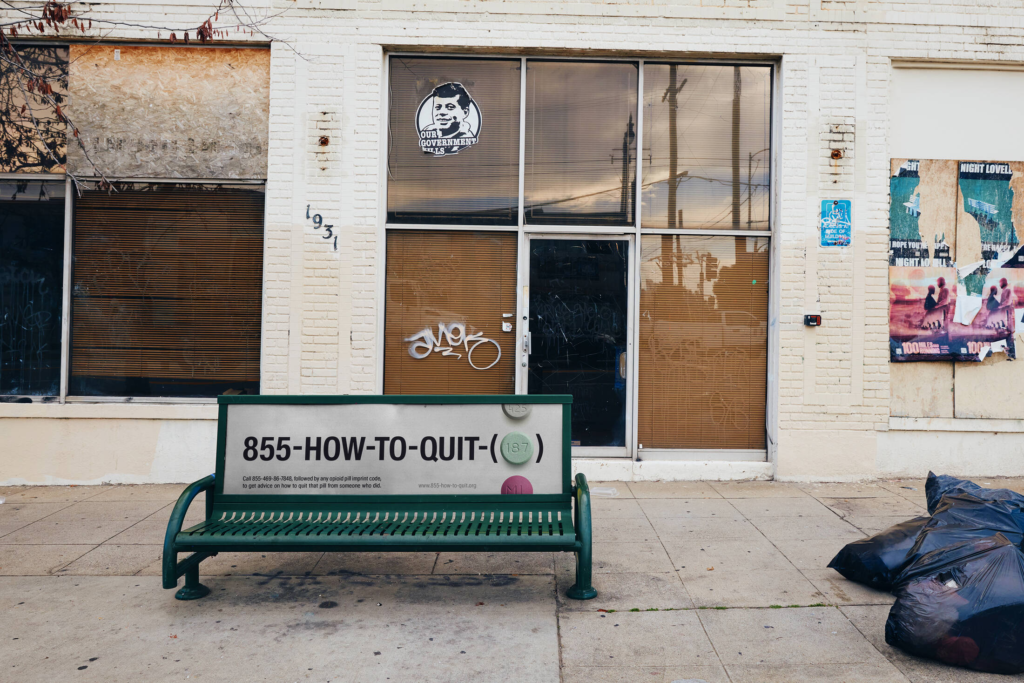
Out-of-home advertising was placed using local prescription data that identified which opioids were most commonly dispensed in specific geographic areas, allowing each outdoor placement to feature the pill codes most familiar to the people who would see it in that location. A billboard near a pharmacy in an area with high codeine prescription rates showed the codeine imprint. The media placement was as precise as the helpline mechanism it was advertising.
An emotional film carried the campaign to television. On social media, influencers who had themselves quit opioids promoted the helpline and, in some cases, joined it as the peer voices callers would reach on the other end of the line. The strategy converted the campaign’s core mechanism, the peer-to-peer connection, into its social media content simultaneously.
The Results
Within the first four weeks of launch in March 2024, the campaign reached 137 million people through OOH, film, and PR, with some estimates placing the broader reach at 182 million people across the combined campaign period. More than 8,000 calls were made to the helpline. More than 3,600 treatment referrals were facilitated.
The D&AD jury described the creative thinking with unusual directness: “It shows some genuinely brilliant creative thinking, taking the problem, the opioid pill itself, and turning that into the solution. The opioid crisis is largely a uniquely American problem and this tackles it with a uniquely American solution.”
The Recognition
The campaign received extensive international recognition across the advertising industry’s most significant award shows. At Cannes Lions 2024, it was shortlisted in the Dan Wieden Titanium category and won Gold and Bronze in Design, Silver in Outdoor, and Bronze in Direct and Media. At D&AD 2024, it won 2 Yellow Pencils in Graphic Design, a Graphite Pencil, and 2 Wood Pencils across Graphic Design, Media, Art Direction, Experiential, and Direct categories. At Eurobest 2024, it won the Design Grand Prix. At The One Club’s ADC Awards, it was recognised in integrated categories. At Clio Health 2024, it received a Bronze.
The volume of recognition across categories, Graphic Design, Media, Direct, Experiential, Outdoor, reflects what each awarding body identified in the work: a campaign that solved a design problem, a media problem, a direct response problem, and a public health problem with a single mechanism.
Campaign Name: 855-HOW-TO-QUIT-(OPIOIDS)
Agency Name: Serviceplan Germany, Munich / Global CCO: Alex Schill / Executive Creative Directors: Lorenz Langgartner, Franz Röppischer / Creative Director: Dennis Fritz / Art Directors: Camille Nizet, Tanvi Phalak, Rohil Borole, Kai West Schlosser / Copywriters: Shruthi Subramanian, Javier Granados / Media: Mediaplus Germany / Production: JOJX, Venice / Post-Production: JAMM / PR: Tulom
Brand Name: Anzen Health, Chicago
Location: United States (national; OOH near pharmacies, film, social; launched March 2024)