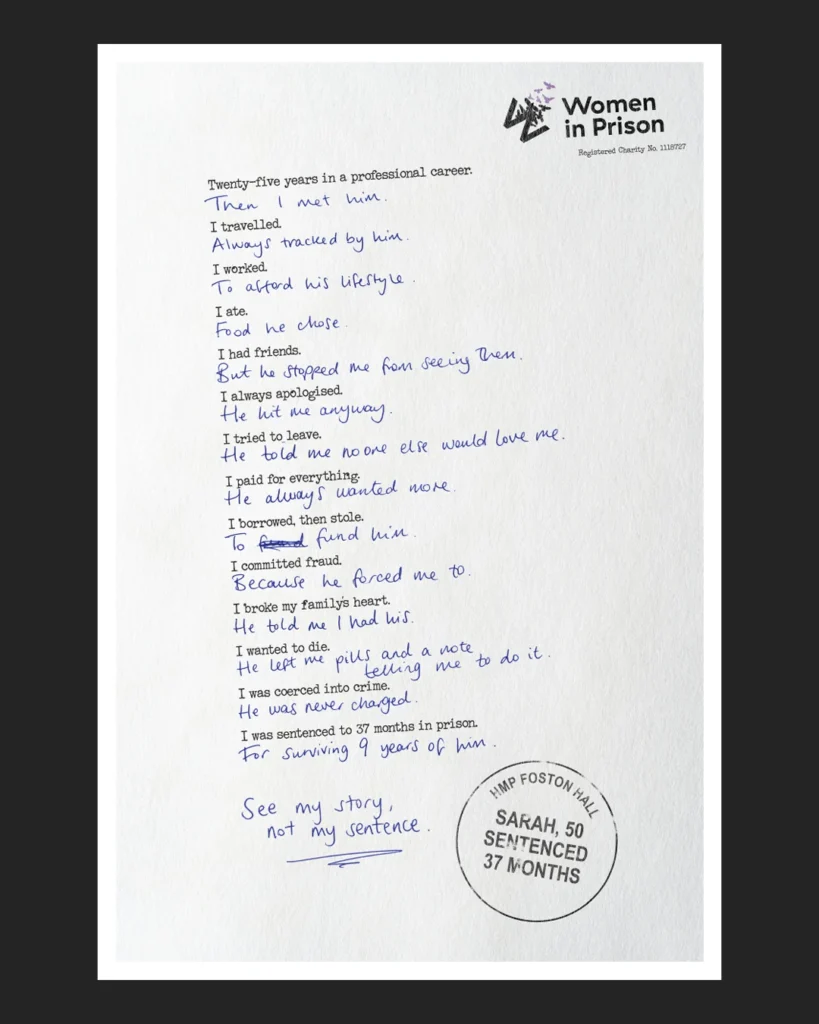
A UK charity is putting the handwriting of women in prison on billboards. Each ad sets the cold facts of a criminal case against the woman’s own note about the abuse that led to it. The campaign asks the public to read both before passing judgement.
Two Kinds of Writing on One Board
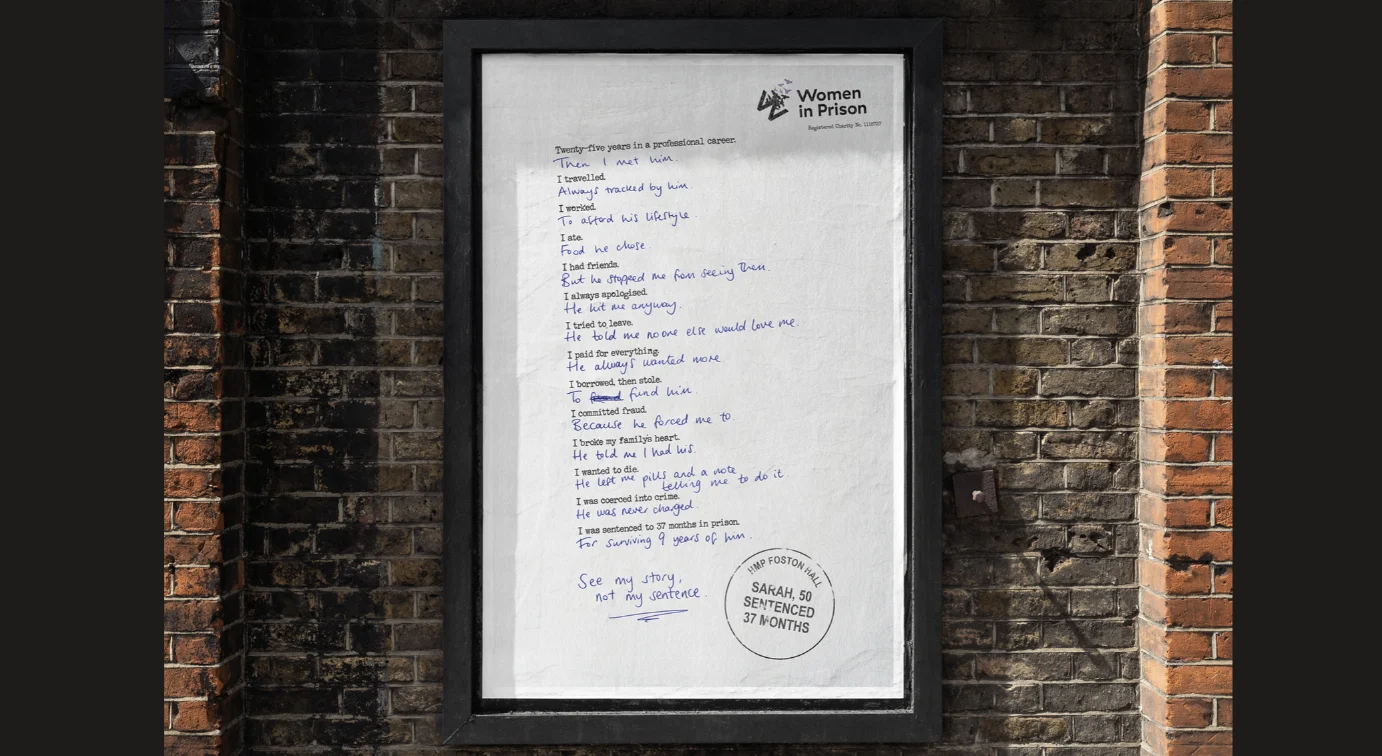
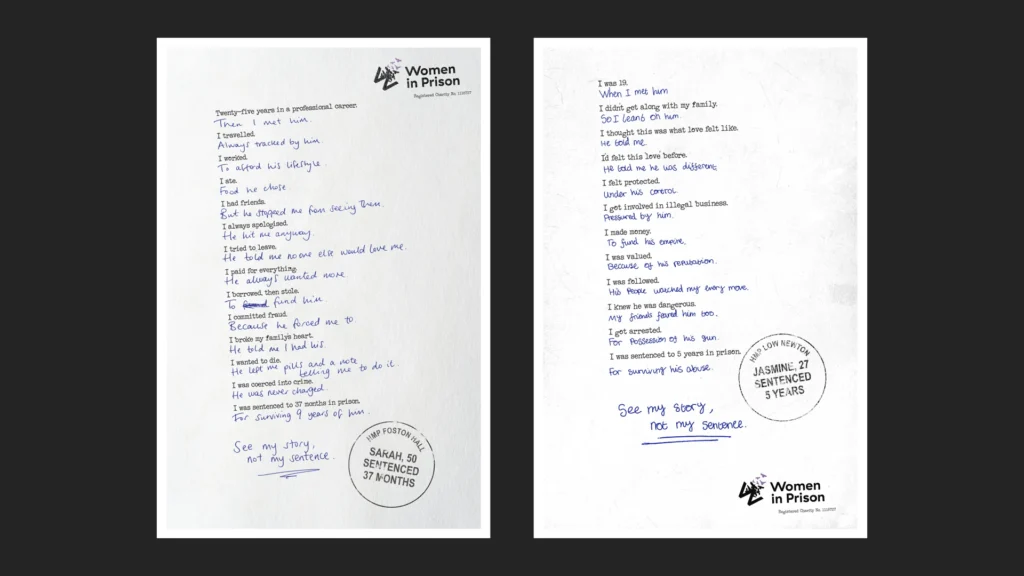
The outdoor ads are simple and stark, running in London and Manchester. Typewritten case details sit beside handwritten context in each woman’s own ballpoint pen, adding her side of the story.
The contrast is the whole idea. The typed text reads like a court record, the version of events the justice system keeps. The handwriting is personal and uneven, the version it often leaves out.
Social posts across Meta platforms use a similar format to share statistics and the women’s stories. Audio is planned to extend the campaign over the coming weeks.
The Women Behind the Cases
The campaign tells true accounts from women who were sentenced after surviving abuse that led to their offending. Sarah was jailed for 37 months for fraud she committed for an abusive partner in a coercive relationship. She had been abused for more than 9 years. Jasmine was sentenced to 5 years for possessing her partner’s gun.
The Numbers in the Report
The campaign launches the charity’s Report on Domestic Abuse, which carries the same name. The report finds that 65% of women in prison were criminalised for trying to survive domestic abuse, and 93% of female prisoners had experienced it. The survey behind it covered 1 in 7 women in prison.
How the Message Rolls Out
Cherie Blair unveils the report in a BBC Newsnight special feature with Victoria Derbyshire on November 25, the International Day for the Elimination of Violence Against Women. The campaign then releases its stories and statistics in stages across the 16 Days of Activism against gender based violence. Hijinks made the work pro bono through its Positivity Through Creativity programme.
What the Charity Is Asking For
Women in Prison wants the Government to strengthen the Domestic Abuse Act 2021. It is calling for a statutory duty across the criminal justice system to identify domestic abuse, consider it in decisions and hold agencies accountable for reducing the criminalisation of survivors.
Sonya Ruparel, CEO of Women in Prison, said “Women who have survived domestic abuse deserve to be believed and supported.” She also pointed out that prisons are overcrowded while domestic abuse is at epidemic levels. Paddy Paddison, senior creative at Hijinks, said it was vital that the women’s full stories were heard.
The Team Behind the Work
The Hijinks team was led by co-founder and CEO Alicia Iveson and chief creative officers Marc Allenby and Tamryn Kerr. Factory Studios handled sound, with Rebecca McLeish as voiceover artist.
A sentence fits on one line of a court record. The campaign puts the years of abuse that came before it on the same page.
Campaign Name: See My Story, Not My Sentence
Agency Name: Hijinks
Brand Name: Women in Prison
Location: London and Manchester, United Kingdom