In India, when an elderly person starts forgetting things, the family reaches for two phrases: “Budhapa aa gaya” and “Bhulne ki bimari.” Old age has come. The forgetting disease. Both reduce dementia to its most visible symptom and in doing so, make everything that happens before the forgetting begins invisible. Tata Trusts launched “Vajood Rahe Maujood” in September 2026 to name what those phrases leave out: the slow erosion of identity, role, and selfhood that begins long before the family has the language to describe what they are watching.
What the Campaign Is About
Vajood Rahe Maujood translates from Hindi as “May Existence Remain Present.” The tagline is not a wish. It is the campaign’s entire argument: that the goal of early dementia awareness is not to prevent memory loss, which cannot always be prevented, but to preserve the person’s sense of self, their roles, their relationships, their everyday abilities, for as long as possible, by acting before the gradual erosion becomes irreversible.
The campaign is built around insights gathered from people living with early-stage dementia, caregivers, and medical professionals. The central finding is that dementia’s most consequential early damage is not to memory but to identity. A person who can no longer cook a meal they made every day for forty years, who can no longer navigate a familiar neighbourhood, who finds themselves in a role of dependency when they have spent a lifetime in a role of care, is losing something that the phrases “Budhapa aa gaya” and “bhulne ki bimari” have no capacity to name or address.
The Film
The campaign’s hero film is a short film rather than a public service announcement, a distinction its creative director made deliberately. Keigan Pinto, Creative Chief, Writer, and Director, described the creative decision: “The creative challenge was to make something as invisible as identity loss felt without reducing dementia to a list of symptoms. That is why we chose to make this a short film rather than a conventional public service announcement. We wanted to give the audience enough time to inhabit an everyday relationship and notice the small shifts that can otherwise be overlooked.”
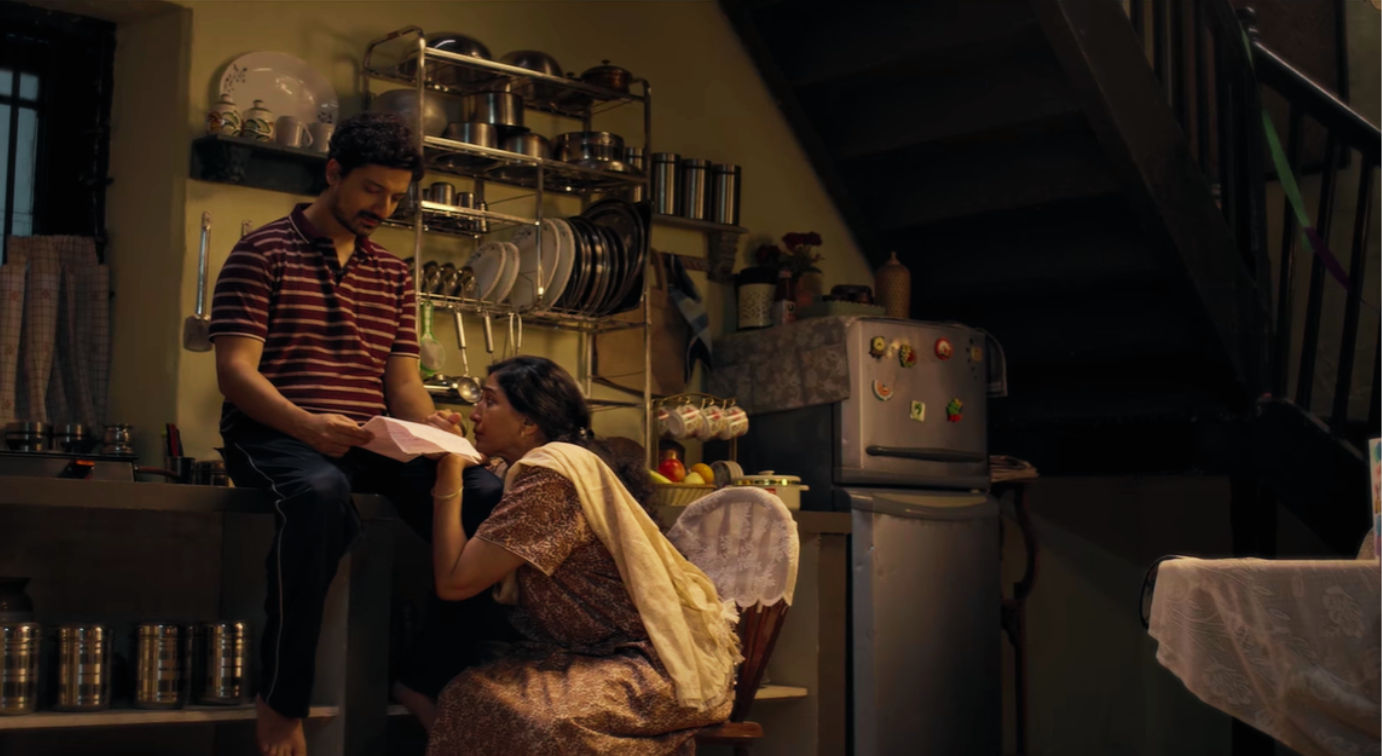
The film follows a mother, played by Geeta Agarwal Sharma of Laapataa Ladies and 12th Fail, showing early signs of dementia. Her son, played by Priyanshu Painyuli of Mirzapur and Extraction, becomes her primary caregiver. The film’s central narrative device is a poem the son writes for his mother on her birthday. The poem allows him to have a difficult conversation about the changes he is witnessing while maintaining the emotional register of care rather than clinical concern. As Pinto described it: “Through the poem, the son has a difficult conversation with his mother, while empathising with her.”
The Two Decisions the Casting Makes
The casting carries two deliberate arguments beyond the performances themselves.
The first is demographic. Dementia affects women disproportionately. The World Health Organization confirms that women make up roughly 65% of dementia cases globally, and in India, where women often delay seeking medical attention for themselves throughout lives spent in caregiving roles, the pattern is acute. Placing a woman as the protagonist makes that disproportionate impact visible in a way that statistics alone cannot.
The second is cultural. Caregiving in Indian families is overwhelmingly performed by women. By placing a son as the primary caregiver, the campaign challenges that assumption and directly encourages greater participation by men in caregiving and in initiating family conversations about dementia. The casting choice is, in both directions, a social argument embedded in a storytelling choice.
The Language Problem the Campaign Solves
One of the most significant insights Wolfzhowl uncovered in their research was a structural barrier that no amount of awareness messaging can overcome without first being addressed: the absence of regional-language vocabulary to describe dementia and its early changes.
Kalyan Challapalli, Founder and Chief of Strategy at Wolfzhowl, described the implication precisely: “You cannot ask people to recognise what they do not have the language to describe. The campaign thus, offers a common ground that hopefully makes the condition easier to decipher, talk about and act on, in homes and communities, not just in clinics.”
In a country with hundreds of languages and dialects, a condition that exists in English medical terminology but not in the everyday language of the households most at risk is effectively invisible to those households. Vajood Rahe Maujood offers both a phrase and a concept in Hindi that families can use to start conversations they previously had no vocabulary to initiate.
The Scale of the Need
India is projected to have more than 347 million people aged 60 and above by 2050. Research estimates that around 45% of dementia cases could potentially be prevented or delayed, and that changes associated with the condition can begin 10 to 20 years before symptoms become apparent. The window for intervention exists. The barriers to using it are awareness, language, and the cultural tendency to treat its early signs as normal ageing.
Shilpi Ghosh, Head of Brand and Marketing Communications at Tata Trusts, described the audience targeting rationale: “Addressing patients exhibiting mild symptoms was therefore a conscious choice of audience for nudging behavior change. And when loss of identity and its various dimensions across the stages of the disease, were uncovered as an insight, we knew we had something powerful to work with, that would lead to captivating communication that was persuasive and not preachy.”
The campaign was launched during World Alzheimer’s Month in September 2026, distributed across digital and social platforms to reach families at the scale the problem requires.
Campaign Name: Vajood Rahe Maujood
Agency Name: Wolfzhowl (strategic communications) / Creative Chief, Writer and Director: Keigan Pinto
Brand Name: Tata Trusts
Location: India (digital and social media; September 2026, World Alzheimer’s Month)