On February 24, 2022, Russia invaded Ukraine. Every major Western intelligence assessment in the preceding days had predicted a Ukrainian collapse within 72 hours. The Russian military expected to be in Kyiv within three days. Banda Agency, a creative studio based in Kyiv that had spent the previous decade working for Uber, Netflix, Pepsi, and Spotify, spent the first few days of the war in shock. Then its co-founder and chief creative officer Pavel Vrzheshch made a decision. The agency would stop being a commercial studio and become what he called creative warriors for Ukraine.
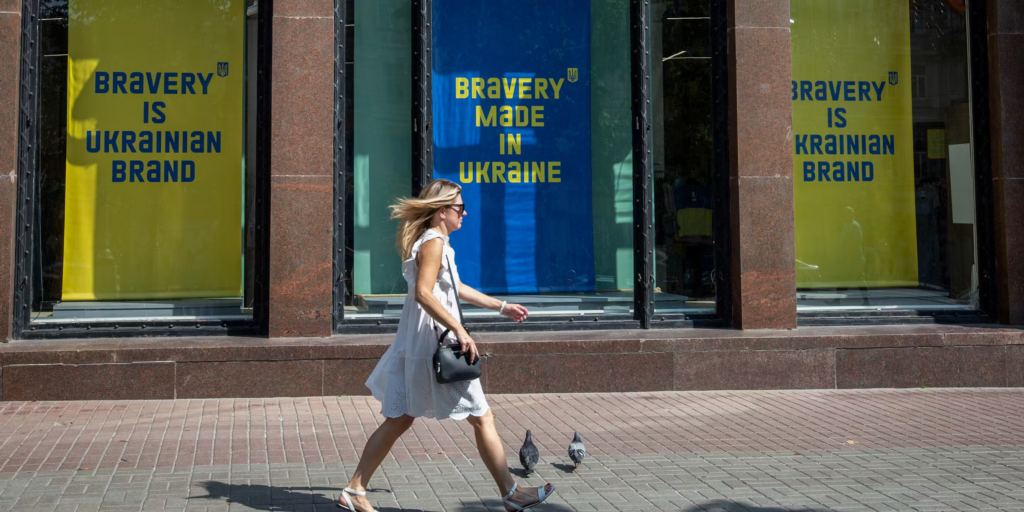
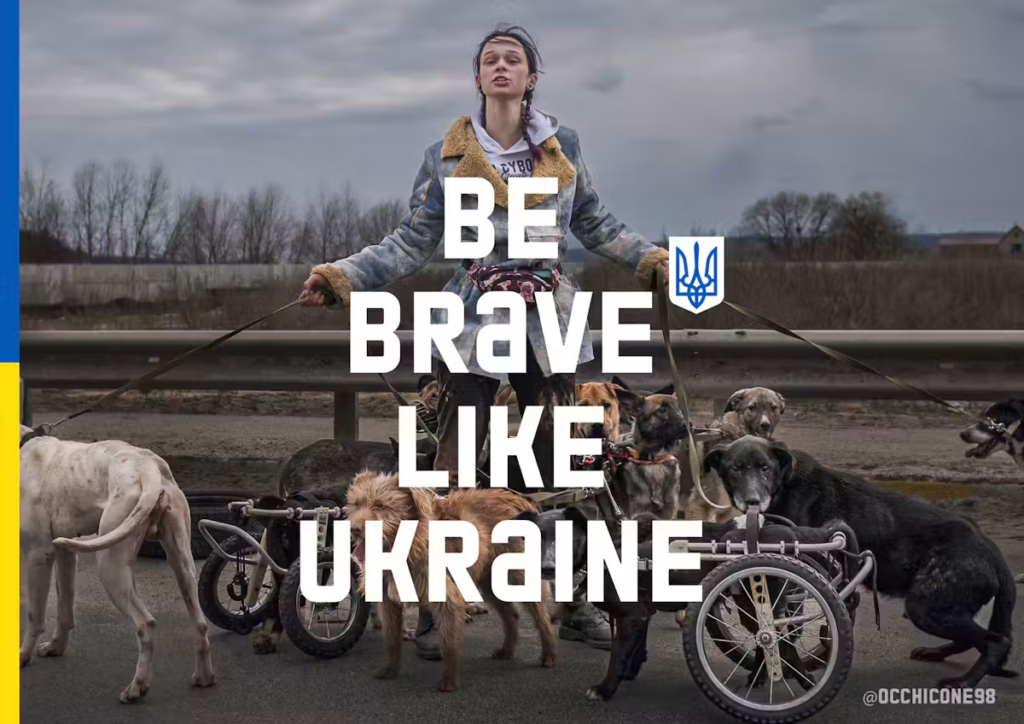
The result was Be Brave Like Ukraine, the largest outdoor advertising campaign in the history of the country, produced with zero budget, seen by more than two billion people.
The Brief
The campaign did not begin with a brief in the conventional sense. It began with a question that Vrzheshch and his team asked themselves in the first days of the invasion: how do you convince the world not to write Ukraine off? How do you counter a narrative of inevitable defeat with something that reaches people emotionally before any battlefield development has confirmed or denied it?
The answer was not to communicate military facts, which were still fluid and uncertain. It was to communicate something more fundamental: the character of the people choosing to fight. Ukraine had already demonstrated something the world had not expected. The question Banda asked was whether that demonstration could be named, amplified, and exported before the moment passed.
Vrzheshch presented the concept to Ukraine’s Ministry of Digital Transformation and then, through the ministry, to President Zelenskyy. Zelenskyy wanted it launched widely. The campaign began on April 8, 2022, forty-three days after the invasion started.
What Was Built
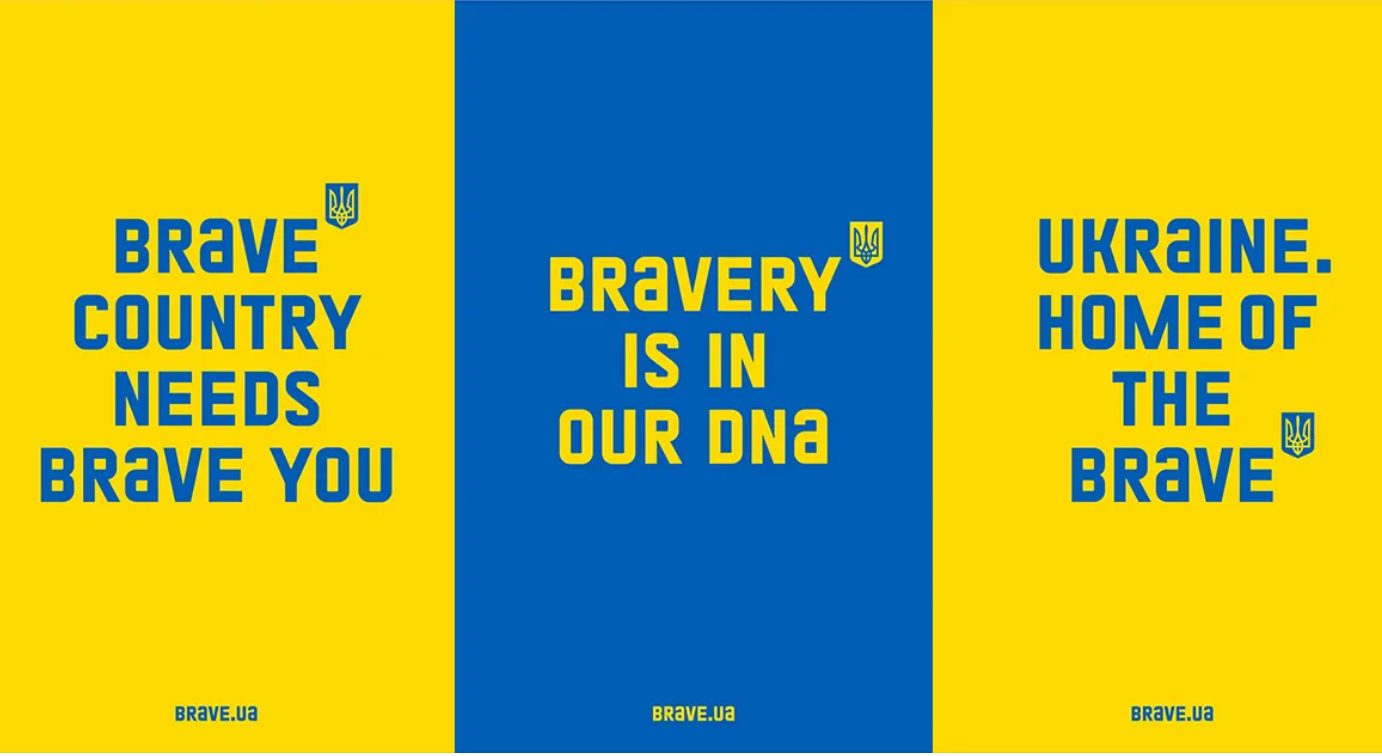
Be Brave Like Ukraine is a visual campaign built entirely in the blue and yellow of the Ukrainian flag. Its executions feature photographs of ordinary Ukrainians and soldiers in the moments that had become the visual record of the war’s first weeks: people defending their country, maintaining infrastructure, continuing daily life under bombardment, and choosing resistance when the rational calculation suggested flight.
The billboard executions carry slogans that place bravery not as a moment but as an identity: “Be Brave Like Ukraine.” “Bravery lives forever.” “Bravery is our brand.” The language claims bravery as a permanent national characteristic rather than an emergency response, which is the campaign’s most significant strategic decision. Vrzheshch described the intent: “The whole world admires the Ukrainian bravery now, we must consolidate this notion and have it represent Ukraine forever.”
Inside Ukraine, the campaign appeared on 500 billboards across 21 cities, on juice bottles, and across public transport environments. Outside Ukraine, the executions ran across approximately 13,000 digital screens covering 22 countries and more than 160 cities, including the United States, United Kingdom, Canada, Poland, Germany, Spain, Sweden, Italy, India, Taiwan, and 12 other markets.
How It Ran for Nothing
Banda donated its creative and production services entirely. The Ukrainian government paid only for production costs. The global media space across 13 countries and 160 cities was donated through partnerships with Publicis Groupe, Dentsu Global, Carat Ukraine, Posterscope Ukraine, and OMD. Three of the world’s largest media agencies gave their outdoor inventory to a country at war without charging for the placement.
The campaign ran in two waves: April to September 2022, and October 2022 to March 2023, giving it a sustained presence across a full year of the conflict rather than a single burst that would have faded with the news cycle.
The Results
The out-of-home campaign generated 1.063 billion total impressions across its placement network. The organic social media response, counting only posts using the campaign’s official hashtags, reached an additional 1.004 billion people. Combined, the campaign reached more than two billion contacts. A campaign produced with no paid media budget, by an agency that had been a commercial studio six weeks earlier, became the most widely seen piece of Ukrainian communication in the country’s history.
The Broader Significance
Be Brave Like Ukraine represents a specific and largely unprecedented use of commercial advertising infrastructure in a geopolitical context. Banda’s decision to reframe its agency as a creative force for the country rather than a commercial service provider converted advertising skills into a form of national communication that reached billions of people in the first months of a conflict where public perception in the West was a direct determinant of the political will to provide military and financial support.
The campaign did not win the war. It did something more specific: it established a narrative about the people fighting it that arrived globally before the outcome of that fight had been determined. Bravery as a brand attribute rather than a situational response is a fundamentally different argument. It claims something permanent about a people rather than something contingent about a moment.
Vrzheshch’s framing of the campaign’s purpose captures that distinction precisely. Ukraine’s bravery in the spring of 2022 was a fact in the present tense. Be Brave Like Ukraine was an argument about what it would mean in the future tense.
Campaign Name: Be Brave Like Ukraine / Bravery to be Ukraine
Agency Name: Banda Agency, Kyiv / Media: Dentsu Global, Carat Ukraine, Posterscope Ukraine / Media partners: Publicis Groupe, OMD
Brand Name: Ukraine / Ministry of Digital Transformation of Ukraine
Location: Ukraine (500 billboards, 21 cities) and global (13,000 digital screens, 22 countries, 160-plus cities; April 2022 to March 2023)