Polaroid does not run conventional advertising campaigns anymore. It runs cultural provocations, and the latest one takes direct aim at one of AI’s least discussed environmental costs: water.
The Billboard

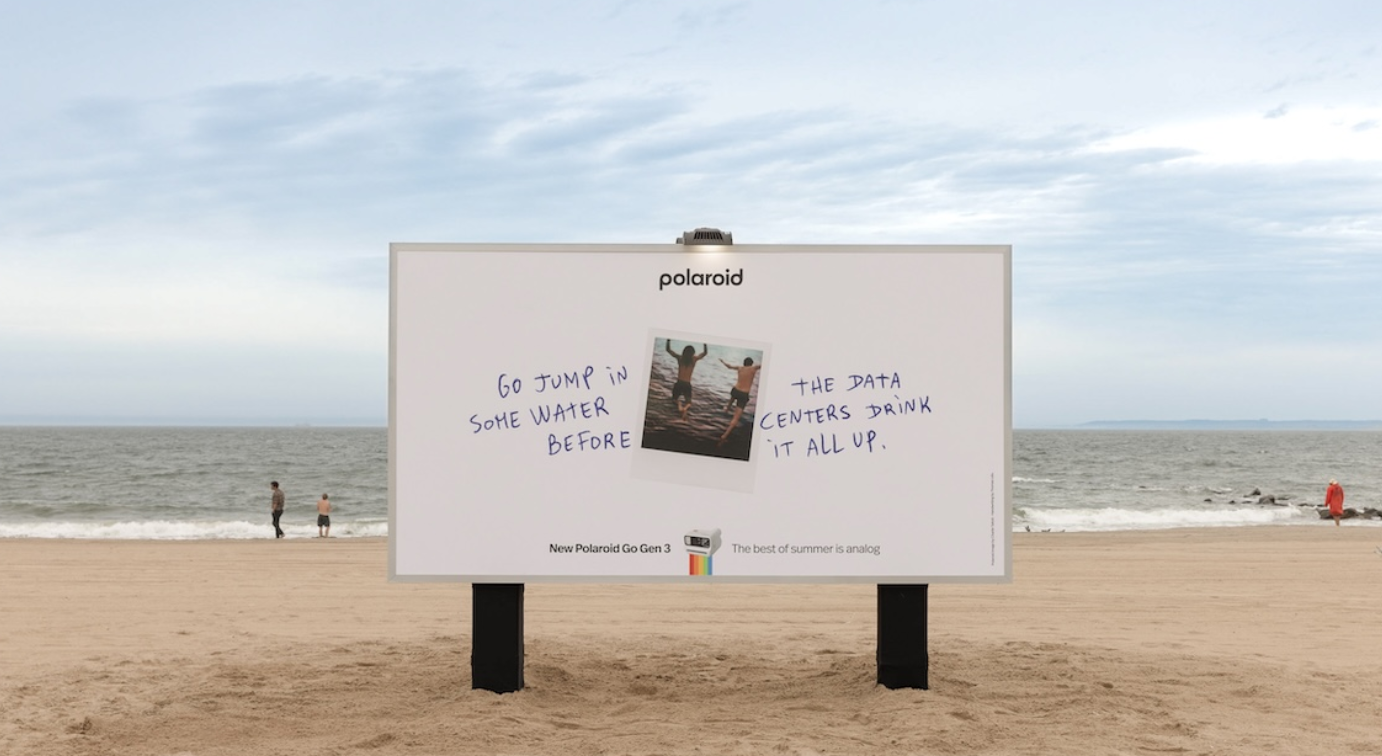
On June 18, 2026, Polaroid installed a billboard on the sand at New York’s Coney Island Beach. The line printed across it reads: “Go jump in some water before the data centres drink it all up.” The placement is deliberate. A message about disconnecting from technology, installed at one of America’s most iconic analogue summer destinations, where people go specifically to be in the water rather than look at a screen.
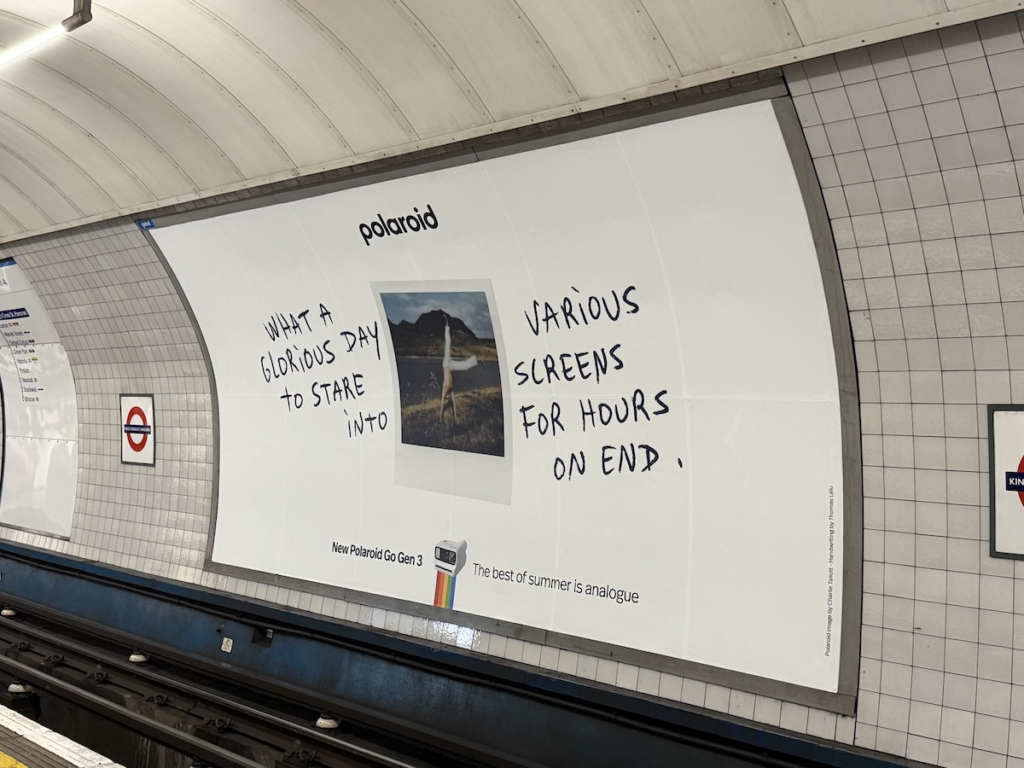
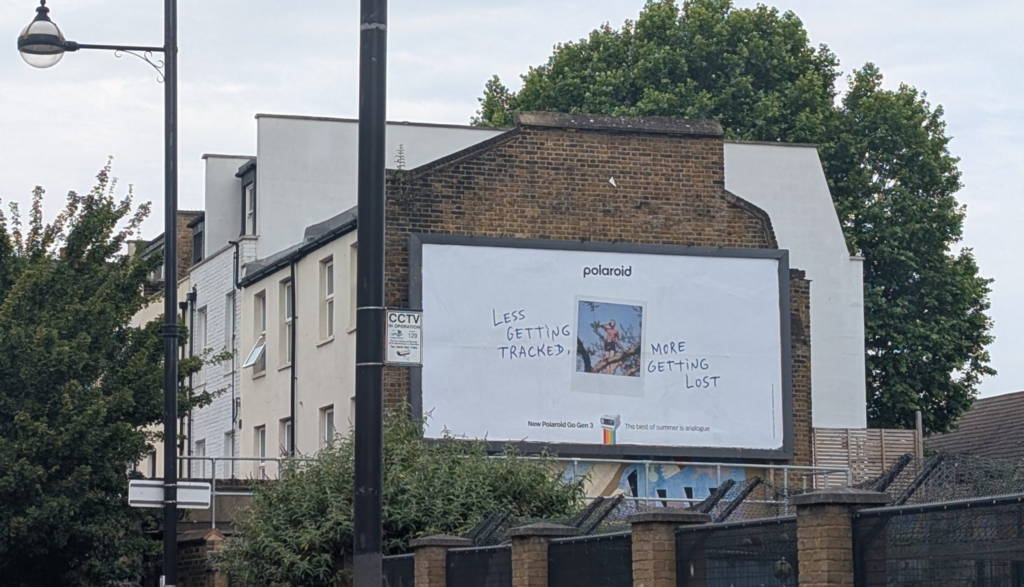
The billboard launches “The Best of Summer Is Analogue,” a global campaign supporting the release of the Polaroid Go Generation 3, the brand’s smallest instant camera to date, priced at $90 with film costing $22 for 32 photos. The campaign extends across New York, London, and South Korea, with additional placements including a station takeover at King’s Cross and outdoor executions at Bethnal Green and Hackney in London. Other lines running across the campaign include “You can’t bask in blue light,” “Dance like nobody is recording,” and “What a glorious day to stare into various screens for hours on end.”
The Data Behind the Provocation
The billboard’s central claim is not invented controversy. Data centres powering generative AI require enormous volumes of water for cooling, and the scale of that consumption has become one of the most scrutinised environmental costs of the AI boom. Polaroid’s creative team built the campaign’s sharpest line directly from that debate, converting an infrastructure statistic most people have never thought about into language that lands at a beach.
The timing compounds the message’s relevance. A recent Gallup poll of 1,600 respondents aged 14 to 29 found that only 18% are hopeful about AI and just 22% are excited about it. Gen Z’s enthusiasm for the technology that dominates their digital lives is measurably low, and Polaroid is speaking directly into that scepticism rather than against it.
The Platform This Builds On
This is not Polaroid’s first run at this idea. The campaign builds explicitly on the brand’s 2025 work, which placed lines like “AI can’t generate the sand between your toes” outside major tech retail stores. Patricia Varella, Creative Director at Polaroid, described the strategic pivot that produced both campaigns: “When we stopped asking ‘How do you make instant cameras appealing to Gen Z?’ and started asking ‘Why should Polaroid exist at all in an AI era?’ we knew we were on to something.”
Varella framed the brand’s position carefully, avoiding a simple anti-technology stance: “While our campaigns are provocative and challenge our relationship with technology, we’re not anti-digital. We know we have to live alongside it, but we’re deeply pro-human, and know what humanity gives us. And we know what we stand to lose if we don’t protect it. That’s a fight worth fighting.” She added elsewhere that for Polaroid, “the simple act of existing is already an act of rebellion.”
The Influencer Layer
The campaign extends beyond outdoor media into a structurally unusual influencer activation. Polaroid paid 12 creators to temporarily step away from social media altogether, asking them to pursue offline versions of the activities that made them popular online in the first place. The announcements were made through handwritten notes shared on the creators’ own feeds, a deliberately analogue format for announcing a digital absence. On their return, the creators posted about their offline adventures, generating content about not posting.
Each participating creator received their Polaroid Go Gen 3 camera in packaging designed to resemble a miniature garden, part of a broader sensory seeding experience for influencers and media designed to immerse recipients in the sights, sounds, and scents of summer before revealing the camera at the centre of it.
Why It Works
Polaroid’s central insight across both this campaign and its predecessor is that audiences already feel uneasy about the pace and cost of digital and AI saturation. The brand is not manufacturing that anxiety. It is naming it specifically and then offering itself as the antidote, an instant camera that produces a physical, imperfect, undeniably real photograph that no generative model can replicate. The billboard does not ask people to boycott AI. It asks them to go swimming, and quietly reminds them what they have been replacing it with.
Campaign Name: The Best of Summer Is Analogue
Agency Name: Not mentioned (Polaroid in-house)
Brand Name: Polaroid
Location: New York City (Coney Island Beach); London, UK (King’s Cross, Bethnal Green, Hackney); South Korea