
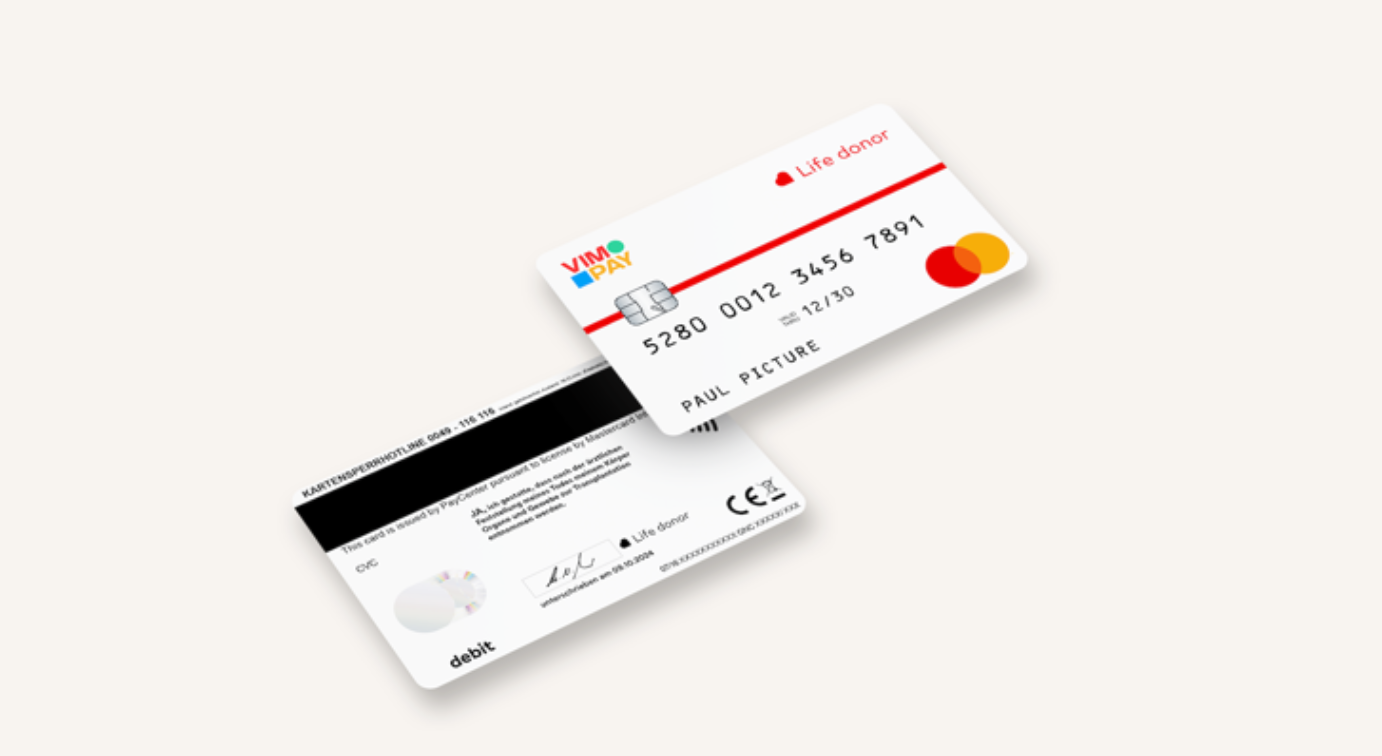
Germany has a problem that is not unique to Germany but is acute there. Eighty-four percent of Germans support organ donation. Fewer than half have ever formally documented that support. The gap between believing in organ donation and registering as a donor is not driven by opposition. It is driven by friction. The donor card exists. It requires a separate visit, a separate document, and an intention to carry something most people never think to keep in their wallet. Mastercard Germany and MRM Germany looked at what was already in every German wallet and built a solution into it.
The Data Behind the Decision
Eighty-six percent of Germans carry their bank card every day. Twenty-six percent carry an organ donor card. The overlap between those two figures is the entire strategic argument for the Life Donor feature. The information about a person’s willingness to donate organs needs to be accessible to medical personnel in the critical window of an emergency. The object most likely to be in that person’s possession at that moment is not a dedicated donor card. It is a payment card.
Mastercard identified the structural misalignment and built a product response to it. The payment card that Germans already carry becomes the declaration that currently goes unmade, by the majority of people who actually support what it states.
How Life Donor Works
The Life Donor feature launched in October 2024 through a partnership between Mastercard Germany, PayCenter, and its VIMpay digital banking application. Users opt in through the VIMpay app. They specify which organs they are willing to donate. That declaration is then physically printed on their Mastercard. The cardholder signs the card. The signature validates the declaration as legally binding, making it a formal, privacy-compliant alternative to the traditional organ donor registry without requiring any additional bureaucratic process.
The feature is specific and deliberate in its design. Users choose which organs to include rather than signing a blanket consent, giving the individual control over the specifics of their declaration. The VIMpay app allows updates to the declaration at any time. The card carries the statement in a format that emergency medical personnel and hospitals are already trained to look for.
The German Organ Transplant Association (BDO) and Kinderhilfe Organtransplantation (KIO), Germany’s leading organ transplant advocacy organisations, formally endorsed and supported the feature before and after launch. Their involvement gave the initiative credibility within the medical and health advocacy communities where resistance to non-traditional documentation formats is highest.
The Broader Context
Germany passed the Decision Solution law in 2020, which requires every citizen to actively register as a donor or non-donor in a central database. Despite this legislative change, registration rates have remained far below what the law intended to generate. The structural problem is the same one the Life Donor feature addresses: most people support the idea but do not take the specific action the formal system requires of them.
The Life Donor feature operates as a complement to the central registry rather than a replacement for it. A signed card found on a donor’s person at the moment of emergency provides immediate, actionable information that can accelerate the consent confirmation process. In organ donation, where time between death and transplant is the defining variable in a transplant’s success, reducing that confirmation window by even a small margin has clinical significance.
Dr. Peter Schönweitz, Managing Director of VIMpay, described the practical value of the mechanism: the card is already there. The information is already needed. The feature removes the separate step that was preventing the two from connecting.
The Structural Pattern
The Life Donor feature belongs to the same body of Mastercard product thinking as the Touch Card for visually impaired cardholders and the True Name feature for transgender customers. In each case, Mastercard identified a population whose practical needs were not being served by existing infrastructure and found the intervention inside the product rather than adjacent to it. The payment card gains a function it did not previously have. The cardholder gains a capability the system was not previously offering them. The brand gains credibility for doing something useful rather than simply communicating something aspirational.
The campaign did not require a new product category or a new channel. It required the recognition that the object everyone already carries was capable of doing something it had never been asked to do.
Campaign Name: Life Donor / Donor Card
Agency Name: MRM Germany / IPG
Brand Name: Mastercard Germany
Location: Germany (pilot launch October 2024; national rollout planned with additional Mastercard issuing partners)