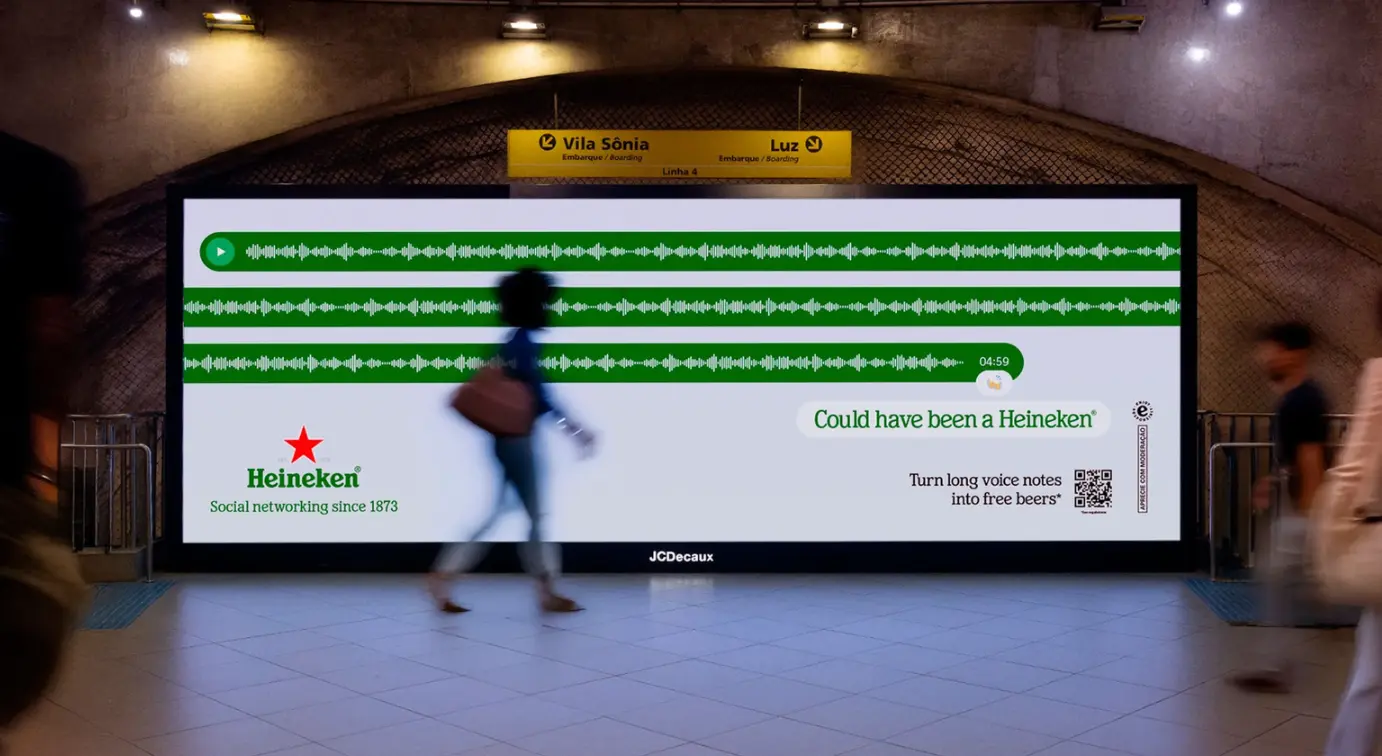
Every day, 9 billion voice messages are sent on WhatsApp. Statista data shows that frequency rose 7% in 2024, and the average length of a voice note rose 8%. Heineken has built campaigns around this problem for years. People were talking at each other rather than with each other, and the voice note had quietly replaced the real conversation.
The brand and its agency LePub Milan, working with LePub São Paulo, built a WhatsApp bot designed to step into that moment.
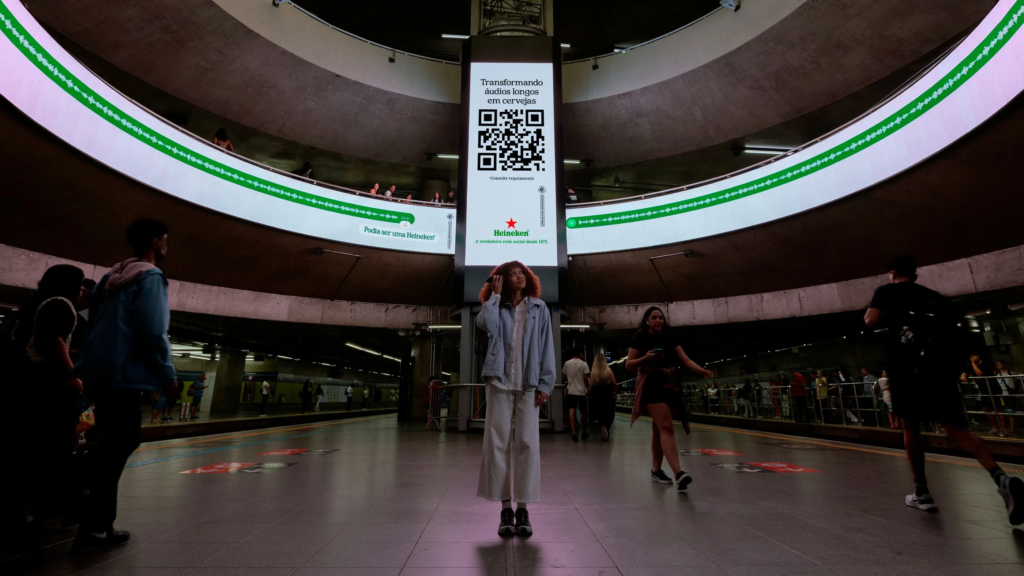
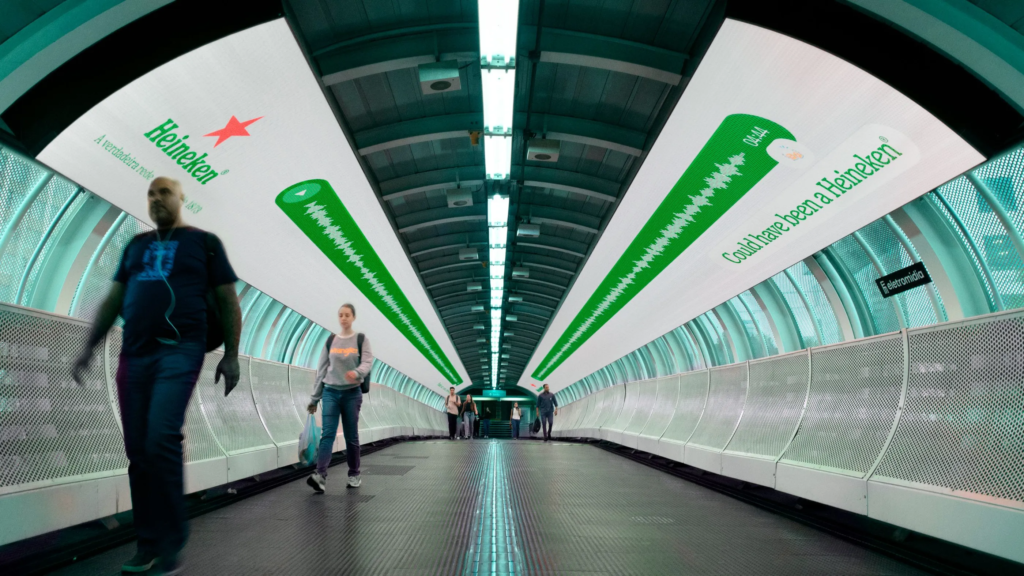
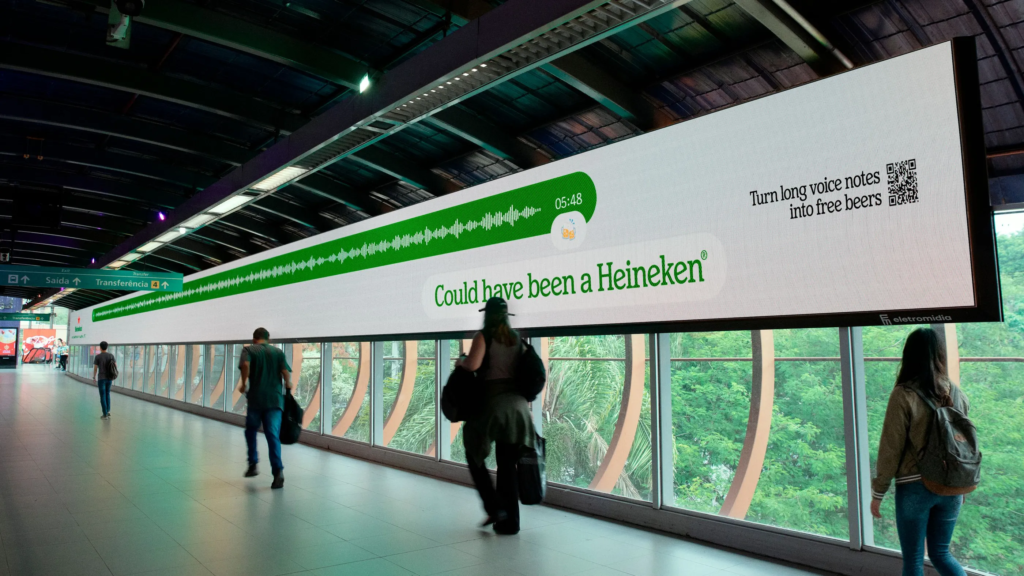
The Mechanic
The campaign launched in Brazil, where the habit is most common. Brazilians send four times as many voice notes as people in any other country. That made Brazil the natural first market for a campaign built entirely around the behaviour.
The mechanics are simple. When a WhatsApp user over 18 receives a voice note that runs three minutes or longer, they can forward it to a private, encrypted Heineken bot. The bot replies with the message “Could have been a Heineken,” a voucher for a free beer, and a list of nearby bars where the sender and the recipient could meet instead.
The three-minute threshold is the campaign’s central design decision. A voice note long enough to replace a phone call is long enough to replace a meetup. The bot turns that moment of passive listening into a reason to show up somewhere in person.
The Research Behind It
Heineken commissioned a poll of more than 14,000 people to build the strategic case. The average person spends close to 150 hours a year on voice notes. 54% of those surveyed said their most fulfilling conversations happened face to face.
Those numbers gave the campaign its argument. Voice notes had started to take the place of the meetups they were supposed to arrange.
Nabil Nasser, Global Head of the Heineken brand, said the brand wants to make sure voice notes “don’t turn into mini podcasts, and that we’re having two-way conversations.”
The Media Support
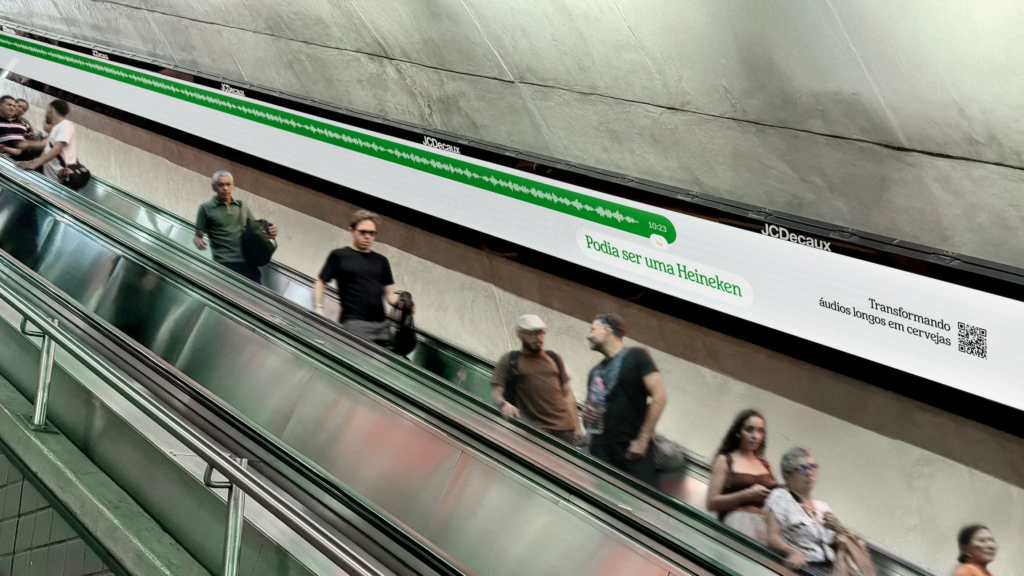
The WhatsApp activation ran alongside outdoor placements, creator content, social activations and remixes of a popular trend across Brazil. The bot is the product. The surrounding media pointed people toward it.
The campaign runs as a pilot, with expansion to other markets planned. Brazil was the entry point because its voice note numbers were strong enough to test the concept before a wider rollout.
At the 2026 D&AD Awards, “Could Have Been a Heineken” was recognised in both the Commerce and Direct categories.
The Broader Pattern
The campaign fits a longer Heineken creative thread. The brand has repeatedly built activations around the idea that digital habits are eroding real-world social life, and each execution uses a piece of technology to make that argument physical. A previous campaign used an AI phone case that flipped handsets face down at social gatherings. An earlier app made smartphones deliberately boring on nights out. “Could Have Been a Heineken” follows the same structure. It takes the technology the behaviour runs on and uses it to steer people away from the screen.
The bot leaves voice notes alone and skips any lecture about screen habits. It makes the alternative more attractive than the default. A free beer and a bar recommendation is a more useful response to a three-minute audio message than anything a person could type back.
The campaign name doubles as the bot’s reply. “Could have been a Heineken” lands on screen in response to every forwarded voice note, and it arrives with the voucher and the bar list needed to make it happen.
Campaign Name: Could Have Been a Heineken
Agency Name: LePub Milan / LePub São Paulo
Brand Name: Heineken
Location: Brazil (pilot launch, 2025), with expansion to other markets planned