
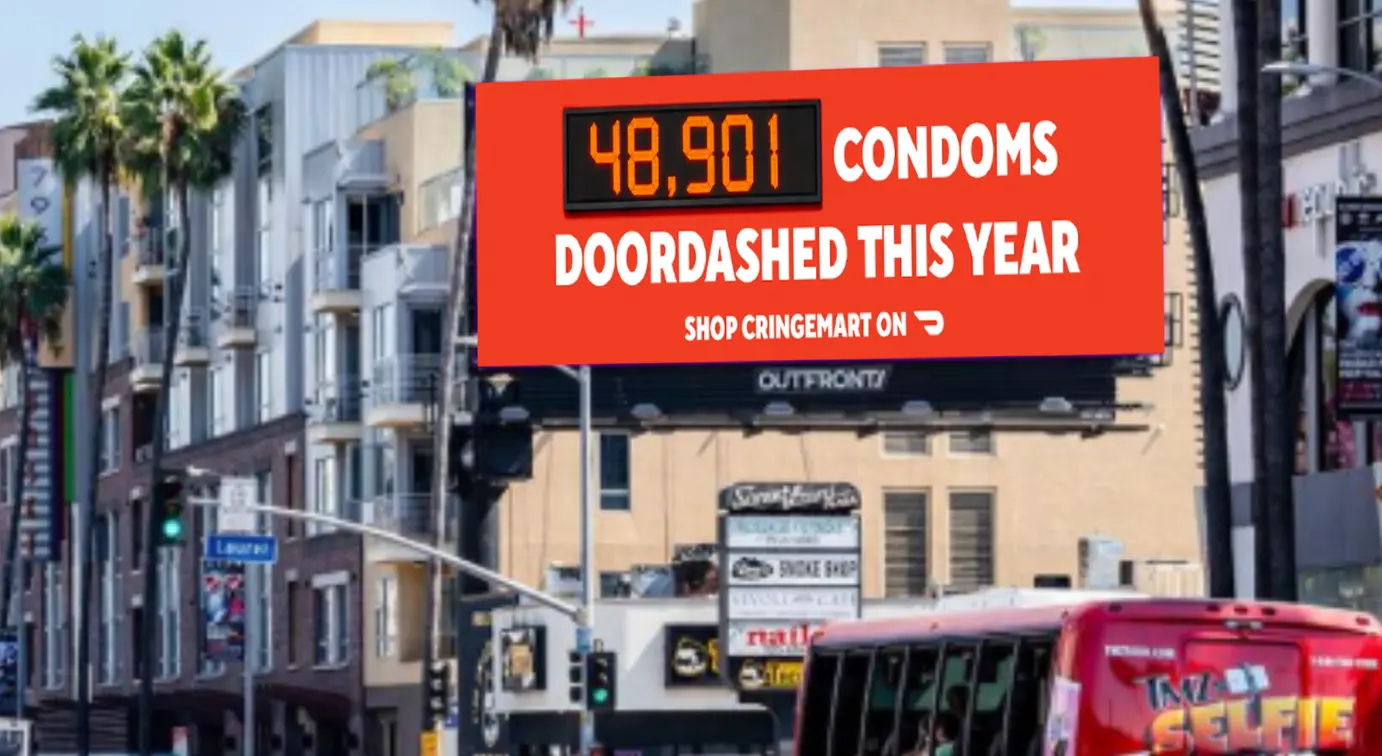
There is a category of purchase that every adult makes and almost nobody acknowledges making. Hemorrhoid cream. UTI tests. Emergency plungers. Condoms at 2am. The products that go face-down in the pharmacy basket, that get covered by a jacket on the checkout belt, that get bought with the self-checkout machine specifically to avoid a human cashier. DoorDash, working with creative studio Loop, built a named storefront for all of them and launched it on August 3, 2026. Then they put a live condom counter on billboards across New York City and Los Angeles.
The Insight Behind CringeMart
The brief came from the data. In 2025 alone, over four million customers turned to DoorDash for their most awkward essentials. A condom sells on the platform every 37 seconds. Two laxatives sell every minute. One especially committed customer placed more than 659 cringe-worthy orders in a single year.
These moments do not wait, and neither do the customers placing them. DoorDash had quietly become the discreet option of choice for purchases people would rather not make in person, and it had the receipts to prove it. CringeMart did not create a new behaviour. It named one that had already been running at scale.
Zaria Parvez, Head of Brand Social at DoorDash, described both the product and its positioning: “The most ‘cringe’ purchases are usually the most relatable. There’s nothing actually ‘cringe’ about any of these items, but buying them can still feel that way. If it’s in CringeMart, it’s probably something you need but don’t want to be seen in public with, which is exactly why we built it. CringeMart is DoorDash’s way of saying we get it, and we’ve got you, no questions asked.”
The Storefront
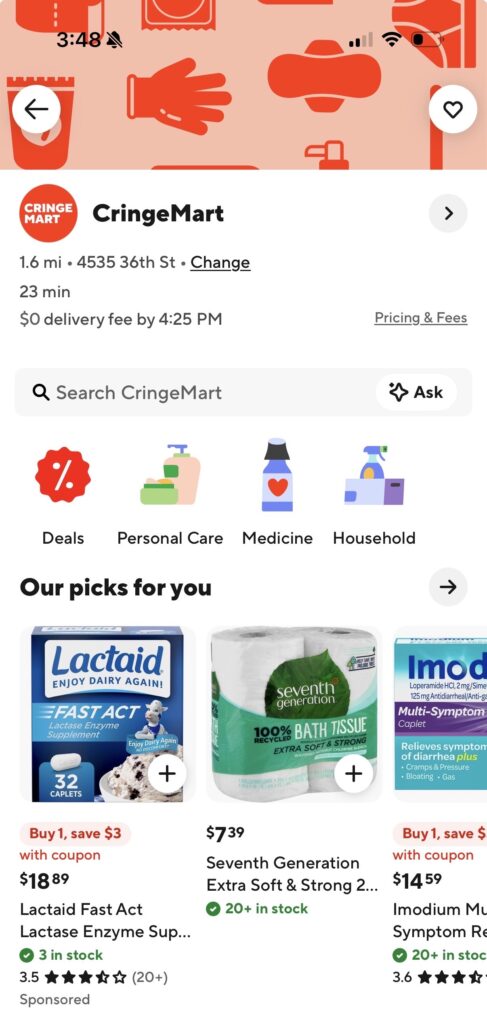
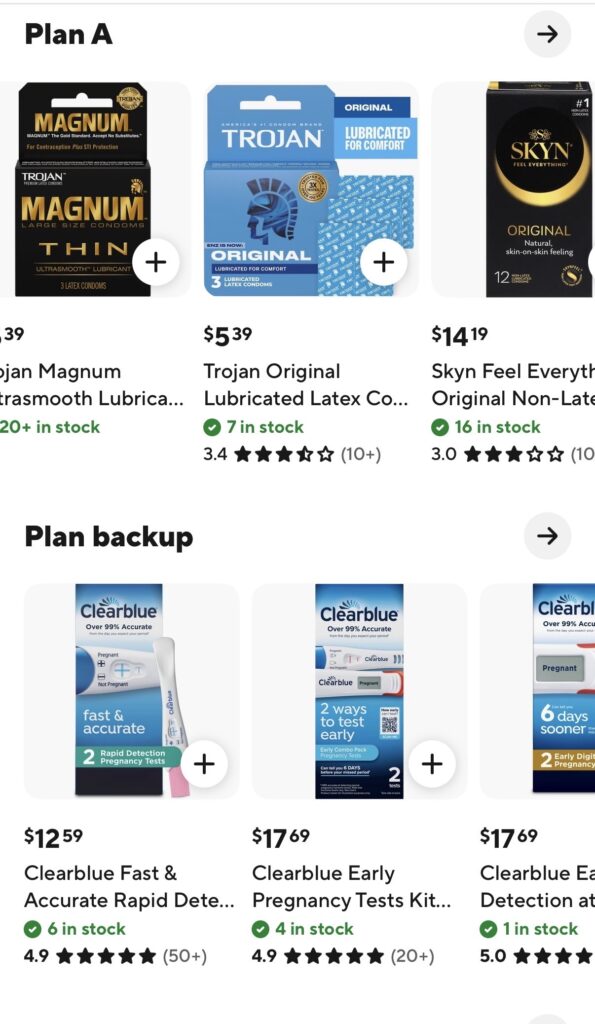
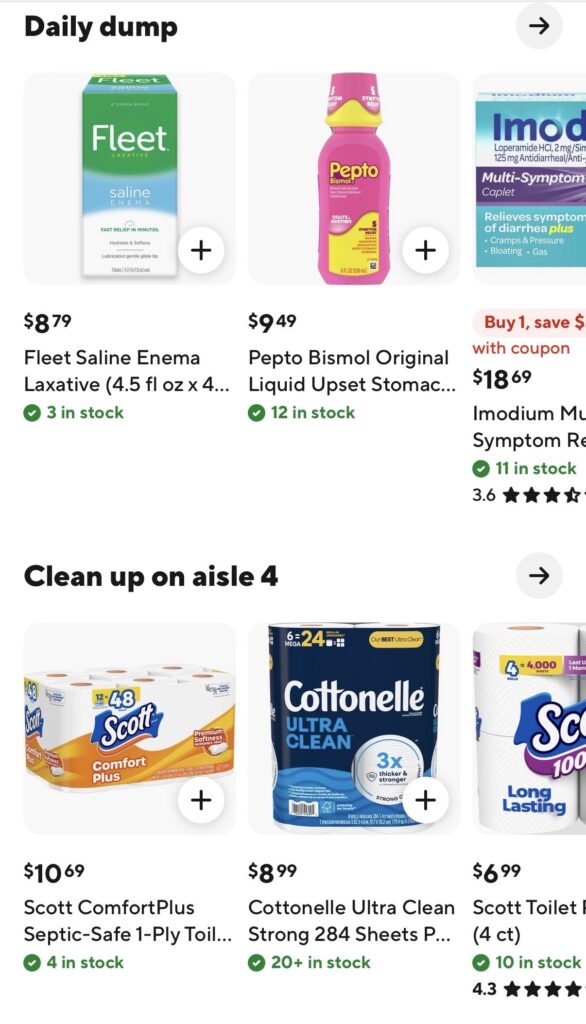
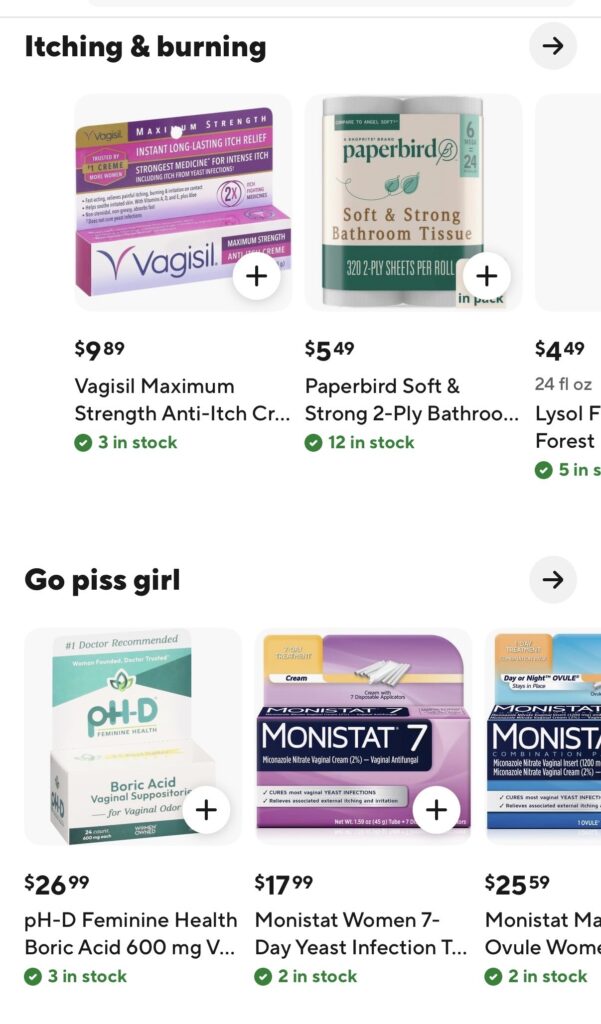
Starting August 3, customers can search “CringeMart” directly in the DoorDash app and shop from a series of curated categories, each one named with the same directness as the campaign itself. “Go Piss Girl” covers UTI tests and treatments. “Daily Dump” covers laxatives and digestive relief. Every category label acknowledges the discomfort rather than softening it, which is the product architecture doing the same work as the advertising.
The Cringe Combos
The data produced one detail that captured the campaign’s spirit better than any creative execution could manufacture. The most popular item combinations ordered together across CringeMart’s product range include Imodium and Flaming Hot Cheetos, extra sensitive condoms and candles, and laxatives and mac and cheese. Each combination tells a complete story without requiring any additional context. The third one, in particular, raises more questions than it answers. DoorDash wisely chose not to answer them.
The Billboard
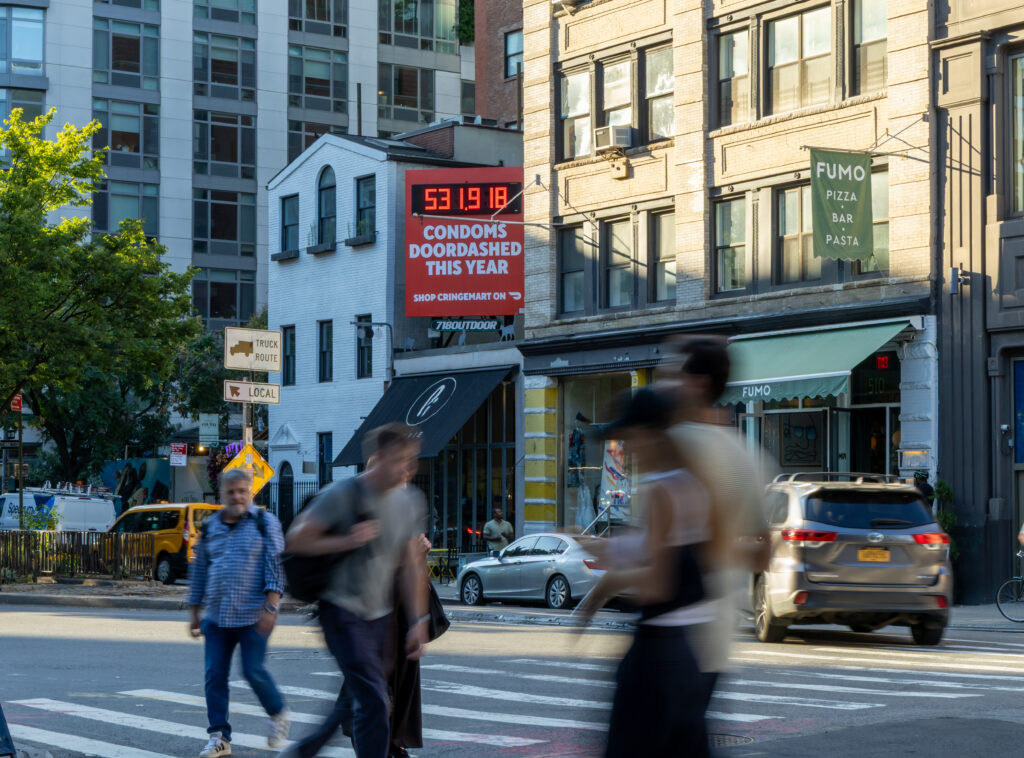
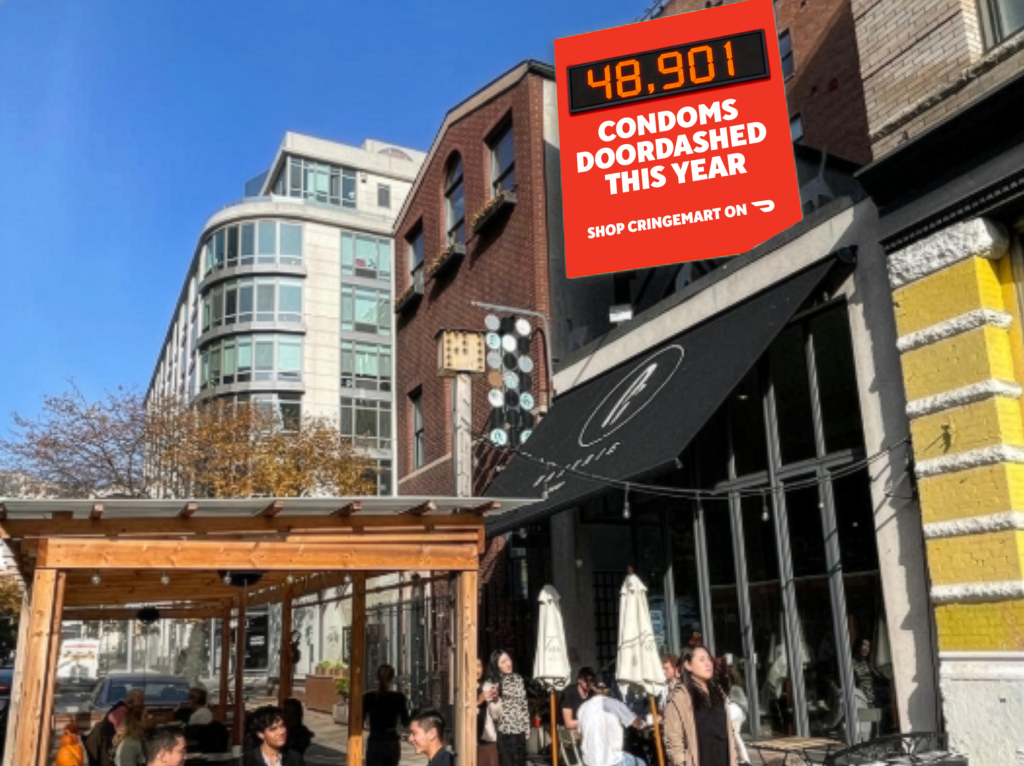
The campaign’s most visible component is the live condom counter. Digital billboards in New York City and Los Angeles display a continuously updating real-time count of condoms ordered through DoorDash that year. The counter in the New York installation reads 53,198 with the line “Condoms DoorDashed This Year,” ticking upward alongside the instruction to “Shop CringeMart on DoorDash.”
Nick Gallo, founder and CEO of Loop, described how the creative team landed on condoms as the live metric: “There’s real data and metrics to track. Plus, the possibility of a real-life couple meeting up under the billboard was too appealing to pass up. ‘What if we kissed under the condom billboard?’ was a fun one in the room.”
The stunt converts an internal sales statistic about the most private category of purchase into the most public possible display: a real-time counter running on the street-level facades of two of America’s most photographed cities. Private behaviour made spectacularly, visibly public. That is the structural irony the entire campaign is built on.
The Tana Mongeau Partnership
To front the campaign’s creator layer, DoorDash partnered with internet personality Tana Mongeau, described by the brand as the internet’s undisputed TMI Queen. Known for turning her most unfiltered moments into cultural conversation, Mongeau stars in a three-episode “CringeMaxxing” content series. Shot on hidden cameras inside a New York City grocery store, each episode puts unsuspecting shoppers through hilariously uncomfortable checkout scenarios, with actors filling the aisles to heighten the absurdity and prove exactly why some purchases are better left to DoorDash.
Parvez described why Mongeau was the right fit: “Creators have an incredible ability to take a simple, relatable truth and turn it into something the internet can’t stop talking about. She brought the right mix of humour, self-awareness and cultural relevance to the idea.”
Gallo reinforced the creative logic: “The most powerful thing a brand can do right now is be entertaining. CringeMart takes a simple DoorDash truth and turns it into a series people would watch on purpose.”
Why the Campaign Works Structurally
CringeMart belongs to a specific and growing category of brand work that earns its attention by naming a behaviour everyone knows exists and no category has previously been willing to speak directly about. Embarrassed purchasing is universal, undiscussed, and commercially significant. DoorDash is not the only delivery platform where people order hemorrhoid cream. It is the first to give that behaviour a name, a storefront, a live data billboard, a set of cringe combo statistics, and a hidden-camera series built around it.
The campaign also resolves a specific commercial problem. Consumers know DoorDash delivers more than dinner. But awareness in the abstract does not reliably translate into reaching for an app at the precise moment of an awkward emergency need. CringeMart is designed to make DoorDash the first thing that comes to mind at exactly that moment, by making that moment culturally memorable rather than something to be forgotten as quickly as possible.
Campaign Name: CringeMart / CringeMaxxing
Agency Name: Loop (creative studio) / Creator partner: Tana Mongeau
Brand Name: DoorDash
Location: United States (national in-app; OOH in New York City and Los Angeles; launched August 3, 2026)