ProMate and Ogilvy Sri Lanka noticed that a used notebook covered in ink is invisible to a blind student who reads by touch. During Sri Lanka’s 2022 economic collapse, when Braille paper became unaffordable, a nationwide donation drive collected used notebooks from households across the country and redistributed them to every government school. It became the most internationally awarded campaign in Sri Lankan history.
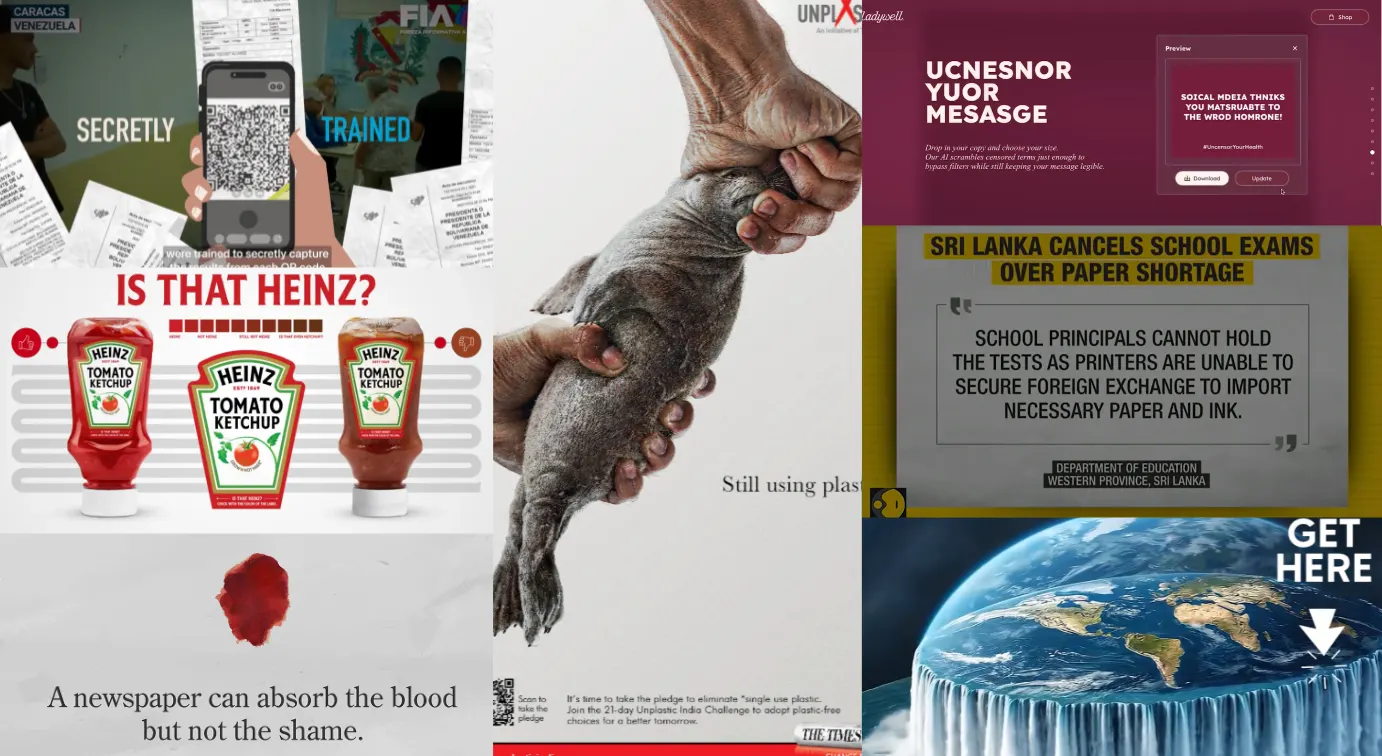
Columbia Sportswear published an open letter in The New York Times offering its entire company, mannequins, coffee machines, and a taxidermy beaver, to any flat earther who could find the edge of the earth and photograph it. Nobody claimed the prize. The campaign won the Clio Grand Prize and four Silver Lions.
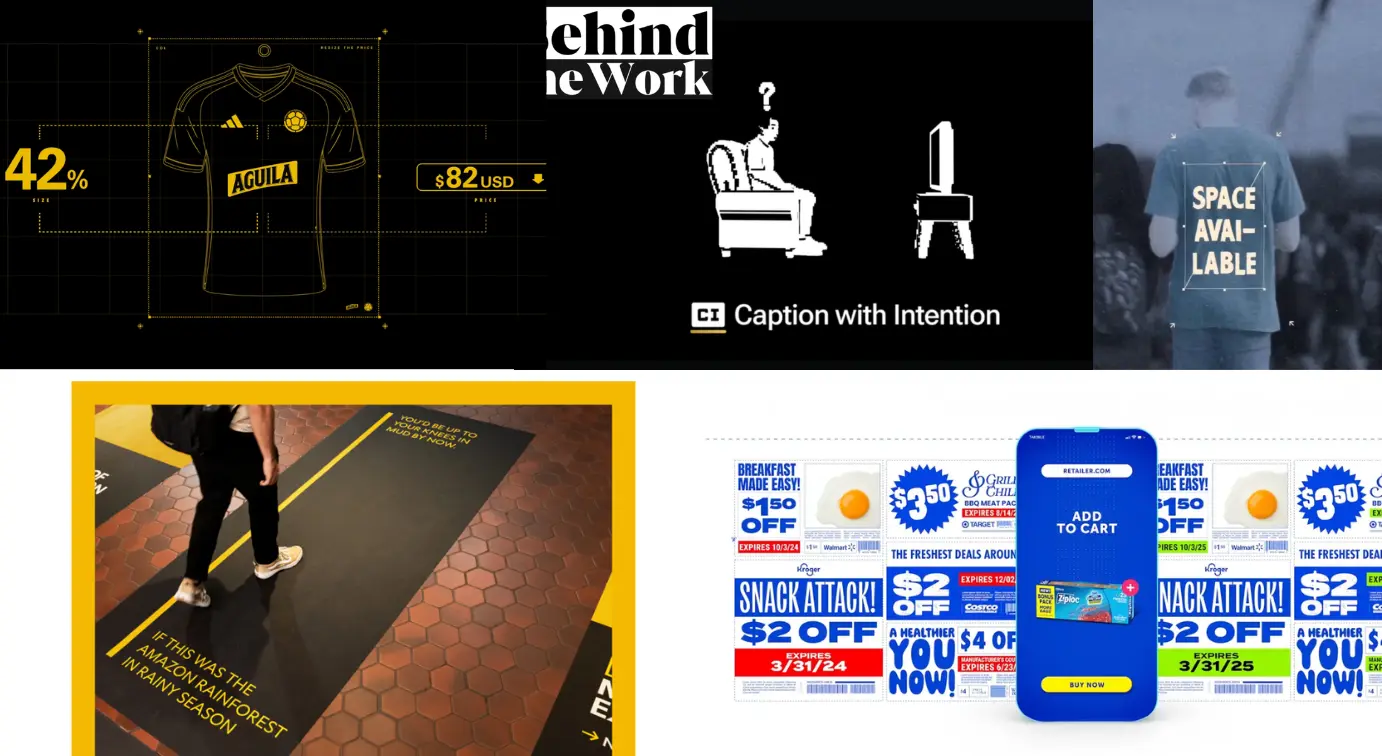
Ladywell faced 84% ad rejection rates for using medically accurate words. Saatchi & Saatchi LA built the Censorship Scrambler, jumbling letters mid-word so humans could still read it while automated filters could not. The ads ran unblocked for the first time, generating 70 million impressions and a Cannes Silver Lion in Creative Strategy.
Comando Con Venezuela secretly trained 600,000 volunteers to photograph ballot tally sheet QR codes at 30,000 polling tables using their own phones. The independently collected data exposed a 30-point gap between the official result and the actual vote. María Corina Machado subsequently won the Nobel Peace Prize. The campaign won the Cannes Titanium Lion and Grand Prix for Good.
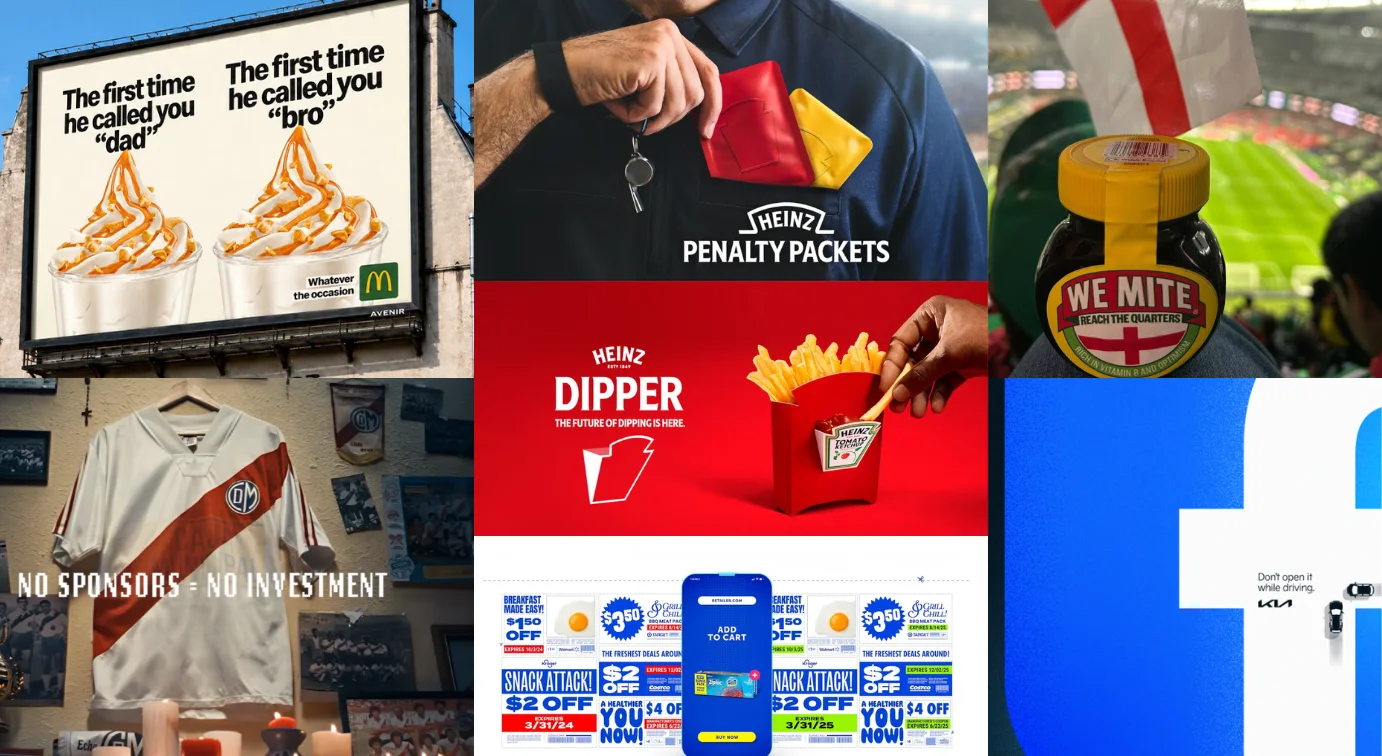
Heinz discovered restaurants were refilling its bottles with cheaper generic ketchup. It added a colour-matched border using its exact Pantone red to every label. If the ketchup inside doesn’t match, the label visibly shows it. Non-Heinz refills in Turkish street food restaurants dropped 73%. The campaign won Ad of the Year at AdAge.
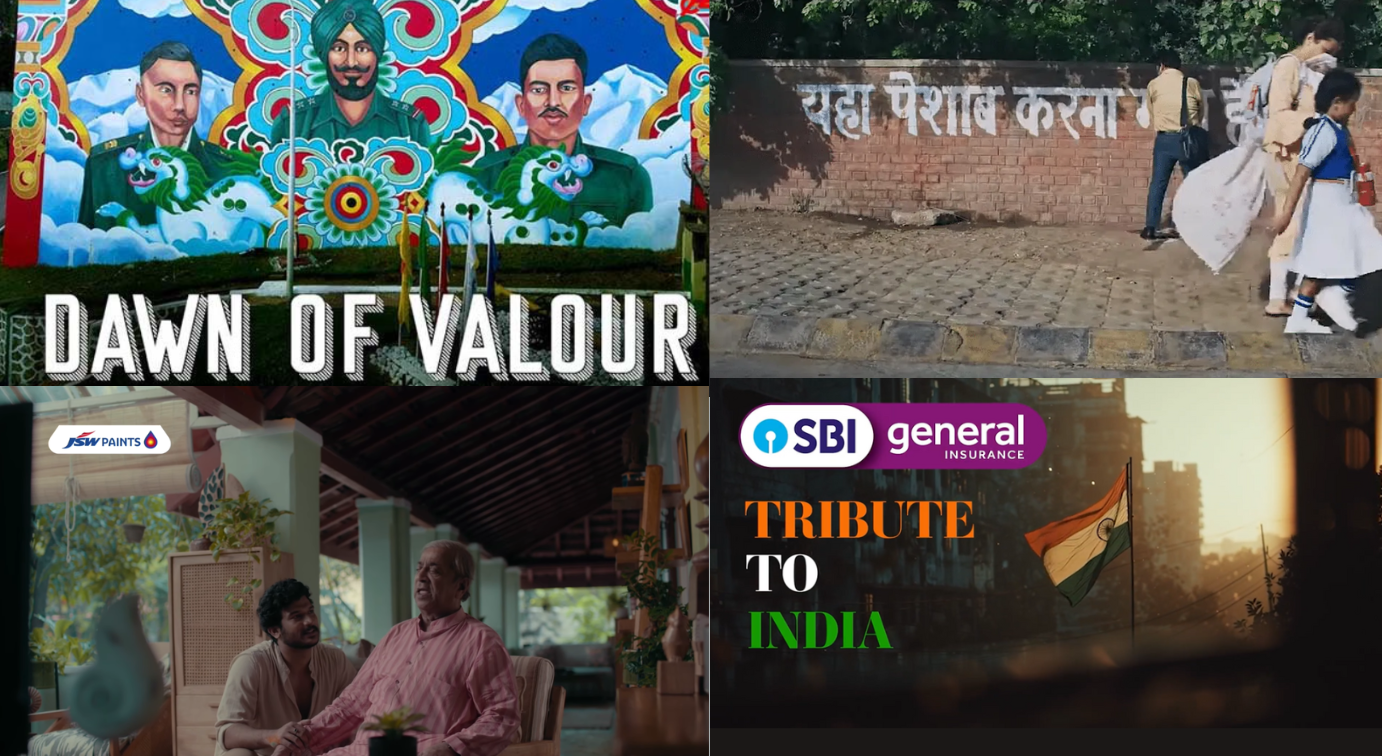
Times of India launched Unplastic India, a 21-day pledge challenge on World Environment Day. Backed by UN Ambassador Dia Mirza and beach cleanup champion Afroz Shah, the campaign reached 71 million social impressions and collected 500,000 pledges in three months. A newspaper turned its own platform into the movement it was reporting on.
Joe Public and the MENstruation Foundation printed blood stains across the front pages of three major South African newspapers on June 1, replicating exactly what a newspaper looks like when used as a sanitary pad. The campaign line: “A newspaper can absorb the blood, but not the shame.” Nearly four million South African schoolgirls have no access to sanitary products.
2M made a reversible football jersey that lets supporters flip sides when their team starts losing, instantly becoming a fan of whichever team is winning. The product solved the oldest problem in football watching and made it impossible to feel awkward about switching allegiances. The brand called it the jersey for “the real fans.”