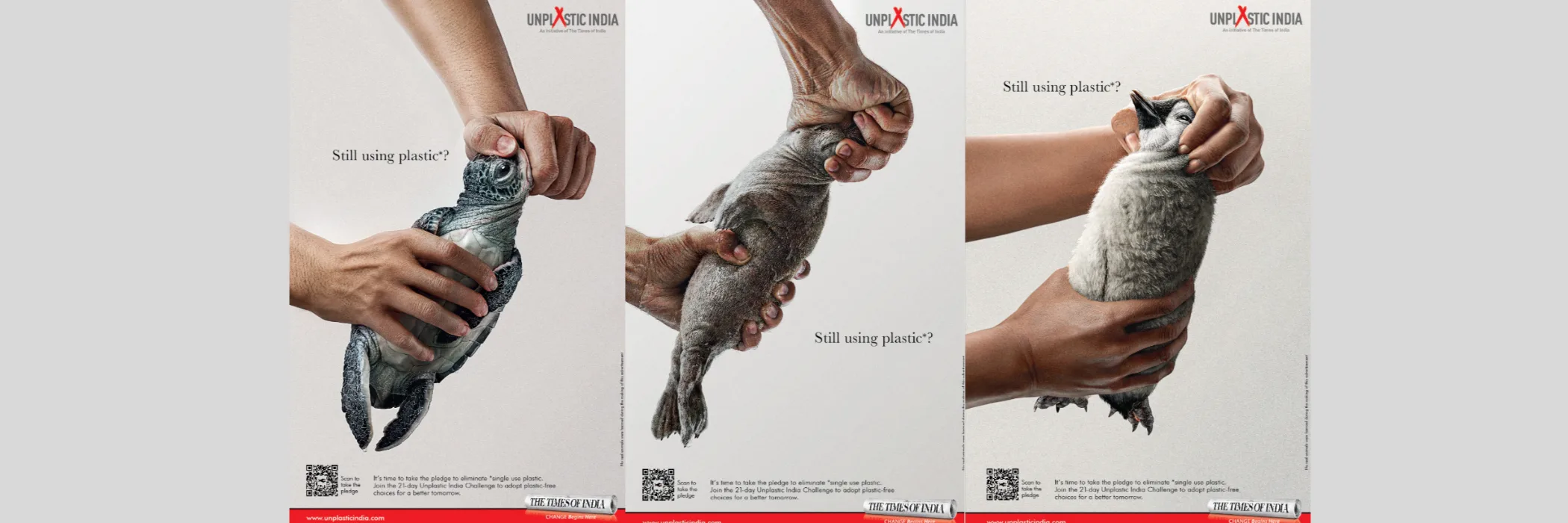
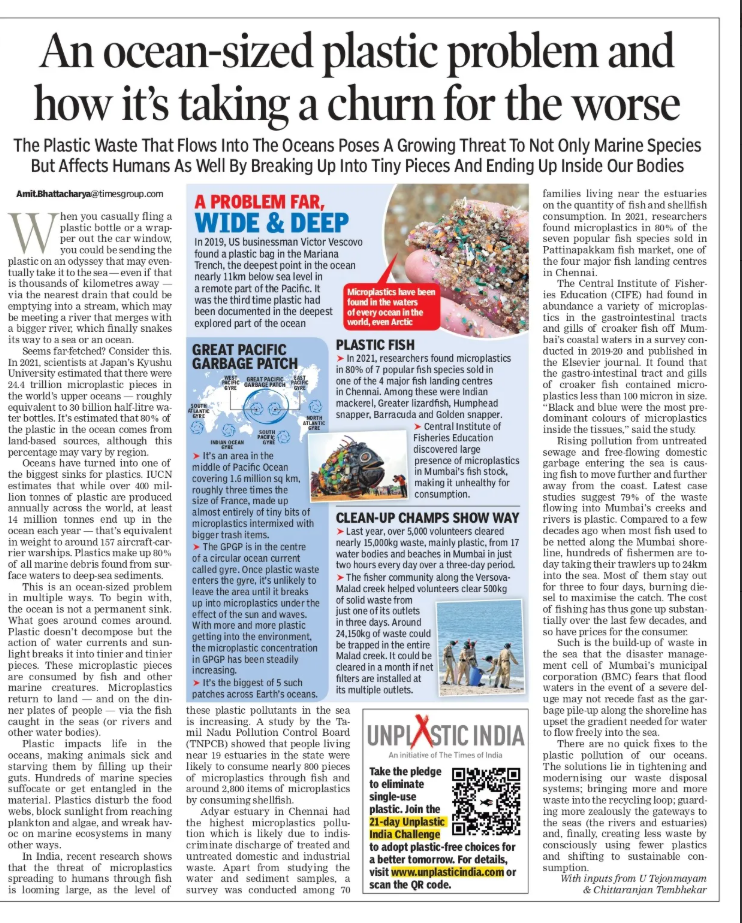
India’s plastic waste problem is not a future projection. The country’s plastic waste generation doubled from 15.9 lakh tonnes in 2015-16 to 34.7 lakh tonnes in 2019-20, with 50% of that waste remaining uncollected and unprocessed. More than 30 million tonnes of plastic have been dumped in the oceans to date, contaminating and killing more than 100,000 marine creatures. Against that backdrop, The Times of India launched Unplastic India, a movement built around a 21-day pledge challenge, timed to World Environment Day on June 5, with the UN’s focus that year being the plastic pollution crisis.
The Campaign Structure
Unplastic India runs as a digital pledge platform at timesofabetterindia.com, inviting users to commit to eliminating single-use plastic from their daily lives. The 21-day challenge framework is drawn from behavioural science’s well-established principle that three weeks of consistent practice is the minimum threshold for forming a new habit. The campaign does not ask for donations or political signatures. It asks for a specific, personal behavioural commitment backed by 21 practical daily tips, each covering one concrete substitution or change a person could make on that day.
The platform is supported by seven waste management partner organisations, including Saahas Zero Waste, Nepra, IPCA, and Walk for Plastic, which give the pledge a structural follow-through beyond the online commitment. Sister publications Navbharat Times, Maharashtra Times, and Ei Samay extended the campaign into Hindi and Bengali-language audiences, significantly broadening its reach beyond the English-reading Times of India base.
The Activations That Amplified It
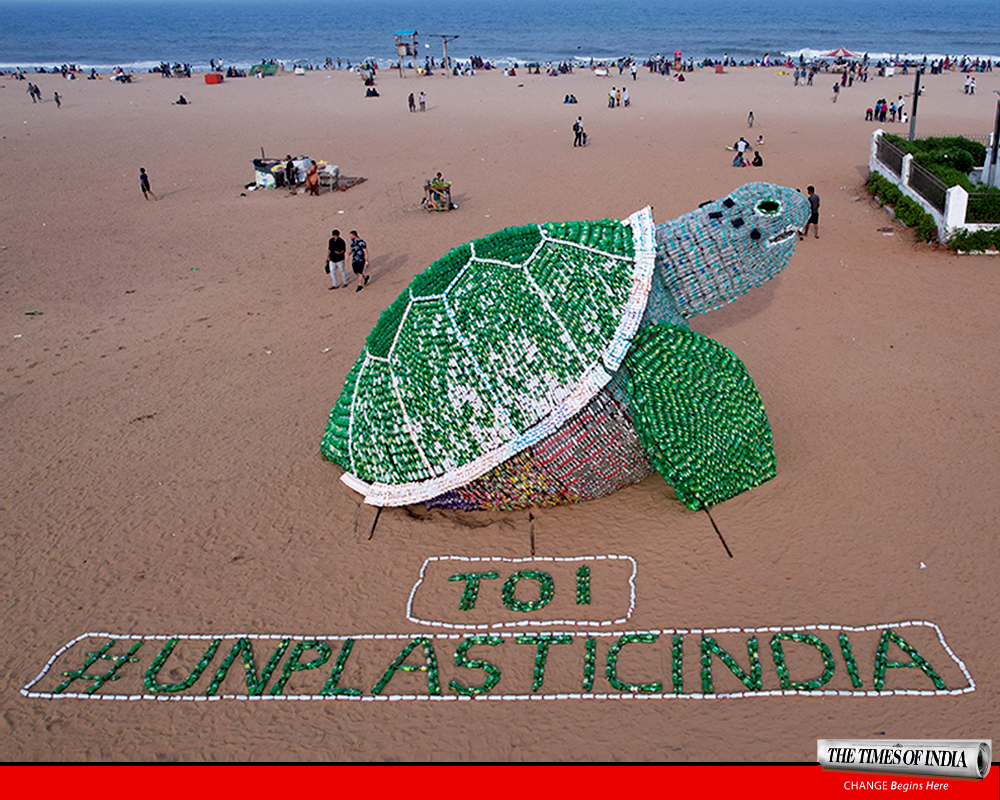
The campaign’s most powerful visual element was created by sand artist Sudarsan Pattnaik, who built a large-scale sand installation communicating the Unplastic India message on a beach, generating photographic coverage that spread organically across social platforms without paid distribution.
Actor and UN Environment Goodwill Ambassador Dia Mirza fronted the campaign in a film collaboration with The Times of India, lending both celebrity reach and credible environmental credentials to the movement. Afroz Shah, the Mumbai-based lawyer who became internationally recognised after organising the world’s largest beach cleanup at Versova Beach and being named a UN Champion of the Earth, appeared in a dedicated interview on the campaign platform. His story, of returning to his childhood beach to find it buried under five feet of plastic and spending weeks removing 13 million kg of waste with volunteer teams until Olive Ridley sea turtles returned to the shore for the first time in decades, functioned as the campaign’s most emotionally direct case for why the pledge mattered.
A turtle installation at Elliott’s Beach in Chennai created another on-ground visual anchor for the campaign, bringing the marine life impact of plastic waste into a physical public space. Chennai’s participation was documented as a separate chapter of the campaign, reflecting geographic spread beyond Mumbai.
What It Generated
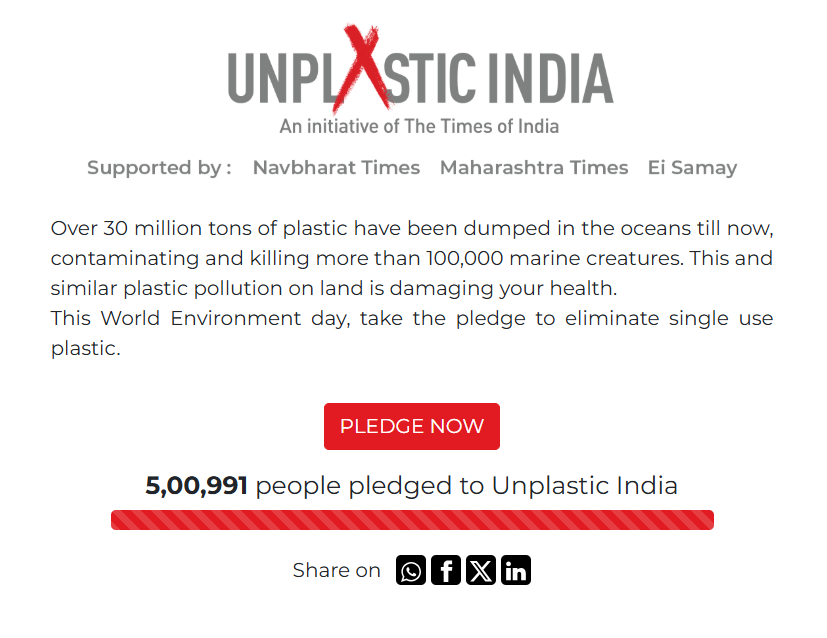
Within three months of launch, more than 500,000 Indians had taken the pledge on the platform, a figure confirmed on the campaign’s live counter. The campaign generated over 71 million impressions across social media platforms and received 98% positive feedback from respondents. The reach achieved across print, digital, and regional-language publications gave Unplastic India a media footprint that most standalone brand campaigns in the environmental category cannot access, because the campaign was itself a Times of India editorial product rather than an external advertiser’s placement.
The broader data context gives the results their weight. India’s plastic waste problem has not been solved by policy alone. The central government’s 2022 ban on single-use plastics introduced restrictions on 19 categories of items, but enforcement has been inconsistent across states. Campaigns like Unplastic India operate in the gap between legislation and behaviour, where the law has changed but the habit has not.
Campaign Name: Unplastic India / #UnplasticIndia
Agency Name: Not mentioned
Brand Name: The Times of India / Times of a Better India
Location: India (national; Mumbai, Chennai documented chapters)