In Belgium, women earn 20% less than men across every sector of the labour market. Every sector, that is, except one. In Belgian prisons, inmates who work receive a fixed allowance for their labour regardless of gender. The pay rate is the same for women as it is for men. The gender pay gap that persists across every other working environment in the country does not exist behind bars.
ZIJkant, Belgium’s progressive women’s rights organisation, and mortierbrigade looked at that fact and built a film around it for the 22nd edition of Equal Pay Day on March 12, 2026. The film follows women trying to get themselves arrested.
The Film
Directed and scripted by Lionel Goldstein through CZAR Brussels, the campaign is built on a single absurdist premise: if prison is the only workplace where women receive the same pay as men, then prison is where rational women should want to go. The film follows this logic to its deadpan conclusion.
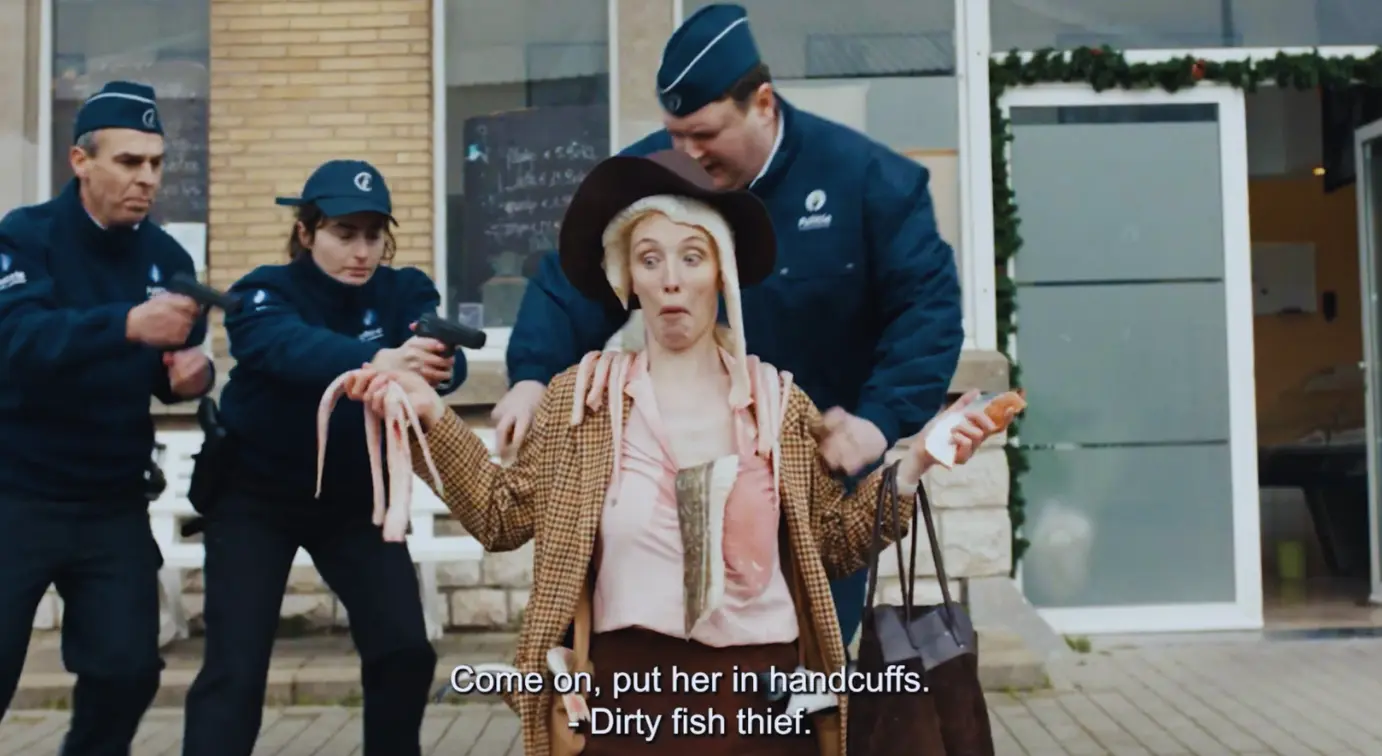
A woman steals openly in broad daylight, making no effort to conceal herself. Another walks into a police station and announces her intention to rob a jewellery store. A third strolls out of a museum carrying a painting, looking directly at passers-by as she goes. A fourth encounters a bank robbery in progress and enthusiastically joins in. They are not particularly skilled criminals. They are not trying to be. They are trying to be caught.
The film’s coda shows the women piling into the back of a police van, celebrating their arrest, delighted that behind bars they will finally receive the same pay as the men working beside them. The closing line arrives over that image: “There is no gender pay gap in prison. Let’s close it everywhere else.”
The Insight That Made the Joke
The campaign’s creative intelligence is in finding a real fact that is absurd on its surface and then building a film that treats it seriously. ZIJkant and mortierbrigade did not invent the prison pay parity claim. It is documented. Belgian prisoners receive a fixed wage for their institutional labour, and that wage is not differentiated by gender. The gap that costs Belgian women an average of 20% of their potential annual earnings throughout their working lives simply does not apply in prison.
That fact, when placed alongside the 20% figure, produces the film’s logic automatically. It does not need to be argued. It only needs to be acted upon. The women in the film are not irrational. They have correctly identified the one employment environment in their country that guarantees what every other environment denies them, and they are pursuing it with the same determination they would bring to any rational career decision.
WIDD Network’s analysis of the campaign captured what makes the approach effective: “The campaign takes something society has learned to discuss politely and makes it impolite again. Percentages are easy to ignore. A figure such as 20% can feel abstract, while telling women to go to prison if they want equal pay sounds ridiculous.”
The 22-Year Campaign Tradition
ZIJkant has been organising Equal Pay Day in Belgium for 22 consecutive years. Equal Pay Day marks the symbolic date when the average Belgian woman’s cumulative earnings catch up with what the average Belgian man had earned by December 31 of the previous year. In 2026, that date fell on March 12, a calendar calculation that makes the gap’s size tangible in a way that percentages alone do not.
The organisation’s campaign history with mortierbrigade has consistently applied the same creative strategy: take the statistical reality of the pay gap and reframe it in a format that makes the absurdity of that reality emotionally rather than arithmetically legible. In 2025, ZIJkant’s Equal Pay Day campaign used the proposition “Working with women is a real privilege, especially when they cost you 20% less,” borrowing the language of bargain retail and applying it to human labour. The prison campaign extends that same satirical logic to its most extreme available destination.
The Distribution
The campaign launched on March 12, 2026, running across television, cinema, DOOH, and activation throughout Belgium. The multi-channel deployment gave the film the reach required to make it a cultural conversation rather than a cause-specific communication. Shots.net described the campaign as “fantastically deadpan,” noting that ZIJkant has organised Equal Pay Day for the 22nd time with a work whose comedy is inseparable from its argument.
Why the Satire Works
The equal pay gap is one of the most well-documented and most frequently dismissed statistics in public policy debate. Its persistence across decades of awareness campaigns, legislation, and institutional commitment to gender equality suggests that making people aware of the gap has not produced the behavioural and structural changes required to close it. Mortierbrigade and ZIJkant’s recurring strategy is to find a new framing each year that makes dismissal more difficult than engagement.
The prison film makes dismissal structurally awkward because the logical chain it presents is airtight. If prison is the only workplace with pay equity, and pay equity is desirable, then prison is, by that measure, the best workplace available to Belgian women. Arguing against the film’s conclusion requires arguing against one of those premises, and neither is comfortable to argue against publicly.
Campaign Name: Equal Pay Day / There Is No Gender Pay Gap in Prison
Agency Name: mortierbrigade / Production: CZAR Brussels / Director: Lionel Goldstein
Brand Name: ZIJkant / Equal Pay Day Belgium
Location: Belgium (TV, cinema, DOOH, activation; launched March 12, 2026)