While tech companies pour money into AI, a growing number of brands are buying billboards to push back against it. The Economist mocks chatbots in short red headlines. A Belgian recruiter dares ChatGPT to finish a building. Polaroid tells people to jump in the sea before data centres drink it dry. The shared message is simple. Human skill, judgement and real experiences are now selling points.
The Economist Bets on Actual Intelligence
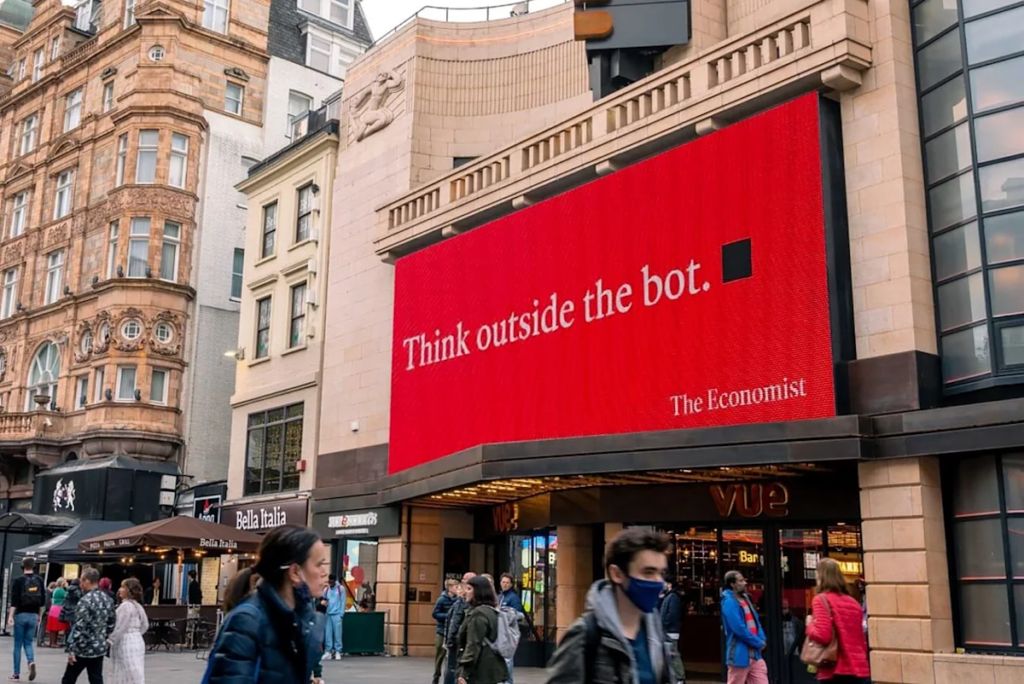
The Economist launched a run of minimal red billboards across London in July 2026, at Leicester Square, Carnaby Street and Canary Wharf. One reads “Think outside the bot.” Another simply promises “actual intelligence.”
The design is classic Economist, with white type on its signature red and very few words. A small black square sits beside the copy, resembling the cursor in a chatbot window. Independent agency Cocogun created the campaign. The pitch is that in a world of instant AI answers, considered human journalism is worth paying for.
A Building Site Asks ChatGPT for Help
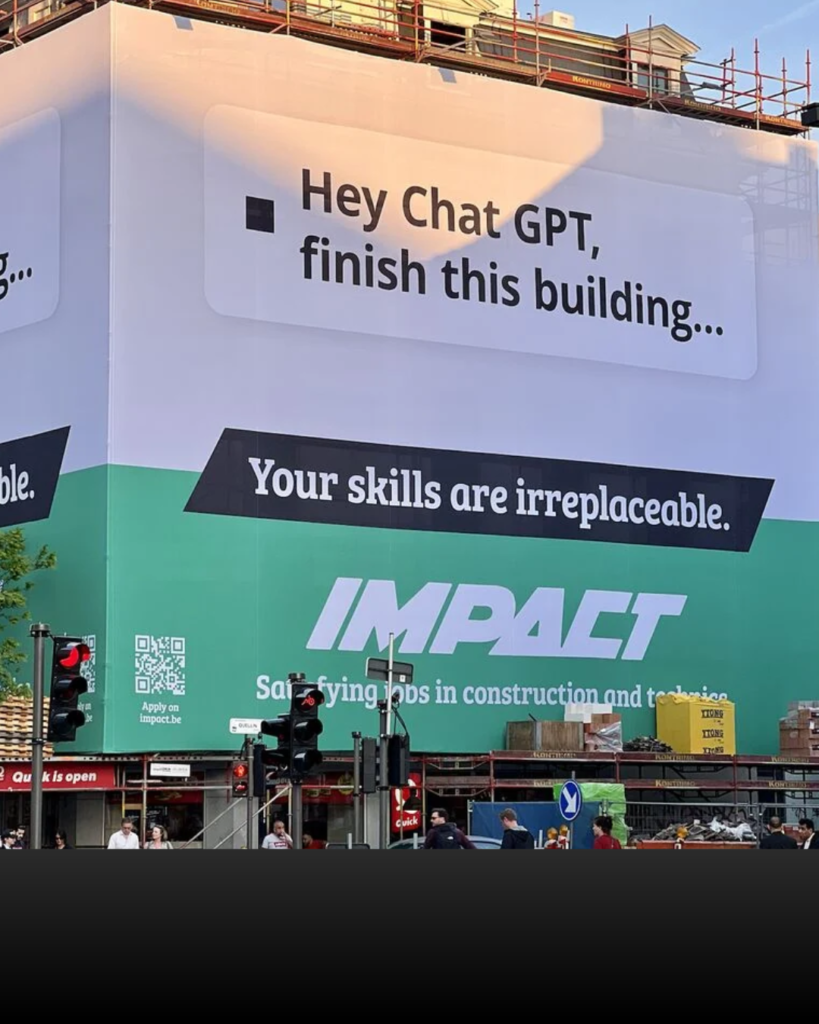
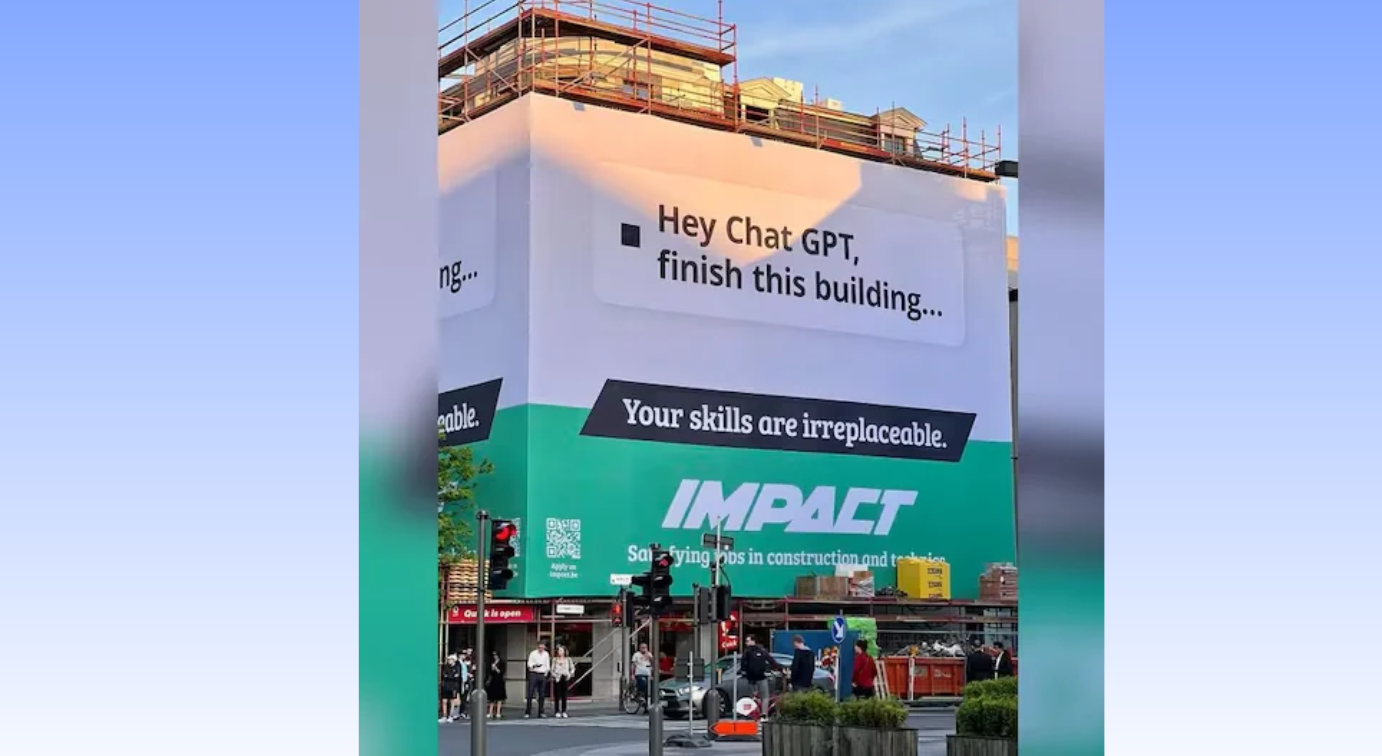
The idea of baiting AI on a billboard took off in Antwerp in June 2023. Belgian staffing company IMPACT wrapped a construction site on the busy De Keyserlei with a giant chat prompt reading “Hey ChatGPT, finish this building…” Below it, a second line answered for the workers. “Your skills are irreplaceable.”
The site was half finished, so the joke worked in real life. Software can write a paragraph, but it cannot lay bricks. IMPACT said the billboard was shared, liked and discussed several million times worldwide, from the US to China. The company said it wanted to give undervalued trades the recognition they deserve.
Polaroid Sends People Offline
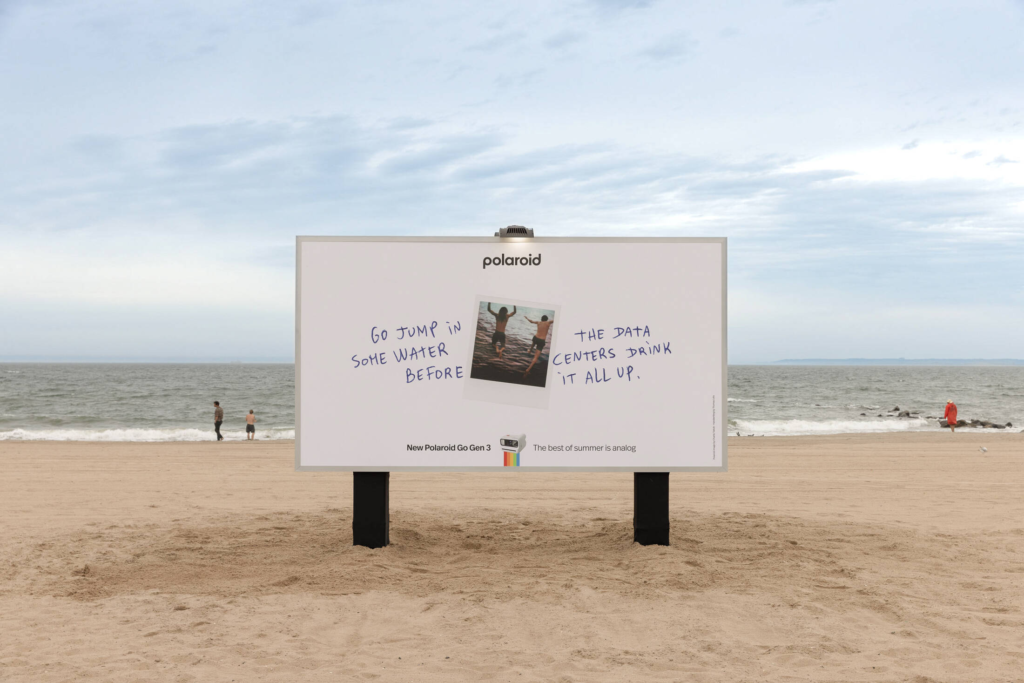
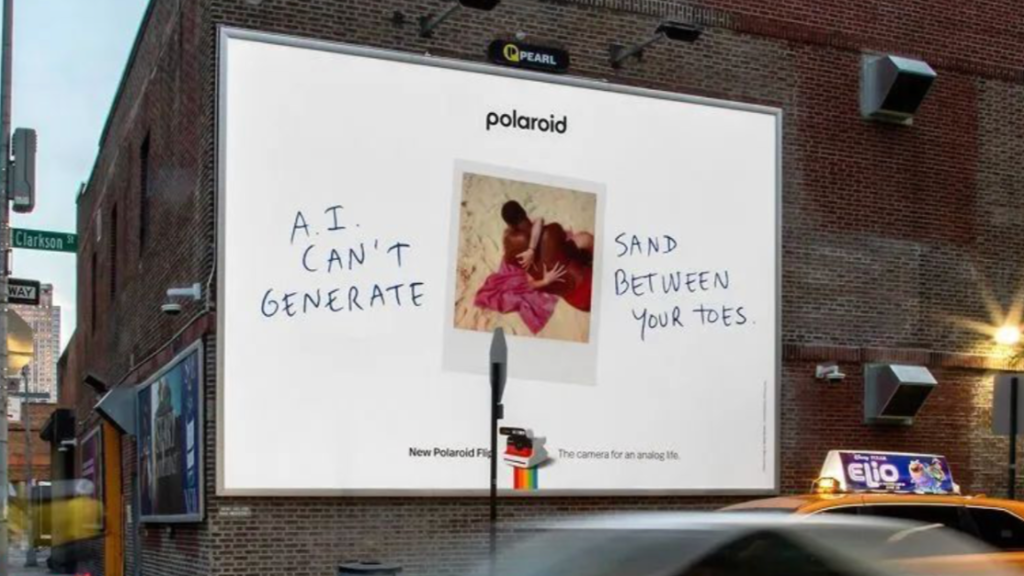
Polaroid has made anti-digital messaging its brand position. In 2025, it placed posters criticising screens and AI near Apple Stores and Google offices. In June 2026, it launched “The best of summer is analog” for its new Go Gen 3 camera, with handwritten lines framed around a real Polaroid print.
One poster reads “Less getting tracked, more getting lost.” The boldest rose out of the sand on Coney Island beach, telling people to go jump in some water “before the data centers drink it all up.” The campaign also ran at King’s Cross, Bethnal Green and Hackney in London, as well as in New York and South Korea. Polaroid Creative Studio created it, and the brand paid 12 creators to take time off social media.
“The simple act of existing is already an act of rebellion,” said Patricia Varella, creative director at Polaroid. Not everyone was convinced. Some critics pointed out the irony of a tech brand warning about technology while asking people to buy more of it.
Heineken Sells Friendship the Old Way
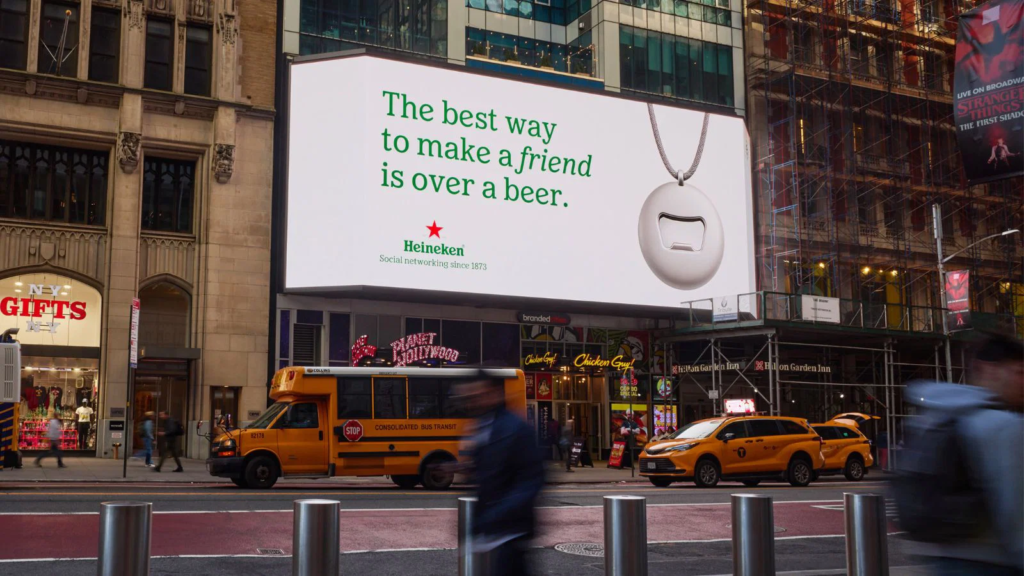
In October 2025, AI wearable startup Friend covered the New York subway with ads for its companion device, and many of them were defaced by commuters. Heineken answered with its own New York outdoor ads from October 16 to 22. The line was “Social networking since 1873,” arguing that the best way to make a friend is over a beer.
LePub New York created the work, which included a bottle opener necklace presented as Heineken’s take on wearable tech.
Aerie Promises Real Bodies
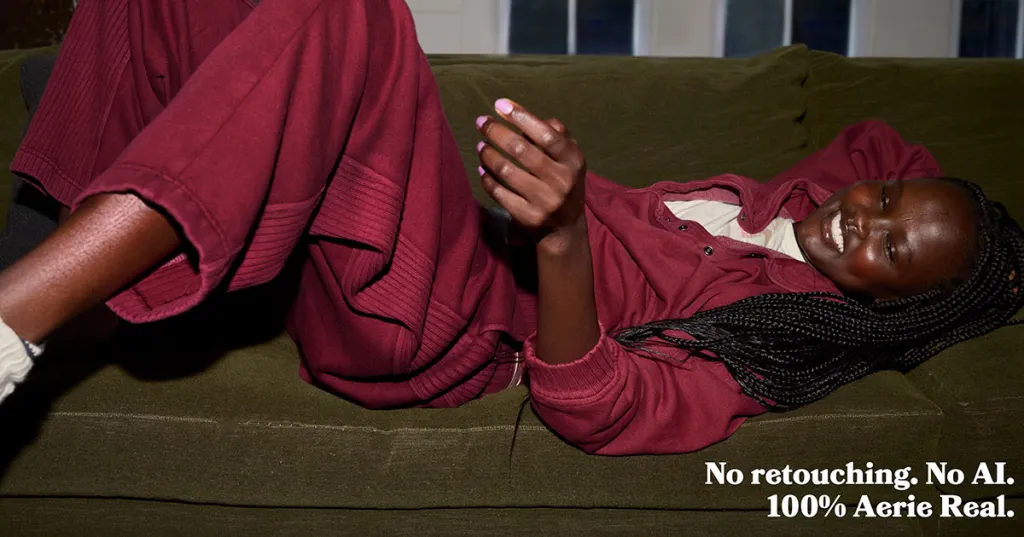

Lingerie brand Aerie took the pledge route. It promised not to use AI-generated bodies or people in its campaigns, extending its 2014 commitment to stop retouching models. The announcement drew more than 40,000 likes on Instagram.
Why Brands Are Picking This Fight
Each of these brands sells something AI cannot fully replace, whether trained judgement, physical craft, a printed photo or time with friends. Attacking AI makes that difference visible. Marketing writers have started comparing “no AI” labels to the organic label on food, a badge that signals authenticity.
The risk is looking hypocritical, since most of these companies use technology every day. The campaigns that worked best kept the joke specific and tied it to what the brand actually sells.
AI has spent the last few years advertising itself everywhere. Now brands are using the same billboards to sell being human.