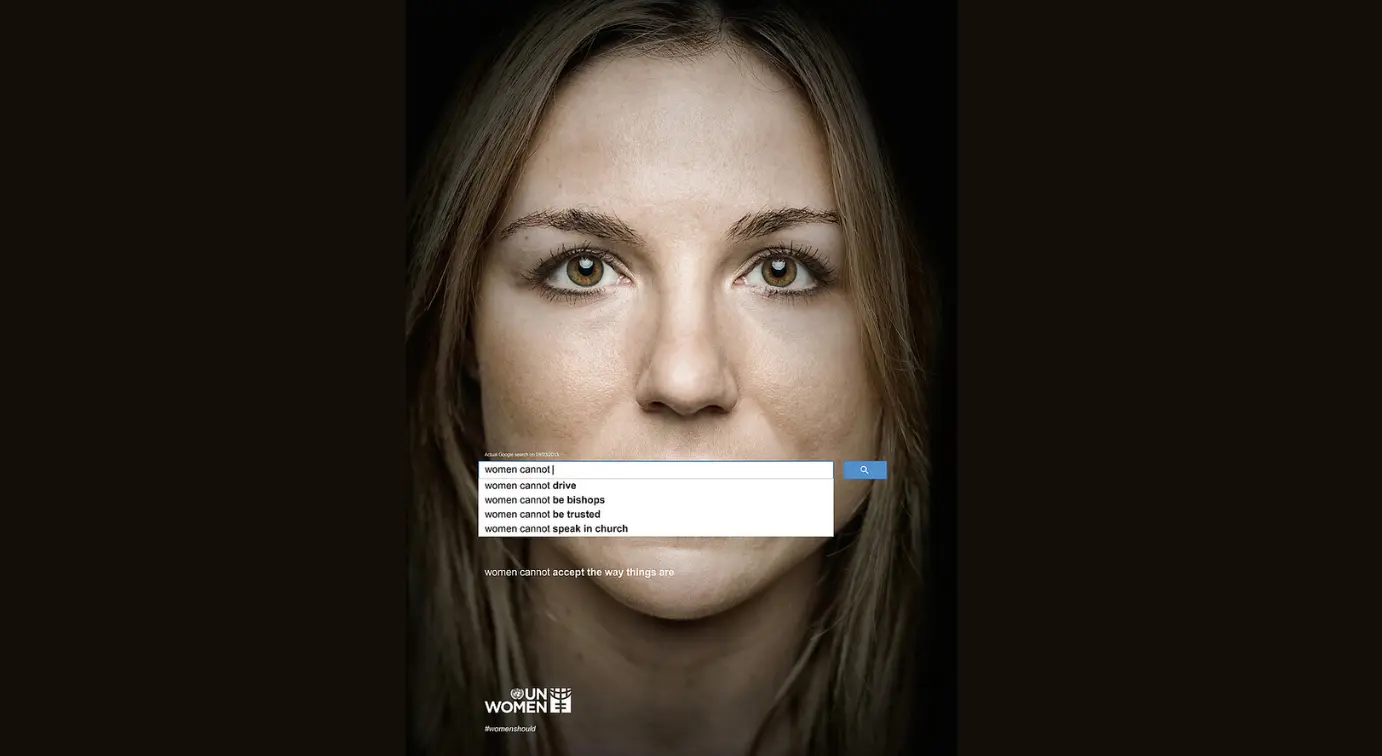
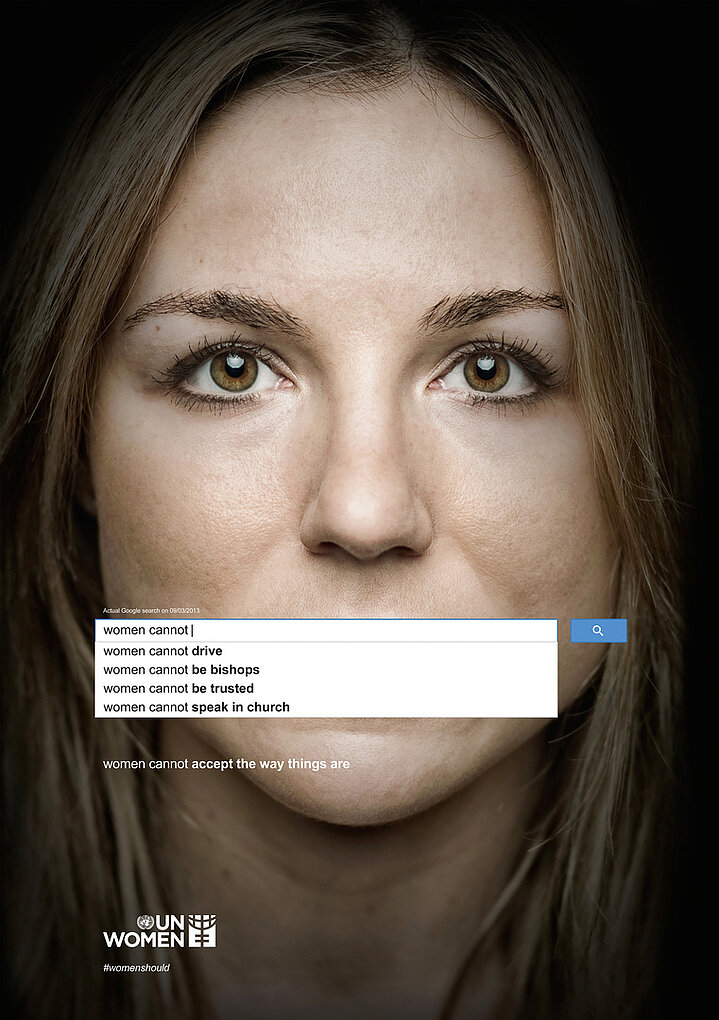
In 2013, UN Women and Memac Ogilvy Dubai ran a campaign that required no media buy and no original research. It used Google’s autocomplete function, fed by billions of real searches, to show what people around the world were actually typing when they searched for information about women. The results were placed directly over the mouths of women in the ads, covering them like a gag.
The Idea
Google’s autocomplete feature surfaces the most common searches associated with any term. When users typed “women should” or “women need” into the search bar, the suggestions that appeared reflected genuine, aggregated search behaviour from millions of people across different countries. The campaign captured those autocomplete results and turned them into ad copy.
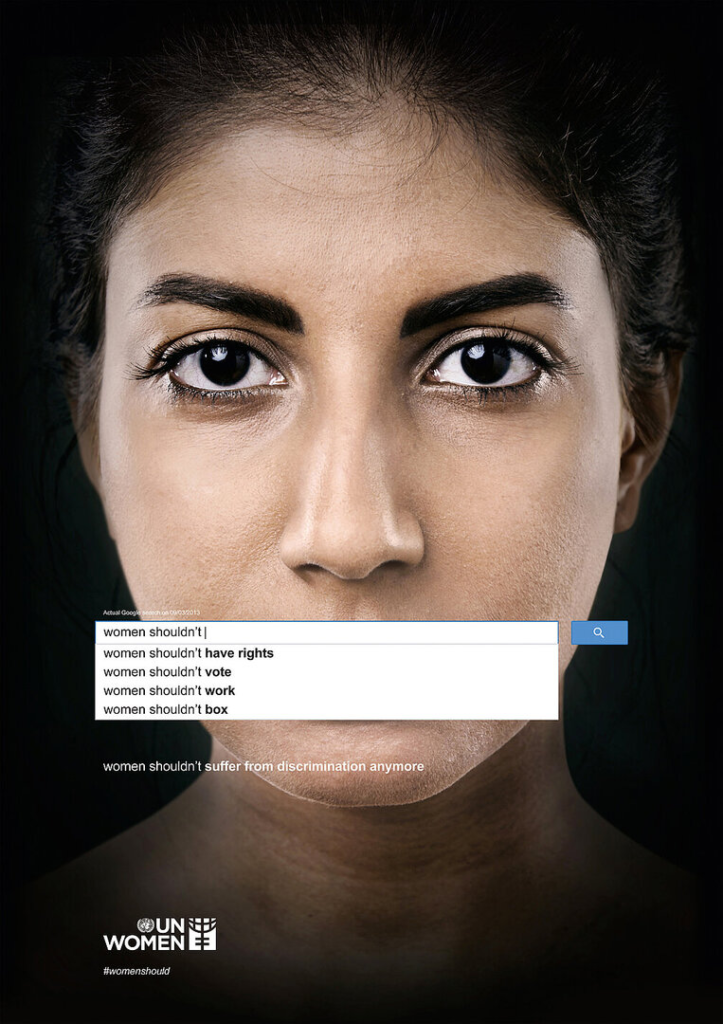
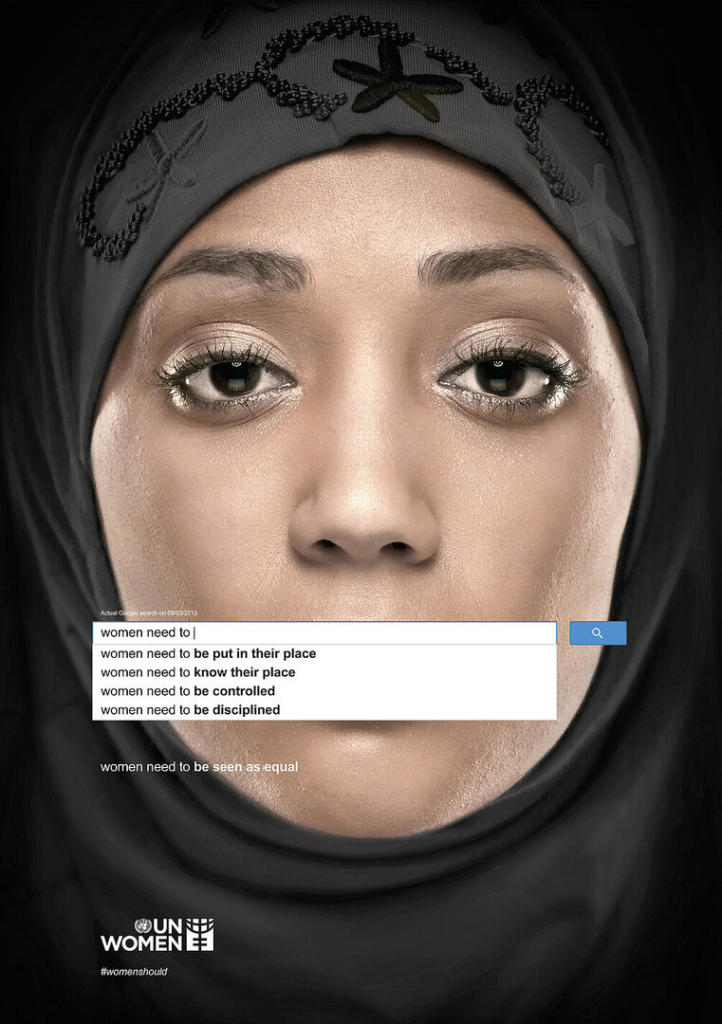
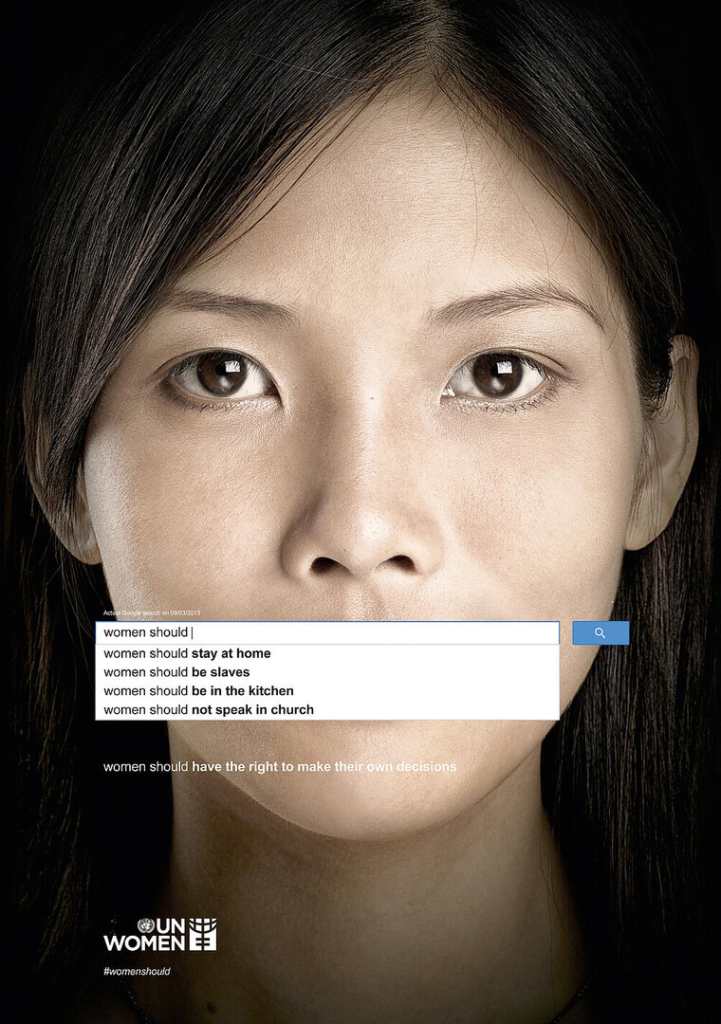
The phrases that appeared were not invented by the agency. They came from real searches: “women should stay at home,” “women need to be controlled,” “women shouldn’t have rights.” The copy wrote itself. Memac Ogilvy’s contribution was recognising that the data already existed and deciding to put it in front of people’s faces.
The Visual
Each ad showed a woman from a different cultural background. The Google search bar was placed horizontally across her mouth, with the autocomplete suggestions visible inside it. The mouth was covered not by a hand or a censor bar but by the interface of the internet itself. The implication was clear. The mechanism doing the silencing was the same one billions of people used every day without thinking about it.
The Spread
The campaign launched in 2013 under the hashtag #womenshould and travelled without paid promotion. It generated 134,000,000 Twitter impressions and earned coverage in 590 global media articles. It was discussed on television, radio, blogs, and in classrooms. The conversation spread across borders and involved both men and women at a scale that a traditional advertising campaign with a comparable budget could not have produced.
The Awards
The campaign won the Red Dot Best of the Best in Brands and Communication Design in 2015, one of the highest distinctions in that programme.
What the Campaign Did
The Autocomplete Truth did not argue that sexism existed. It showed the evidence without commentary, using a source the audience trusted and interacted with daily. The search bar is a tool people associate with neutral information retrieval. Turning it into the vehicle for the message made the prejudice harder to dismiss as an exaggeration or an editorial position. The data came from the audience itself.
Campaign Name: The Autocomplete Truth
Agency Name: Memac Ogilvy, Dubai
Brand Name: UN Women
Location: Global (produced in Dubai)