There is a poster somewhere in the UK that looks like it was installed by someone having a very bad day. The creative is mis-sized. The board is crooked. Mud is splattered across its face. Walk past quickly, and you would assume the outdoor company made a catastrophic error. Look closer, and you have just been sold business insurance. A television commercial from the same campaign will broadcast to millions of viewers this week, upside down. This is not an accident. This is Hiscox.
The Problem That Forced the Idea
Hiscox is a global specialist insurer listed on the London Stock Exchange, covering over 800 categories of small businesses across the UK. Between 2020 and 2023, the company shifted its marketing investment heavily toward lower-funnel performance advertising, chasing short-term acquisition at the expense of brand building. The result was three consecutive years of declining brand metrics and rising acquisition costs. Total Media business director Hannah Moody described it directly: Hiscox had seen three years of declining brand metrics and increased acquisition costs, stifling their growth.
The challenge was structural. Business insurance is one of the lowest-interest advertising categories in existence. Hiscox did not have the budget of a high-street insurer. Standard advertising in the category could be safely ignored. The brand needed to become unmissable without spending like a market leader.
Uncommon Creative Studio identified two insights from behavioural research that shaped the strategy. First, there was a 91% correlation in attitudes and behaviours between Hiscox customers and its competitors, meaning the brand could not rely on audience targeting alone to differentiate. Second, risk awareness was the primary barrier stopping small businesses from getting insured. Business owners knew the risks existed. They had not yet connected those risks to the decision to insure against them.
Season 1: The Most Disastrous Campaign Ever
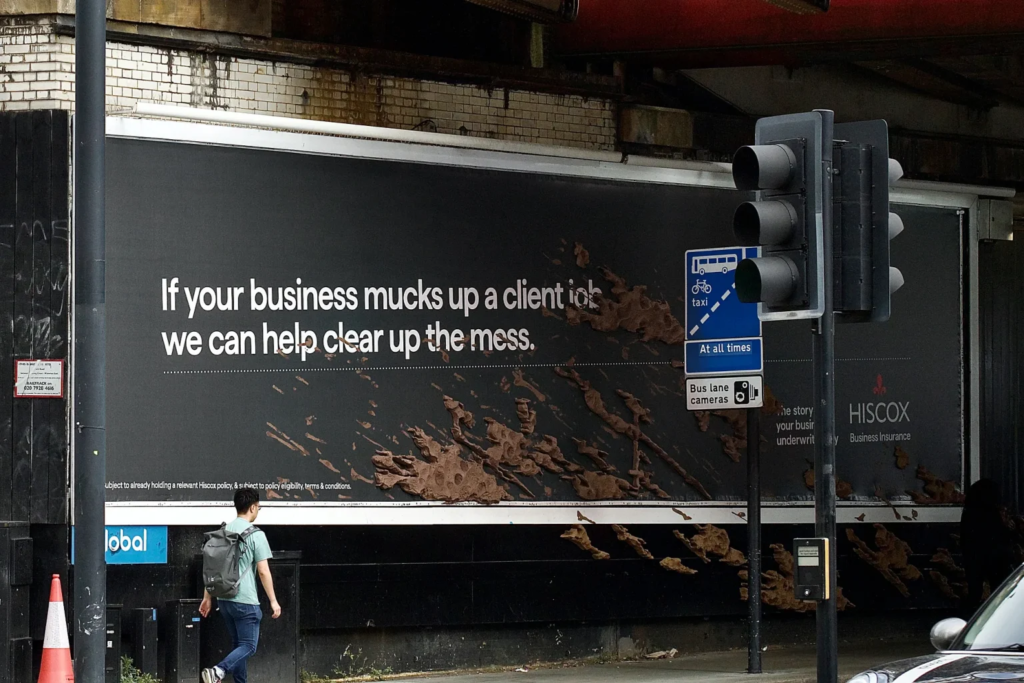
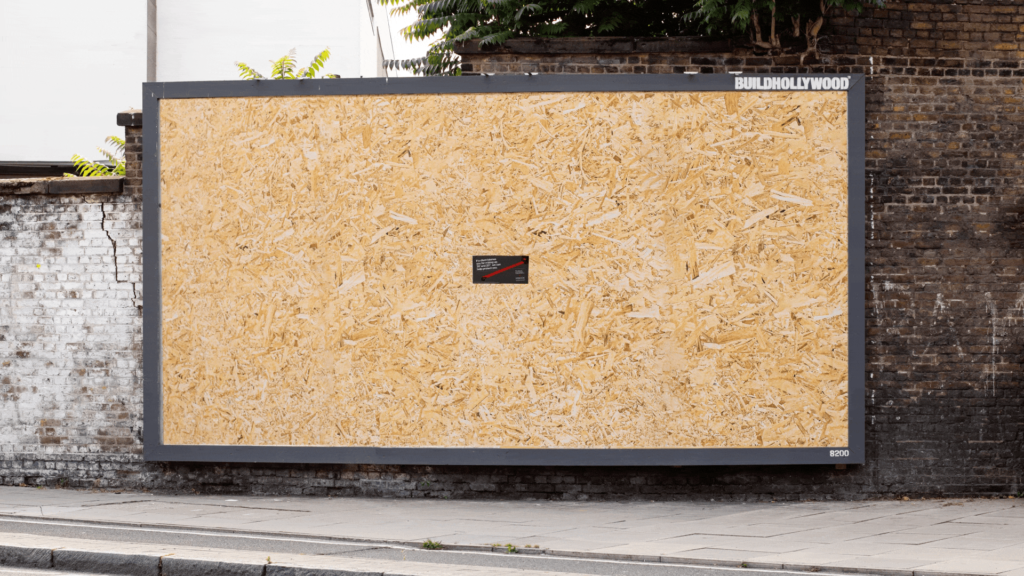
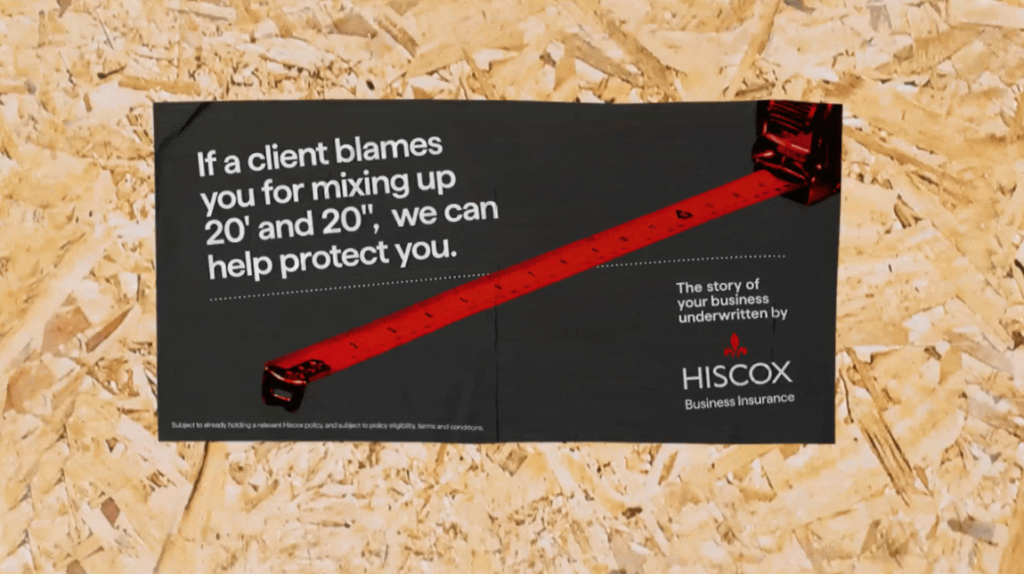
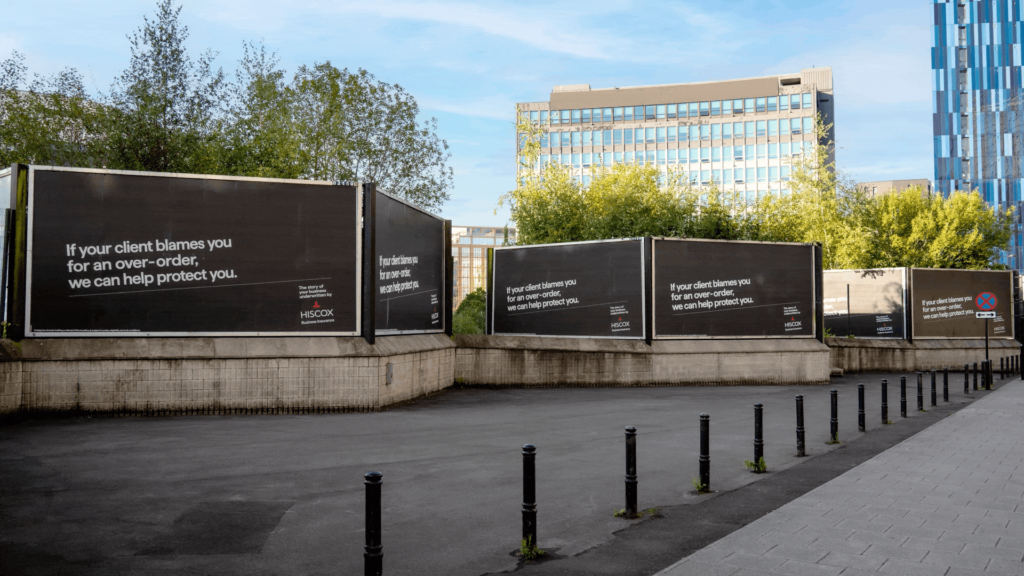
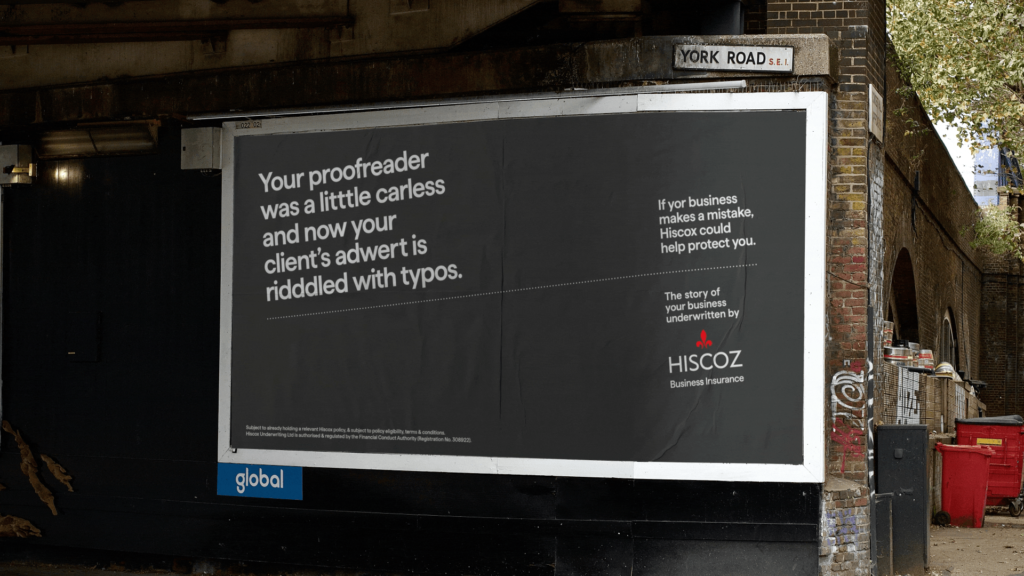
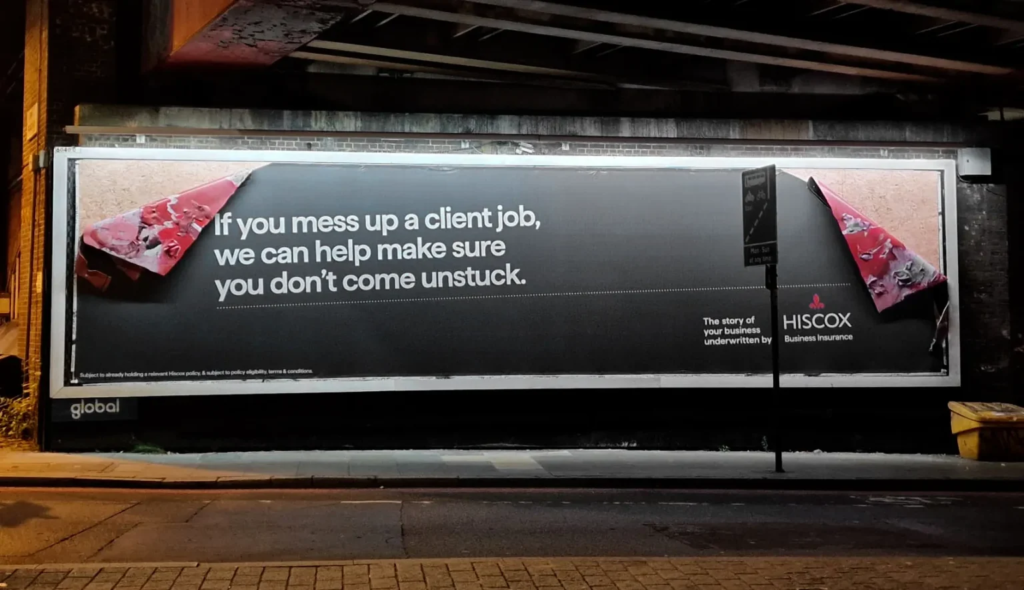
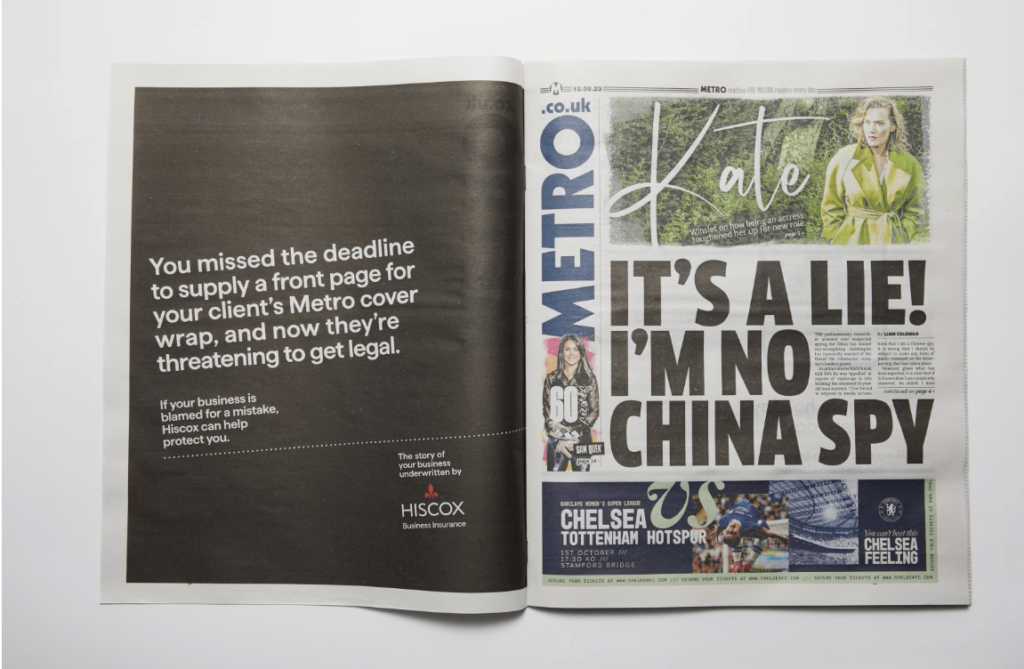
Launched in September 2023, the campaign ran across 17 UK towns and cities as the largest deployment of OOH special builds in British advertising history. Twenty-one bespoke installations brought real-life business risks to life through the advertising itself going wrong in ways that illustrated what Hiscox covers.
A burst water pipe installation at Westfield featured real running water. A broken wire at a Glasgow site used real LED sparks. Posters appeared to have been mis-sized, duplicated, or installed upside down. One execution misspelled the brand name as “Hsicox.” A Metro newspaper cover wrap ran entirely blank on the front page, with an inside ad explaining that the copy had not been submitted on time and that the client was now threatening legal action. WeTransfer was taken over to illustrate the risk of sharing confidential information. WeWork locations across the country were dominated by Hiscox messaging for months.
Each execution illustrated a specific category of business risk covered by Hiscox. The campaign did not claim to protect against disasters. It dramatised what those disasters actually look like, in real media environments, with real production commitment.
Lucy Jameson, co-founder at Uncommon, described the creative logic: “From typos to burst pipes, this playful outdoor work uses multiple special builds to bring to life real stories of the risks and challenges that affect business owners today.”
Season 2: Escalation Into Digital
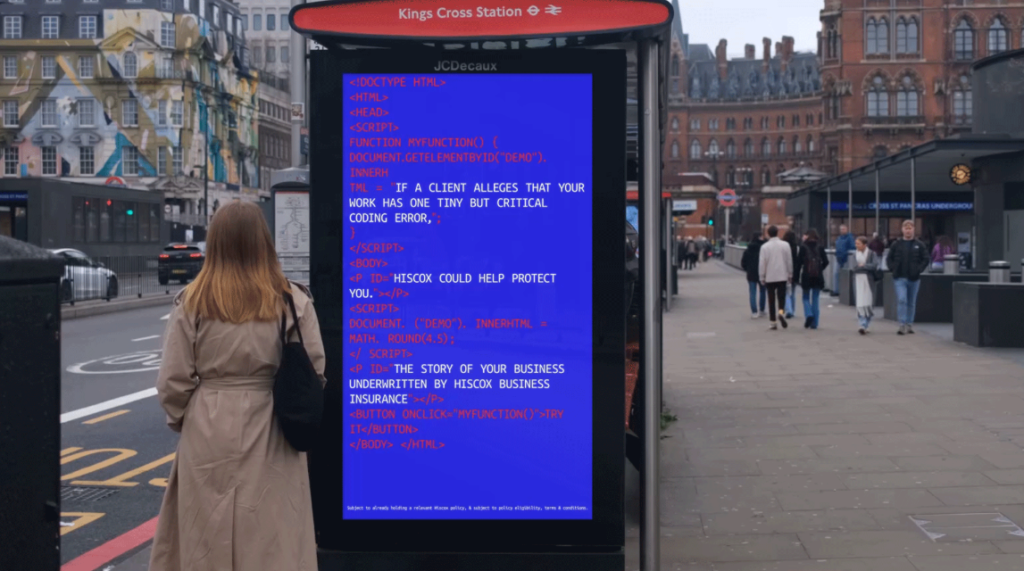
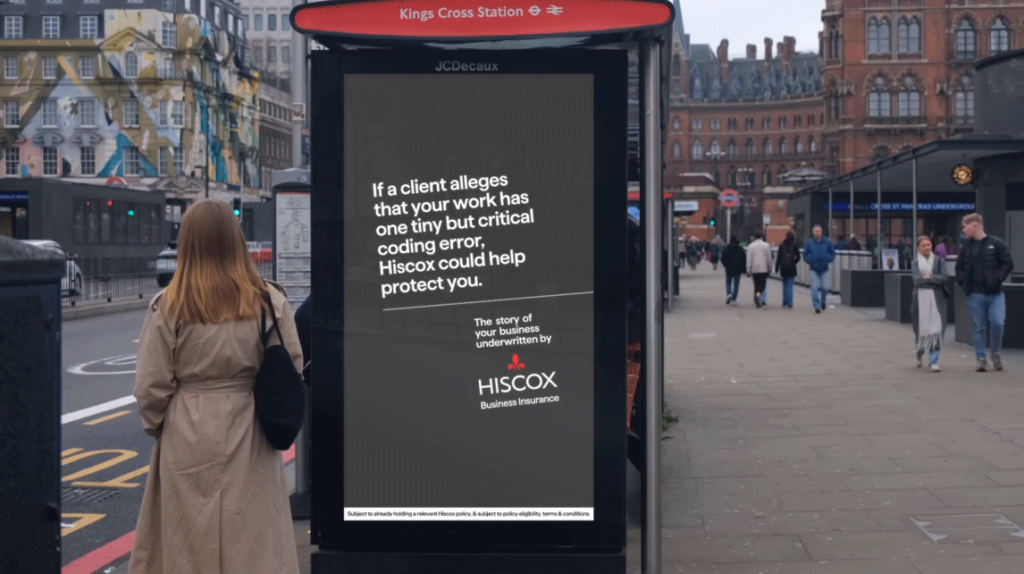
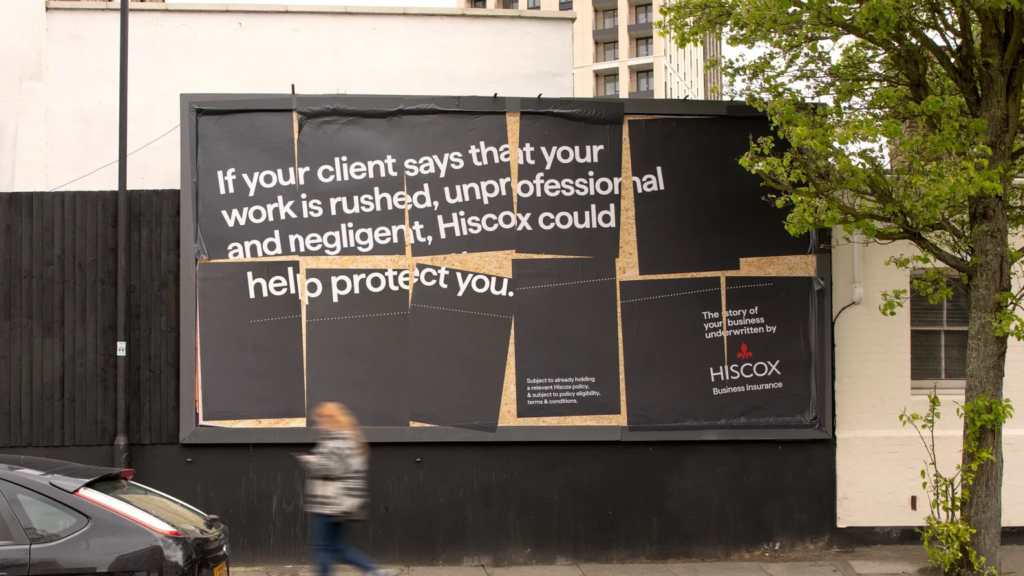
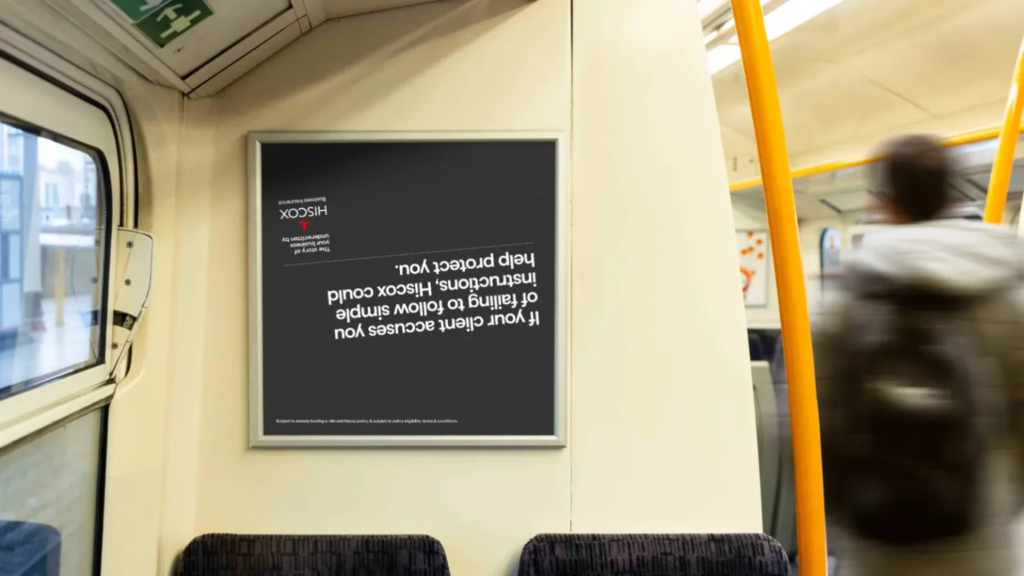
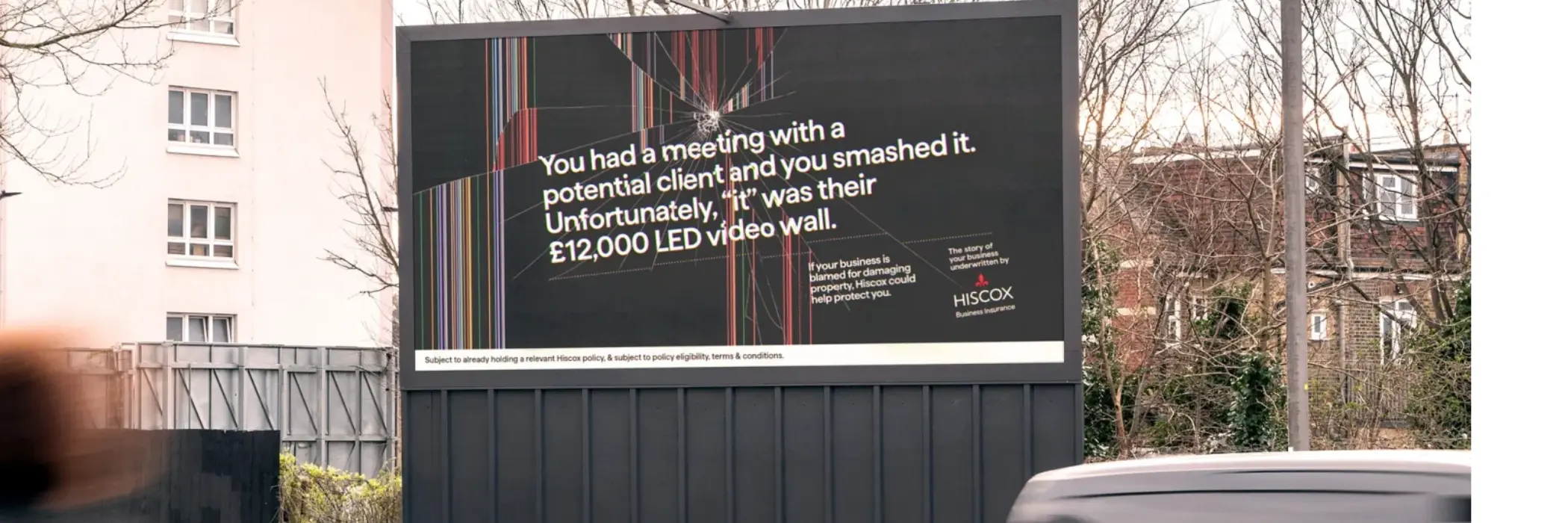
The second wave extended the disaster framework into digital territory. An incorrectly coded DOOH screen. A poster apparently written by a child. A smashed screen. A billboard was installed upside down. The list of risks expanded, too, covering data leaks, coding errors, and the kind of human mistakes that feel painfully familiar to anyone who has accidentally sent an email to the wrong person. The campaign remained structurally consistent: whatever could go wrong in advertising was used to illustrate what could go wrong in business.
Season 3: Copyright Infringement as the Medium
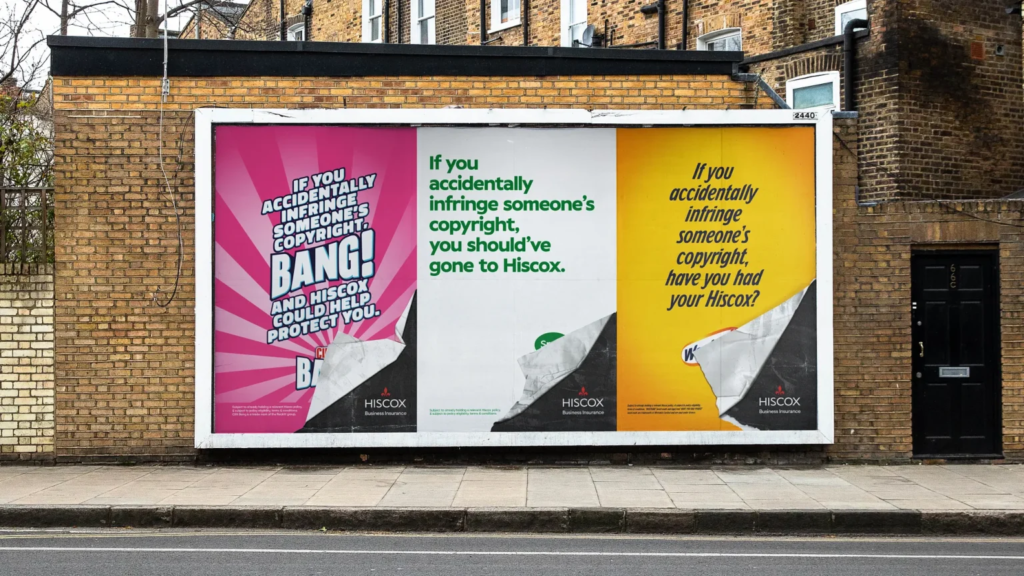
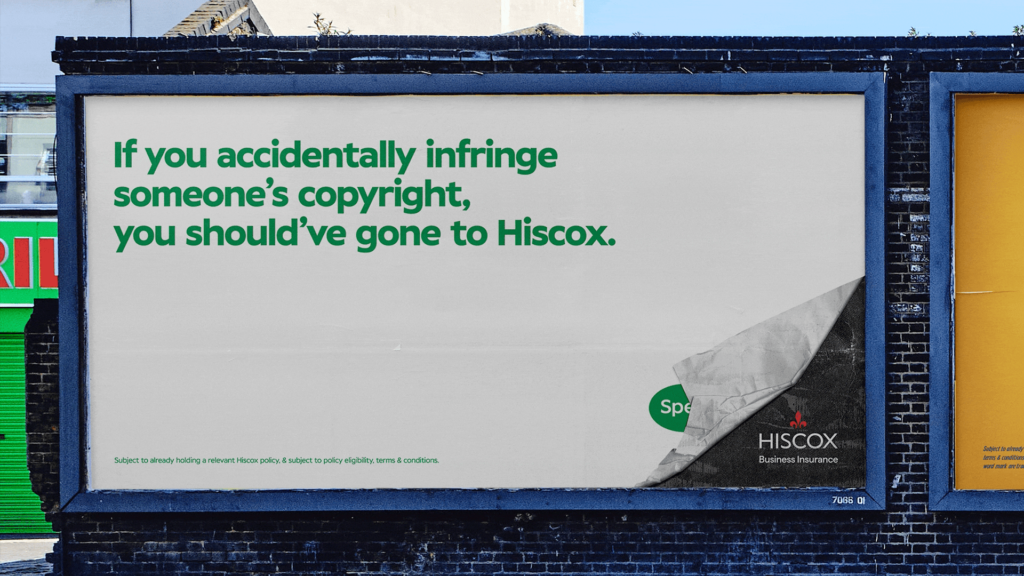
The third phase was the most structurally audacious. Hiscox and Uncommon produced posters that at first glance appear to be advertisements for Specsavers, Weetabix, and Cillit Bang, using each brand’s colours, distinctive visual assets, and iconic taglines. Only on closer inspection does the campaign reveal itself. The creative infringed the visual identity of three established UK brands to demonstrate copyright infringement as a business risk, through the act of committing it.
Getting Specsavers, Weetabix, and Cillit Bang to consent to the execution was no small production challenge. All three agreed. Nils Leonard, co-founder at Uncommon, described what that represented: “At a time when lots of people are playing with their own logos, we thought we’d play with everyone else’s. Long running ideas with such a clear and disruptive format are rare to find, and a mark of this campaign’s power is a moment when even other brands are happy to play a role.”
Season 4: The Opposite Direction
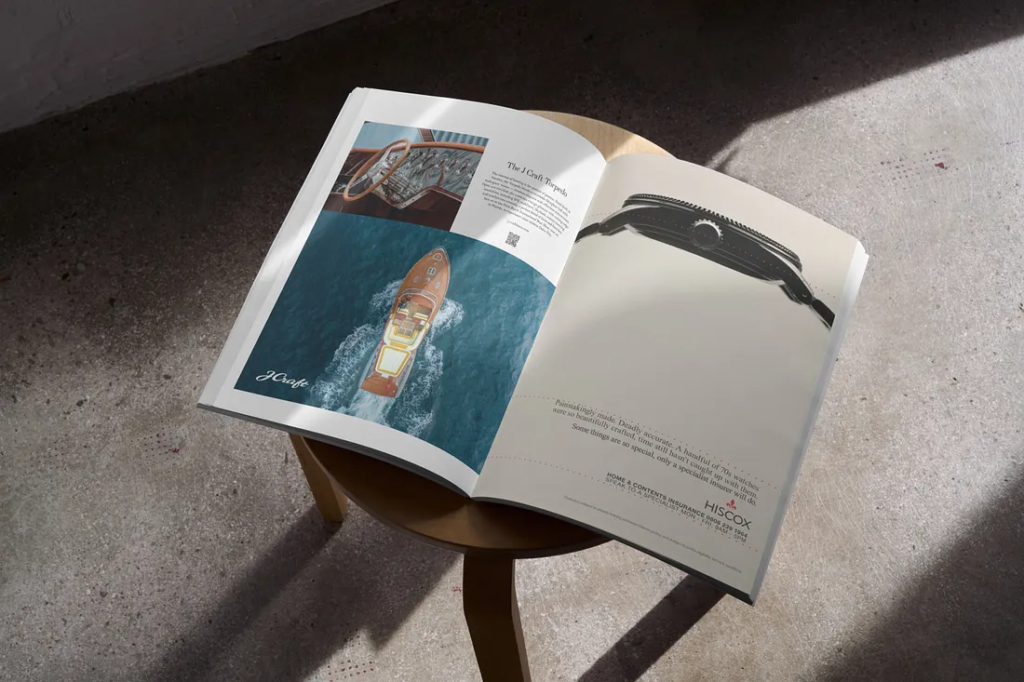
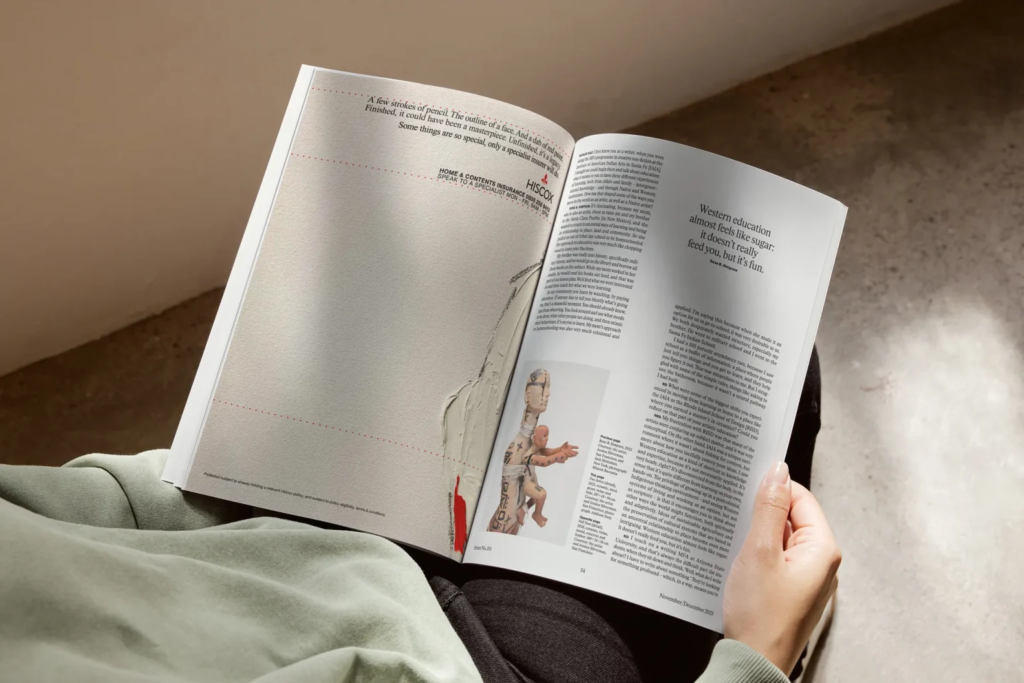
November 2025 introduced a gear change. The Collections campaign, developed for Hiscox’s home and contents insurance targeting high-net-worth individuals, abandoned the chaos entirely. Long copy. Stripped-back art direction. Print executions that read as magazine editorial rather than advertising. The target audience, collectors of fine wine, rare watches, art, and antiques, is chronically underinsured, not from indifference but from neglect, most having taken out their last policy years ago without updating it. The creative celebrated the objects of collection themselves, positioning Hiscox as a brand that genuinely understands what those objects mean to the people who own them.
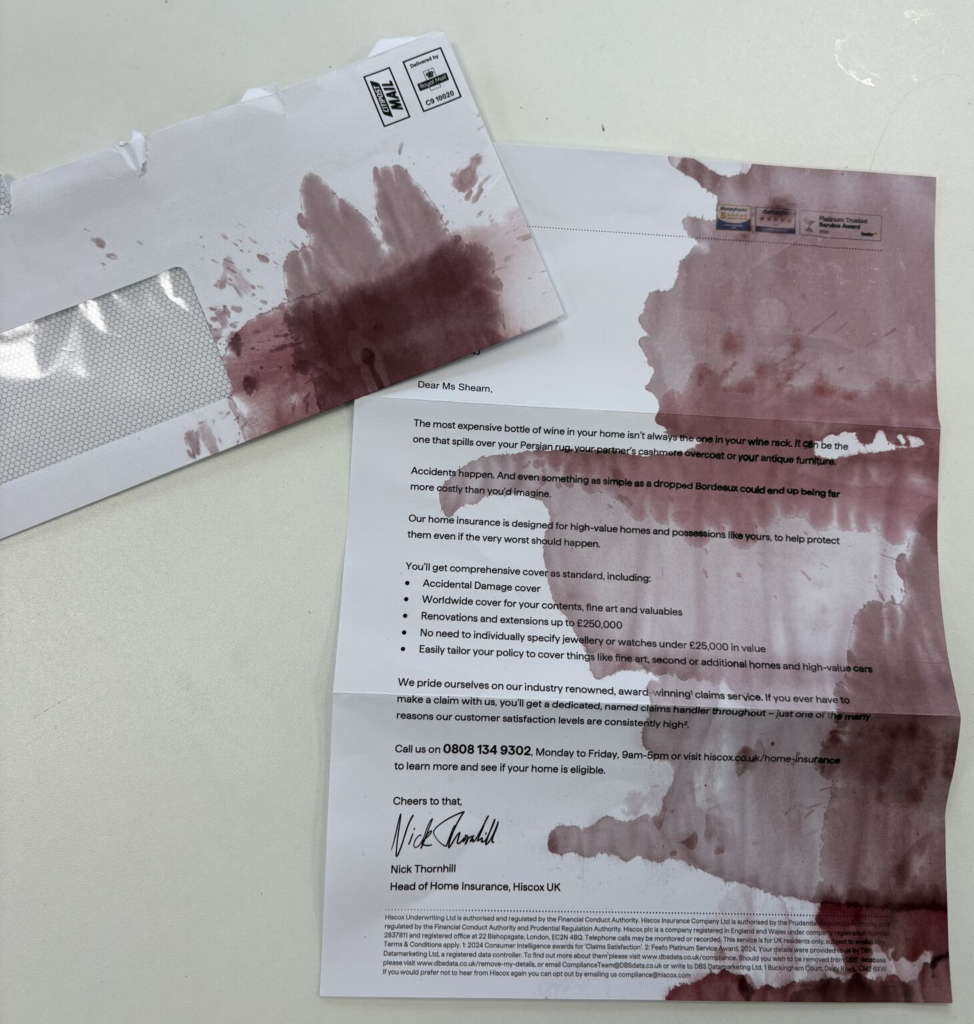
Direct mail executions for the same campaign arrived at recipients appearing drenched in red wine stains and smudged text, making the argument that even a dropped Bordeaux carries consequences worth covering. The disaster aesthetic applied to a new format and a new audience, without losing the underlying logic.
The Results
The campaign’s apparent disastrousness produced results that were anything but. Hiscox recorded a 52% increase in unaided brand awareness, a 47% increase in brand keyword searches, and 16% growth in sales, leading to the company’s highest-ever annual profit. Spontaneous brand awareness and commercial metrics showed significant uplift from the first phase alone.
The campaign has run for over two years without running dry, which is the rarest outcome in advertising. Most campaigns that produce one strong execution in a category-disrupting register struggle to sustain the logic across multiple seasons, formats, and audiences. Hiscox has done it four times and is still going.
The central mechanic, the campaign itself, goes wrong in ways that illustrate the risks Hiscox covers, is flexible enough to absorb any business risk, any level of absurdity, and any medium. The TV commercial that broadcasts upside down this week is the same idea that ran as a mud-splattered poster in 2023. The platform has not changed. Only the disaster has.
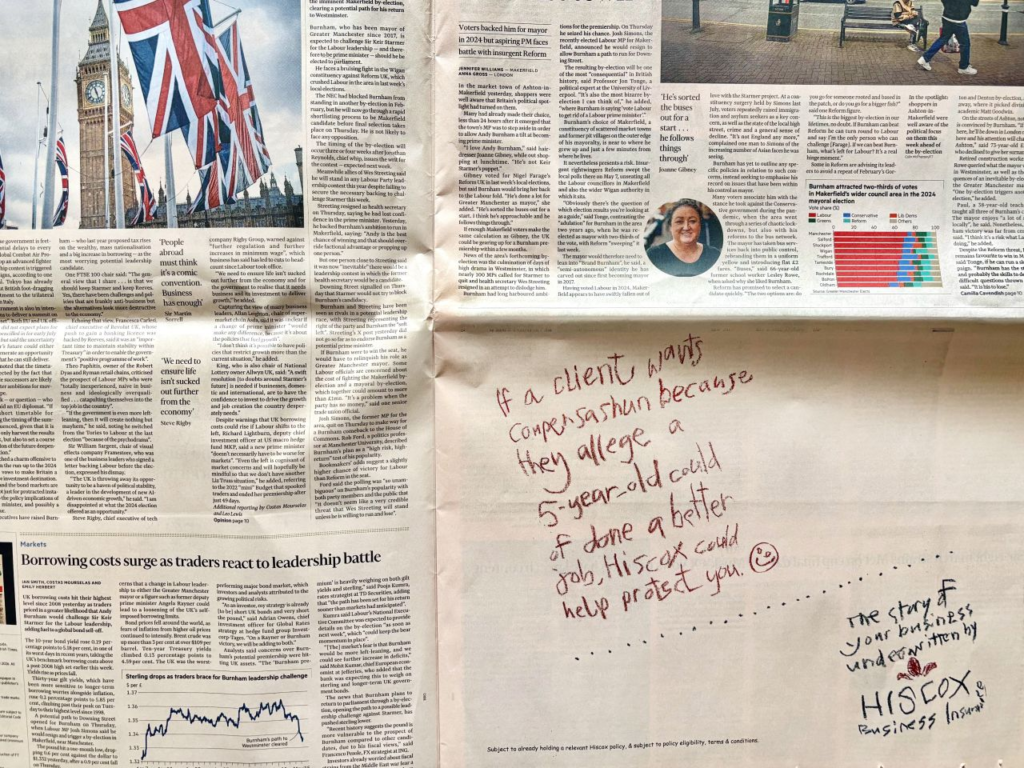
Campaign Name: The Most Disastrous Campaign Ever
Agency Name: Uncommon Creative Studio / Media: Total Media / OOH: Posterscope and Ocean Special Builds