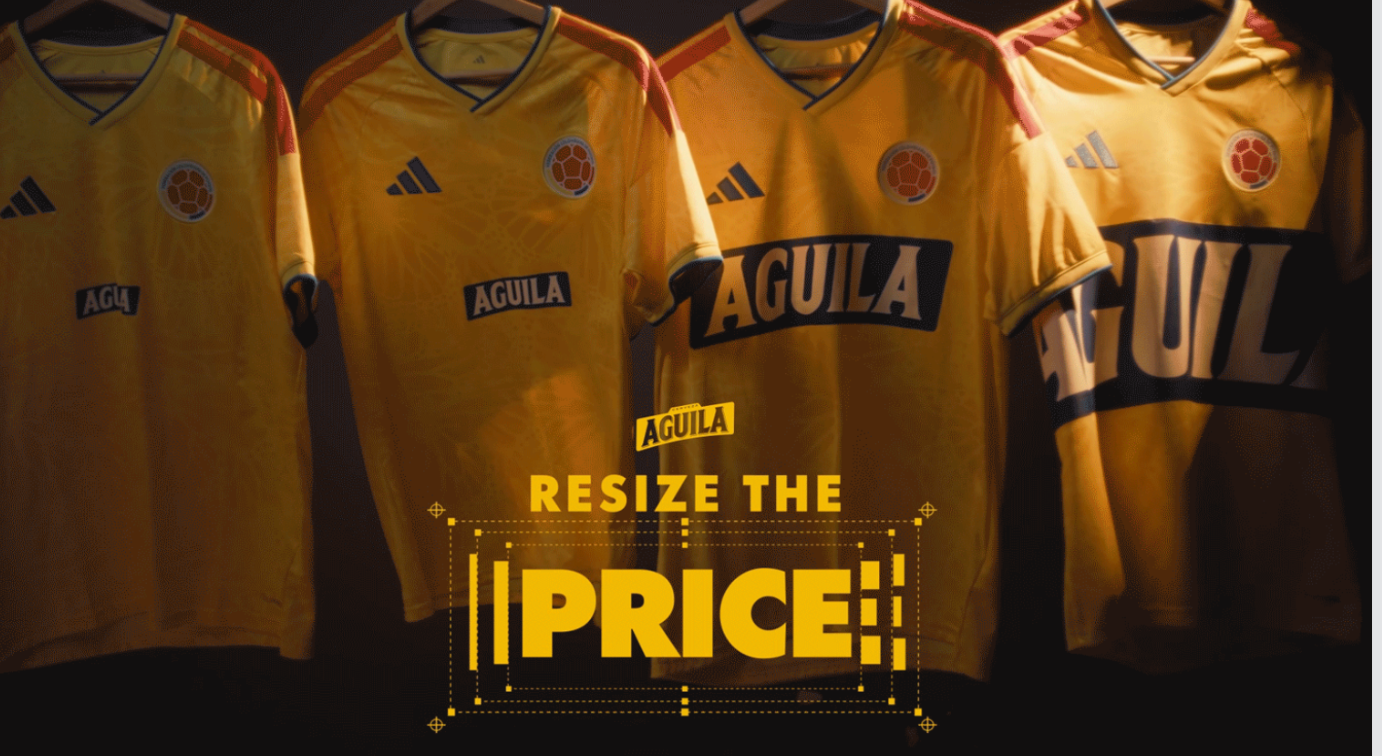
Colombia’s official football jersey for the 2026 FIFA World Cup was priced at $150 USD. That is nearly 25% of the average monthly salary in Colombia. Fans who had waited eight years to see their national team at a World Cup, Colombia last qualified for 2018, were being priced out of the one shirt that meant the most to them. Aguila, Colombia’s official team beer sponsor and the brand with a contractual right to place its logo on the shirt, turned that sponsorship asset into a direct financial tool for the fans who could least afford it.
The Problem
The 2026 FIFA World Cup is the most expensive football tournament in history. Across host cities in the United States, Canada, and Mexico, ticket prices, stadium food, and official merchandise have generated sustained controversy about who the tournament is actually for. In Colombia, the jersey pricing problem landed with particular weight. The country was returning to the World Cup stage after an eight-year absence. Demand for the yellow shirt was enormous. Supply was not the issue. Price was.
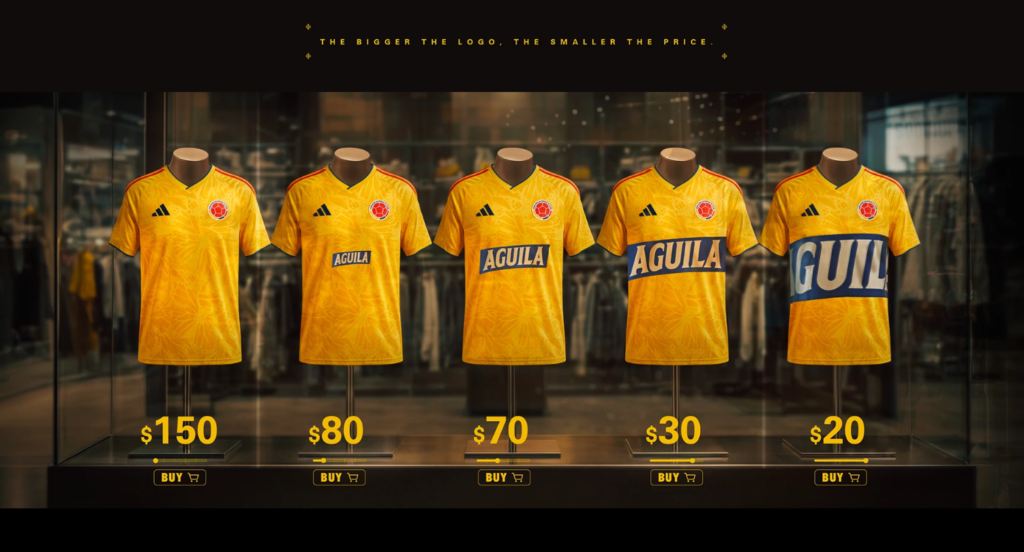
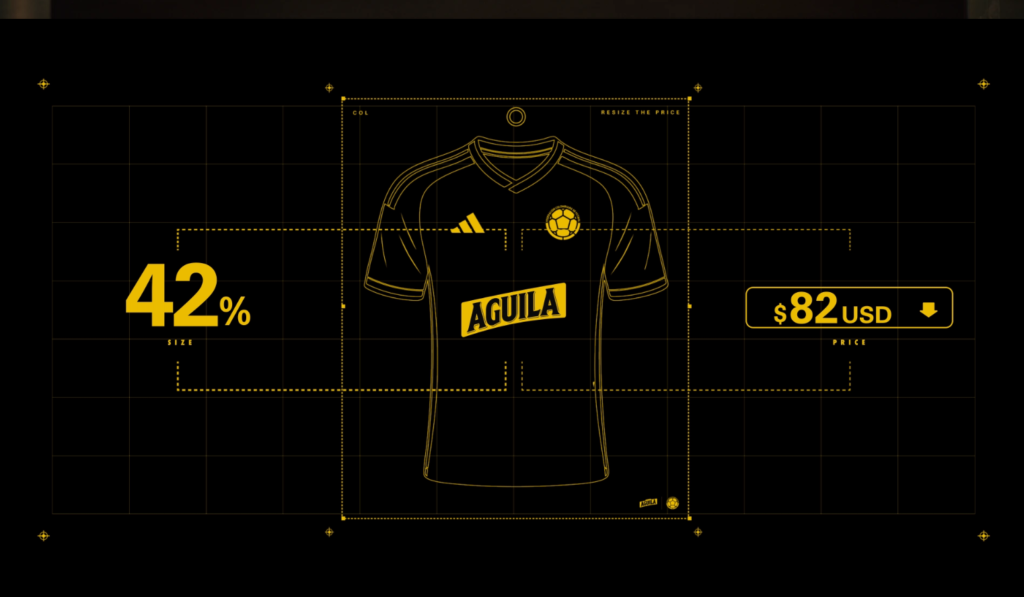
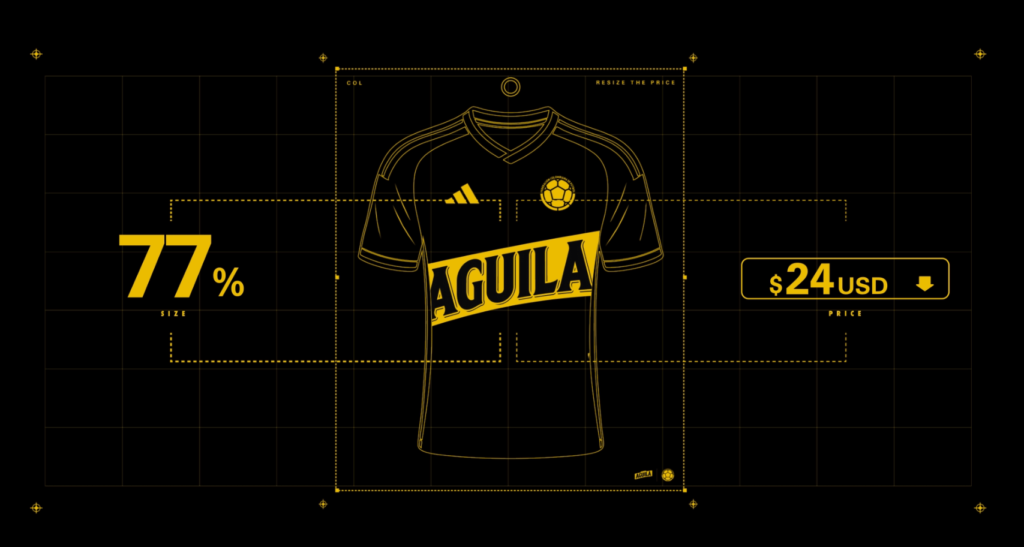
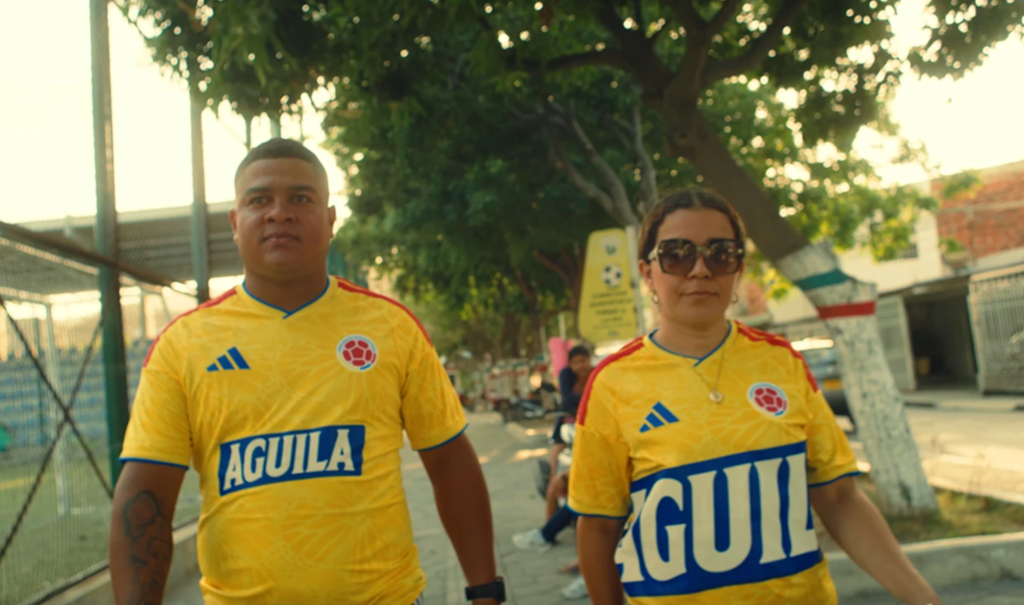
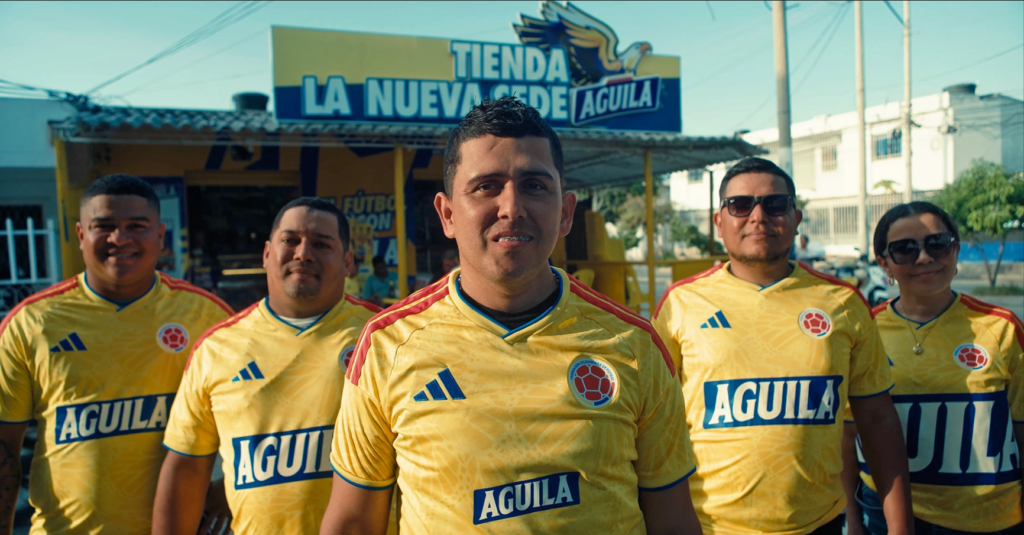
At $150, the jersey represented a purchase that required a significant portion of a month’s income for millions of Colombian fans. The social media conversation was clear: people wanted the shirt. They could not afford it.
The Mechanic
Aguila Beer, as Colombia’s official team sponsor, held the contractual right to print its logo on official merchandise. DAVID Bogotá and DAVID Madrid identified that right as the campaign’s entire mechanism.
Resize the Price worked on a simple sliding scale. Fans who agreed to have Aguila’s logo printed on their jersey received a discount proportional to the size they chose. The larger the logo, the lower the price dropped. The scale slid from $150 all the way down to $20, a reduction of 87% for fans who opted for the largest logo size.
The campaign’s Behance case study describes the underlying commercial logic directly: Aguila used its official sponsorship space on the shirt to strike a direct deal with fans. “Let us use our official space on your chest, and we’ll pay you for it.” A legal sponsorship asset was converted into a fan subsidy. The more a fan was willing to show up for Aguila, the more Aguila showed up for them.
Why the Idea Works Structurally
Sponsorship logos on football shirts are a standard commercial arrangement that every brand in the category executes without distinction. The logo appears on the chest. The brand pays the federation. The shirt goes on sale. Fans buy it or do not. The transaction between brand and consumer is entirely passive.
Resize the Price inverted every element of that structure. The logo placement became a negotiation between the brand and the fan rather than between the brand and the federation. The size of the logo became a variable controlled by the consumer rather than fixed by the contract. The commercial value of the sponsorship was transferred downward through the supply chain to the person wearing the shirt rather than retained at the top.
The result is a sponsorship activation that is simultaneously visible, commercially measurable, and directly beneficial to the audience it is trying to reach. Most sponsorship deals benefit brands. This one benefited fans first, with brand visibility as the direct mechanism through which the benefit was delivered.
The Context: The World Cup’s Affordability Crisis
The campaign arrived in a broader context of mounting public frustration about World Cup pricing. Newsweek reported on fan outrage at $19 beers inside stadiums. Former professional players publicly described the pricing as “shambolic.” FIFA faced sustained criticism for what multiple outlets described as a tournament that was becoming economically inaccessible to the working-class fan base the sport was built on.
Aguila’s campaign did not address the structural pricing problem in any formal sense. It addressed one specific, local, and solvable version of it: a Colombian fan who wanted a Colombian shirt at a price that was compatible with a Colombian salary. The campaign made that possible without requiring any change to the tournament’s broader commercial model, simply by redirecting a sponsorship asset that already existed.
The Cannes Recognition
Resize the Price won a Gold Lion in Entertainment Lions for Sport in the Brand Partnerships, Sponsorships and Collaborations category at Cannes Lions 2026, awarded to DAVID Bogotá and DAVID Madrid. The Gold placed it directly behind the Grand Prix winner in the same category, which went to Club Deportivo Municipal’s “The Thousand Sponsors of Muni,” another Latin American campaign that restructured the financial relationship between a football brand and its supporters.
Two Gold Lions in the same sport sponsorship category going to Latin American campaigns in the same year, both built around rethinking who benefits from the commercial agreements surrounding football, is not a coincidence. It reflects a genuine regional pattern of finding the fan’s financial exclusion from the sport they love as the starting point for creative work.
Campaign Name: Resize the Price
Agency Name: DAVID Bogotá / DAVID Madrid (Ogilvy)
Brand Name: Aguila Beer (Cerveza Aguila)
Location: Colombia