Washington D.C. has more than 70 museums. Most of them use advertising to tell people what is inside. National Geographic and Terri & Sandy did the opposite.
The Campaign
The National Geographic Museum of Exploration opened in Washington D.C., with a launch campaign built around one instruction: do not show what is in the museum. Instead, ask people to imagine it.
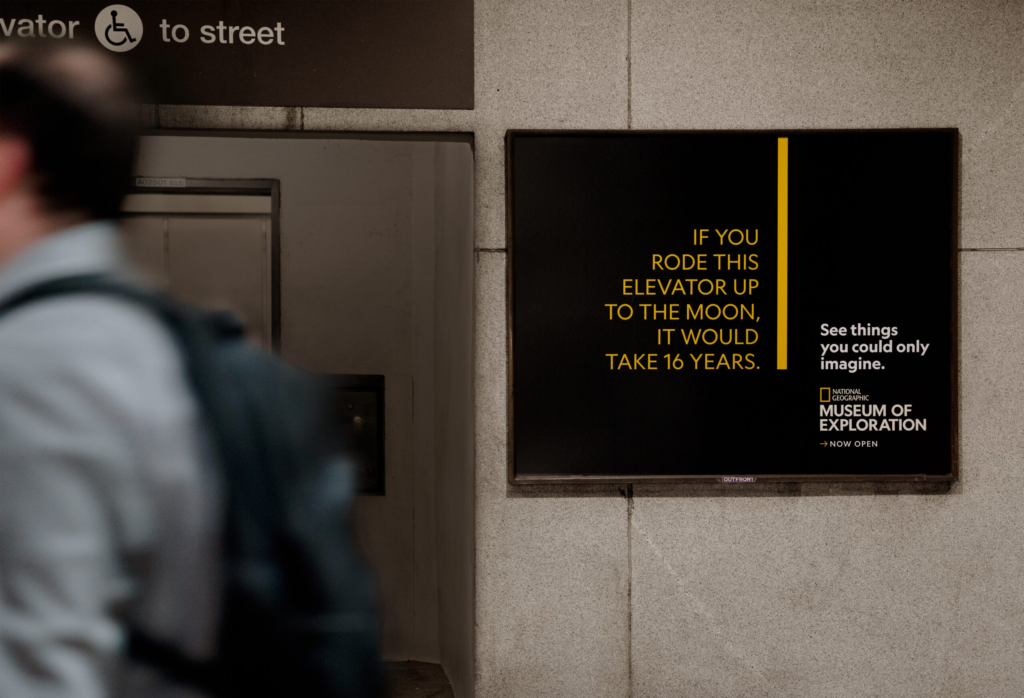
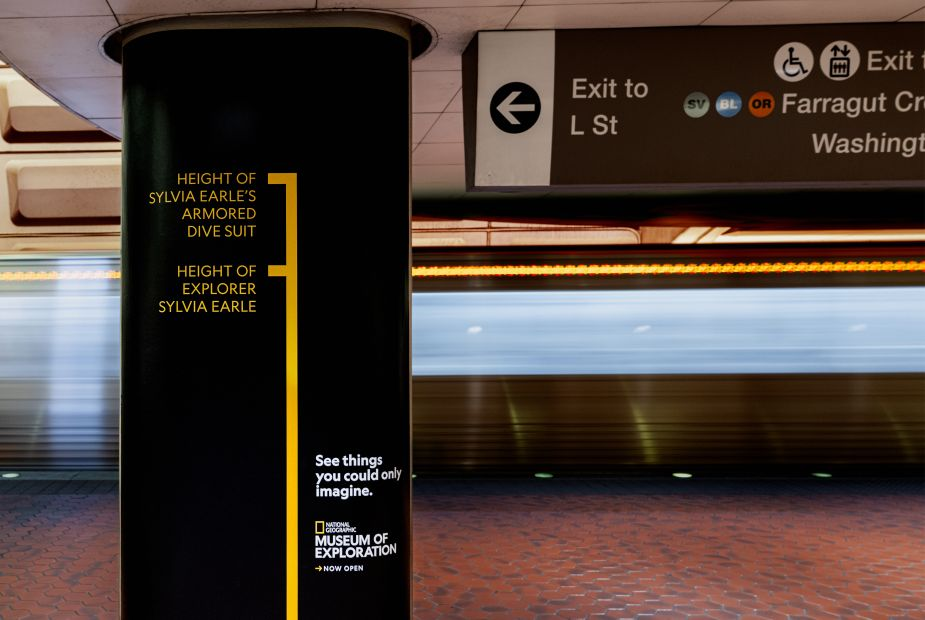
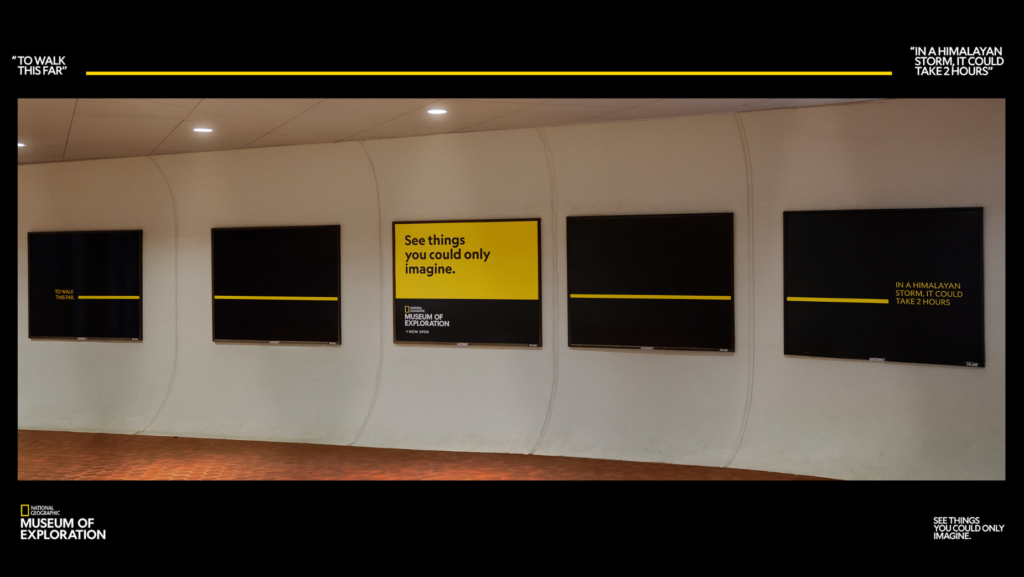
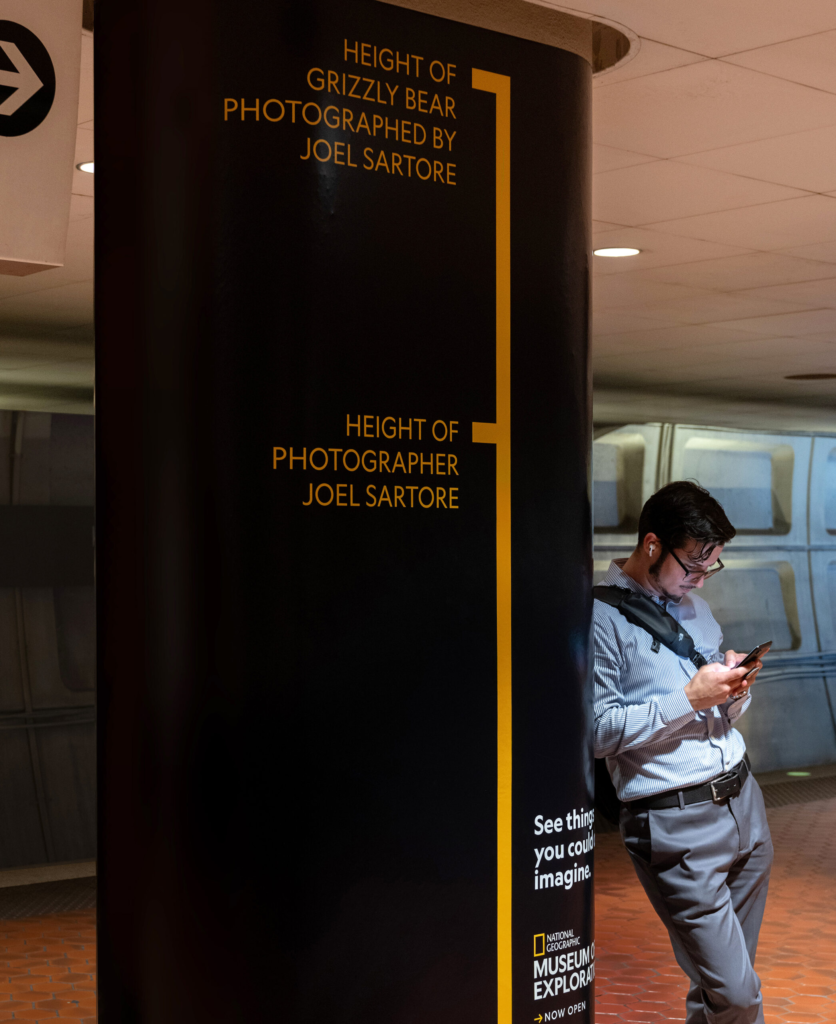
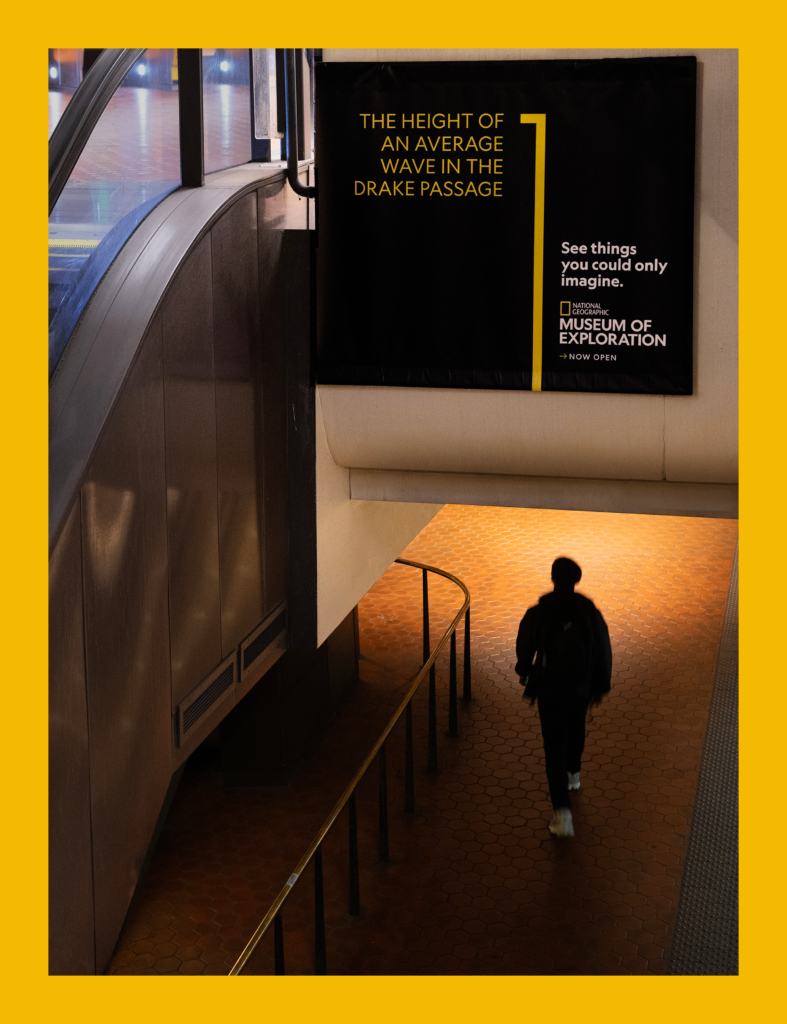
Over 100 unique outdoor executions were placed across D.C., unified by a single visual device: the National Geographic iconic yellow border, one of the most recognisable brand marks in the world. Where the border normally frames a photograph of something discovered, documented, or explored, the campaign left the frame empty. The yellow rectangle surrounded nothing. The audience was asked to fill it.
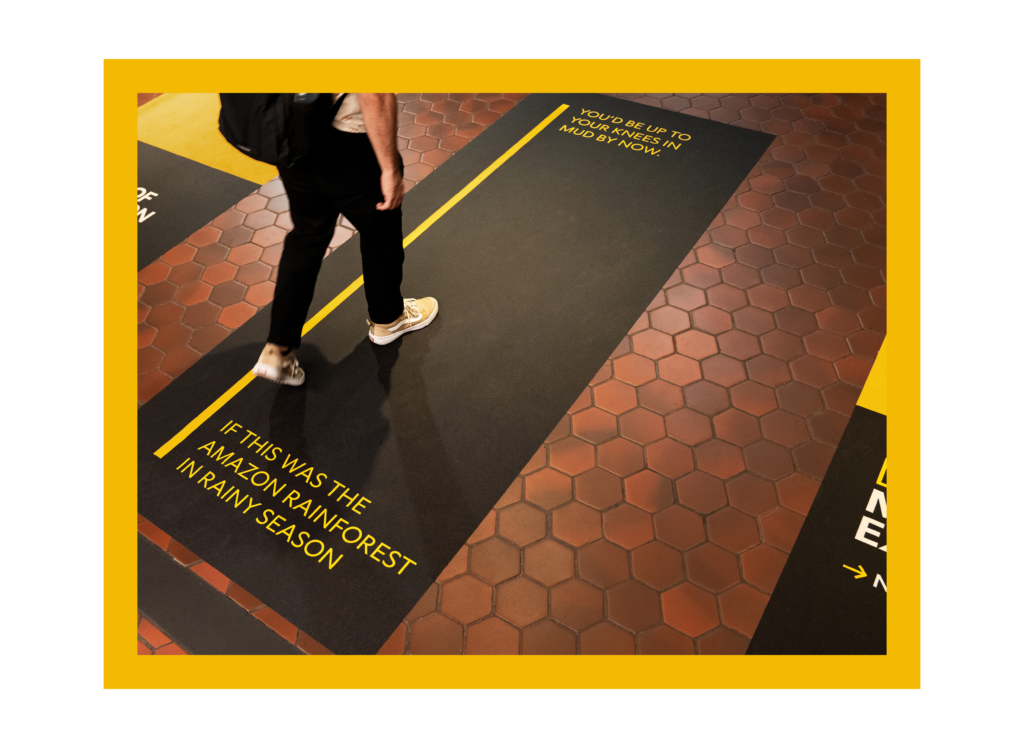
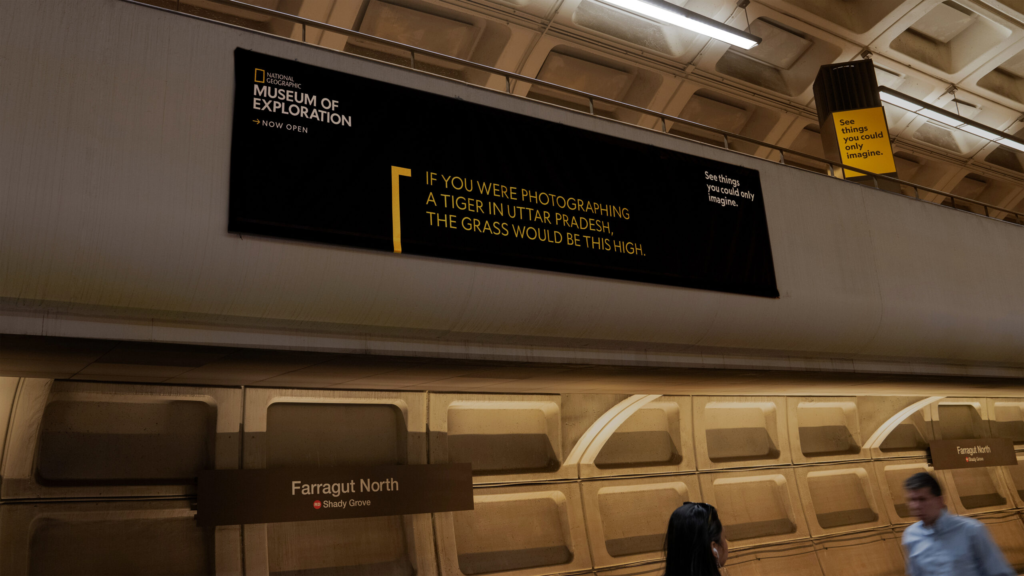
The campaign platform, “See Things You Could Only Imagine,” required no imagery of exhibits because the exhibits themselves were not the point. The curiosity that drives people into museums was. Each installation framed a different space in the city as if it were the subject of a National Geographic story, transforming bus shelters, Metro stations, billboards, and transit corridors into extensions of the museum experience itself.
The Specific Executions
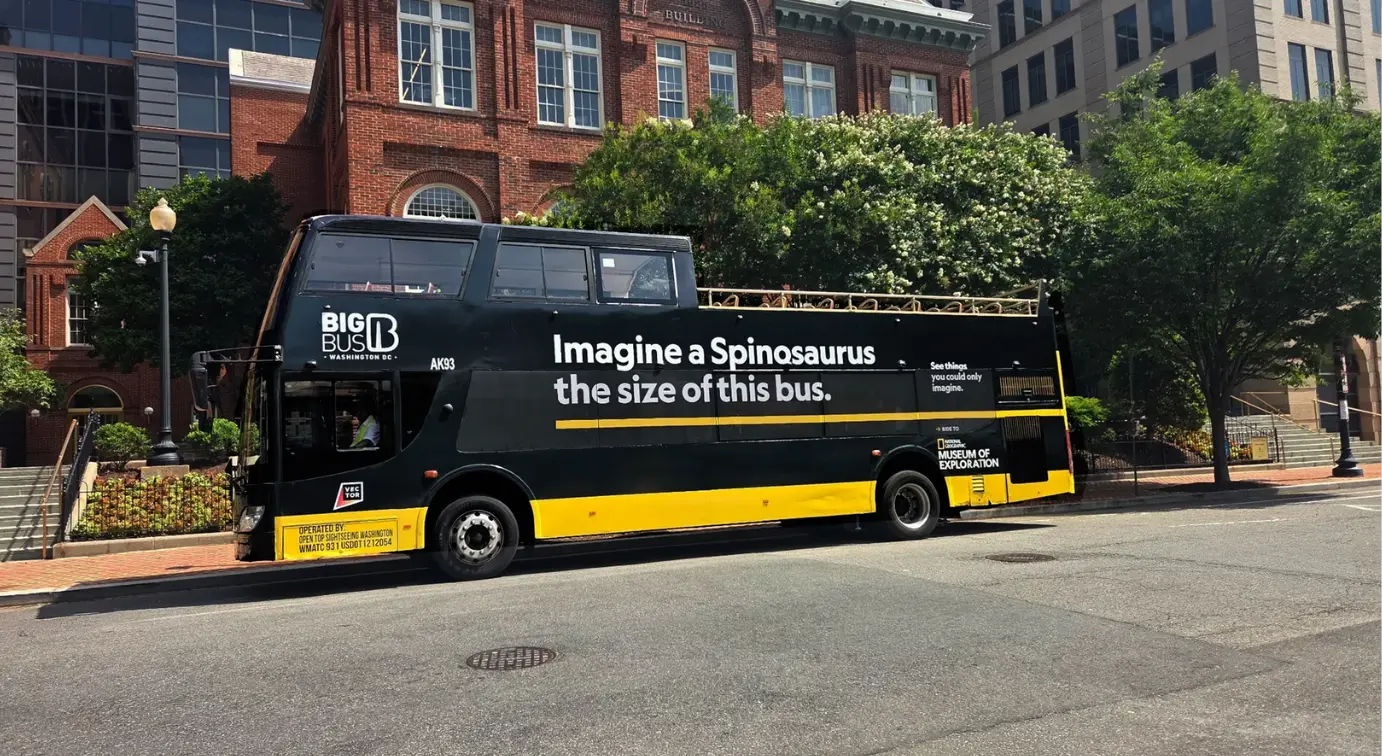
The installations went beyond placing empty yellow borders in conventional advertising spaces. One Metro station featured a life-size yellow line illustrating the precise distance a person would travel through a Himalayan storm. Another used the full length of a city bus to demonstrate the actual size of a Spinosaurus. Each execution turned a piece of transit infrastructure into a unit of measurement or a spatial comparison that made something impossible to visualise without the frame suddenly imaginable within it.
The approach reflects National Geographic’s founding identity. Since 1888, the Society’s work has made the world’s most remote, extreme, and extraordinary places comprehensible to readers and viewers who would never physically reach them. The campaign translated that same impulse into an urban environment where the extraordinary needed to arrive at the commuter rather than the other way around.
The Creative Brief
Terri & Sandy, the 2025 Ad Age A-List Independent Agency of the Year, described the challenge directly in its campaign notes: Washington D.C. is home to over 70 museums. A museum launch campaign in that context must do something none of the others are doing. Showing photographs of exhibits is what every museum does. National Geographic’s brand equity is built not on photographs of completed discoveries but on the promise of discovery itself. The campaign started from that distinction and made imagination the creative medium rather than imagery.
The yellow border’s role in the campaign is an extension of its role in the brand. For 138 years, the yellow border has framed the world as it has been found. The campaign asked what happens when the border frames the world as it could be imagined, and then placed that question in front of the 700,000 daily commuters who move through D.C.’s transit system.
The Reach Beyond Outdoor
The campaign extends into social media, digital platforms, streaming, and connected TV, maintaining the same visual system and the same creative platform across every channel. The yellow border and the empty frame are the campaign’s entire visual identity, which gives it complete flexibility of execution without losing coherence at any scale or in any medium.
Campaign Name: See Things You Could Only Imagine
Agency Name: Terri & Sandy, New York
Brand Name: National Geographic Society / National Geographic Museum of Exploration
Location: Washington D.C. (Metro stations, buses, billboards, airport; national digital and streaming distribution)