Sweden debates its sunniest spot the way other countries debate their best beaches. The answer was always a matter of opinion. IKEA and NoA Åkestam Holst decided to settle it with data, then mark the location with something permanent.
What Was Built There
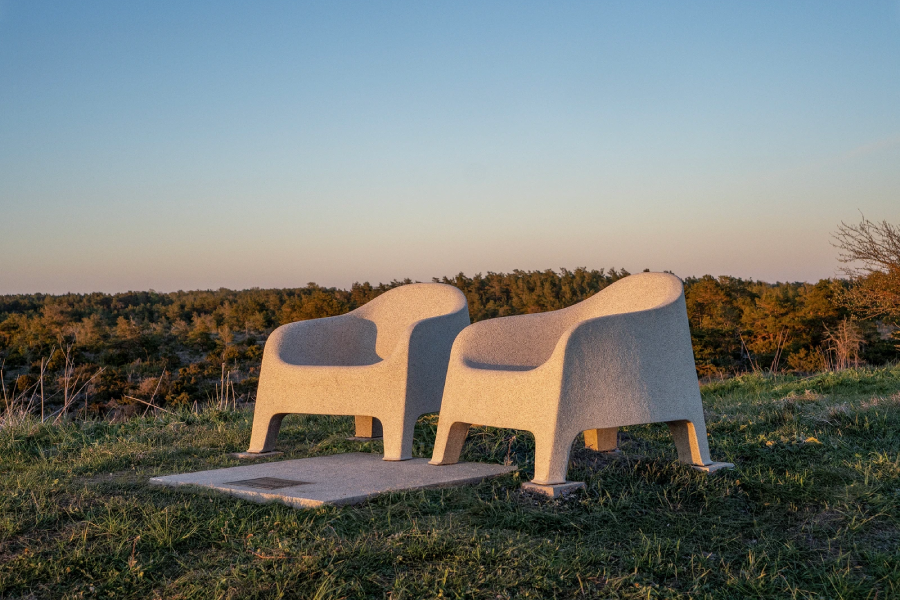
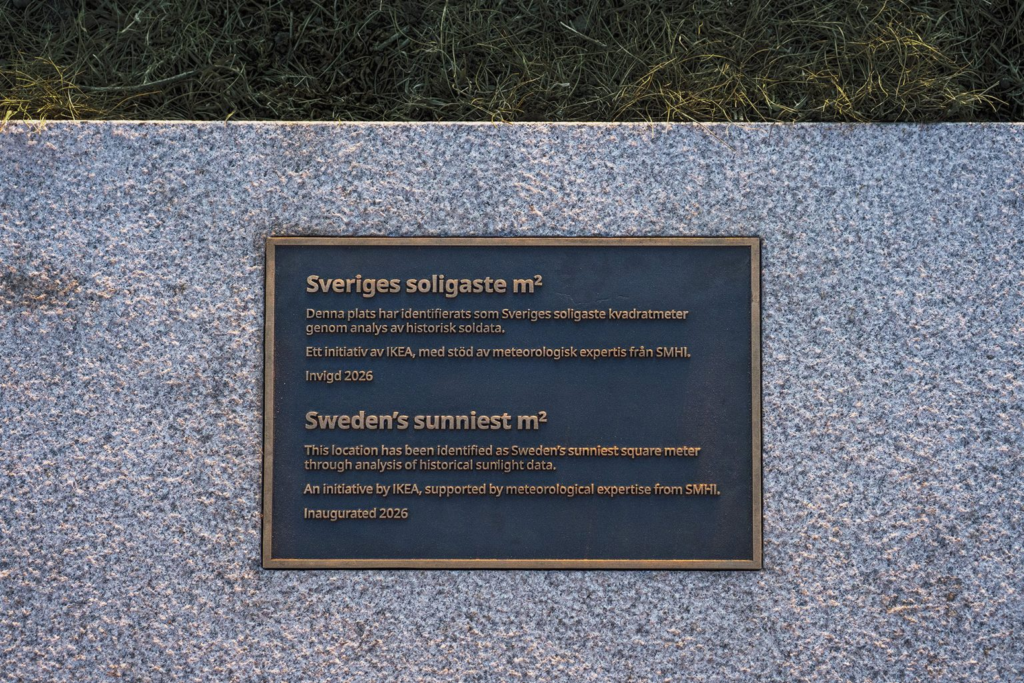
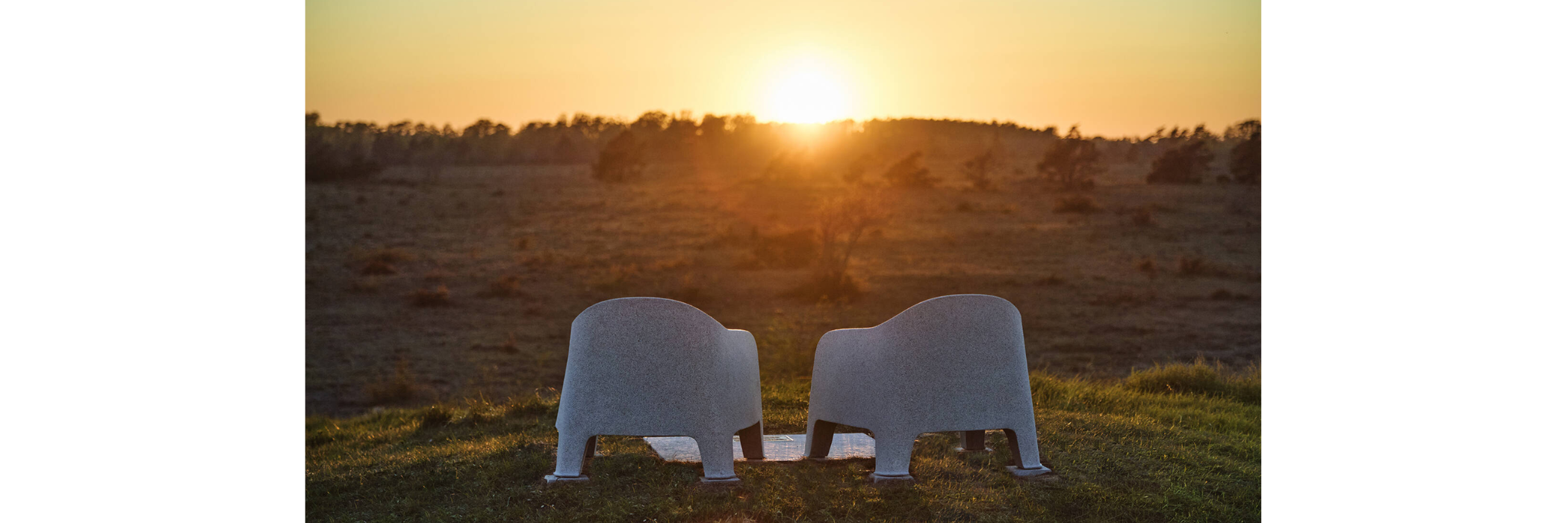
IKEA did not install a plaque, a marker, or a sign. They installed furniture. Two stone armchairs, designed by Magnus Elebäck and modelled directly on IKEA’s SKARPÖ outdoor chair, were cast and placed at the precise coordinates identified by Gardell’s analysis. The chairs are granite. They are permanent. They are designed to be sat on by anyone who travels to the island and finds the spot.
The design choice to use stone rather than the actual plastic SKARPÖ chair is significant. A branded plastic chair placed in a field is an advertisement. Two granite chairs cast in the same form become a monument. The material transforms what could be a product placement into a landmark. IKEA’s outdoor furniture shape will sit at Sweden’s sunniest square metre indefinitely, in a material that will outlast the product line that inspired it.
How the Spot Was Found
IKEA Sweden partnered with SMHI, the Swedish Meteorological and Hydrological Institute, and fed twenty years of solar radiation data, covering 2005 to 2025, through an analysis designed to identify the single most sun-drenched location in the country. The result pointed to a patch of land southwest of Burgsvik on the southern end of Gotland, Sweden’s largest island and its sunniest region by a significant margin. That patch averaged 2,137 sunshine hours per year across the two-decade period, close to six hours of sun every single day. The broader island of Gotland had long been informally recognised as Sweden’s sunshine capital, but identifying the specific location within it required a second, more precise pass.
Architect and topographic adviser Erik Gardell was commissioned to assess local slope gradients, sun exposure angles, and shadowing patterns at ground level to identify the single square metre where sunlight has historically had the greatest opportunity to reach the surface for the highest number of hours and minutes. The result is a spot precise enough to stand on. Both feet fit.
The Platform It Extends
The Sunniest Square Metre is the third consecutive campaign from IKEA Sweden and NoA Åkestam Holst built around the same structural logic: take a real but unresolved question about Swedish outdoor life, answer it with data or craft, and produce a physical object that makes the answer worth visiting. The FRAKTA Point of You campaign earlier in 2026 photographed Swedish life from inside the bag. A 2024 activation brought sunlight into the shadowed Stockholm courtyard seating areas that IKEA had identified as underlit and underused. The sunniest square metre extends that sequence by turning a meteorological data set into a travel destination.
Linda Vikström, Communications Manager at IKEA Sweden, described the brand’s intent: “As the seasons change, so do the ways we live. When the sunlight and warmth return after winter, people across Sweden move outdoors. We want to help as many people as possible make the most of life outside.”
The Gotland Context
Gotland is Sweden’s holiday island. It draws visitors through its medieval Visby, its limestone formations, its long summer days, and its reputation as the warmest, sunniest part of a country that spends several months of the year in near-darkness. The installation lands on the island at the start of the summer season, when Swedes are already planning their time outdoors, and Gotland is already at the top of the destination list. The chair is not in the middle of a field and is accessible only on foot. It sits in a landscape that visitors to southern Gotland will already be travelling through.
The sunniest spot in Sweden now has seating. IKEA put it there.
Campaign Name: Sweden’s Sunniest Square Metre
Agency Name: NoA Åkestam Holst / Topographic consultant: Erik Gardell / Chair designer: Magnus Elebäck
Brand Name: IKEA Sweden
Location: Southwest of Burgsvik, Gotland, Sweden