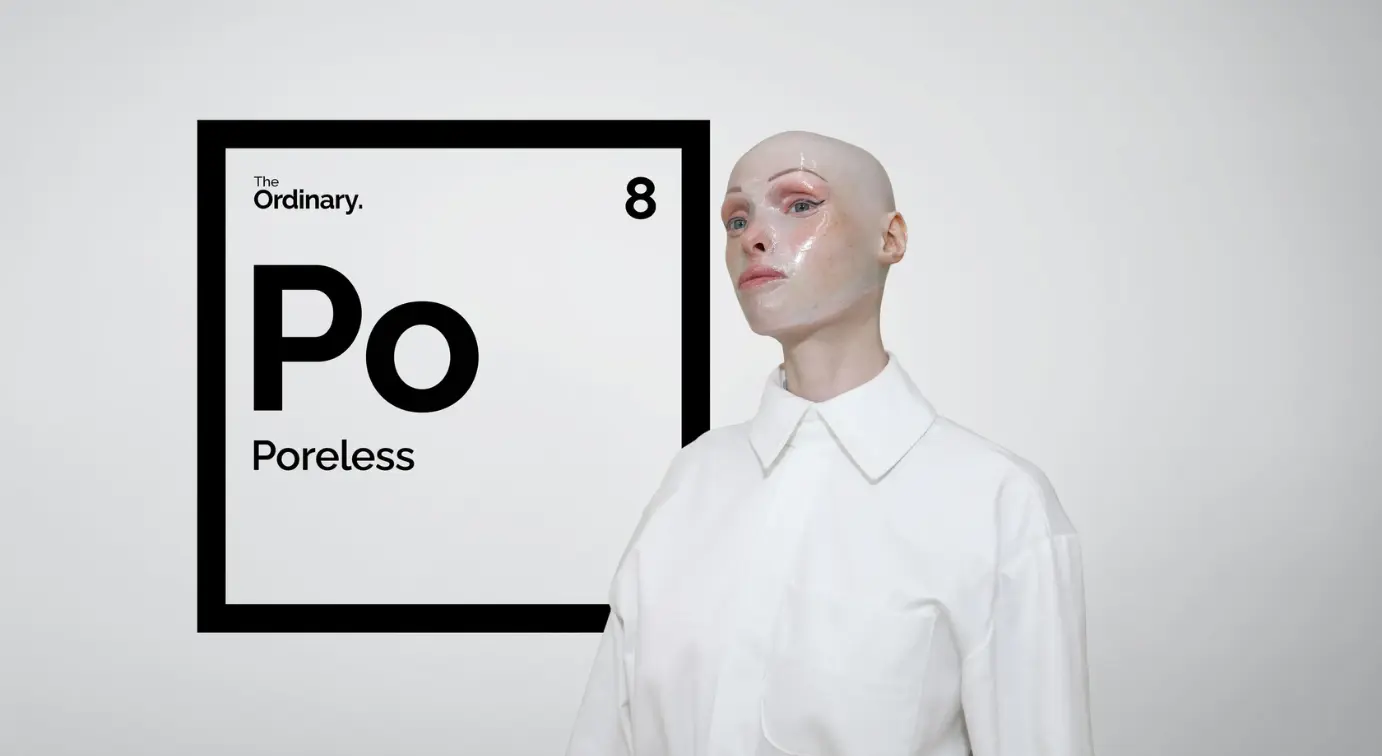
The beauty industry does not need to lie. It has something better: language that sounds scientific without being science at all. Words like “Medical Grade,” “Poreless,” “Fat Freezing,” “Age-Defying,” and “Wrinkle Erasing” appear on packaging alongside real dermatological ingredients, presented with the same authority, dressed in the same clinical aesthetic, but carrying none of the evidence. The Ordinary and Uncommon Creative Studio built a campaign specifically designed to make that distinction impossible to ignore. It won the Health and Wellness Grand Prix at Cannes Lions 2026.
The Periodic Table With No Real Elements
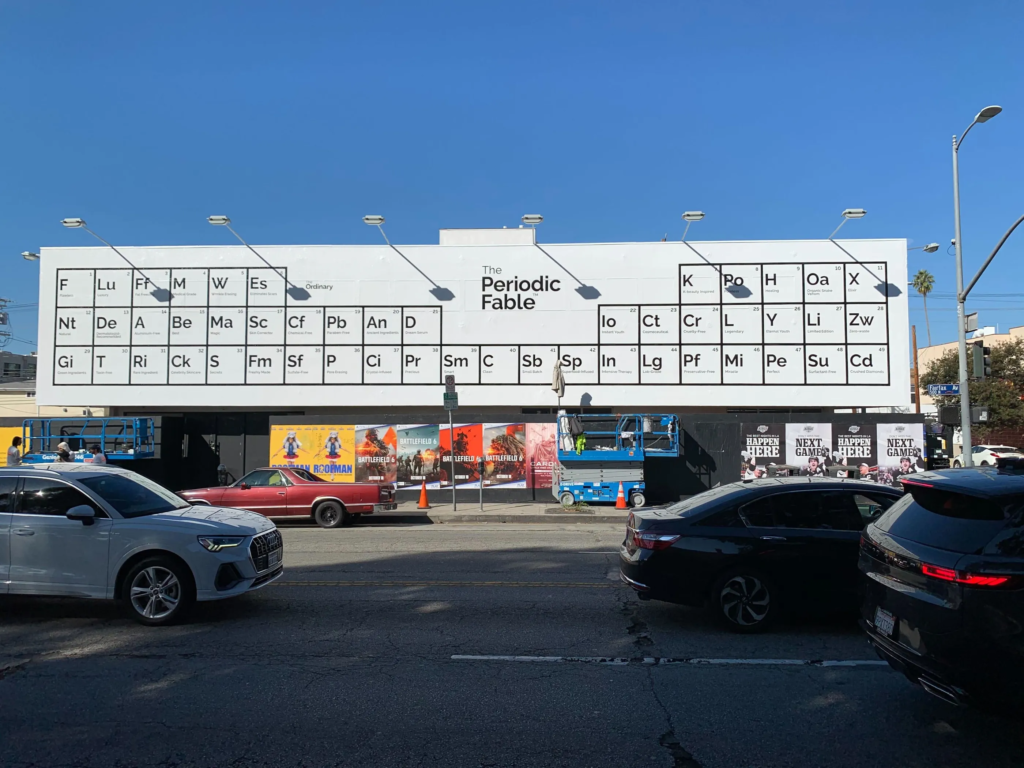
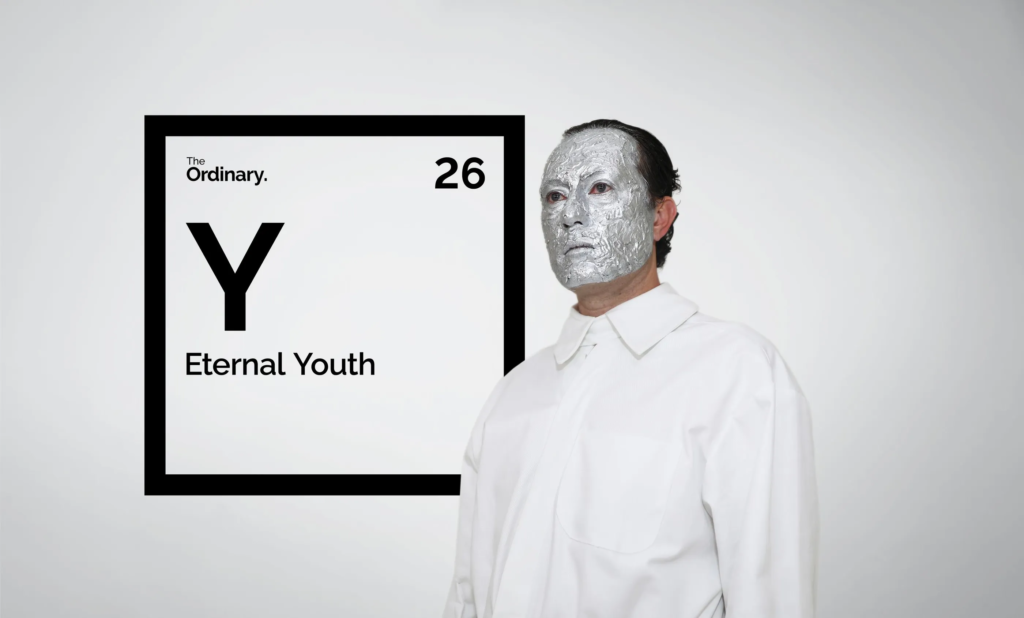
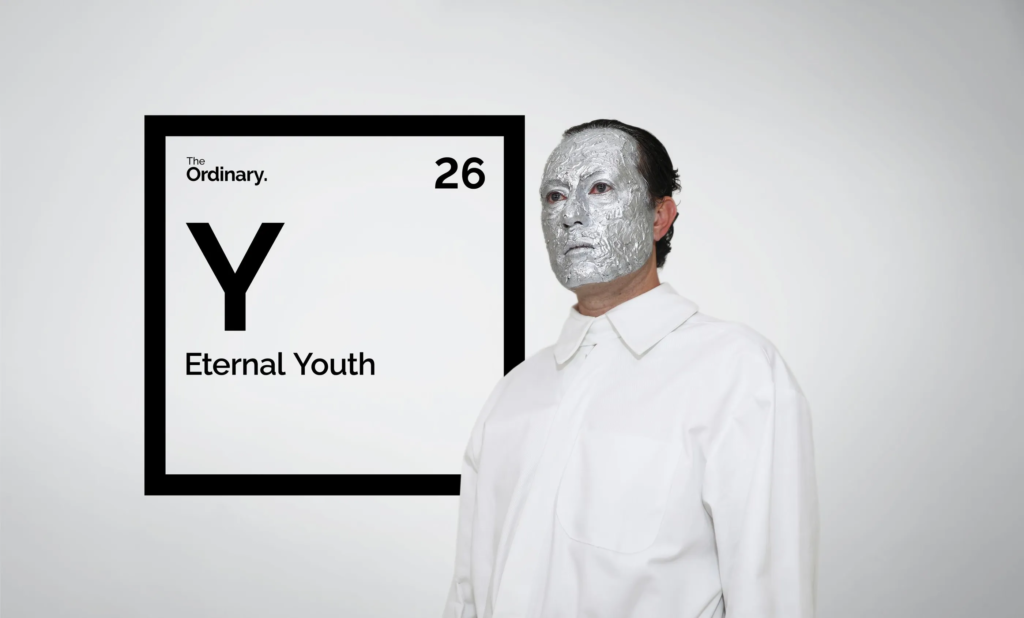
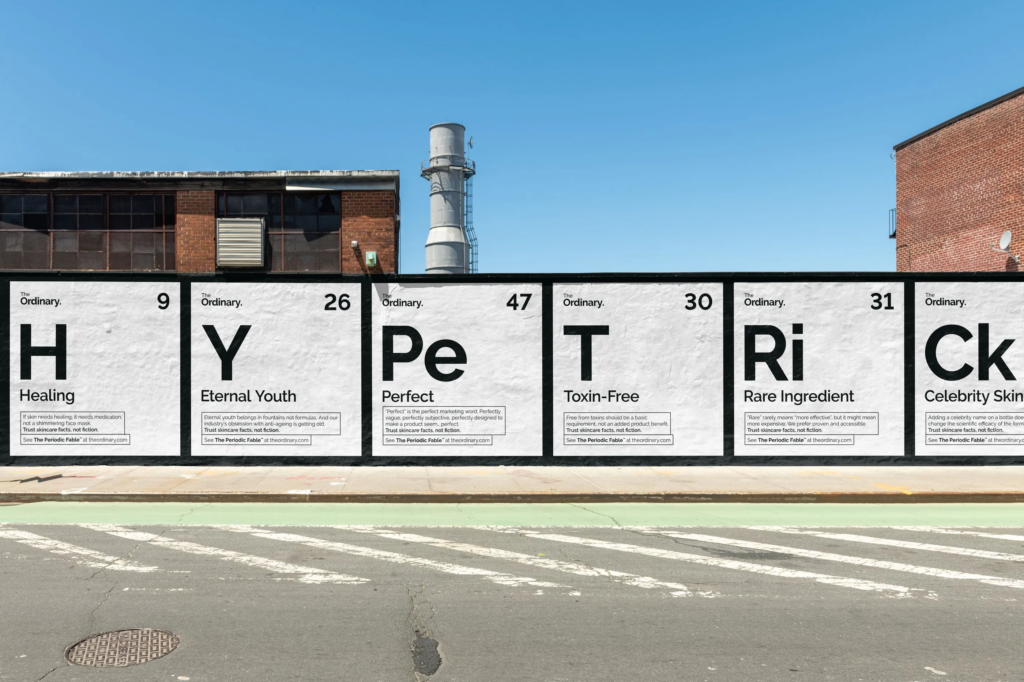
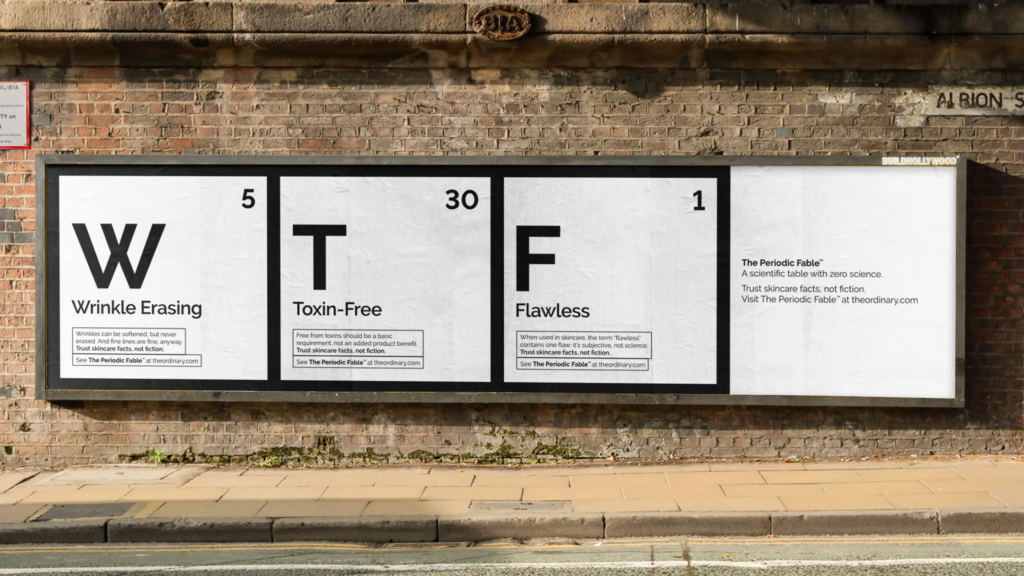
The Periodic Fable takes the visual format of Mendeleev’s periodic table, one of the most recognised scientific frameworks in global education, and populates every cell with a beauty industry buzzword. Forty-nine terms in total, each presented in the periodic table’s standardised tile format with atomic-style notation, classified not by actual chemical properties but by the degree to which they imply results that no regulation requires them to prove.
The table includes “Medical Grade,” a phrase with no legal definition in most cosmetic regulations. “Poreless,” which describes a physical impossibility. “Fat Freezing” and “Wrinkle Erasing,” which make specific therapeutic claims that would require clinical trial evidence if applied to a pharmaceutical but face no such requirement in cosmetics marketing. “Eternal Youth,” “Eliminates Scars,” “Magic.” Each element in The Periodic Fable is labelled with a single notation: zero science.
The design borrows the periodic table’s authority and redirects it. By placing these terms inside a structure the viewer instinctively associates with verified scientific truth, the campaign makes the fraud vivid rather than abstract. The table does not say these claims are wrong. It says they are not science. The audience is left to draw the obvious conclusion about what they have been reading on their skincare labels.
The Film
The hero film, directed by Olivia De Camps through SMUGGLER London, is a dystopian-inspired piece set in a sterile classroom where students perform viral skincare routines in a trance-like, cult-like state, chanting marketing jargon with the mechanical repetition of a doctrine rather than a habit. The visual register draws from the aesthetics of social media skincare content, the specific way that skincare tutorials are filmed and consumed by millions daily, and exaggerates it into something uncanny and deliberate.
The film does not name specific brands or specific products. It names the language. The critique is structural, aimed at an industry-wide practice rather than a single competitor, which is the precise positioning that makes The Ordinary’s argument credible. The brand names its own ingredients on its packaging. It has built its commercial identity on being the company that does not speak the language it is satirising here.
The OOH and Digital Layer
The campaign extended into hand-painted murals in New York and Los Angeles, carrying the periodic table imagery into public urban space and giving the work a physical presence outside screens and feeds. A companion microsite allowed visitors to explore the full table of 49 buzzwords, read an explanation of why each claim is scientifically unsupported, and understand the regulatory gap that allows the language to exist without consequence.
An influencer layer extended the campaign across social platforms, with creators participating in the broader platform rather than simply amplifying the brand. The work is part of The Ordinary’s wider “The Truth Should Be Ordinary” brand platform, which launched with a free digital archive of myth-busting scientific studies, making The Periodic Fable the campaign chapter of a sustained, multi-year commitment to category transparency rather than a standalone activation.
Why It Won
Kainaz Karmakar, Chief Creative Officer at Ogilvy India and Health and Wellness Jury President at Cannes Lions 2026, delivered the citation with precision: “It’s an outstanding commentary on how the obsession with skin trends is getting more out of control every day. When health, creativity, craft and culture intersect in the best way possible, work like this is born. The universality of the message was one thing; the idea was strong, the message was relevant, but what made it undeniably a Grand Prix was the craft, the craft, and the craft. The communication is right on what the brand is about: simplifying beauty. The beauty industry has been complicated so badly, and beauty trends are affecting young people in a way that’s really hurting their mental well-being. I think The Periodic Fable as a film is flawless, but as a movement, it is necessary.”
The Health and Wellness Lions received 889 entries this year. Thirty-one Lions were awarded. The Grand Prix went to this one.
What It Says About The Ordinary’s Brand Strategy
The Ordinary was founded in 2016 as part of the DECIEM group with a single proposition: effective ingredients at honest prices, named on the label in plain scientific language. A serum called “Niacinamide 10% + Zinc 1%” does not need to promise “porelessness.” It describes what it contains. The brand built its commercial identity in deliberate contrast to the industry language The Periodic Fable now satirises.
The campaign does not need to convince anyone that The Ordinary is different. It needs to show the audience what everyone else is doing. The Periodic Table of fake beauty elements does exactly that, in a format so immediately recognisable and so structurally precise that the argument lands before the viewer has read a single buzzword.
Amy Bi, who has led The Ordinary’s brand communications alongside the Uncommon Creative Studio partnership, described the campaign’s intent as being about holding the beauty industry to a higher standard, not through lecturing but through making the problem visually undeniable.
Campaign Name: The Periodic Fable
Agency Name: Uncommon Creative Studio, London / Production: SMUGGLER London (Director: Olivia De Camps)
Brand Name: The Ordinary (DECIEM)
Location: United Kingdom and United States (film, OOH murals in New York and Los Angeles, global digital and influencer)