
A brown toe ring leather sandal at Milan Fashion Week should not cause a diplomatic incident. But when Prada’s Spring/Summer 2026 menswear collection hit the runway on June 22, 2025, that is precisely what happened. The sandal in question was a near-identical replica of the Kolhapuri chappal, a centuries-old handcrafted footwear form from Maharashtra and Karnataka that has held Geographical Indication status since 2019. Prada priced it at approximately ₹1.2 lakh per pair. The word Kolhapuri appeared nowhere.
The Backlash
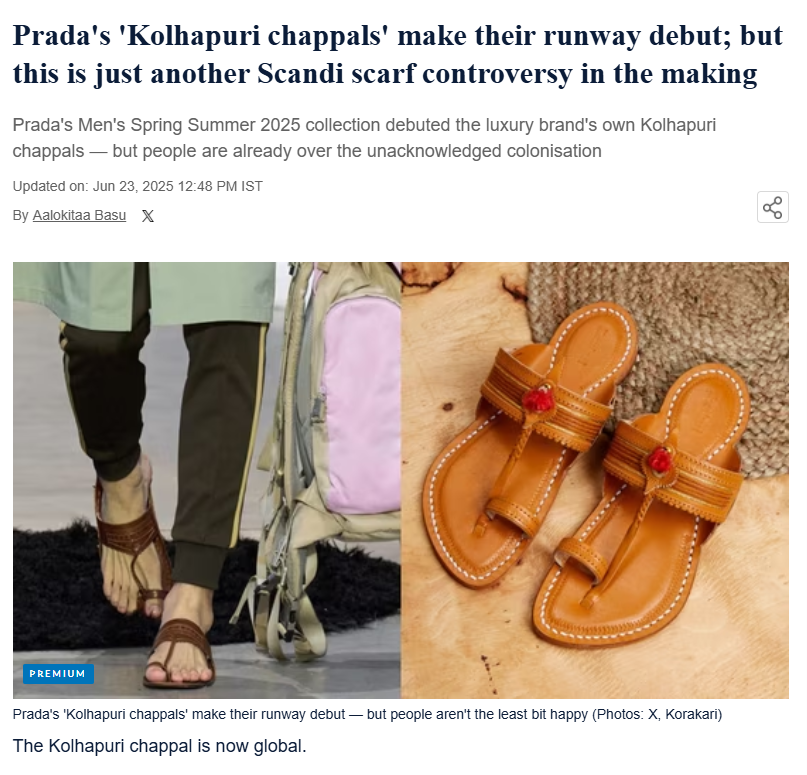
The images spread instantly. RPG Group chairman Harsh Goenka was among the first prominent voices to call it out, pointing to the price gap between what Prada charged and what artisans in Kolhapur earn, roughly ₹300 for two days of handwork on a pair that sells locally for around ₹1,000. Human rights group Dalit Voice framed the stakes more precisely, describing Kolhapuri chappals as a legacy of Dalit craftsmanship and resilience, not simply a design reference. The craft has deep social and economic roots in communities across eight districts in Maharashtra and Karnataka, four in each state.
By June 28, Prada issued official correspondence acknowledging that the sandals were inspired by traditional Indian handcrafted footwear with a centuries-old heritage. The company maintained that the product was still in a conceptual stage. On July 9, Prada formally denied violating GI terms. On July 16, the Bombay High Court dismissed a Public Interest Litigation filed against the brand, ruling that only registered GI holders like LIDCOM and LIDKAR had the legal standing to pursue the matter. Separately, LIDKAR issued a legal notice of ₹500 crore to Prada. The case remains under review.
The Pivot
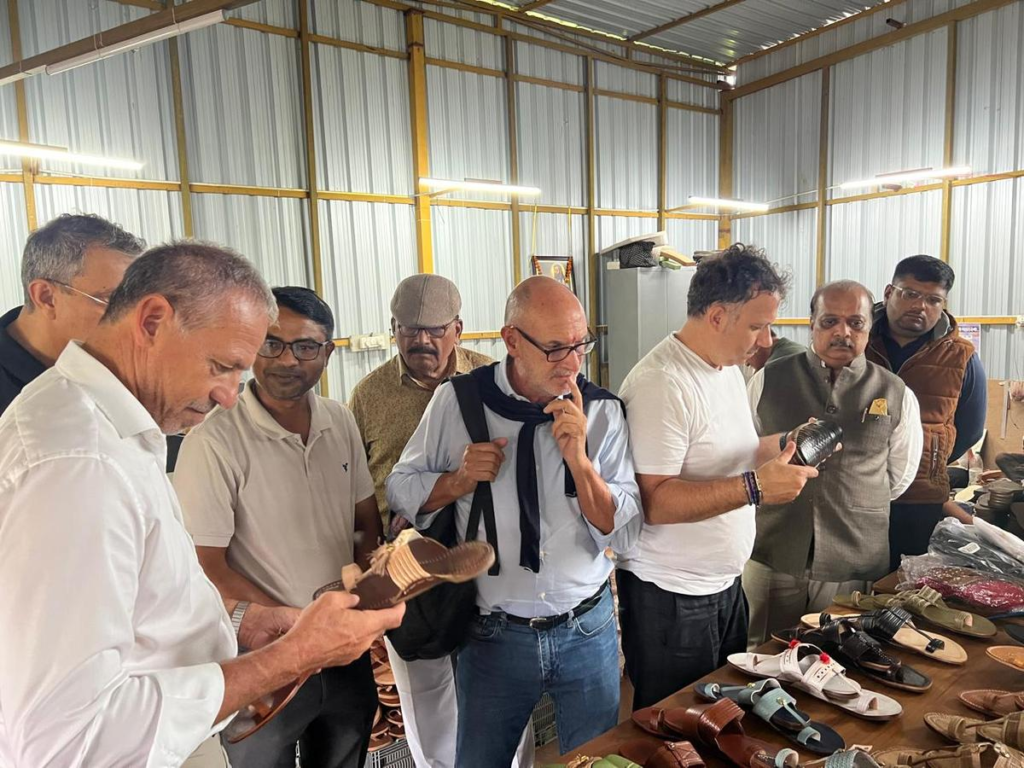
Prada did not wait for a court verdict to move. On July 16, the same day as the PIL dismissal, Prada representatives visited Kolhapur, met with artisans, shopkeepers, and district officials, and initiated conversations about a formal collaboration. Lorenzo Bertelli, who represents the brand’s management, framed the aim as highlighting the craft internationally while ensuring fair returns to its makers.
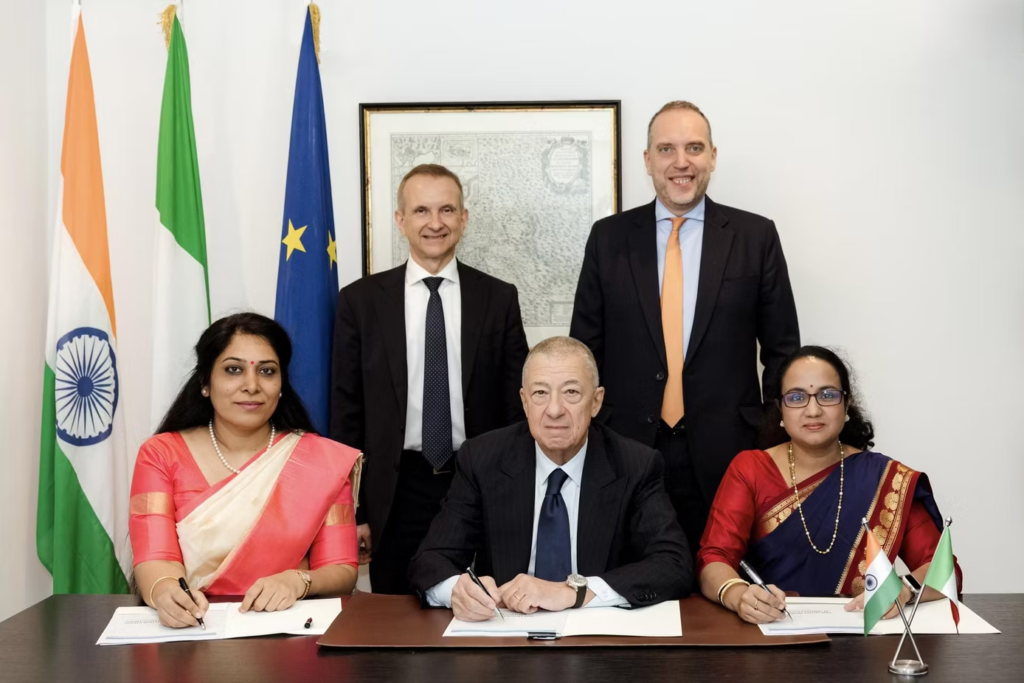
By December 11, 2025, Prada signed a Memorandum of Understanding with both LIDCOM and LIDKAR, the government bodies that hold the GI registration for Kolhapuri chappals. The agreement set out the production of 2,000 limited edition pairs in Maharashtra and Karnataka, combining traditional handicraft with Italian finishing techniques. Each pair would be priced at approximately ₹85,000, significantly lower than the Milan runway price, with revenue structured to flow back through the artisan organisations.
Prada also announced a three year training programme for artisans across the eight districts traditionally associated with Kolhapuri making. Delivered by the National Institute of Fashion Technology and the Karnataka Institute of Leather and Fashion Technology in structured six-month modules, the programme is expected to reach 180 craftspeople. Selected artisans will also be offered visits to the Prada Group Academy in Italy.
The Launch and the Reaction
The limited-edition collection landed in April 2026, officially labelled “Made in India” and distributed through 40 Prada stores worldwide and online. The price landed at approximately 750 euros per pair internationally and around ₹85,000 in India.
The Indian internet received the launch with scepticism rather than applause. Comments flooded social media, calling the designs identical to traditional Kolhapuris rather than inspired versions. “This isn’t inspired, this is literally the Kolhapuri.” “Call it what it is, the OG chappal.” The new “Made in India” label was noted, but the underlying frustration about extraction and pricing remained.
What Actually Changed
The collaboration does represent a structural shift from where this started. Artisans are now contracted partners, not uncredited references. The GI bodies that hold legal standing over the craft are party to the production agreement. Revenue moves through state backed organisations that support Dalit and disadvantaged communities. A training programme will reach 180 artisans starting from May 2026.
What has not changed is the price architecture. An artisan producing a pair earns a few hundred rupees. A Prada pair sells for ₹85,000. The spread between craft cost and luxury retail price is the same logic that generated the original backlash. The “Made in India” label reframes the optics without resolving that gap.
The Prada controversy also triggered a ripple effect domestically. Indian brands reported a surge in Kolhapuri chappal sales as buyers responded to the heritage narrative by purchasing the original product. Maharashtra moved to pursue GI tags for over 30 additional products following the episode. And a separate legal battle involving Bidriware, another GI-protected Indian craft, is now moving through the Delhi High Court, carrying with it the weight of precedent that the Prada case left behind.