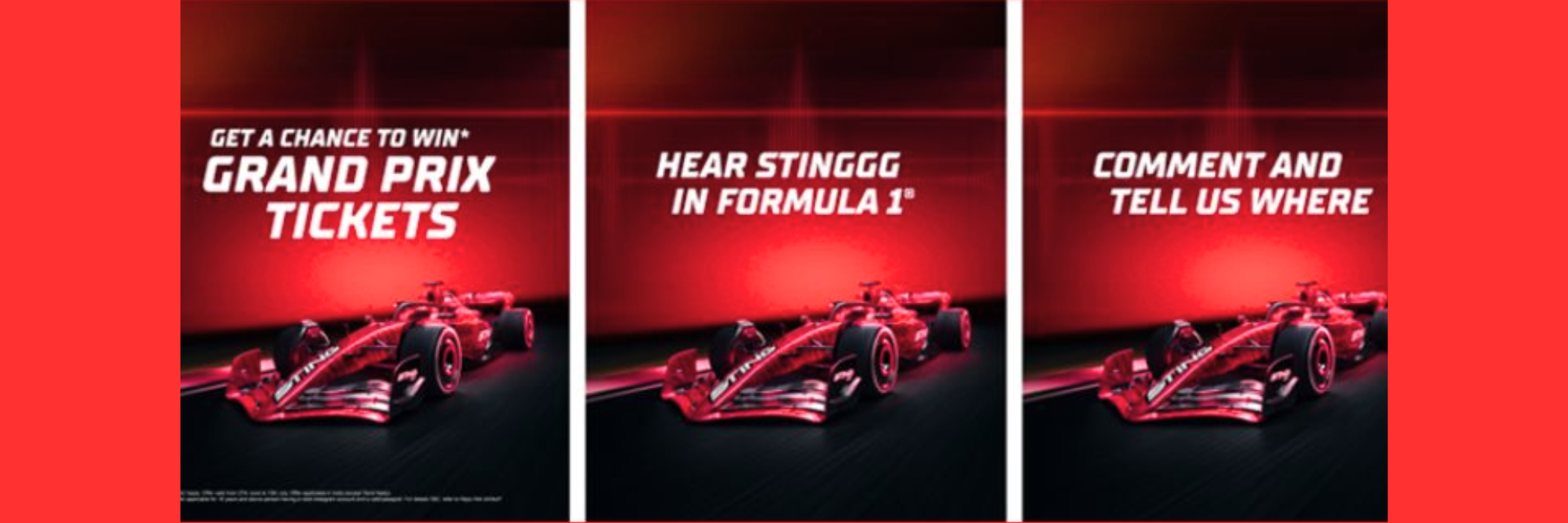
In Formula 1, brand visibility is bought by the centimetre. Logos on cars, pit lane boards, broadcast titles, driver suits. The sport generated over $2 billion in total sponsorship revenue last year. Sting Energy, a PepsiCo drink brand with strong roots in APAC and the Middle East, had just signed on as F1’s Official Energy Drink Partner but had no logo on track, no broadcast presence, and no on-site branding in year one. What it did instead was more effective than any of that.
The Setup: A DJ, a Studio, and an Engine Recording
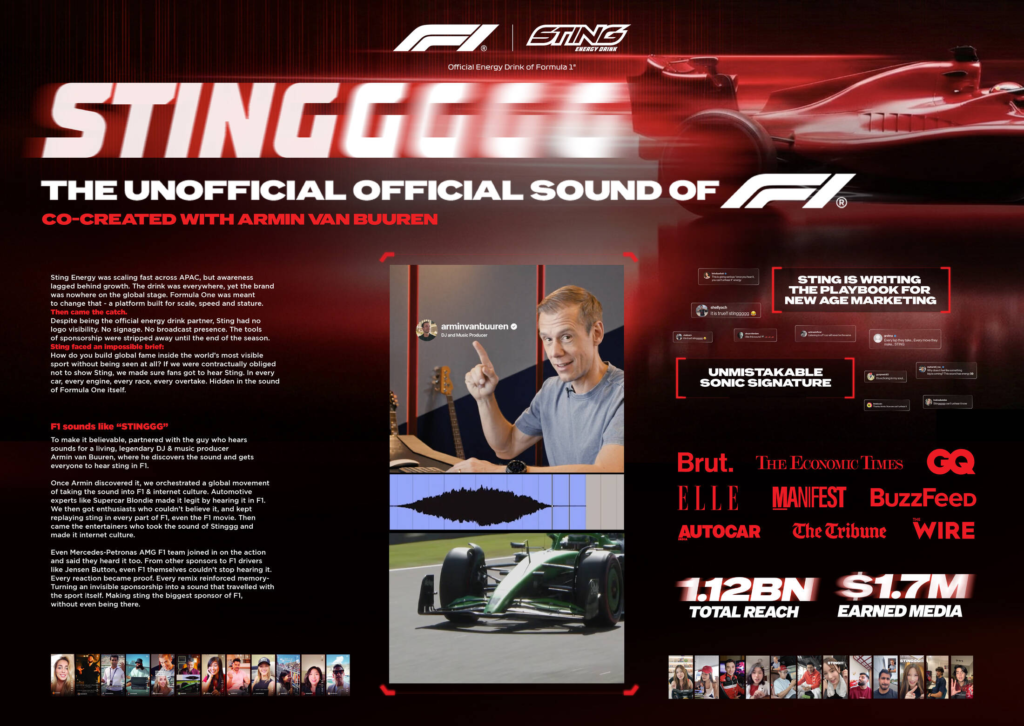
On May 23, 2025, world renowned DJ and producer Armin van Buuren posted a video from his studio. He had been isolating audio layers from a Formula 1 race recording when he noticed something. A specific frequency in the engine roar sounded, unmistakably, like the word “Sting.” He posted the clip without any brand messaging attached, just the observation and the audio.
Van Buuren framed it as a personal discovery. “As a longtime F1 fan, I was revisiting some engine sounds in the studio when one frequency stood out, it almost sounded like ‘Sting.’ At first, I thought it was a coincidence, but the more I listened, the more melodic it became.”
No logo. No product shot. No sponsorship disclosure. Just a creator presenting a sonic anomaly to his audience and letting them decide what to do with it.
The Cascade That Followed
The post did exactly what it was designed to do. Fans rewound it. Creators posted reaction videos. The hashtag #F1SoundsLikeSting spread across platforms. One comment captured the dynamic precisely: “Been a fan of F1 for over 15 years, and somehow never heard it like this. Once you hear it, you can’t unhear it.”
That last phrase is the entire mechanism of the campaign. Hearing bias, the psychological tendency to continue perceiving a pattern once it has been pointed out, meant that every subsequent F1 race became a free Sting Energy activation. Viewers at home, watching 21 race weekends throughout the season, would hear the engine roar and think of the brand. No media buy required beyond the initial seeding.
F1 legend Jenson Button and 2025 F2 Monaco Grand Prix winner Kush Maini joined the conversation, both amplifying the sonic connection to their own audiences. The frenzy peaked at the Monaco Grand Prix, where fans and influencers were filming the cars from the stands in real time, reacting as Sting’s supposed sonic signature played out lap after lap. The brand had still made no official announcement.
The Official Reveal
On May 27, 2025, PepsiCo confirmed the partnership. Sting Energy was the new Official Energy Drink of Formula 1. The campaign was titled “The Sound of Speed” at launch, with the subsequent integrated creative work developed by Leo India under the campaign title “The Unofficial Official Sound of F1,” which won a Clio Award Gold in 2026.
The full PepsiCo partnership extends across three brands. Gatorade became the Official Sports Drink and Official Partner of F1 Sprint, with event hydration and on site branding across six Sprint weekends. Doritos became the Official Savoury Snack. The deal covers TV visible trackside advertising, FanZone activations at all 21 races, exclusive on track pouring rights, and co-branded products.
Vandita Pandey, VP Marketing at PepsiCo International Beverages, framed the launch approach directly: “Sometimes the most powerful brand moments aren’t manufactured, they’re discovered. Sting Energy didn’t just join Formula 1, it revealed it had always been there, hidden in the sound.”
Why the Sonic Strategy Worked
Sting is available in 34 markets, predominantly in South and Southeast Asia, the Middle East, and Africa. Its profile outside those regions is limited. Formula 1 has 1.6 billion viewers and an active fan base of 826 million globally. The gap between where Sting was known and where F1 is watched was significant.
The sonic campaign bypassed that gap. It did not require audiences to know the brand before engaging with the content. The discovery mechanic worked whether you had heard of Sting or not, because the content was about sound and curiosity, not brand recognition. Markets where Sting had no presence shared the clip alongside markets where it was already a category leader. The structure of the campaign, a single seeded discovery followed by a creator cascade, travelled intact across all of them.
Leo India’s creative approach recognised something that most sports sponsorships miss entirely. In a sport built on noise, the audio is the most ubiquitous media channel at every race, and it costs nothing to own once the association is planted.
Campaign Name: The Unofficial Official Sound of F1
Agency Name: Leo India
Brand Name: Sting Energy / PepsiCo
Location: India (campaign origin); Global rollout across 21 F1 race markets