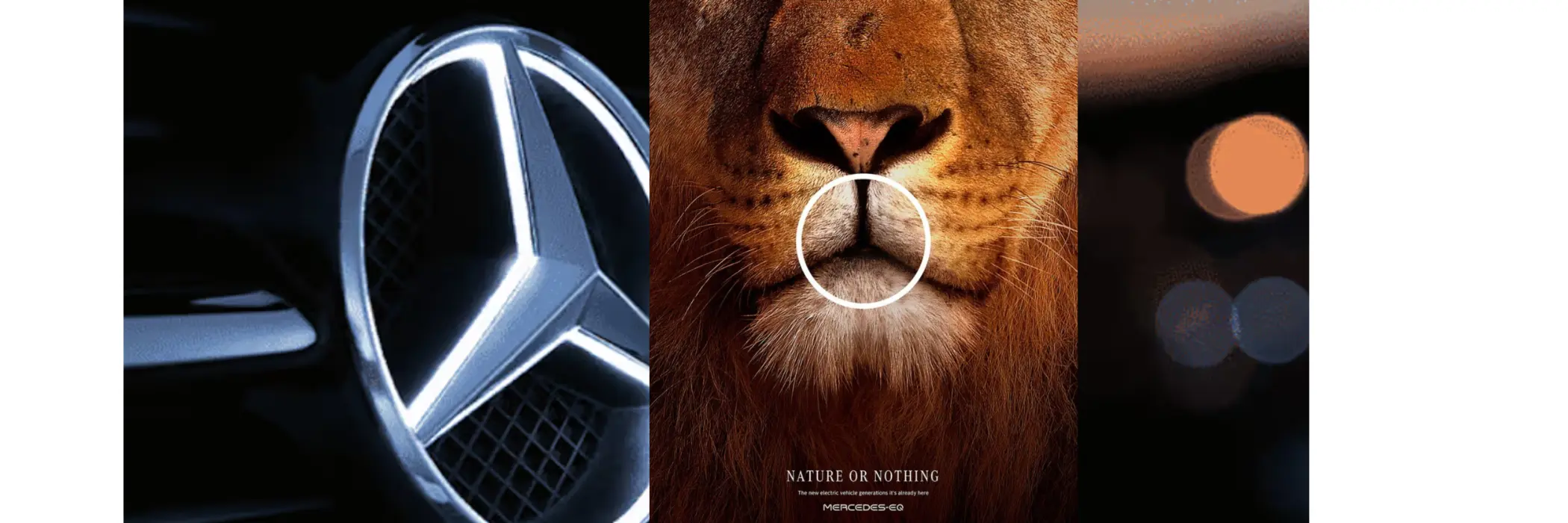
In August 2022, a series of posters began circulating on LinkedIn. Advertising and design professionals shared them with praise. The images were genuinely striking: the Mercedes three-pointed star logo formed from the close-up patterns of a leaf’s veins, bees in a honeycomb, a pink rose, a lightning bolt. A clean white outer circle completed the symbol. The copy read “Nature or Nothing,” a riff on Mercedes’ brand promise “The Best or Nothing,” adapted for the brand’s electric vehicle line. The response was admiring. Then the scrutiny arrived, and everything changed.
The Campaign
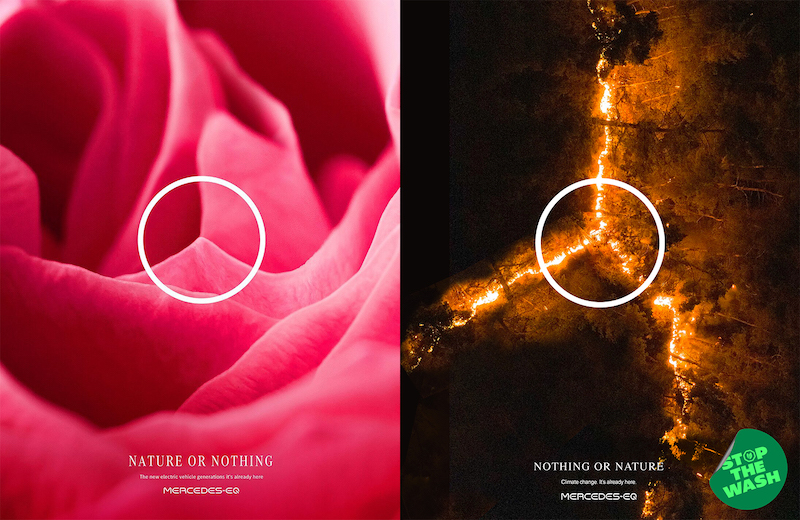
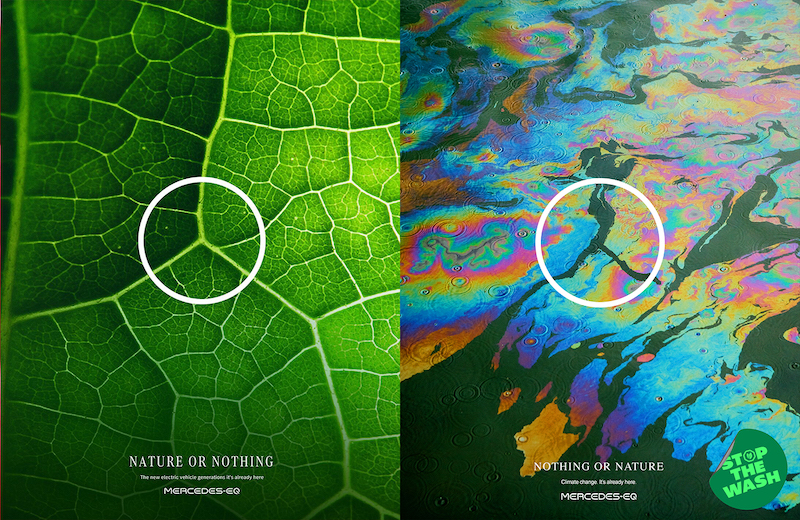
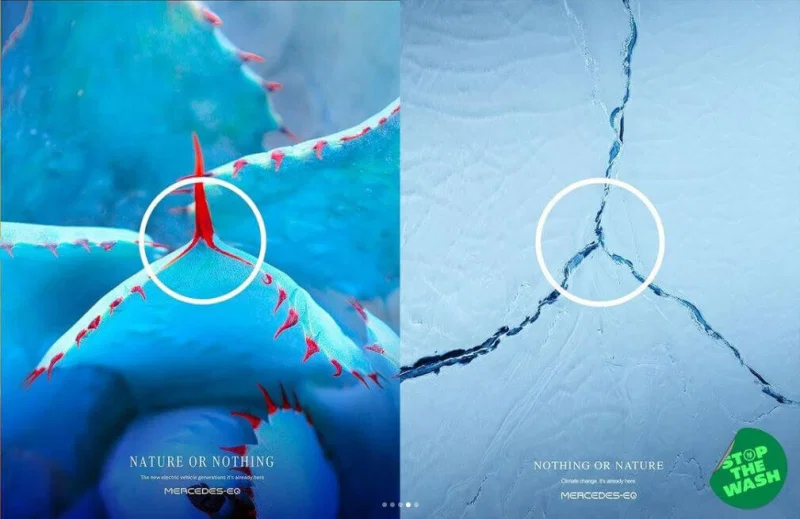
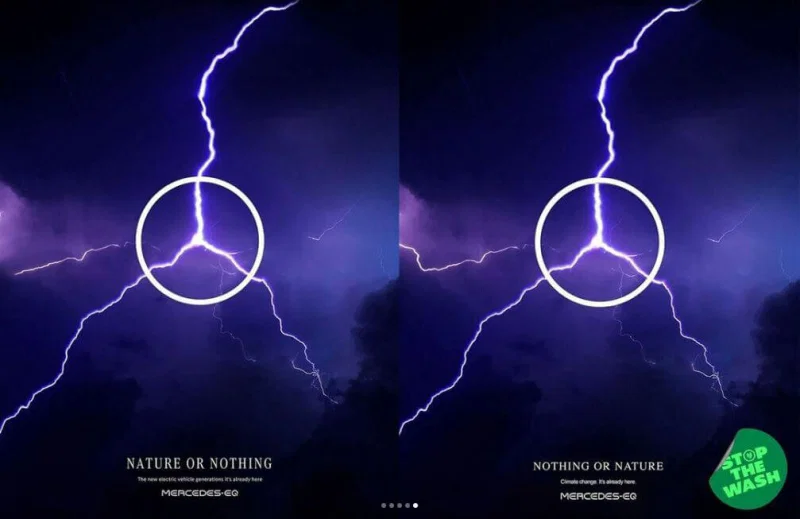
Leo Burnett Mexico created “Nature or Nothing” for Mercedes-EQ, the brand’s electric vehicle range, as an Earth Day communication for the Mexican and Latin American markets. The design execution is precise and visually inventive. The idea of finding the Mercedes logo in the geometric patterns of the natural world is elegant. The production is clean. It generated exactly the kind of organic circulation on LinkedIn that most brand campaigns spend significant media budget trying to achieve.
The English-language version spread globally without any paid amplification, which is precisely what made the subsequent backlash so difficult to contain.
The Hijack
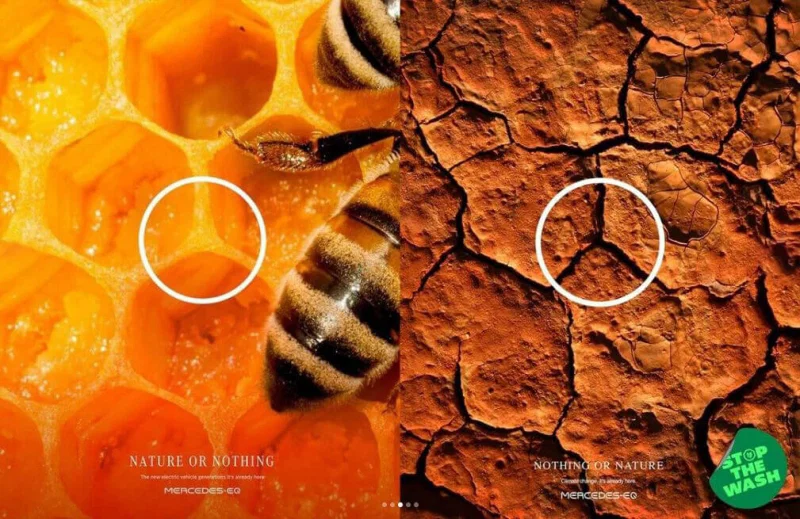
Sustainability review platform Wherefrom, working with London agency 10 Days, saw the campaign circulating and produced a direct parody within days. The format was reproduced exactly. The natural imagery was replaced with the visible consequences of climate change: an oil spill, a wildfire, parched cracked earth, and a breaking iceberg. The tagline was changed to “Nothing or Nature. Climate change. It’s already here.”
The timing of the parody landed with precision. At the moment the campaign was circulating, Mercedes-Benz AG was facing a lawsuit in Germany from climate activists accusing the company of not doing enough to reduce its carbon emissions. The parent company Daimler, had also, in 2020, agreed to a $1.5 billion settlement with the US Department of Justice over emissions cheating in Mercedes diesel vehicles. These were not old or obscure facts. They were active legal and commercial realities running in parallel with a campaign positioning the brand in visual harmony with pristine nature.
George White, strategy director and co-founder at 10 Days, described it directly: “This is Greenwashing 101. It is using the beauty of nature to appear green when the truth is that Mercedes is being sued for not taking enough action to tackle their contribution to climate change. Creative agencies should take a hard look at themselves and take responsibility as the originators of the greenwashing ideas.”
Mercedes Distances Itself From Its Own Campaign
When the backlash spread globally, Mercedes issued a statement. A spokesperson said the original campaign was in Spanish, the tagline “Nature or Nothing” was not created or approved by Mercedes-Benz at the global level, and the English-language version was adapted and distributed by the agency for the Mexican and Latin American markets without brand approval. None of the adapted content had been published on any official Mercedes-Benz social media channels.
The clarification was accurate but arrived after the story had already run globally. The campaign had spread under the Mercedes name across LinkedIn, advertising press, sustainability media, and mainstream news before the brand said anything. The agency had published the work as a case study on its own website, which is where the 10 Days team first found it.
The Term It Spawned
Fast Company published an essay in the wake of the episode introducing the term “nature-rinsing,” a more precise category of greenwashing in which brands borrow the visual language of pristine natural environments to imply environmental credentials without substantiating them. The Mercedes campaign was its primary exhibit, described as “a particularly offensive example.” The term entered wider circulation in environmental marketing discourse.
The Structural Problem That Made It Fail
Brand strategy consultancy Siegel+Gale published an analysis identifying the root cause. The campaign was not poorly executed. The creative is genuinely strong. The failure was a misalignment between the brand promise being communicated and the brand reality that critics already knew.
A brand that is actively facing litigation over its environmental record, and whose parent company has settled emissions fraud cases for $1.5 billion, cannot use the visual language of an untouched natural world without that contradiction being noticed and used against it. The creative quality of “Nature or Nothing” is precisely what made the backlash so sharp. Weak creative gets ignored. Strong creative that makes a claim the brand cannot support gets hijacked.
The lesson is not that automotive brands cannot make environmental advertising. It is that the credibility of the claim must precede the communication of it. Mercedes made the creative first and left the credibility gap for its critics to fill.
Campaign Name: Nature or Nothing
Agency Name: Leo Burnett Mexico / Parody response: Wherefrom x 10 Days London
Brand Name: Mercedes-EQ / Mercedes-Benz
Location: Mexico and Latin America (original); global digital spread (English version)