
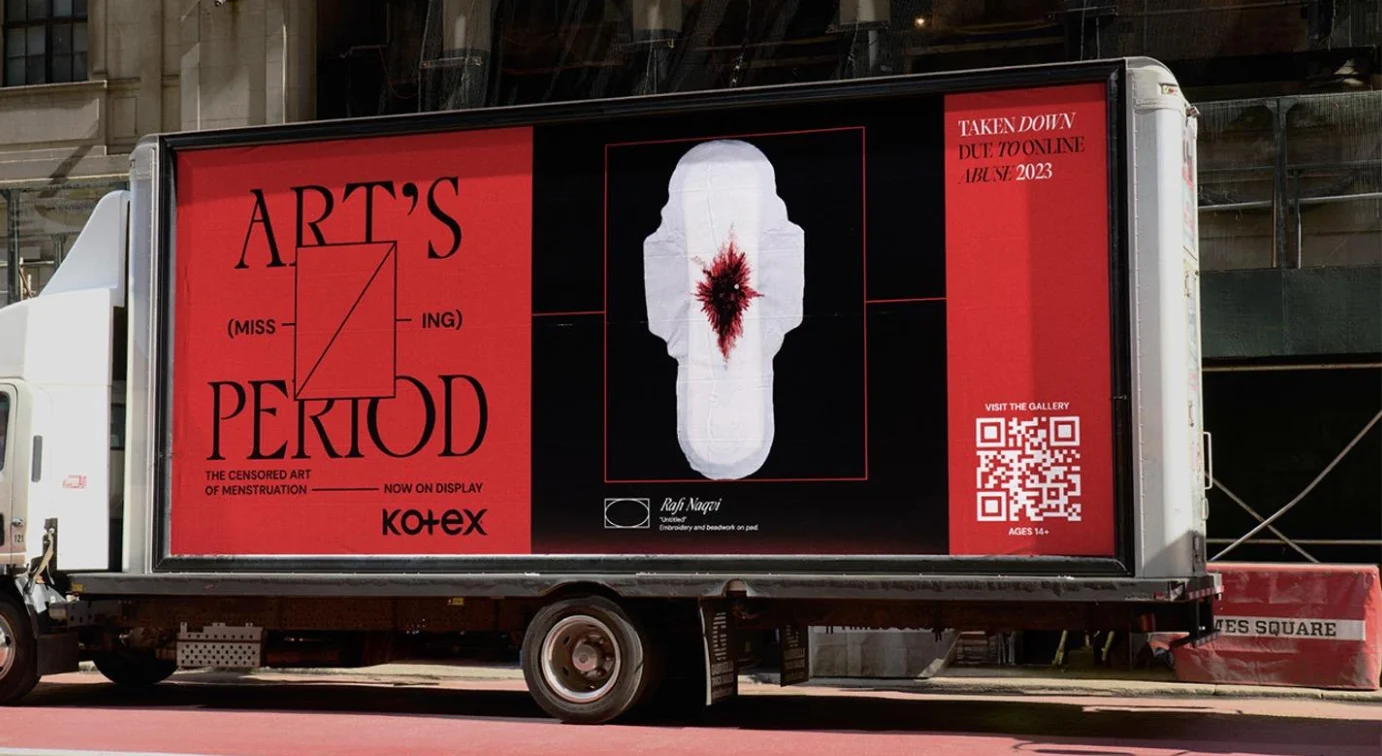
Art has never been squeamish about blood. Battles rendered in oil paint. Martyrdoms carved into marble. Wounds celebrated in sculpture. Violence depicted across every museum wall in the world without restriction, without content warnings, without removal. One kind of blood has been consistently, systematically absent from those walls for the entirety of recorded art history. Kotex, DAVID London, and Ogilvy Singapore built a campaign to name that absence and fill it.
The Broader Argument
Kotex’s brief for the campaign contains the line that carries everything: “Periods do not hold us back, but hiding them does.” The argument is not that menstruation should be visible as an act of empowerment. It is that the consistent, centuries-long cultural decision to hide it has done direct, documentable harm. To women’s experience of their own bodies. To institutional art’s relationship with truth. To the wider cultural conversation about what is considered normal and what is considered sensitive.
The campaign is structurally unusual for a feminine hygiene brand because it does not feature the product at all. No pads. No packaging. The brand has made a decision to spend its advertising budget arguing for a cultural shift rather than demonstrating a product difference. That decision is only available to a brand that has concluded its category argument is better made at the level of the problem than at the level of the solution.
The Observation
For centuries, art featuring blood in the context of violence has been displayed, celebrated, and canonised. The same institutions that house those works have rejected, removed, and censored artwork depicting menstrual blood. The pattern is not incidental. It is documented, consistent, and cross-cultural. Works dating from 35,000 BCE through to contemporary pieces submitted to galleries in 2025 share the same trajectory: created, shown briefly if at all, then dismissed as too sensitive for public viewing.
The campaign title is the argument. “Art’s Missing Period” operates as a pun on the punctuation mark and as a thesis about a century-long absence simultaneously. The missing period is the punctuation. The missing period is the menstrual cycle. The missing period is the entire historical era in which this subject has been made invisible.
The Execution
Art’s Missing Period launched globally on April 6, 2026, across film, OOH, and digital, developed by DAVID London and Ogilvy Singapore. The outdoor execution placed mobile billboards and wild postings directly outside the Guggenheim, The Met, the Whitney Museum, and MoMA in New York. The institutions that shape what art is considered acceptable for public view are the precise addresses where Kotex placed work that they would not show inside.
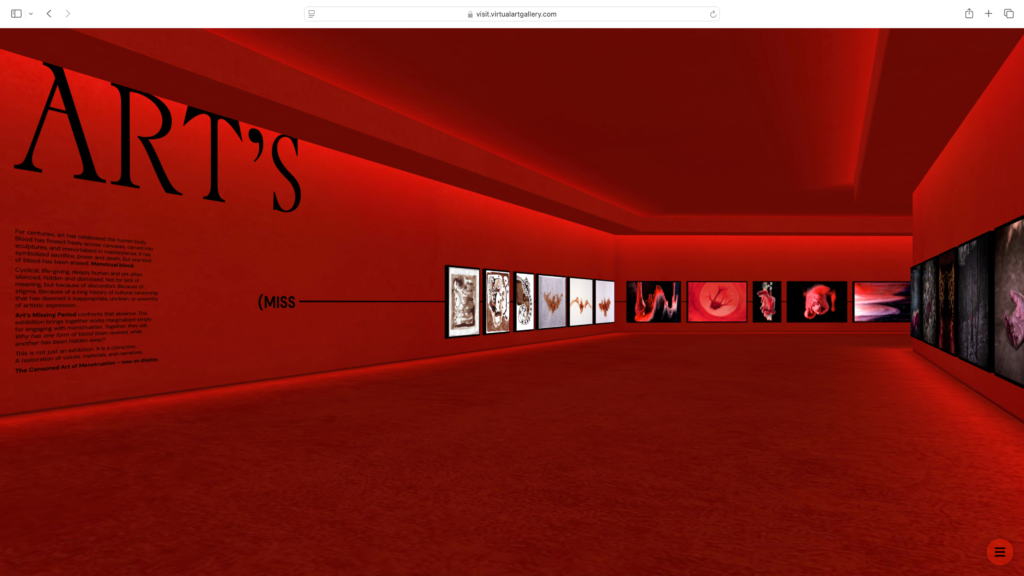
Each placement carries a QR code directing audiences to a virtual gallery at virtualgallery.com/kotexartsmissingperiod, live for one year from the launch date. The gallery exhibits over 40 artworks centred on menstruation, spanning prehistoric pieces from 35,000 BCE through to contemporary works rejected or removed from public display. The gallery functions as a permanent corrective, supported by and supporting the artists, galleries, and exhibitions that have hosted this work despite institutional resistance.
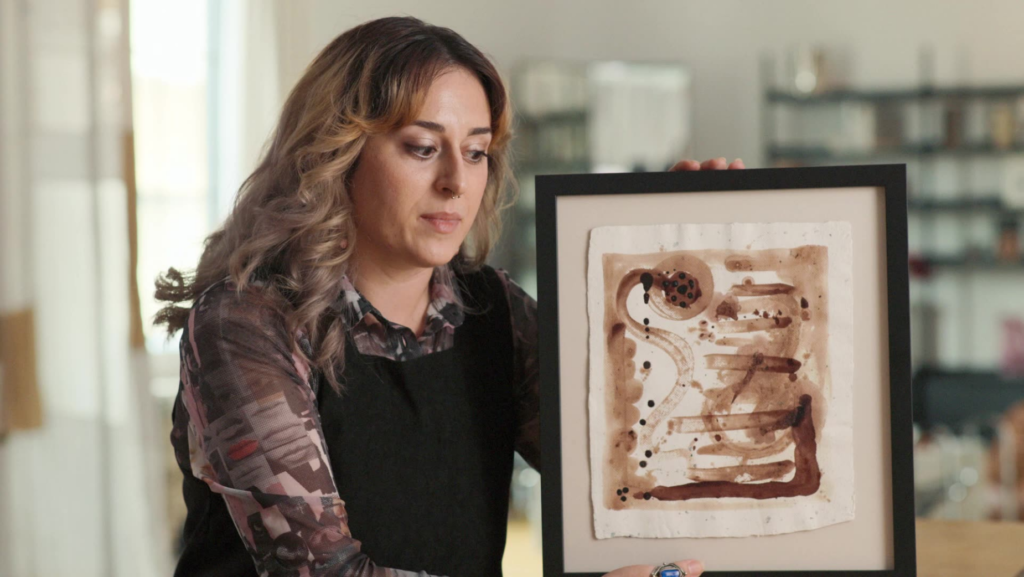
The hero film was directed by Emmy Award-winning filmmaker Kathryn Everett and narrated by award-winning journalist and producer Noor Tagouri. The documentary questions why society accepts blood depicting violence but not the blood of life and creation, and tells the stories of artists who have faced period stigma directly. The film sits alongside the OOH and virtual gallery as the third leg of the campaign’s physical and digital infrastructure.
The Agency Milestone It Represents
The campaign holds additional significance within DAVID London’s own history. Executive Creative Directors Genevieve Gransden and Selma Ahmed described the win with personal weight: “Exactly one year ago, we opened DAVID London here in Cannes and now, on our first birthday, we get to celebrate with our first Gold Lion for Kotex. We’ve started with a bang, and this is just the beginning of what we hope to achieve in the years.”
Nicolas Courant, CCO of Ogilvy Singapore, framed the campaign’s intent across the creative partnership: “This is not just a campaign. It is a restoration of voices, narrative and art that deserves to be seen.”
The Cannes Recognition
At Cannes Lions 2026, Art’s Missing Period won a Gold Lion in Health and Wellness in the OTC Products category, alongside a Bronze Lion in Brand Experience and Activation. The campaign was additionally shortlisted across Film and Entertainment categories, confirming its range across multiple creative disciplines. The Health and Wellness Lions received 889 entries this year and awarded 31 Lions in total. The Grand Prix went to The Ordinary’s “The Periodic Fable.” Art’s Missing Period was the category’s Gold Lion winner.
Kainaz Karmakar, Chief Creative Officer of Ogilvy India and Health and Wellness Jury President, described what the campaign represents at the level of the category itself: the year’s work showed that the best health and wellness advertising addresses what people are actually experiencing in their bodies and their lives, rather than what the industry has historically considered appropriate to discuss.
Campaign Name: Art’s Missing Period
Agency Name: DAVID London / Ogilvy Singapore / Documentary Director: Kathryn Everett
Brand Name: Kotex (Kimberly-Clark)
Location: Global (outdoor activations in New York City; virtual gallery available worldwide; launched April 6, 2026)