
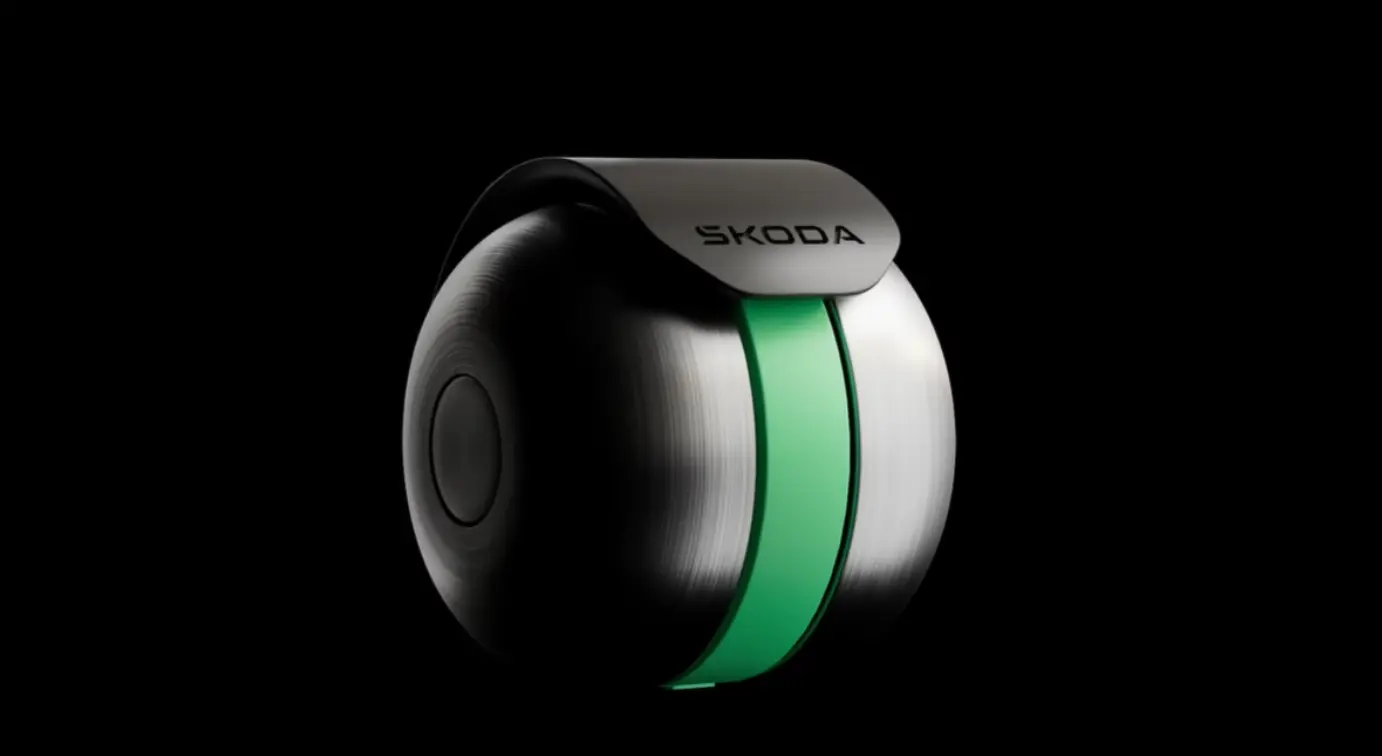
The bike bell has not changed in over a century. The world around it has changed considerably. In London in 2024, bike-pedestrian collisions rose 24% according to Transport for London data. One contributing factor is now documented: active noise-cancelling headphones filter out the frequency range that a standard bike bell operates in, meaning a pedestrian wearing ANC earbuds may hear nothing at all when a cyclist rings to warn them. Škoda, AMV BBDO, and the University of Salford decided to engineer around that problem.
The Research
Škoda partnered with acousticians from the University of Salford to conduct one of the world’s first studies examining specifically how ANC technology affects the audibility of traditional bicycle bells. The finding that shaped everything that followed was the identification of a narrow frequency band between 750Hz and 780Hz that consistently penetrates ANC filters. ANC systems work by generating counter-sounds to cancel incoming audio signals. The research found that this specific frequency range, a window the team called the “safety gap,” arrives too erratically for ANC algorithms to lock onto and cancel effectively.
Dr Will Bailey from the University of Salford described the finding: “This project uncovered something fascinating about how we experience sound in modern environments. We’re proud to have worked with Škoda to turn that insight into something practical that could make a real difference to safety in our cities.”
The Engineering
The DuoBell is entirely mechanical. No battery. No electronics. No app. The innovation is in its physical design. A second resonator tuned to the 750-780Hz safety gap sits alongside a specially designed striking mechanism that produces rapid, irregular impacts rather than the clean, predictable ring of a standard bell. ANC algorithms work by predicting and cancelling consistent incoming sounds. Irregular, erratic sound patterns are harder to model and cancel in real time. The DuoBell exploits that limitation by design.
The result is a bell that is up to four times more effective than a standard bell at penetrating noise-cancelling technology. In acoustic testing and real-world trials, it was heard five seconds earlier and up to 22 metres further away than a conventional bell by pedestrians wearing ANC headphones. Five seconds at cycling speed is the difference between a collision and an avoided one.
The Real-World Trial
The prototype was not tested in a laboratory alone. Škoda ran a two-week trial with a fleet of Deliveroo riders in London, one of the world’s most congested cycling cities and a market where 54% of headphone models sold now include ANC. Deliveroo riders spend their working day navigating high-traffic urban environments where pedestrian-cyclist interaction is constant, and collision risk is daily. Their feedback shaped the final prototype.
One Deliveroo rider summarised the trial’s outcome in a single line: “I finally had a voice in the streets.”
The Open Source Decision
Škoda is not commercialising the DuoBell as a proprietary product. The research findings have been published in an open-source whitepaper, making the acoustic methodology, the frequency data, and the engineering approach available to any bell manufacturer, cycling brand, or city government that wants to use them. The decision to release the intellectual property rather than patent it is the campaign’s most structurally unusual element. A brand that solves an urban safety problem and then gives the solution away occupies a different category of public trust than one that monetises it.
Ben Edwards and Guy Hobbs, Executive Creative Directors at AMV BBDO, described the creative brief precisely: “Bike bells have barely changed in a hundred years, but the world around them has. Škoda DuoBell is the first-ever bell designed to cut through noise-cancelling headphones. A clever analogue hack that outsmarts the AI algorithms inside them. It’s one tweak that will make city streets safer.”
Why a Car Brand
Škoda’s connection to cycling is not incidental. The company started life as a bicycle manufacturer in Mladá Boleslav in 1895, making two-wheelers for more than two decades before it pivoted to motorcycles and then to cars. The brand currently sponsors the Tour de France, the Tour de France Femmes, and La Vuelta, among dozens of other international cycling events. The DuoBell is the most operationally direct expression of that cycling heritage the brand has produced in recent years. It is also the most commercially unusual product a car manufacturer has launched in 2026: a mechanical bell, priced to be simple and affordable to manufacture, designed by a company whose primary product starts at tens of thousands of euros.
The influencer campaign running alongside the product features Professor Hannah Fry and delivery driver London Hustle, extending awareness across both the science community and the urban cycling audience the product is built for.
Campaign Name: DuoBell
Agency Name: AMV BBDO / PHD Media (innovation) / Production: Unit 9 / Research: University of Salford
Brand Name: Škoda
Location: United Kingdom (London; global distribution)