FIFA’s “clean venue” policy exists to protect its sponsors. It requires every non-sponsor brand to be removed or covered at all 16 host stadiums during the 2026 FIFA World Cup. The policy has generated one of the tournament’s most talked-about brand moments, and the brand that created it was not an official sponsor. It was the one being forced to cover up.
The Policy and the Problem
The 2026 FIFA World Cup is the first edition of the tournament to be hosted primarily in existing commercial venues across the United States, Canada, and Mexico, rather than purpose-built stadiums. That structural difference created an immediate conflict. American stadiums operate on naming rights deals with major brands. SoFi Stadium became Los Angeles Stadium. MetLife became New York New Jersey Stadium. NRG became Houston Stadium. Gillette became Boston Stadium. AT&T became Dallas Stadium.
Levi’s Stadium in Santa Clara, home of the San Francisco 49ers and host to six World Cup matches including the opening game between Qatar and Switzerland on June 14, became the San Francisco Bay Area Stadium. FIFA’s requirement was straightforward: remove or cover all non-sponsor branding. Levi’s had to comply.
What happened next was not in the policy.
The Cover-Up That Uncovered Everything
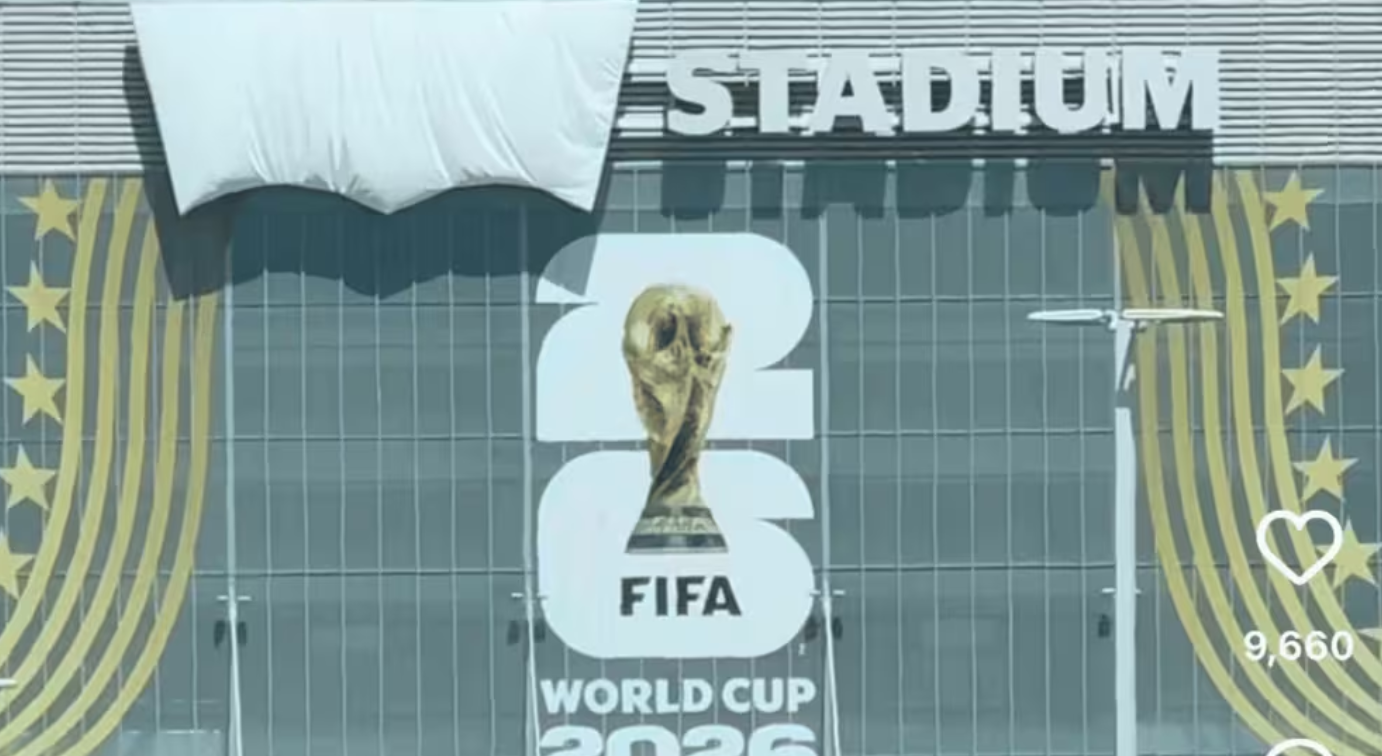
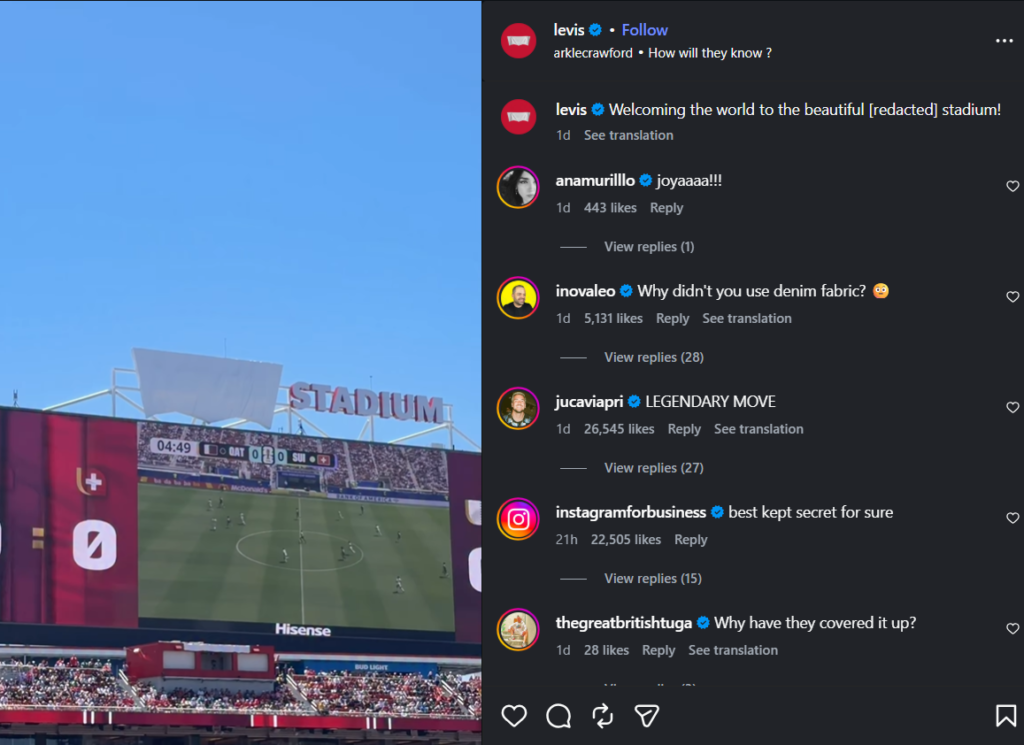
To conceal the Levi’s branding on the stadium facade, management placed a white tarp over the logo. The tarp removed the wordmark. It could not remove the shape. The iconic Levi’s batwing, the two-arched silhouette that has appeared on the brand’s products since the 19th century, remained visible as a raised outline through the covering, distinctive enough that anyone familiar with the brand recognised it immediately. The cover-up had made the logo more visually interesting than the logo itself.
Images and videos of the tarp-covered batwing spread across social media over the tournament’s opening weekend. Rather than waiting for the moment to pass, Levi’s moved inside it. The brand changed its Instagram profile picture to an image of the tarp-covered logo against a red backdrop. It posted videos of the shrouded emblem at the stadium entrance and above the scoreboard, set to the viral “Nobody’s Gonna Know” TikTok audio. The post caption read: “Welcoming the world to the beautiful [redacted] stadium!”
The consumer response was immediate and overwhelmingly positive. Comments called it one of the cleverest marketing moves of the year. Amy Leverton, founder of Denim Dudes, wrote on Instagram that the brand had “definitely won the world cup of marketing moments,” adding that the response amplified Levi’s anti-establishment roots.
The Broader Brand Protection Chaos
The scale of FIFA’s brand protection effort across the 16 host venues produced a catalogue of details that illustrated the policy’s reach. Inside the press box at the former Levi’s Stadium, 23 bottles of condiment had their labels covered in black tape. Standard credit card payment terminals at Gillette Stadium were swapped out for different machines. Cupholders across more than 80,000 seats at one venue carried a brand logo the host committee refused to cover, citing the cost involved. Lumen Field in Seattle had its exterior branding covered with blue tape.
Atlanta’s Mercedes-Benz Stadium presented a different kind of problem. The Mercedes-Benz star mounted atop the stadium’s retractable roof could not be removed or covered without risking structural damage to the roof itself. FIFA accepted the exception. The star remained visible throughout the tournament.
Why Levi’s Won
The batwing is one of the most recognised brand silhouettes in American consumer culture. It does not require the wordmark to communicate the brand. That level of visual equity, built over 150 years of consistent use, meant that covering the name while leaving the shape visible did not hide the brand. It highlighted it, in a new and more memorable context, at a moment when the entire world was watching the stadium.
The social media response converted a compliance obligation into a campaign. No brief was written. No budget was allocated. No agency was involved. The regulatory restriction produced the creative idea, and Levi’s moved fast enough to own it before anyone else could frame it differently.
As one industry observer put it: it is not every day that half the world is watching your ad.
Campaign Name: Not mentioned
Agency Name: Not mentioned (in-house social response)
Brand Name: Levi’s / Levi Strauss & Co.
Location: Levi’s Stadium (San Francisco Bay Area Stadium), Santa Clara, California, USA