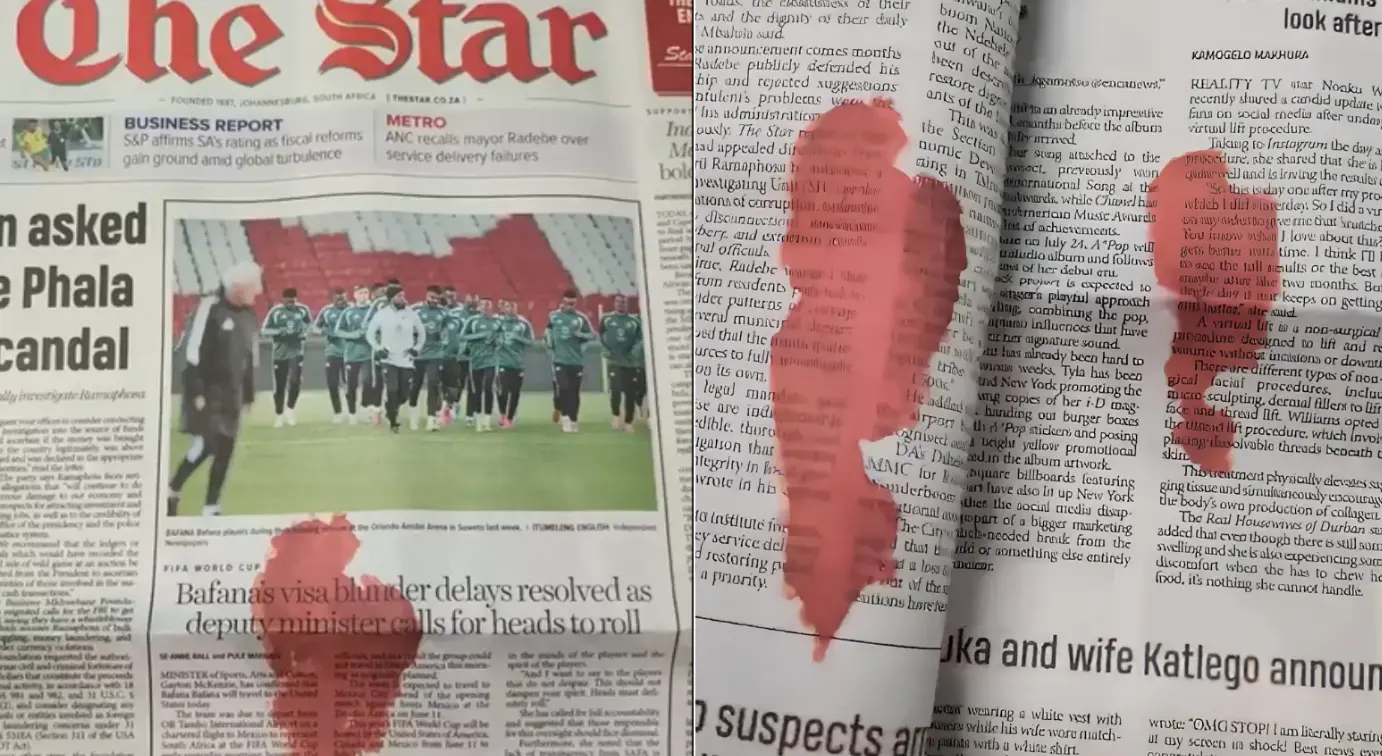
On the morning of June 1, 2026, readers of three of South Africa’s most widely circulated newspapers opened their papers and found something that had never appeared on a front page before. Blood stains. Printed across the paper, seeping through the pages beneath, exactly as they would appear if the newspaper had been used as a sanitary pad. Because for nearly four million South African schoolgirls, it effectively has been.
The Campaign
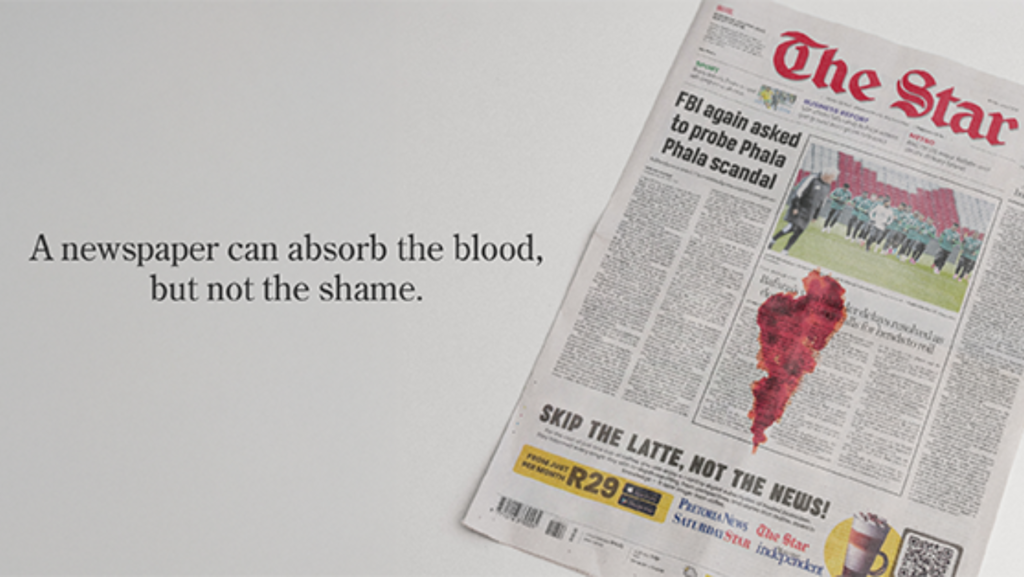
Period Paper was created by advertising agency Joe Public in partnership with the MENstruation Foundation and Independent Media, the publisher of The Star, The Mercury, and Cape Times. The campaign launched on World Menstrual Hygiene Day, May 28, 2026, with the full front-page execution running in all three papers on June 1.
Joe Public developed the blood-stain artwork through photography, retouching, and print testing with Independent Media’s production team, creating a visual that was indistinguishable from the real thing on newsprint. The medium is the message with unusual precision here. The newspaper is not a backdrop for the campaign. It is the proof of concept. The object being used as an advertisement is the same object being used as a sanitary product by millions of girls across the country.
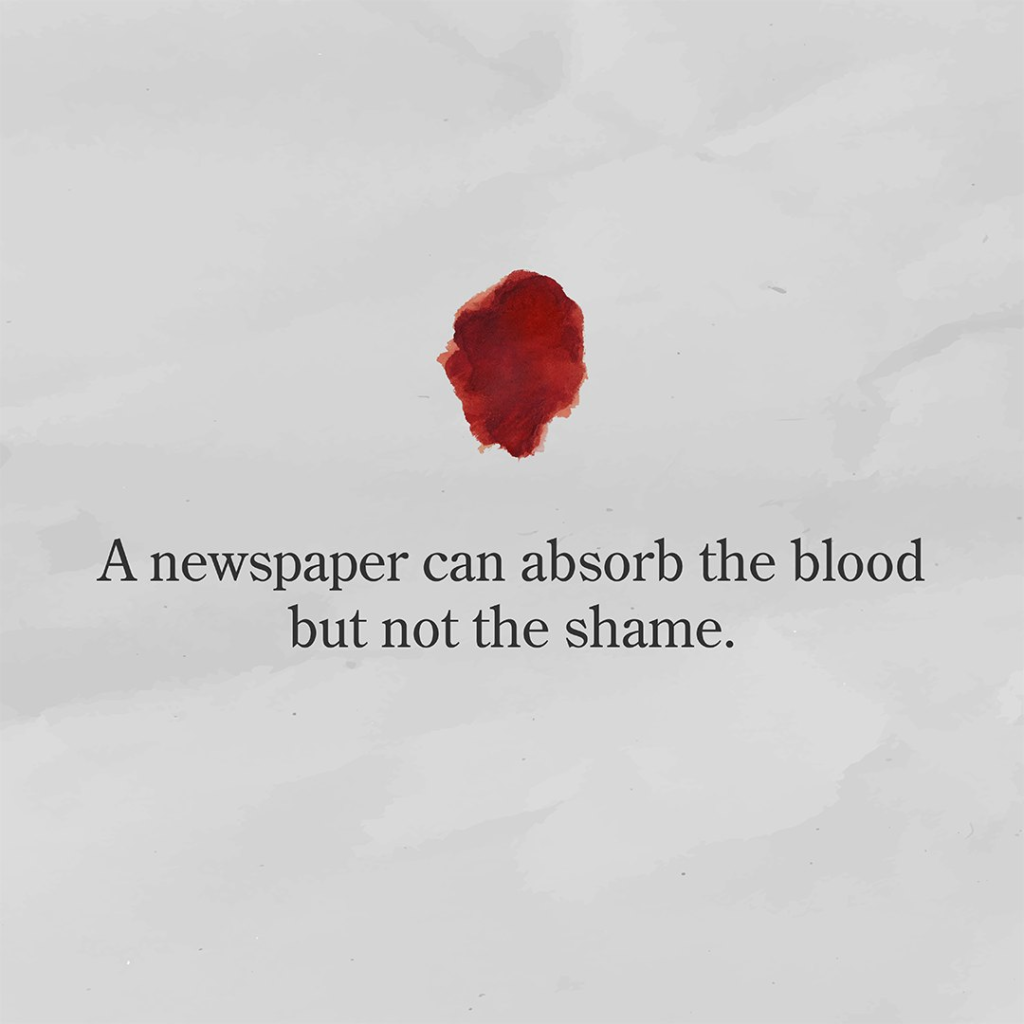
The campaign line is the sharpest piece of copy produced on this subject in recent memory: “A newspaper can absorb the blood, but not the shame.”
What Period Poverty Actually Means in South Africa
The numbers behind the campaign are stark. Nearly four million South African schoolgirls lack reliable access to sanitary products. Girls resort to newspapers, rags, and other unsafe substitutes during their periods. Period poverty causes girls to miss up to five days of school each month, the equivalent of one week per cycle, every cycle, across their entire school-going life. The cumulative educational impact is not a marginal concern. It is a structural barrier to a generation.
Globally, an estimated 500 million people lack adequate access to menstrual health management. South Africa’s government removed the 15% VAT on sanitary products in 2019 in recognition of the problem, but the cost of basic pads remains out of reach for a significant portion of the population.
Siv Ngesi, co-founder of the MENstruation Foundation, is an actor and comedian by profession. He built the foundation around a manufacturing model rather than a donation model. The Foundation manufactures sanitary pads at a facility in Paarl that produces 192,000 pads per eight-hour shift, making it one of the most cost-efficient pad producers on the continent. It currently distributes over one million pads per month and reaches 100,000 schoolgirls through a dispensary machine network installed directly in schools.
As Ngesi stated plainly: “Just R60 supplies a schoolgirl with pads for an entire year.” The constraint is not manufacturing capacity. It is funding.
The Operational Ask
The front page runs with a QR code linking directly to the MENstruation Foundation’s donation page. The campaign’s targets are concrete: 30,000 more schoolgirls reached with free pads, and 65 additional dispensary machines installed across the country.
Mpume Ngobese, Managing Director of Joe Public, described the brief directly: “We wanted to create something impossible to ignore. Period poverty is often hidden in shame and silence, yet it affects millions of girls every single month. By using newspapers, one of the very materials many girls are forced to use during their periods, we transformed an everyday object into a powerful symbol of both survival and indignity. The campaign is intentionally uncomfortable because the reality is uncomfortable.”
The MENstruation Foundation is also expanding its school dispensary machine programme. On World Menstrual Hygiene Day itself, the Foundation launched a new machine at Hoërskool Die Burger in Roodepoort, Gauteng, with the school’s principal describing what the installation means in practice: “For some of our learners, access to sanitary products is not guaranteed. We see the impact on attendance, confidence and dignity. This changes that.”
Why the Format Works
Awareness campaigns about period poverty typically reach the audience that already cares about the issue. A front-page blood stain in a national newspaper reaches a different audience: the reader who picked up the paper for the sports section, the business pages, the news. The campaign does not allow the reader to self-select out of the subject before encountering it. The front page delivers the message before the reader has decided whether they want to receive it.
The choice of newspapers as both a medium and a metaphor closes the creative logic completely. A campaign about the use of newspapers as makeshift sanitary products, printed in newspapers, on a front page that replicates exactly what that use looks like, requires no explanation, no supporting copy, and no secondary argument. The fact and the format are the same thing.
Campaign Name: Period Paper
Agency Name: Joe Public
Brand Name: The MENstruation Foundation / Independent Media
Location: South Africa (The Star, The Mercury, Cape Times; national distribution)